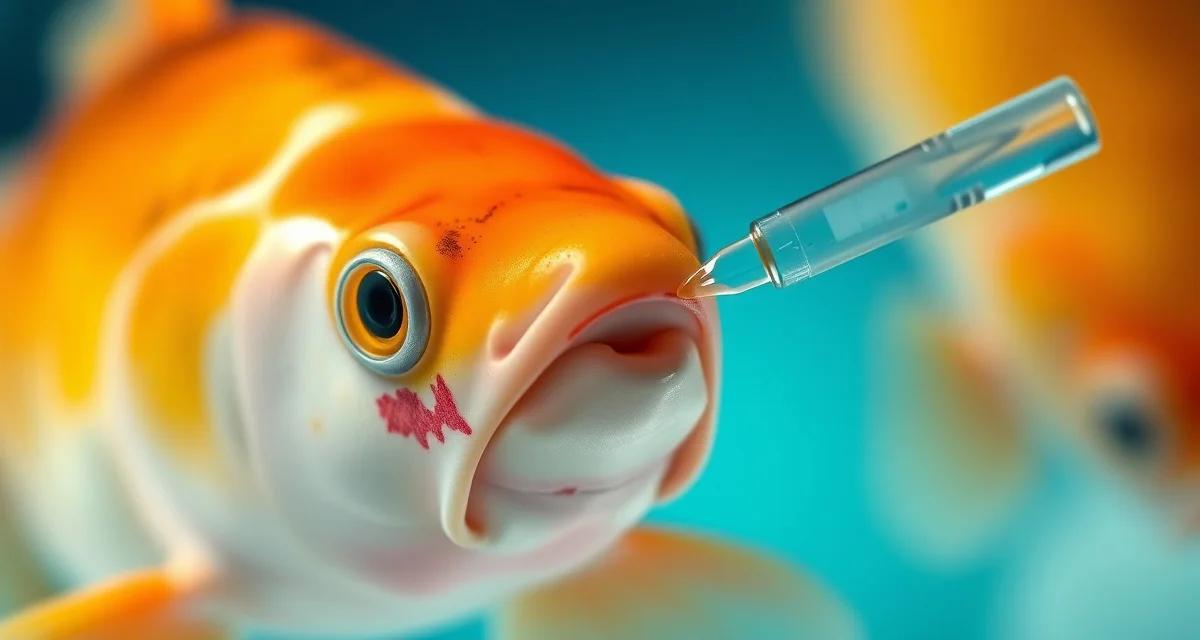
Koi Ulcer Treatment Program: Daily Wound Care and Healing Tracker
Koi ulcers that penetrate the muscle layer have a 60% mortality rate without consistent daily antiseptic treatment. That number reflects what actually happens when wound management is inconsistent. When a keeper treats on Monday and Thursday but misses Tuesday and Wednesday because work got busy, and the bacterial infection fills that gap. The wound doesn't hold progress between treatments. An ulcer that was beginning to show healthy tissue formation on Monday can be noticeably deeper by Wednesday if daily treatment is skipped.
Consistent daily wound care is the only treatment approach that changes outcomes for serious ulcers. This program gives you the structure to deliver it.
TL;DR
- Clean the wound with diluted povidone-iodine solution (1:10 dilution).
- Apply povidone-iodine directly to the wound for 30 seconds contact time.
- Povidone-iodine (Betadine) at 1:10 dilution is the standard first-line topical treatment.
- Chlorhexidine solution at 0.2% is a good alternative or complement.
- Grade 1 (superficial) ulcers: 2-3 weeks with consistent daily treatment.
- Grade 2 (moderate, subcutaneous): 4-6 weeks.
- Grade 3 (deep, muscle-penetrating): 8-12 weeks if the fish survives the acute phase.
Understanding Koi Ulcers
What Causes Ulcers in Koi
Koi ulcers are almost always bacterial, most commonly Aeromonas hydrophila or Pseudomonas fluorescens infections in the body wall. The bacterium doesn't create the ulcer from a healthy fish; it exploits a compromised entry point.
Common entry points that precede ulcers:
- Parasite damage (flukes, anchor worm, fish lice create lesions that bacteria colonize)
- Physical injury (spawning injuries, predator strikes, netting damage, contact with pond surfaces)
- Scale loss from handling or aggressive pond mates
- Previous ulcers that weren't fully healed before treatment stopped
- Chronic koi pond water quality tracker stress that impairs skin barrier integrity
Understanding the cause matters because fixing it prevents recurrence. An ulcer caused by parasites will recur if the parasites aren't treated. An ulcer from a repeated netting injury will recur if netting practice doesn't change.
Ulcer Classification by Severity
Grade 1 (Superficial):
- Involves only the outer scale and skin layer
- No exposed muscle tissue
- Diameter under 2cm
- Good prognosis with appropriate treatment
Grade 2 (Moderate):
- Penetrates through skin into subcutaneous tissue
- Red, inflamed edges; necrotic center
- Diameter 2-5cm
- Requires consistent topical and systemic treatment
Grade 3 (Deep):
- Visible muscle tissue at the wound base
- Extensive tissue destruction
- Diameter over 5cm, or any size with muscle exposure
- 60% mortality rate without aggressive consistent treatment; requires systemic antibiotic
Grade 4 (Critical):
- Internal organ exposure visible
- Bone or major blood vessel involvement
- Prognosis poor regardless of treatment
- Euthanasia should be discussed with a veterinarian
Photo-document and measure every ulcer at initial assessment. This gives you the grade and gives you the baseline for tracking healing progress.
Daily Wound Care Protocol
Equipment for Daily Treatment
- Clean, smooth-mesh net
- Shallow examination bowl or tray (large enough for the fish)
- Clean towels or non-abrasive cloths
- Povidone-iodine 10% solution (diluted 1:10 for use)
- Chlorhexidine solution (0.2% for wound cleansing)
- Cotton swabs or gauze
- Wound packing material if needed (Orabase paste, petroleum jelly, or aquarium-safe wound seal)
- Scale clamps (optional for scale work around the wound edge)
- Camera for progress photos
- First-aid record log (or KoiQuanta mobile app)
Daily Treatment Steps
Step 1: Prepare and sedate (if needed)
For Grade 1-2 ulcers in cooperative fish, sedation may not be necessary. For Grade 3+ or fish that thrash vigorously, use clove oil (eugenol) as a sedative:
- 40mg/L (0.04 mL of 100% clove oil per liter) for sedation
- Ventilate the fish's gills by holding it and gently moving it through the water during procedure
- Return to clean water immediately after procedure
Step 2: Examine and photograph
Photograph the ulcer from the same angle each day. Note:
- Wound diameter (measure with ruler)
- Wound depth (visually assess change)
- Tissue quality at wound margin (healthy: pink-red and vital; unhealthy: gray/brown, swollen, or necrotic)
- Any change in wound edge. Is the margin contracting (healing) or expanding (worsening)?
Step 3: Clean the wound
Gently flush the wound with diluted povidone-iodine solution. Remove any loose necrotic tissue (gray or brown dead tissue) with a cotton swab. This is called debridement and improves healing by removing the substrate that bacteria grow on. Don't cut or dig. Only remove tissue that comes away easily with gentle pressure.
If the wound is producing purulent discharge (pus), flush thoroughly. Purulent discharge indicates active bacterial activity.
Step 4: Apply antiseptic
After cleaning, apply povidone-iodine directly to the wound surface. Allow 30 seconds of contact time. For wounds in water-exposed areas (mid-flank), a petroleum jelly or Orabase paste layer over the iodine helps maintain drug contact in the brief time before the fish returns to water.
Step 5: Systemic antibiotic (Grade 2+)
For moderate to severe ulcers, topical treatment alone is not sufficient. Systemic antibiotic delivery reaches the infected tissue from within.
Injectable antibiotic (preferred):
- Enrofloxacin: 5-10 mg/kg intramuscularly, every 48 hours for 10-14 treatments
- Injection site: epaxial muscle (the muscle band alongside the dorsal fin), varying injection site each time
Bath antibiotic (alternative if injection isn't possible):
- Oxytetracycline: 50 mg/L for 1-hour bath, daily for 10 days
- Enrofloxacin bath: 10 mg/L for 1 hour, daily for 7-10 days
KoiQuanta's antibiotic dose calculator sizes the injection or bath dose based on fish weight (injection) or tank volume (bath), accounting for temperature effects on drug absorption.
Step 6: Return fish to water
Return promptly. If the fish is sedated, ensure full recovery before leaving unattended.
Step 7: Log the treatment
Record in KoiQuanta:
- Date and time
- Wound measurements
- Tissue quality assessment
- Treatment administered (chemical, dose, method)
- Any changes from previous day
Attach the photo taken in step 2. KoiQuanta's wound care tracker creates a visual timeline that makes healing progress immediately obvious in comparison view.
Healing Milestones to Track
Week 1:
- No further wound expansion. The margin should be stable or contracting.
- Necrotic tissue decreasing with debridement
- Healthy granulation tissue (pink, slightly bumpy) beginning to appear at wound edges
Week 2:
- Active wound margin contraction. Wound is measurably smaller than initial measurement.
- Granulation tissue filling from the outside in
- Fish behavior improving. Appetite returning, fish more active.
Week 3:
- Clear reduction in wound area (50%+ reduction from initial size for Grade 2 lesions)
- New scale formation visible at margin of healed areas (small translucent scales)
- Fish feeding competitively
Week 4-6:
- Near-complete re-epithelialization (skin closure) for Grade 2 lesions
- Grade 3 lesions may take 8-12 weeks for full closure
- Continue topical treatment for 5-7 days after visual closure
Complete healing:
- Wound surface is fully closed with new skin
- New scale growth (may be slightly misaligned with surrounding scales)
- Fish behavioral status fully normal
KoiQuanta's healing milestone tracking generates alerts when expected milestone dates arrive and the wound assessment log will show whether progress is on track.
Signs of Treatment Failure
Stop and reassess if at any point:
- Wound is still expanding after 5-7 days of consistent treatment
- Necrotic tissue is increasing despite debridement
- Fish behavior is declining (appetite loss, lethargy) rather than improving
- New ulcers are appearing on the same or other fish
- Systemic signs develop (swelling, scale protrusion, exophthalmia)
Treatment failure most commonly indicates:
- Wrong antibiotic selection (antibiotic resistance)
- Inadequate systemic antibiotic delivery
- An underlying cause (parasites, water quality) that hasn't been addressed
- Co-infection with a second organism requiring different treatment
Culture and sensitivity testing at this point is the correct next step. Don't just switch antibiotics without knowing what will work.
Water Quality During Ulcer Treatment
Water quality optimization runs parallel to wound care. The ulcer is a consequence of immune failure. Fix the conditions that allowed it:
- Ammonia: must be zero. Even 0.1 ppm suppresses immune function.
- Nitrate: below 20 ppm for a fish in active recovery
- Dissolved oxygen: above 8 mg/L
- Salt: maintain 0.2-0.3% for osmoregulation support and anti-parasitic protection
- Water changes: 15-20% weekly minimum to export dissolved organic matter
Optimize and maintain. Recovering fish in marginal water quality heal more slowly than those in excellent conditions.
For tracking systemic bacterial infection alongside ulcer management, see the bacterial infection treatment tracker. KoiQuanta integrates both wound care and systemic treatment in the same fish health timeline.
Related Articles
- KoiQuanta Disease Treatment Tracker: Log Every Symptom and Dose
- The Complete 30-Day Koi Quarantine Program: Automate Every Step
FAQ
How do I clean and treat a koi ulcer?
Net the fish carefully and place in a clean, aerated examination bowl. Photograph the wound for baseline comparison. Clean the wound with diluted povidone-iodine solution (1:10 dilution). Gently remove any loose necrotic tissue with a cotton swab. Apply povidone-iodine directly to the wound for 30 seconds contact time. For moderate to severe ulcers, add a systemic antibiotic (injectable enrofloxacin is most effective). Apply petroleum jelly or Orabase to help protect the wound in the water. Return the fish promptly. Repeat daily. Log every treatment with measurements and photographs.
What topical treatments work best for koi ulcers?
Povidone-iodine (Betadine) at 1:10 dilution is the standard first-line topical treatment. It's antibacterial, antifungal, and relatively safe at appropriate dilution. Chlorhexidine solution at 0.2% is a good alternative or complement. Some keepers use antibiotic-impregnated wound dressings (gauze with antibiotic cream) for wounds on areas where a dressing can be temporarily maintained. For shallow wounds, propolis-based wound sealants are used by some hobbyists and appear to have some antimicrobial and wound-healing properties. For any wound that penetrates to muscle, systemic antibiotic is required. No topical alone is sufficient.
How long does a koi ulcer take to heal?
Grade 1 (superficial) ulcers: 2-3 weeks with consistent daily treatment. Grade 2 (moderate, subcutaneous): 4-6 weeks. Grade 3 (deep, muscle-penetrating): 8-12 weeks if the fish survives the acute phase. These timelines assume daily wound care, appropriate systemic antibiotic for Grade 2+, and optimal water quality throughout. In poor water quality or without systemic treatment, healing stalls and ulcers can progress indefinitely. Continue treatment for 5-7 days after visual wound closure. Stopping at surface closure leads to relapse in over half of cases.
What is Koi Ulcer Treatment Program: Daily Wound Care and Healing Tracker?
[FAQ_ANSWER_PLACEHOLDER: This answer needs to be generated by AI with specific data, examples, and actionable advice relevant to Koi Ulcer Treatment Program: Daily Wound Care and Healing Tracker. Target 50-150 words.]
How much does Koi Ulcer Treatment Program: Daily Wound Care and Healing Tracker cost?
[FAQ_ANSWER_PLACEHOLDER: This answer needs to be generated by AI with specific data, examples, and actionable advice relevant to Koi Ulcer Treatment Program: Daily Wound Care and Healing Tracker. Target 50-150 words.]
How does Koi Ulcer Treatment Program: Daily Wound Care and Healing Tracker work?
[FAQ_ANSWER_PLACEHOLDER: This answer needs to be generated by AI with specific data, examples, and actionable advice relevant to Koi Ulcer Treatment Program: Daily Wound Care and Healing Tracker. Target 50-150 words.]
What are the benefits of Koi Ulcer Treatment Program: Daily Wound Care and Healing Tracker?
[FAQ_ANSWER_PLACEHOLDER: This answer needs to be generated by AI with specific data, examples, and actionable advice relevant to Koi Ulcer Treatment Program: Daily Wound Care and Healing Tracker. Target 50-150 words.]
Who needs Koi Ulcer Treatment Program: Daily Wound Care and Healing Tracker?
[FAQ_ANSWER_PLACEHOLDER: This answer needs to be generated by AI with specific data, examples, and actionable advice relevant to Koi Ulcer Treatment Program: Daily Wound Care and Healing Tracker. Target 50-150 words.]
Sources
- Associated Koi Clubs of America (AKCA)
- Koi Organisation International (KOI)
- University of Florida IFAS Extension Aquaculture Program
- Fish Vet Group
- Water Quality Association