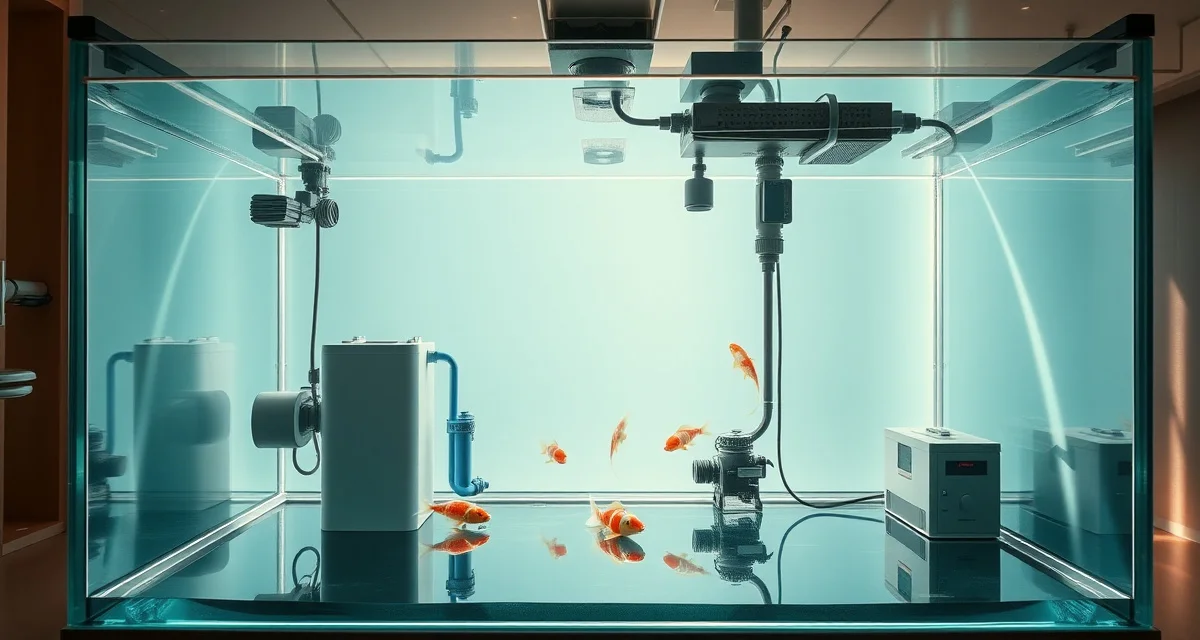
The Complete 30-Day Koi Quarantine Program: Automate Every Step
Parasites not caught in quarantine-implementation) spread to resident fish within 72 hours of introduction. That's not a slow decline. It's three days from new fish in the pond-after-pond-treatment) to an established parasitic infection spreading through your entire population.
The 30-day-best-medications) koi quarantine program exists to close that window. Every day matters. Automated day-by-day task lists mean you never miss a salt treatment, water change, or observation window. And that consistency is what makes quarantine actually work.
TL;DR
- A 30-day quarantine is the minimum for meaningful disease surveillance; imports and auction fish need 45-60 days.
- Koi Herpesvirus clinical signs typically appear within 14-21 days of exposure at 18-25 degrees Celsius.
- Most ectoparasites complete multiple life cycles within 30 days, confirming clearance at the end of the period.
- Salt treatment starts at 0.1% on day 3, rises to 0.2% by days 4-5, with therapeutic treatment at 0.3%.
- A prophylactic potassium permanganate treatment at day 5 and again at day 21 catches parasite loads that were not visually apparent.
- No fish should leave quarantine until all discharge criteria are met for 10 consecutive days.
- KoiQuanta pre-fills all dose calculators from stored tank volume and auto-calculates retreatment dates from temperature logs.
Why 30 Days Specifically?
The 30-day quarantine period is calibrated to the biology of the most common koi pathogens:
Parasites: Most koi ectoparasites (Costia, Trichodina, gill flukes, Chilodonella) complete multiple life cycles within 30 days at optimal temperatures. A 30-day period with two rounds of treatment at the appropriate life-cycle interval confirms clearance.
koi disease prevention: Many opportunistic bacterial infections (Aeromonas, Pseudomonas) that are subclinical at fish introduction will become apparent under the stress of a new environment within 14-21 days.
Koi Herpesvirus (KHV): KHV has a temperature-dependent incubation period. Between 18-25°C (the KHV danger zone), clinical signs typically appear within 14-21 days of exposure. A 30-day quarantine at these temperatures provides a meaningful (though not guaranteed) surveillance period.
SVCV (Sleepy Disease): Clinical signs typically appear within 10-14 days of exposure in susceptible temperature conditions.
30 days is the minimum for meaningful surveillance. High-risk fish (internationally imported, from auction, from unknown sources) should be held for 45-60 days.
Quarantine Setup Before Fish Arrive
new koi quarantine protocol, confirm:
- [ ] Tank ready with 200+ gallons of established or freshly cycled water
- [ ] Aeration running and confirmed adequate
- [ ] Temperature matched to the fish's source water (within 2°C)
- [ ] Filtration running
- [ ] Water tested: ammonia 0, nitrite 0, pH 7.0-8.5, KH above 80 ppm
- [ ] All supplies on hand: salt, test kits, treatment medications, nets, towels
- [ ] KoiQuanta quarantine batch created with fish details and tank volume entered (this pre-fills all dose calculators)
Day-by-Day Quarantine Protocol
Days 1-3: Arrival and Stabilization
Day 1: Introduction
- Temperature-match the fish by floating the transport bag for 20-30 minutes
- Release fish gently. Don't add transport water to the quarantine tank.
- No feeding. Stressed fish don't need food and uneaten food will spike ammonia.
- Observe for 2 hours. Normal: exploratory behavior, resting at bottom. Concerning: gasping, flashing, laying on side.
- Test water: ammonia, nitrite, pH, temperature
Day 2:
- First feeding. Very small amount.
- Observe feeding response and behavior
- Water test: ammonia, nitrite, pH
- Log all observations
Day 3:
- Begin salt treatment: raise concentration to 0.1% (dissolve and add gradually over 4-6 hours)
- For a 300-gallon tank: approximately 2.5 lbs of non-iodized pond salt
- Do not rush the salt addition. Dissolve batches in bucket of tank water and distribute.
- Water test: ammonia, nitrite
- First disease screening: visual inspection of each fish
- Scale condition: any missing scales, unusual markings, redness?
- Fin condition: torn, clamped, or eroded fins?
- Eyes: clear and bright, or cloudy?
- Body shape: any swelling, pinecone scales, lesions?
- Behavior: normal active swimming, or isolating, listing, or unusual posture?
Days 4-7: Salt Treatment and Baseline Monitoring
Days 4-5:
- Second salt addition: raise to 0.2% if no signs of osmotic stress
- Continue daily water testing (ammonia, nitrite)
- Observe feeding behavior closely. Is every fish eating competitively?
- Log any behavioral observations
Day 5: Potassium Permanganate Bath (Recommended for Unknown Sources)
If fish came from an unknown source, a low-dose potassium permanganate treatment at this point clears many surface parasites. This is a prophylactic step, not emergency treatment.
- Dose: 2 ppm in the quarantine tank
- Add with aeration running during daylight hours
- Monitor fish closely for 2 hours during treatment
- Treatment is exhausted when water turns brown (within 4-8 hours typically)
Days 6-7:
- Continue monitoring and logging
- Salt at 0.2%. Maintain by testing and adjusting for evaporation and water changes.
- Look for any fish showing behavioral changes: hanging at the back, reduced feeding, flashing
Days 8-14: Primary Screening Window
This is when subclinical conditions often become apparent. New environment stress has peaked and immune suppression from transport and adaptation is at its worst.
Day 10: Full Disease Screening
- Check every fish individually in good light
- Run the KoiQuanta screening checklist
- Gill examination if possible (gentle gill cover lift, check for normal red/pink healthy tissue)
- Look specifically for:
- White spots (potential ich)
- Gray film or excess mucus (Costia, Trichodina)
- Flashing behavior (skin or gill irritation from parasites)
- Unusual redness at base of fins or on body (bacterial)
- Swelling or raised scales (potential internal issues)
Day 10-14:
- If parasites are identified: begin appropriate treatment immediately
- If treatment is initiated, log it with dose, rationale, and planned re-treatment date
- Water test: full panel (ammonia, nitrite, nitrate, pH, KH)
Days 14-21: Treatment Window (If Needed)
Day 14:
- If parasites were identified and treated on day 10-14, this is your re-treatment window based on parasite life cycle
- KoiQuanta calculates the re-treatment date automatically from your water temperature log
- If no issues identified: continue monitoring, maintain salt at 0.2%
Day 14 Feeding Assessment:
- A healthy fish 14 days into quarantine should be feeding enthusiastically
- Any fish still not eating normally after day 10-14 needs investigation
- Reduced appetite at this stage suggests an ongoing health issue
Days 15-20:
- Continue water testing daily (ammonia and nitrite)
- Weekly: nitrate, pH, KH
- Observe feeding and behavior twice daily
- Keep detailed notes on any changes
Days 21-28: Final Treatment Phase
Day 21: Second KMnO4 Treatment (Standard Protocol)
Even if no visible issues were identified, a second prophylactic potassium permanganate treatment at day 21 provides additional insurance against low-level ectoparasite loads that weren't visually apparent.
- Dose: 2 ppm as per day 5 protocol
- This covers the life cycle window for any parasites that may have been missed
Day 21-28:
- Confirm fish are feeding normally and competitively
- Look for resolution of any issues that were treated
- If Praziquantel for flukes was used: re-treatment at day 21 if first treatment was day 7-10
- Begin reducing salt concentration gradually with water changes if discharge is planned
Days 28-30: Discharge Assessment
Before any fish leaves quarantine, confirm all discharge criteria are met:
Discharge checklist:
- [ ] No active disease signs for the final 10 days
- [ ] All treated conditions resolved with no recurrence
- [ ] Feeding normally and competitively at every observation
- [ ] Water parameters have been stable throughout (no unexplained ammonia or nitrite events)
- [ ] Full visual inspection completed and all fish clear
- [ ] Salt concentration gradually reduced (if transitioning to unsalted main pond)
- [ ] Documentation complete (for dealers: full treatment log ready)
If any fish is not meeting discharge criteria, extend quarantine for those individuals. Don't rush discharge because the calendar says day 30.
Salt Concentration Reference for Quarantine
| Treatment Goal | Target Concentration | Addition to 300-gal Tank |
|---|---|---|
| Prophylactic protection | 0.1% | 2.5 lbs |
| Parasite treatment | 0.3% | 7.5 lbs |
| Maximum therapeutic | 0.5% | 12.5 lbs |
| Stress reduction only | 0.05-0.1% | 1.25-2.5 lbs |
Always add salt in multiple increments over 24-48 hours, not in one dump. See the salt treatment calculator for exact incremental dose calculations.
What to Do When Problems Are Found
Parasites identified: Start the appropriate treatment (potassium permanganate, formalin, or praziquantel for flukes). Schedule re-treatment for the correct interval based on water temperature. Restart the discharge countdown from the first clean observation after treatment.
Bacterial infection identified: Isolate affected fish if possible. Begin treatment with appropriate antibiotics based on symptom severity. Topical treatment for surface lesions, systemic treatment for internal infections. Extend quarantine accordingly.
Ammonia spike: Immediate partial water change. Stop feeding. Check filter function. Test the water source for ammonia (chloramines in tap water can register as ammonia).
Fish death during quarantine: Remove immediately. Full water test. Look for underlying cause. If death appears disease-related, the remaining fish's quarantine period restarts from the death date.
Quarantine Tracking in KoiQuanta
KoiQuanta's automated quarantine timeline connects to your koi quarantine software dashboard and pre-fills all dose calculations from your stored tank volume. Every treatment logged automatically records to the fish's health history. Every water test becomes a data point in a trend chart.
When quarantine is complete, you have a full 30-day record of every test, treatment, observation, and outcome. Ready for export as documentation or simply stored in the fish's profile.
FAQ
What happens on day 1 of koi quarantine?
Day 1 is about safe introduction and initial stabilization. Float the transport bag for 20-30 minutes to match temperature, release fish without adding transport water to your quarantine tank, observe behavior for 2 hours, and run a water quality test (ammonia, nitrite, pH, temperature). Don't feed on day 1. Stressed fish won't eat and uneaten food generates ammonia. Make your first observation notes: how many fish, apparent health, behavior on introduction. This baseline is what you compare against for the next 30 days.
What salt concentration should I use during quarantine?
Start at 0.1% on day 3 and raise to 0.2% by days 4-5 if the fish are tolerating it without stress. For active parasite treatment, 0.3% is the standard therapeutic concentration. The upper end for severely stressed fish or severe parasite loads is 0.5%, but this requires close monitoring for osmotic stress signs (fish at surface, labored breathing). Always add salt in increments dissolved in bucket water. Never dump it directly into the tank. Use the koi salt treatment calculator to calculate exact doses for your tank volume.
When can I move new koi to my main pond?
When all discharge criteria are met. Typically day 28-30 for fish with no issues found, longer for fish that had active health events during quarantine. The criteria are: no active disease signs for 10 consecutive days, all treated conditions resolved, feeding normally, water parameters stable, and full visual inspection clear. Don't move fish on the basis of calendar date alone if any criteria aren't met. Extend quarantine by 7-14 days and reassess. One extra week of quarantine is always cheaper than treating a disease outbreak in your main pond.
Can I shorten quarantine if the fish look healthy on arrival?
Appearance on arrival is not a reliable indicator of disease status. Conditions including Koi Herpesvirus and subclinical parasite loads produce no visible signs for 10-21 days after introduction. The 30-day period exists because fish that look completely healthy can be shedding pathogens or carrying infections that will emerge under the stress of a new environment. Shortening quarantine based on appearance is one of the most common ways disease enters an established pond.
What records should I keep during a 30-day quarantine?
At minimum: daily water parameter readings (ammonia, nitrite, pH), every feeding observation, any behavioral changes, all treatments with dose and rationale, and dates of each disease screening. For dealers, a complete treatment log is required for quarantine certificate generation. KoiQuanta stores all of this automatically and exports the full record on discharge.
What happens if a fish dies during quarantine?
Remove the dead fish immediately and run a full water quality test. If the death appears disease-related, the quarantine period for all remaining fish restarts from the death date. Log the event with observations about the fish in the days before death. This documentation is important both for understanding the cause and for regulatory reporting if required.
What is The Complete 30-Day Koi Quarantine Program: Automate Every Step?
[FAQ_ANSWER_PLACEHOLDER: This answer needs to be generated by AI with specific data, examples, and actionable advice relevant to The Complete 30-Day Koi Quarantine Program: Automate Every Step. Target 50-150 words.]
How much does The Complete 30-Day Koi Quarantine Program: Automate Every Step cost?
[FAQ_ANSWER_PLACEHOLDER: This answer needs to be generated by AI with specific data, examples, and actionable advice relevant to The Complete 30-Day Koi Quarantine Program: Automate Every Step. Target 50-150 words.]
Sources
- Associated Koi Clubs of America (AKCA)
- Koi Organisation International (KOI)
- USDA Animal and Plant Health Inspection Service (APHIS)
- University of Florida IFAS Extension Aquaculture Program
- Fish Vet Group
Get Started with KoiQuanta
Following a structured 30-day protocol with daily checklists and automated dose calculations removes the guesswork that lets disease slip through quarantine. KoiQuanta keeps every observation, treatment, and water test in one place so your discharge decision is based on complete data, not memory. Start your first quarantine batch in KoiQuanta and see how much easier consistent compliance becomes.