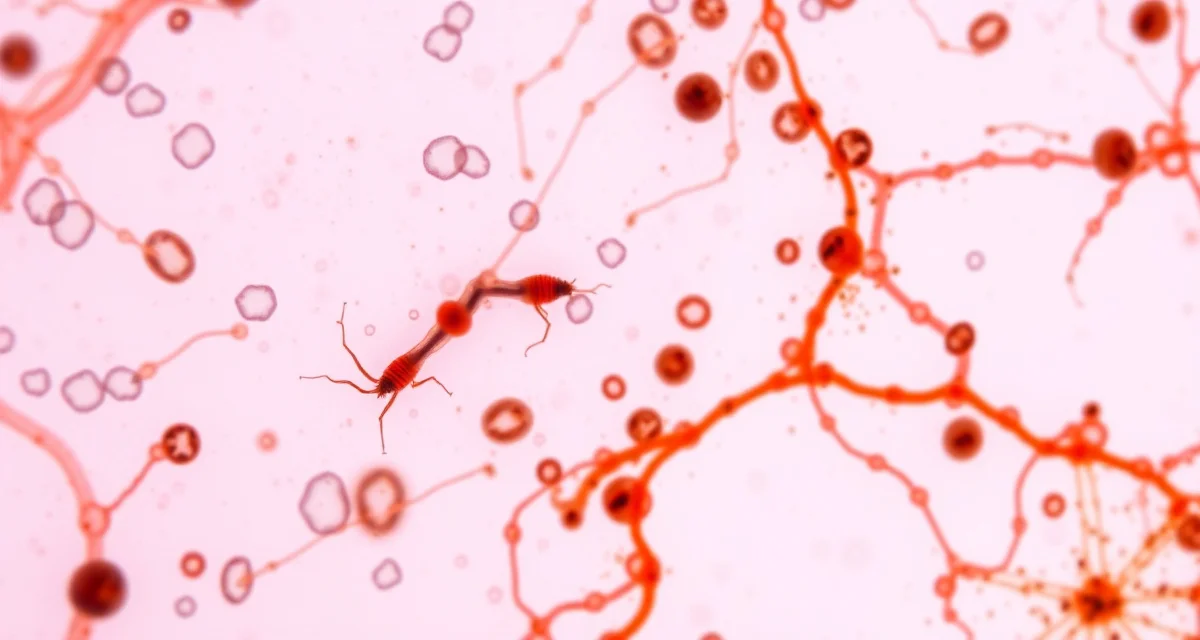
Costia and Trichodina Treatment Tracker for Koi
Trichodina establishes drug resistance when retreatment intervals are missed by even 48 hours. This isn't theoretical caution. It's what practitioners see in ponds where Trichodina persists despite multiple rounds of treatment. The parasite's reproductive rate is rapid enough that missing the retreatment window by two days allows enough new reproductive cycles to select toward drug-resistant individuals.
Water-temperature-adjusted retreatment scheduling accounts for faster parasite reproduction in warm summer water. At 28°C, what would be a 7-day retreatment interval at 18°C compresses to 3-4 days. Treating on the old schedule in summer means treating late.
TL;DR
- At 28°C, what would be a 7-day retreatment interval at 18°C compresses to 3-4 days.
- Net fish carefully into a shallow bowl of tank water 2.
- Gently press a clean microscope coverslip or glass slide against the skin surface 3.
- Draw the coverslip toward the tail to collect surface cells and any parasites 4.
- Sample both flanks and the area around the dorsal fin 5.
- Place the coverslip on a microscope slide and examine at 100-400x Gill scrape procedure: 1.
- Press the coverslip against the gill tissue 3.
Understanding Costia (Ichthyobodo necator)
Costia (taxonomically known as Ichthyobodo necator) is a small biflagellate protozoan parasite. It's one of the most common and serious koi ectoparasites, despite being too small to see without magnification.
Appearance under microscopy: Pear-shaped or elongated cell with two flagella. Attaches to the skin and gill epithelium using a holdfast organelle, feeding on the host cells. Infected tissue appears as a gray-blue velvety film.
Disease characteristics:
- Particularly dangerous in cool water (most active below 18°C, but occurs year-round)
- Very high mortality potential in young, stressed, or immunocompromised fish
- Can kill tosai within days of establishing
- Spread directly fish-to-fish and through contaminated water
Clinical signs of Costia:
- Gray-blue or milky velvety film on the skin, most visible in good light
- Excess mucus production
- Flashing behavior (rubbing against surfaces)
- Clamped fins
- Lethargy and reduced appetite
- Surface hanging in advanced cases (gill involvement)
- Pale gills visible on examination
Confirmation: Skin scrape and microscopy at 200-400x. Costia is small but moves. The biflagellate cells are visible swimming in the scrape preparation.
Understanding Trichodina
Trichodina is a ciliated protozoan parasite with a distinctive disc-shaped body visible under low-power microscopy (100-200x). It moves by rotating. This distinctive circular motion makes it identifiable even to beginners looking at a scrape.
Disease characteristics:
- Present at low levels in virtually every koi pond. It's an opportunist that takes advantage of compromised fish.
- Can affect both skin and gills
- Less acutely dangerous than Costia in healthy fish, but highly damaging to stressed, overcrowded, or immunocompromised fish
- Particularly problematic in quarantine tanks and facilities with high fish density
Clinical signs of Trichodina:
- Excess mucus production (often the most obvious sign)
- Flashing behavior
- Clamped fins
- Skin erosion in heavy infestations
- Gill involvement: labored breathing, flared opercula
- Saddling posture (fish appearing to arch the back) in severe cases
- Very similar clinical picture to Costia. Microscopy distinguishes them.
Diagnosis: Scrape First, Then Treat
Both Costia and Trichodina produce overlapping clinical signs. Treating for Trichodina with salt when the real problem is Costia (which requires more aggressive treatment) wastes critical time. Treating with formalin when a gentle salt approach would work means unnecessary chemical stress.
Skin scrape procedure:
- Net fish carefully into a shallow bowl of tank water
- Gently press a clean microscope coverslip or glass slide against the skin surface
- Draw the coverslip toward the tail to collect surface cells and any parasites
- Sample both flanks and the area around the dorsal fin
- Place the coverslip on a microscope slide and examine at 100-400x
Gill scrape procedure:
- Gently lift one gill cover
- Press the coverslip against the gill tissue
- Examine under microscopy as above
KoiQuanta's parasitic infection tracker logs scrape results with date, parasite type identified, density estimate, and the initiating treatment. When you enter a Costia or Trichodina finding, the tracker pre-fills the appropriate treatment protocol and retreatment schedule based on your current water temperature.
Treatment Options
Salt
Salt is the gentlest and most commonly used first-line treatment for both Costia and Trichodina. It works by disrupting osmotic balance in organisms that lack the osmoregulatory mechanisms that fish have.
For Trichodina: Salt at 0.3-0.5% is effective against most strains. In a pond, this is a sustained-level treatment maintained for 2-4 weeks. In a quarantine tank, easier to dose and monitor.
For Costia: Salt alone is less reliable for Costia than for Trichodina. It can suppress the parasite population but may not clear a heavy infestation. For confirmed heavy Costia, potassium permanganate or formalin is more effective.
Dose calculation: Use the salt dose calculator to calculate incremental addition from your current salt concentration to your target. Never add a full dose on top of existing salt without accounting for what's already in the water.
Potassium Permanganate (KMnO4)
The most effective treatment for Costia and Trichodina. KMnO4 is a strong oxidizer that kills surface parasites through oxidative damage.
Pond treatment dose: 2-3 ppm (mg/L)
- Add during daylight hours with aeration running
- Water turns pink-purple. This indicates active KMnO4.
- When water turns brown, the KMnO4 has been consumed (organic matter and parasites have been oxidized)
- If water turns brown within 1 hour, the organic load in your pond is high and the effective dose may have been consumed before the parasites were fully treated. Repeat at a slightly higher dose or consider a bath treatment instead.
Bath treatment: 10-20 ppm for 30-60 minutes in a separate treatment tank. More controlled and more effective than pond treatment for heavily infested fish.
Important: Adjust KMnO4 dose downward in high-organic-load water. The organic matter competes with parasites for the oxidizing agent. Use the potassium permanganate calculator for dose by pond volume.
Formalin
More powerful than KMnO4 for Costia specifically. Standard pond dose: 15-25 ppm with temperature correction.
Temperature adjustment is critical: At above 22°C, reduce dose by 20-30% per 5°C increment. Formalin removes dissolved oxygen. Warm water holds less oxygen, so the oxygen-depleting effect of formalin is more dangerous in summer. Use the formalin dose calculator for temperature-adjusted dosing.
Run maximum aeration during any formalin treatment. Have additional fresh water ready in case fish show stress.
The Retreatment Schedule
This is the part most keepers get wrong. Water temperature determines how quickly you need to retreat, and the intervals are shorter than most people expect in summer:
| Water Temperature | Trichodina Retreatment | Costia Retreatment |
|---|---|---|
| 10-15°C | 10-14 days | 10-14 days |
| 15-20°C | 7-10 days | 7-10 days |
| 20-25°C | 5-7 days | 5-7 days |
| 25-30°C | 3-5 days | 3-5 days |
At 28°C, the retreatment window for Trichodina is only 3-4 days after the initial treatment. Treatment on day 1 and then on day 7 (the "standard" interval many hobbyists use year-round) is too late in warm water. The parasite has reproduced through multiple cycles and re-established.
KoiQuanta calculates your retreatment date from the water temperature logged at your first treatment date. The retreatment alert appears on the correct day.
Minimum Treatment Cycles
Trichodina: Minimum 3 treatments at appropriate intervals. Often requires 4-5 for complete clearance in established infestations.
Costia: Minimum 3 treatments. Heavy infestations may need 4-5 cycles. Confirm clearance with a negative scrape after the final treatment.
Preventing Resistance
Trichodina resistance to chemical treatments develops when:
- Retreatment intervals are missed (allows reproduction between treatments to cycle resistant individuals)
- Sub-therapeutic doses are used (kills sensitive individuals, allows resistant ones to survive and reproduce)
- The same chemical is used cycle after cycle without rotation
Rotation strategy: If you've used KMnO4 for two treatment cycles with incomplete clearance, rotate to formalin or vice versa. Rotating chemicals disrupts any developing resistance pattern.
Full-dose treatment: Don't underestimate out of caution. Calculate accurately and deliver the full dose. Sub-therapeutic dosing is the fastest route to resistance.
Confirming Clearance
After the full treatment series:
- Run a confirmatory scrape 5-7 days after the final treatment
- No detectable parasites at 200x = confirmed clearance
- Behavioral signs (flashing, excess mucus) should have resolved by day 3-5 post-final treatment
If behavioral signs persist after 3 treatments, either the treatment is failing (resistance, wrong chemical, wrong dose) or there's a concurrent condition (bacterial infection in damaged skin) that treatment hasn't addressed.
For management of the parasitic infection tracker across all parasite types, or for calculating the specific dose for your pond volume, the pond volume calculator connects to all treatment calculators in KoiQuanta.
FAQ
How do I diagnose Costia in koi?
Costia diagnosis requires a skin or gill scrape examined under microscopy at 200-400x magnification. Clinical signs (gray-blue velvety film, excess mucus, flashing behavior) strongly suggest Costia or another ectoparasite, but they're not specific enough for confident identification. Under the microscope, Costia appears as small pear-shaped or elongated biflagellate cells, often seen moving rapidly in the scrape fluid. Both skin and gill scrapes should be taken because gill involvement changes the urgency and treatment approach. Without microscopy, KMnO4 treatment is a reasonable empirical choice when behavioral signs are present.
What is the best treatment for Trichodina?
Potassium permanganate at 2-3 ppm is the most effective first-line treatment for Trichodina. Salt at 0.3-0.5% is gentler and appropriate for mild infestations or fish in poor condition. Formalin at temperature-corrected doses is effective for heavy infestations, particularly when gill involvement is present. The retreatment schedule matters as much as the chemical choice. Trichodina that aren't re-treated at the correct interval develop resistance quickly. For ponds with a history of treatment-resistant Trichodina, rotating between KMnO4 and formalin across treatment cycles and tightening retreatment intervals in warm weather usually resolves persistence.
How many salt treatments does it take to clear Costia?
Salt alone is often insufficient for heavy Costia infestations and is not the primary treatment of choice. For mild Costia in otherwise healthy fish as a supplementary support: 3-4 salt treatments at 0.3-0.5% concentration with correct retreatment intervals can suppress the population. For anything beyond a mild infestation, potassium permanganate or formalin is the appropriate primary treatment. If salt is being used, a minimum of 3 treatments is necessary, timed to the water temperature cycle. At 25°C, retreatment every 5-7 days; at 15°C, every 10-14 days. Confirm clearance with a negative scrape before concluding treatment.
What is Costia and Trichodina Treatment Tracker for Koi?
The Costia and Trichodina Treatment Tracker for Koi is a structured tool designed to help koi keepers monitor, schedule, and record treatments for two of the most common protozoan parasites affecting koi: Costia (Ichthyobodo necator) and Trichodina. It helps track retreatment intervals adjusted for water temperature, since parasite reproduction rates vary significantly with temperature. Missing retreatment windows by even 48 hours can contribute to drug resistance, making accurate tracking essential for effective parasite control.
How much does Costia and Trichodina Treatment Tracker for Koi cost?
The Costia and Trichodina Treatment Tracker for Koi is a free resource available on KoiQuanta. There is no purchase required to access or use the tracker. It is part of KoiQuanta's broader commitment to providing practical, science-backed tools for koi health management. While the tracker itself is free, effective treatment does require purchasing appropriate antiparasitic medications from your local koi supplier or aquatic veterinarian.
How does Costia and Trichodina Treatment Tracker for Koi work?
The tracker works by logging each treatment date, water temperature, and parasite load observed through skin and gill scrapes examined under a microscope. Based on the recorded water temperature, it calculates the correct retreatment interval — for example, compressing a standard 7-day interval down to 3-4 days at 28°C. Users record scrape results after each treatment to confirm parasite clearance, ensuring the full treatment course is completed before the parasite population can recover or develop resistance.
What are the benefits of Costia and Trichodina Treatment Tracker for Koi?
Using a treatment tracker helps prevent the two most common treatment failures: missed retreatment windows and temperature-blind scheduling. Trichodina can develop drug resistance when retreatment is delayed by even 48 hours. The tracker eliminates guesswork by giving keepers a temperature-adjusted schedule to follow, a record of treatment history for veterinary consultation, and a clear endpoint based on microscopy results rather than assumption. This leads to faster parasite clearance and lower risk of recurrence.
Who needs Costia and Trichodina Treatment Tracker for Koi?
Any koi keeper managing an active Costia or Trichodina infection should use this tracker, particularly those with multiple fish, larger ponds, or a history of recurring parasite problems. It is especially valuable during warm summer months when parasite reproduction accelerates and standard retreatment schedules no longer apply. Hobbyists new to parasite treatment will benefit from the structured approach, while experienced keepers will appreciate the temperature-adjusted interval calculations and documentation for ongoing fish health records.
Sources
- Associated Koi Clubs of America (AKCA)
- Koi Organisation International (KOI)
- University of Florida IFAS Extension Aquaculture Program
- Fish Vet Group
- Water Quality Association