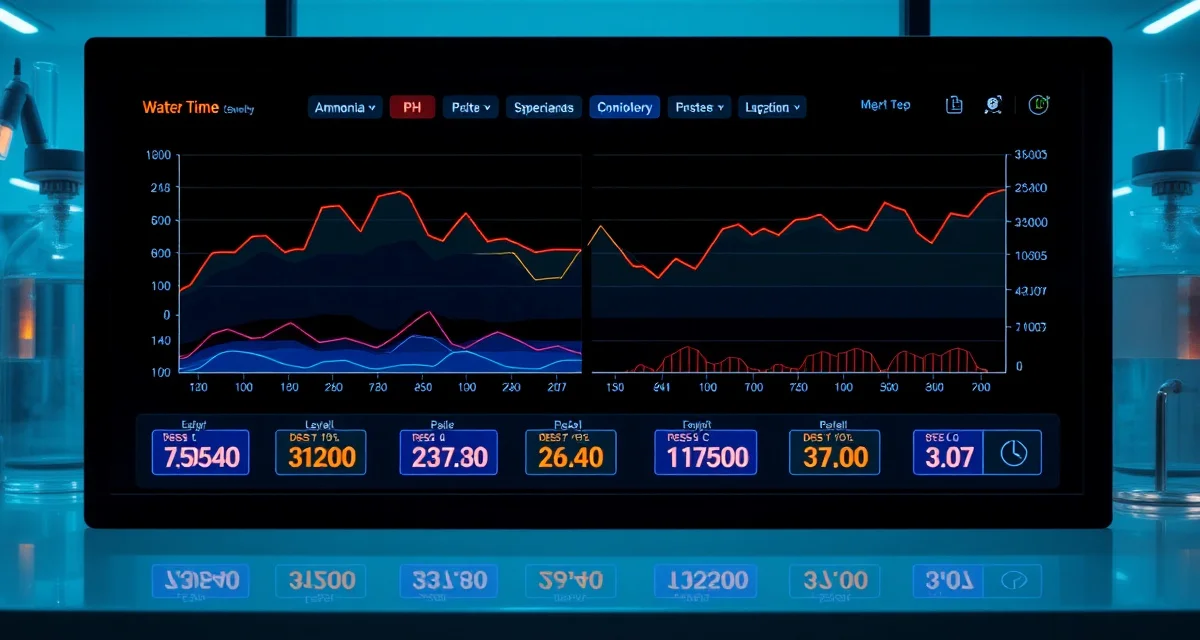
KoiQuanta Water Quality Tracker: Monitor Every Parameter That Matters
Over 70% of koi disease outbreaks are preceded by undetected water quality deterioration in the 7 days before. Not poor water quality that was obvious. Deterioration that was happening but not tracked. Ammonia creeping from 0 to 0.1 to 0.2 ppm over a week. pH dropping from 7.8 to 7.4 over the same period. Dissolved oxygen declining slightly each morning. None of these readings would trigger alarm in isolation. But as a trend across seven days, they tell you clearly that the pond is under stress, and that disease is likely coming.
KoiQuanta's trend-based alerts catch deteriorating water quality 24-48 hours before fish show clinical stress symptoms. That's the margin that separates "we caught it in time" from "why are my fish sick?"
TL;DR
- Ammonia creeping from 0 to 0.1 to 0.2 ppm over a week.
- pH dropping from 7.8 to 7.4 over the same period.
- KoiQuanta's trend-based alerts catch deteriorating water quality 24-48 hours before fish show clinical stress symptoms.
- A single ammonia reading of 0.1 ppm is not alarming.
- But if that 0.1 ppm is coming after 0.0 / 0.0 / 0.05 / 0.05 / 0.1 / 0.1 across six days, it's telling you that ammonia is rising.
- You need to act now, not after the next reading that might be 0.25 ppm.
- Any ammonia above 0 ppm indicates either insufficient biological filtration or more fish waste than the filter can handle.
The Problem With One-Off Testing
Most koi keepers test their water. The problem isn't testing frequency (though it matters). It's what happens with the results. A reading goes in a notebook. Or it doesn't go anywhere at all. The next test result is another isolated number. There's no trend. No comparison. No alert when things are moving in the wrong direction.
A single ammonia reading of 0.1 ppm is not alarming. It's borderline but manageable. But if that 0.1 ppm is coming after 0.0 / 0.0 / 0.05 / 0.05 / 0.1 / 0.1 across six days, it's telling you that ammonia is rising. The biofilter is struggling. You need to act now, not after the next reading that might be 0.25 ppm.
This is what trend monitoring reveals. And it's only possible when every result is stored, plotted, and compared against history.
What KoiQuanta Tracks
Ammonia (NH3/NH4+)
The most critical parameter for koi health. Any ammonia above 0 ppm indicates either insufficient biological filtration or more fish waste than the filter can handle. At 0.25 ppm, gill tissue damage begins. At 0.5 ppm and above, fish are in serious danger.
What the tracker shows:
- Every test result on a timeline
- 7-day and 30-day trend lines
- Alert when ammonia rises above 0.1 ppm on two consecutive tests (indicating a rising trend before it reaches danger level)
Nitrite (NO2-)
The intermediate nitrogen cycle product. Zero in a healthy, established pond. Any reading above zero in an established pond indicates the biofilter is struggling. At 0.5 ppm, methemoglobinemia begins. Fish blood loses its ability to carry oxygen.
What the tracker shows:
- Trending view that reveals whether nitrite is holding at zero or creeping up
- Correlation with ammonia. Rising nitrite after rising ammonia confirms a filter stress event.
- Alert when nitrite exceeds 0.1 ppm
Nitrate (NO3-)
The end product of the nitrogen cycle. Accumulates slowly over time. Chronic high nitrate (above 40 ppm) causes suppressed immune function, reduced growth, and impaired color. The tracker's monthly trend shows whether your water change schedule is keeping nitrate under control.
pH
A stable pH in the 7.0-8.5 range is the goal. Stability matters more than the exact value. Daily pH fluctuations of more than 0.5 units create acid-base stress.
What the tracker shows:
- AM and PM readings plotted together to reveal daily swing magnitude
- Alert when daily swing exceeds 0.5 units
- Trend showing whether pH is slowly declining (indicating KH depletion)
Dissolved Oxygen (DO)
Often the most dangerous unmonitored parameter. DO can crash to lethal levels within hours in summer without any preceding symptoms.
What the tracker shows:
- Dawn readings (the critical daily low point) charted over time
- Seasonal trend showing how DO changes with summer water temperature
- Alert at below 7 mg/L (pre-stress warning before the 6 mg/L threshold)
Temperature
Temperature affects every other parameter and determines treatment dosing, feeding schedule, parasite reproduction rates, and disease risk windows.
What the tracker shows:
- Daily temperature logging with seasonal pattern
- Overlay on disease event dates, showing what temperature the pond was at when health events occurred
- Alert for rapid temperature changes (more than 4°C in 24 hours)
Carbonate Hardness (KH)
The buffer capacity that prevents pH crashes. Often ignored until a pH crash happens. The tracker catches slow KH decline before the crisis.
The Integrated Dashboard View
The single most valuable view in KoiQuanta's water quality tracker is the integrated dashboard. All parameters plotted on the same timeline, with health events overlaid.
This view makes visible what's otherwise invisible:
- You can see that nitrate climbed steadily for 4 weeks before the Aeromonas outbreak
- You can see that dissolved oxygen was below 7 mg/L every morning for two weeks before the surface-hanging started
- You can see that pH was swinging more than 0.5 units daily in the weeks when your Kohaku's color looked dull
These correlations are the feedback loop that improves your pond management over time. Without the integrated view, you treat each health event as isolated. With it, you start to see the water quality patterns that precede problems in your specific pond.
Trend Alerts: The Feature That Changes Outcomes
KoiQuanta's trend alerts work on two criteria:
Threshold alerts: Parameter exceeds a defined threshold (ammonia above 0.1 ppm, DO below 7 mg/L, pH swing above 0.5 units). These are immediate warnings.
Trend alerts: Parameter has been moving in a concerning direction across the last 3-5 tests. A rising ammonia trend (0.0 → 0.05 → 0.1 ppm over 7 days) triggers a trend alert even though no single reading has hit the threshold. This is where KoiQuanta catches problems 24-48 hours before clinical symptoms appear.
You set the alert thresholds and the trend sensitivity. Default settings are calibrated to standard koi keeping best practice, but you can adjust based on your pond's typical behavior.
Testing Frequency Recommendations
Active season (water above 15°C):
- Ammonia: 2-3x weekly minimum; daily if any reading is above 0
- Nitrite: 2-3x weekly; daily if above 0
- pH: twice daily (morning and late afternoon) to reveal swing magnitude
- Dissolved oxygen: daily at dawn in summer; weekly in spring/fall
- Temperature: daily
- Nitrate, KH: monthly minimum
Dormancy period (below 10°C):
- Ammonia: weekly
- Nitrite: weekly
- pH: weekly
- Temperature: daily (to track the warming spring transition)
- DO: check if any fish are observed at the surface
After disease treatment:
- Ammonia and nitrite: daily for 2 weeks (many treatments disrupt biofilter activity)
- Full panel: weekly until confirmed stable
Does KoiQuanta Integrate With Digital Testing Devices?
KoiQuanta supports manual entry from any test kit or meter. For hobbyists using liquid test kits, strip tests, or handheld meters, test results are entered through the app's test logging interface.
For hobbyists using specific digital meters (some YSI, Hanna, and Apogee devices), data export from the meter can be imported to KoiQuanta in CSV format. Direct wireless integration with consumer-grade pond meters is in development.
Currently, the most reliable approach is testing with quality meters (pH pen, DO meter) and entering results into KoiQuanta immediately after testing. The logging takes 30 seconds per parameter and the historical value of that data accumulates over months and seasons.
Comparison: Water Quality Tracking Options
| Method | Trend Data | Alerts | Dose Integration | Historical Analysis |
|---|---|---|---|---|
| Paper notebook | No | No | No | Difficult |
| Spreadsheet | Manual | Manual | Manual | Possible |
| KoiLogic | None | None | None | Limited |
| KoiQuanta | Automatic | Yes | Yes | Yes |
| Commercial lab testing | No | No | No | Report only |
KoiLogic has no water quality trending. KoiQuanta plots every test result and alerts you when parameters trend toward dangerous levels. That's the meaningful functional difference between logging results and actually managing water quality.
For the specific parameter guides that support this tracking practice:
FAQ
How often should I test my koi pond water?
During the active season (water above 15°C), test ammonia and nitrite 2-3 times weekly at minimum, daily if either shows any reading above 0. Test pH twice daily (morning and late afternoon) to capture the daily fluctuation range. Check dissolved oxygen daily at dawn in summer. Test nitrate and KH monthly. After any disease treatment or water change, return to daily ammonia and nitrite testing for 2 weeks. In winter, reduce to weekly monitoring of the key parameters.
What water parameters are most important for koi health?
Ammonia (must be zero), dissolved oxygen (above 8 mg/L), and nitrite (must be zero) are the parameters most likely to cause rapid fish death. pH stability (avoid swings over 0.5 units per day) is the most important factor for long-term immune function. KH (carbonate hardness above 80 ppm) prevents pH crashes. Nitrate accumulation (keep below 40 ppm) causes chronic immune suppression. Temperature determines which diseases are active and how quickly pathogens reproduce. All matter, but ammonia, DO, and nitrite are the acute killers to monitor most vigilantly.
Does KoiQuanta integrate with digital water testing devices?
KoiQuanta currently supports manual data entry from all test kits and meters, with CSV import from selected digital meters. Direct wireless integration with consumer-grade pond monitoring devices is in development. Manual entry remains the most reliable approach. Test with quality kits or meters, enter results immediately in KoiQuanta. The 30 seconds of entry time is offset by months and seasons of trend data that transforms how you understand and manage your specific pond's behavior. Contact KoiQuanta support for the current list of directly compatible meters and import formats.
What is KoiQuanta Water Quality Tracker: Monitor Every Parameter That Matters?
KoiQuanta Water Quality Tracker is a trend-based monitoring tool designed for koi pond keepers. Rather than evaluating individual water readings in isolation, it tracks parameters like ammonia, pH, and dissolved oxygen over time to detect deteriorating conditions before they become visible problems. Over 70% of koi disease outbreaks are preceded by gradual, undetected water quality decline—KoiQuanta is built to catch that drift early.
How much does KoiQuanta Water Quality Tracker: Monitor Every Parameter That Matters cost?
Pricing details for KoiQuanta Water Quality Tracker are available directly on the KoiQuanta website. The platform is designed to serve both hobbyist and serious koi keepers, so plan options are structured around pond size and monitoring needs. Visiting KoiQuanta.com will give you the most current and accurate pricing information for your specific setup.
How does KoiQuanta Water Quality Tracker: Monitor Every Parameter That Matters work?
KoiQuanta works by logging your water quality readings over time and analyzing trends across parameters like ammonia, pH, nitrite, nitrate, and dissolved oxygen. When readings show a consistent directional shift—even within technically safe ranges—the system triggers alerts 24–48 hours before fish show clinical stress symptoms, giving you a meaningful window to intervene before disease takes hold.
What are the benefits of KoiQuanta Water Quality Tracker: Monitor Every Parameter That Matters?
The core benefit is early warning. A single ammonia reading of 0.1 ppm isn't alarming—but six days of readings showing a steady climb from 0.0 to 0.1 ppm signals a real problem. KoiQuanta surfaces that pattern automatically, turning raw data into actionable alerts. This closes the gap between 'we caught it in time' and 'why are my fish sick?', protecting both fish health and your investment.
Who needs KoiQuanta Water Quality Tracker: Monitor Every Parameter That Matters?
KoiQuanta is built for any koi keeper who wants to move from reactive to proactive pond management. Whether you're maintaining a backyard hobby pond or a serious koi collection, if you're currently testing water without tracking trends over time, you're missing the most important signal. It's especially valuable for keepers who have experienced unexplained disease outbreaks or whose fish appear healthy until they suddenly aren't.
Sources
- Associated Koi Clubs of America (AKCA)
- Koi Organisation International (KOI)
- University of Florida IFAS Extension Aquaculture Program
- Fish Vet Group
- Water Quality Association