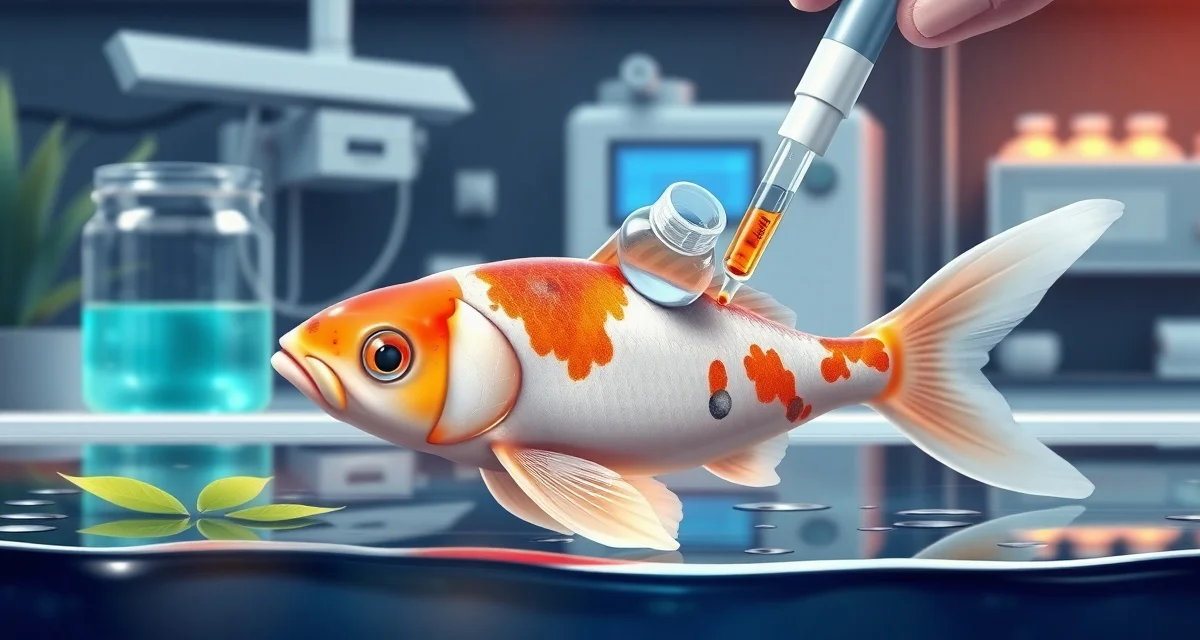
Koi Bacterial Infection Treatment Tracker: Dose, Log, Recover
Undertreated bacterial infections relapse in over 50% of cases when treatment duration is cut short. The fish looks better. The wound is closing. You stop the antibiotic treatment three days early because things seem fine. And two weeks later the lesion is back, worse than before, with a bacterial population that's now had an opportunity to develop resistance to your first choice of antibiotic.
KoiQuanta's antibiotic dose calculator accounts for fish weight and pond volume so you hit therapeutic levels without overdosing. The follow-up schedule keeps you on track for the full treatment duration, not just until the fish looks better.
TL;DR
- An early ulcer (1-2cm, not penetrating to muscle) treated promptly typically heals completely in 3-4 weeks.
- A deep muscle-penetrating ulcer has a 60% mortality rate even with consistent treatment.
- Injectable ### Topical Treatment (Surface Lesions) For lesions that haven't penetrated deep tissue: 1.
- Net the fish carefully and place in a clean, aerated bowl with pond water 2.
- Use a soft cloth or damp hands to blot the lesion area dry (do not rub) 3.
- Apply antiseptic: Povidone-iodine solution, Chloramine-T solution, or commercial wound preparation 4.
- For deeper surface lesions, debride necrotic tissue gently with a cotton swab and apply a wound protectant (Orabase or Vaseline after antiseptic) to prevent continued water entry 5.
Recognizing Koi Bacterial Infection
Bacterial infections in koi are usually opportunistic. They follow an entry point. Something compromises the skin barrier first: a parasite lesion, a physical injury, a spawn wound, or chronic stress-related immune suppression. Then Aeromonas hydrophila, Pseudomonas fluorescens, or another environmental bacterium establishes in the compromised tissue.
Early signs of bacterial infection:
- Redness or hemorrhage at the base of fins, around the mouth, or at wound sites
- Small raised areas or pinpoint red spots on the body surface
- Subtle change in behavior: slight reduction in feeding enthusiasm, swimming slightly slower than usual
Progressive signs:
- Ulcers: Open sores in the body surface with a red, ulcerated center and white-gray necrotic margin. The depth and size increase if untreated.
- Scale lifting around lesion sites
- Fin erosion with red margin (fin rot)
- Increased lethargy and appetite loss
- Increased distance from other fish (sick fish often isolate)
Severe infection signs:
- Deep ulcers penetrating into muscle tissue (visible muscle bundles at wound base)
- Hemorrhagic lesions spreading across the body
- Dropsy signs (swollen body, raised scales like a pinecone)
- Exophthalmia (pop-eye): one or both eyes bulging from bacterial infection in the orbital tissue
- Loss of balance or buoyancy
The distinction between early-caught and late-caught bacterial infection matters. An early ulcer (1-2cm, not penetrating to muscle) treated promptly typically heals completely in 3-4 weeks. A deep muscle-penetrating ulcer has a 60% mortality rate even with consistent treatment.
Common Koi Bacterial Pathogens
Aeromonas hydrophila
The most common cause of koi bacterial infections. A gram-negative environmental bacterium that's present in virtually all pond water and causes disease only when fish are compromised. Most commonly produces ulcers (hole-in-the-side disease), hemorrhagic septicemia, and fin rot.
Treatment: Responds to appropriate antibiotics. First-line choices include enrofloxacin (injectable is most reliable) and oxytetracycline (bath or medicated food). Antibiotic resistance in Aeromonas is common in ponds that have had repeated antibiotic exposure. Culture and sensitivity testing is the gold standard for selecting the right antibiotic.
Pseudomonas fluorescens
Produces very similar lesion patterns to Aeromonas. Often co-infects with Aeromonas. Can be more resistant to treatment than Aeromonas in some cases. Responds to fluoroquinolones (enrofloxacin).
Columnaris (Flexibacter/Flavobacterium columnare)
Distinctive "cottonmouth" appearance at the mouth and head, with erosion of the head and mouth tissues. Can also affect gills and skin. Often confused with fungal infection because of its appearance. Does not respond to antifungal treatment.
Treatment: Responds to oxytetracycline, some sulfonamides, and certain disinfectant baths.
Aeromonas salmonicida (Furunculosis)
Causes furunculosis. Boil-like swellings under the skin that rupture to form large ulcers. More commonly associated with salmonids but occurs in koi, especially in stressed fish in cooler water. Responds to appropriate antibiotics when caught early.
Treatment Approach: Topical vs. Bath vs. Injectable
Topical Treatment (Surface Lesions)
For lesions that haven't penetrated deep tissue:
- Net the fish carefully and place in a clean, aerated bowl with pond water
- Use a soft cloth or damp hands to blot the lesion area dry (do not rub)
- Apply antiseptic: Povidone-iodine solution, Chloramine-T solution, or commercial wound preparation
- For deeper surface lesions, debride necrotic tissue gently with a cotton swab and apply a wound protectant (Orabase or Vaseline after antiseptic) to prevent continued water entry
- Return fish to water immediately
Topical treatment alone is appropriate for:
- Very superficial lesions (skin surface only, no subcutaneous involvement)
- As a supplement to systemic antibiotic treatment
Topical treatment is NOT sufficient for:
- Lesions penetrating to muscle
- Multiple lesions on one fish
- Any internal signs (swelling, behavioral change, appetite loss)
Bath Treatment (Antibiotic)
Antibiotic baths work by exposing the fish to dissolved antibiotic at a concentration that penetrates the gill surface and achieves therapeutic blood levels. Reliability is lower than injection because absorption varies and depends on gill health, water temperature, and individual fish condition.
Antibiotic bath options (where legal in your jurisdiction):
- Oxytetracycline (OTC): 50-75 mg/L in a static bath for 1 hour, repeated daily for 10 days. Or as long-term bath at 10-20 mg/L for 24 hours, repeated every 48 hours.
- Enrofloxacin: 5-10 mg/L bath, 1 hour daily for 5-7 days.
KoiQuanta's antibiotic dose calculator accounts for fish weight and pond volume to calculate the correct therapeutic concentration. Underdosing (giving too little) promotes resistance development. Overdosing causes tissue damage. The calculator gives you the correct amount.
Injectable Antibiotics (Most Effective)
Intramuscular or intraperitoneal antibiotic injection provides the most reliable drug delivery in koi. It bypasses absorption variability and ensures therapeutic blood levels regardless of gill condition.
Injection is the treatment of choice for:
- Deep ulcers
- Internal infections
- Fish not responding to bath treatment
- Fish with compromised gills that limit bath antibiotic absorption
Practical challenge: most hobbyists are not comfortable injecting fish, and some jurisdictions require veterinary prescriptions for certain antibiotics. Find an aquatic veterinarian and discuss this option before you need it urgently at 9pm on a Saturday.
Common injectable choices:
- Enrofloxacin (Baytril): 5-10 mg/kg intramuscularly every 48 hours for 7-10 treatments
- Oxytetracycline: 20 mg/kg intramuscularly every 24 hours for 7-10 treatments
Daily Treatment Protocol for Ulcers
This is the ulcer treatment program daily protocol:
Day 1: Catch and sedate fish if needed (clove oil at appropriate dose). Clean wound with povidone-iodine. Debride necrotic tissue if present. Apply wound protectant. Begin systemic antibiotic (injectable preferred for moderate to serious lesions). Log wound measurement and photograph.
Days 2-7: Daily topical treatment: clean, antiseptic, wound protectant. Continue systemic antibiotic per schedule. Photograph every 48 hours. Log wound measurements for trend tracking.
Day 7 assessment: Is the wound contracting? Healthy new tissue forming at the margin? If yes, continue the protocol. If not improving, culture and sensitivity testing is warranted before switching to a different antibiotic.
Days 8-21: Continue until complete re-epithelialization (skin closure over the wound). Do not stop treatment when the surface appears closed. Continue 3-5 days after visual closure to prevent relapse.
KoiQuanta's bacterial infection tracker logs each daily wound treatment and photographs with timestamp, generating a visual healing record that's useful for vet consultations and insurance.
Antibiotic Resistance: A Real Concern
Aeromonas bacteria in ponds that have received repeated antibiotic treatments develop resistance. Using the wrong antibiotic, or using the right antibiotic at a dose too low to be therapeutic, selects for resistant bacteria.
If a bacterial infection doesn't respond to your first-choice antibiotic within 5-7 days of consistent treatment, don't just add more or switch to another antibiotic without guidance. Get a culture and sensitivity test from the lesion. Your aquatic vet can submit a swab to a lab that will grow the bacteria and test which antibiotics kill it. This takes 3-5 days but gives you the right answer instead of a guess.
Water Quality During Bacterial Treatment
Improving water quality during bacterial treatment improves outcomes. The bacteria are opportunistic. They're in the pond already and can only establish when fish are compromised. Remove the compromise:
- Do a 20-25% water change immediately when bacterial infection is identified
- Reduce feeding to prevent ammonia spikes during treatment
- Salt at 0.2-0.3% supports osmoregulation and mucus coat healing
- Ensure dissolved oxygen is above 8 mg/L
- If the cause of immune suppression was water quality (chronic high ammonia, high nitrate), fix the cause
The koi disease identification guide covers differential diagnosis between bacterial infection and other conditions that can look similar.
Related Articles
- Costia and Trichodina Treatment Tracker for Koi
- Formalin Dose Calculator for Koi: Safe Treatment Every Time
FAQ
How do I know if my koi has a bacterial infection?
Look for redness and lesions on the body surface, particularly at the base of fins, around the mouth, and at any prior injury sites. Early bacterial infection often shows as a small reddened area or a shallow wound with a necrotic (gray-white) center. As it progresses, the lesion deepens and grows. Behavioral signs include reduced appetite, slight lethargy, and isolation from other fish. Any fish with a visible open wound, regardless of size, should be evaluated for bacterial infection. Fin erosion with a red margin is classic fin rot. Multiple lesions on one fish, or spreading lesions that grow between daily checks, indicate progressive infection requiring systemic treatment.
What antibiotic is used to treat koi bacterial infections?
The most commonly used antibiotics for koi bacterial infections include enrofloxacin (Baytril), oxytetracycline, and in some cases amoxicillin or trimethoprim-sulfamethoxazole. Enrofloxacin injectable is generally regarded as the most reliable first-line treatment for serious infections because it's effective against both Aeromonas and Pseudomonas and can be dosed precisely by fish weight. Antibiotic availability varies by country. Many are prescription-only in the UK, US, and EU. Culture and sensitivity testing from the lesion is the gold standard for selecting the right antibiotic, particularly for infections that haven't responded to first-line treatment.
How long does bacterial infection treatment take?
Mild surface lesions with prompt treatment typically resolve in 3-4 weeks. Moderate ulcers penetrating subcutaneous tissue take 4-6 weeks for full healing. Deep muscle-penetrating ulcers can take 8-12 weeks if the fish survives. The most common mistake is stopping treatment when the fish looks better or the surface of the wound appears closed. Bacterial infections relapse in over 50% of cases when treatment is stopped prematurely. Continue topical treatment for at least 3-5 days after the wound surface appears closed, and complete the full systemic antibiotic course regardless of visual appearance.
What is Koi Bacterial Infection Treatment Tracker: Dose, Log, Recover?
KoiQuanta's Koi Bacterial Infection Treatment Tracker is a structured tool that helps pond keepers manage antibiotic treatment for bacterial infections in koi. It calculates correct dosing based on fish weight and pond volume, provides a follow-up schedule, and helps you log treatment progress from initial diagnosis through full recovery — preventing the relapse that occurs in over 50% of cases when treatment is stopped too early.
How much does Koi Bacterial Infection Treatment Tracker: Dose, Log, Recover cost?
The Koi Bacterial Infection Treatment Tracker on KoiQuanta is a free resource. There is no subscription or purchase required to access the dose calculator, logging framework, or treatment schedule guides. KoiQuanta provides these tools to help hobbyists and pond keepers achieve better outcomes without the cost of repeated veterinary consultations for every bacterial outbreak.
How does Koi Bacterial Infection Treatment Tracker: Dose, Log, Recover work?
The tracker works in three steps: dose, log, and recover. First, you input your fish's weight and pond volume to calculate a therapeutic antibiotic dose. Then you log each treatment session, wound appearance, and fish behavior daily. Finally, the follow-up schedule keeps you on track for the full treatment duration — typically 3–4 weeks for surface ulcers — not just until symptoms appear to resolve.
What are the benefits of Koi Bacterial Infection Treatment Tracker: Dose, Log, Recover?
The primary benefit is preventing relapse and antibiotic resistance. Stopping treatment early because a koi 'looks better' allows surviving bacteria to repopulate and develop resistance. The tracker also removes guesswork from dosing, reducing the risk of underdosing or overdosing. For deep ulcers with 60% mortality risk, consistent treatment tracking meaningfully improves survival odds by ensuring therapeutic levels are maintained throughout recovery.
Who needs Koi Bacterial Infection Treatment Tracker: Dose, Log, Recover?
Any koi keeper managing a bacterial infection needs this tracker — from hobbyists with backyard ponds to experienced aquaculturists. It is especially valuable for those treating ulcers, Aeromonas, or Pseudomonas infections without direct veterinary supervision. If you have ever stopped antibiotic treatment early because your fish seemed fine, or struggled to calculate safe doses for your pond volume, this tool was built specifically for you.
Sources
- Associated Koi Clubs of America (AKCA)
- Koi Organisation International (KOI)
- University of Florida IFAS Extension Aquaculture Program
- Fish Vet Group
- Water Quality Association