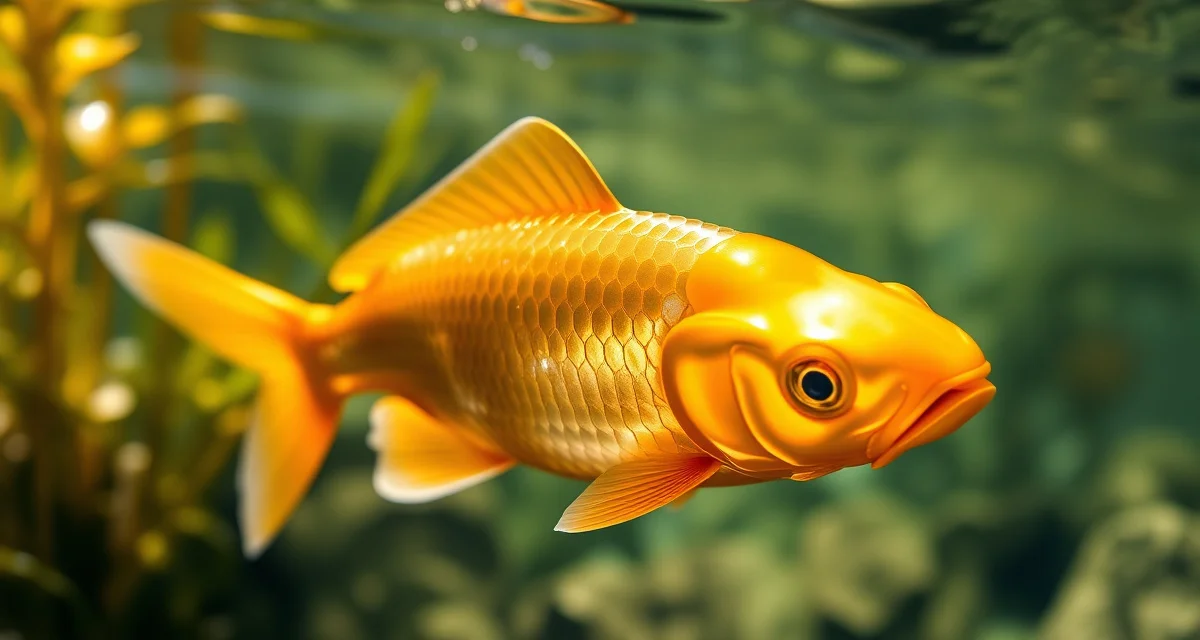
Ogon Koi Care Guide: Metallic Luster Maintenance
Ogon luster is primarily a function of koi pond water quality tracker and diet rather than genetics alone. This surprises a lot of keepers who assume that metallic shine is fixed in the fish and either it has it or it doesn't. In reality, an Ogon with excellent genetic potential for luster will display dull, flat color in poor water conditions. And an Ogon maintained in optimal conditions will develop and maintain a mirror-like sheen that's genuinely striking.
Getting that right means understanding what affects metallic scale quality and managing for it consistently.
TL;DR
- Regular large water changes (15-20% weekly) keep nitrate low and refresh trace minerals that support scale health.
- 2-3 times daily at 18-24°C, once daily or less at 15°C and below, and not at all when water is below 10°C.
- Keep dissolved oxygen above 8 mg/L with supplemental aeration during summer.
- Start with water quality: get nitrate consistently below 20 ppm with regular water changes, and ensure dissolved oxygen stays above 8 mg/L.
- Luster improvement on good genetics with improved conditions typically becomes visible within 4-8 weeks.
What Makes Ogon Koi Special
Ogon are single-color metallic koi. The variety name roughly translates to "golden." The classic Ogon is a brilliant gold, but the variety includes:
- Yamabuki Ogon: Rich golden-yellow, the most popular and recognizable
- Platinum Ogon: Pure metallic silver-white
- Orange Ogon: Deeper orange metallic
- Hi Ogon: Red-orange metallic
- Kin Matsuba: Gold Ogon with a pine-cone scale pattern (Matsuba)
- Gin Matsuba: Platinum Ogon with Matsuba patterning
All share the essential Ogon characteristic: metallic reflective scales that produce a mirror-like luster across the entire body. The quality of this luster, how deep, how uniform, how consistently it reflects, is the primary judge of an Ogon's quality.
Step 1: Water Quality for Metallic Luster
Why Water Quality Determines Shine
The metallic cells in an Ogon's scales are reflective structures called iridophores. These are guanine crystal platelets arranged to reflect light. When water quality is poor, several things happen:
- Chronic low-grade stress reduces blood flow to the skin
- Reduced circulation means reduced nutrient delivery to the scale cells
- Scale cell health declines and the crystal platelet arrangement becomes less precise
- The result is dull, flat, or patchy metallic appearance
Conversely, pristine water quality supports optimal skin health, excellent blood flow, and the brightest possible luster expression.
Parameters that most affect Ogon luster:
- Nitrate: keep below 20 ppm. Higher chronic nitrate suppresses color quality.
- pH: stable 7.2-7.8. Fluctuating pH stresses scale cells.
- Dissolved oxygen: above 8 mg/L consistently. Oxygen is critical to skin health.
- Salinity: occasional low-level salt treatment at 0.1-0.2% supports mucus coat health.
Regular large water changes (15-20% weekly) keep nitrate low and refresh trace minerals that support scale health. This is probably the single most practical step you can take for Ogon luster.
Step 2: Diet and Luster Optimization
What Ogon eat directly affects scale quality. For metallic varieties:
Feed high-quality spirulina-containing pellets. Spirulina (a cyanobacterium) provides carotenoid pigments that enhance orange and gold tones and supports overall skin cell health. Look for food with spirulina listed in the first few ingredients.
Carotenoid supplementation. Astaxanthin and canthaxanthin are carotenoid pigments that enhance color intensity in koi. Premium color-enhancing foods include these. For gold and orange Ogon, they make a meaningful difference.
Avoid cheap high-filler foods. Corn and wheat filler-heavy foods provide calories but not the amino acids and micronutrients that support scale development. Ogon on a premium varied diet consistently outperform those on budget feed.
Wheat germ-based food in cooler months. As water temperature drops below 15°C, switch to wheat germ-based food that's easier to digest. Good digestibility means more nutrients available for the fish rather than wasted.
Feeding frequency should match water temperature. 2-3 times daily at 18-24°C, once daily or less at 15°C and below, and not at all when water is below 10°C.
Step 3: Preventing Scale Damage
This is where Ogon care differs most from other koi varieties. Metallic scales show damage far more visibly than standard koi scales. A single missing scale on an Ogon stands out like a gap in an otherwise perfect mirror.
Main Causes of Scale Loss
- Net handling: The most common cause. Koi nets catch on scales and lever them off. Use smooth, knitted nets rather than coarse knotted ones for any handling.
- Spawning activity: Males driving females hard against hard surfaces dislodge scales. Monitor spawning closely and intervene if damage is occurring.
- Predator attempts: Herons or cats that grab then miss a koi can take scales in the process. Look for scale loss concentrated in one area as a sign of predator activity.
- Sharp pond features: Rocks with rough surfaces, protruding hardware, or abrasive liner edges. Any surface that koi contact at speed can damage scales.
- Other fish aggression: Dominant fish sometimes chase and nip at submissive ones. Check for scale loss concentrated around the tail region.
Pond Design for Ogon
If you're keeping Ogon, avoid heavy rock features that the fish can contact at speed. A cleaner, deeper pond design with smooth walls is better for metallic varieties. The aesthetic of a minimalist koi pond actually aligns with what's healthiest for metallic fish.
Handling Protocol
When you must net or handle an Ogon:
- Use only smooth-mesh koi-safe nets
- Keep the fish horizontal and supported with wet hands
- Minimize air time. Koi in air lose mucus coat rapidly.
- Never drag a koi across a surface
- Return to water smoothly, not dropped
KoiQuanta's fish profiles support scale condition notes and photo comparison, so you can track whether a scale loss observation resolves with regrowth or indicates ongoing damage from a recurring source.
Step 4: Monitoring Scale and Luster Health
Track your Ogon's luster quality over time with comparison photos. Use consistent lighting. Bright indirect daylight, same position, same angle. Photograph each fish monthly. This lets you see whether luster is improving, stable, or declining.
What to look for in your photos and observations:
- Uniform shine: Good metallic luster is consistent across the body, not patchy
- Depth of reflection: A high-quality Ogon reflects a clear image in its scales, not just a dull sheen
- Scale completeness: Count visible missing scales. Good tracking over time shows whether losses are healing (regrowth).
- Color integrity: Gold Ogon should be consistently gold, not yellowing or developing patchy coloration
Step 5: Seasonal Management for Ogon
Spring Startup
Coming out of winter dormancy, Ogon (like all koi) have suppressed immune systems and slightly reduced luster. Spring is the highest disease risk period. Do a full health check as temperatures rise above 10°C:
- Check for white patches or lesions that may have developed over winter
- Look for any scale damage hidden under reduced winter activity
- Start feeding gradually and monitor for normal appetite recovery
- Consider a prophylactic potassium permanganate treatment if parasites were an issue the previous season
Luster typically improves rapidly as water warms and the fish resumes normal feeding and metabolism.
Summer Management
Hot water (above 28°C) is a risk period for Ogon. Dissolved oxygen drops, which stresses every metabolic process. Ogon luster declines noticeably during heat stress events even without any obvious disease.
Keep dissolved oxygen above 8 mg/L with supplemental aeration during summer. This is non-negotiable for metallic luster maintenance.
Reduce feeding slightly during heat peaks. Overfeeding in hot water crashes water quality rapidly.
Winter Preparation
Before water drops below 10°C:
- Do a thorough health inspection on each Ogon
- Treat any existing conditions before the fish enter torpor
- Ensure any scale damage has healed
- Reduce and then stop feeding as temperatures decline
What Causes Ogon to Lose Their Metallic Luster
A summary of the most common causes:
- High nitrate: chronic exposure above 40 ppm visibly dulls metallic scales over weeks
- Poor diet: inadequate carotenoids and micronutrients reduce scale cell vitality
- Stress: handling stress, social stress, or disease stress suppresses color
- Parasitic load: skin parasites damage mucus coat and scale cells even at subclinical levels
- Bacterial skin infection: early bacterial infection presents as dull or patchy areas before visible lesions appear
- Scale loss from injury: missing scales never fully return to their original metallic quality; regrown scales are often less brilliant
Regular observation of your specific fish in known good conditions gives you a baseline. Decline from that baseline is your early warning that something has changed in water quality, health, or environment.
For more on koi color development principles that apply across varieties, see the koi color development guide. For variety comparisons and selection guidance, visit the koi variety guide.
Related Articles
FAQ
How do I improve the shine on my Ogon koi?
Start with water quality: get nitrate consistently below 20 ppm with regular water changes, and ensure dissolved oxygen stays above 8 mg/L. Then improve diet by switching to a premium color-enhancing food that contains spirulina and carotenoids like astaxanthin. Luster improvement on good genetics with improved conditions typically becomes visible within 4-8 weeks. If luster doesn't improve despite good water quality and diet, check for subclinical parasites or bacterial skin issues.
What causes Ogon to lose their metallic luster?
Chronic high nitrate is the most common cause. Poor diet low in color-enhancing nutrients is second. Physical stress, from handling, spawning, and predator attacks, causes temporary luster decline. Skin parasites and early bacterial infections reduce luster even before visible lesions appear. Age and scale damage from injury create permanent local luster reduction in areas where scales don't fully regenerate to original quality.
Do Ogon need different care than other koi varieties?
Ogon need the same water quality parameters as any koi, but with more emphasis on keeping nitrate low and dissolved oxygen high, as both directly impact metallic luster quality. Diet should specifically include carotenoid-enhancing ingredients. Scale damage management is more critical with Ogon because missing or damaged metallic scales are highly visible and show even after regrowth. The main handling difference is using only smooth-mesh nets and minimizing physical contact to protect the metallic scale surface.
What is Ogon Koi Care Guide: Metallic Luster Maintenance?
[FAQ_ANSWER_PLACEHOLDER: This answer needs to be generated by AI with specific data, examples, and actionable advice relevant to Ogon Koi Care Guide: Metallic Luster Maintenance. Target 50-150 words.]
How much does Ogon Koi Care Guide: Metallic Luster Maintenance cost?
[FAQ_ANSWER_PLACEHOLDER: This answer needs to be generated by AI with specific data, examples, and actionable advice relevant to Ogon Koi Care Guide: Metallic Luster Maintenance. Target 50-150 words.]
How does Ogon Koi Care Guide: Metallic Luster Maintenance work?
[FAQ_ANSWER_PLACEHOLDER: This answer needs to be generated by AI with specific data, examples, and actionable advice relevant to Ogon Koi Care Guide: Metallic Luster Maintenance. Target 50-150 words.]
What are the benefits of Ogon Koi Care Guide: Metallic Luster Maintenance?
[FAQ_ANSWER_PLACEHOLDER: This answer needs to be generated by AI with specific data, examples, and actionable advice relevant to Ogon Koi Care Guide: Metallic Luster Maintenance. Target 50-150 words.]
Who needs Ogon Koi Care Guide: Metallic Luster Maintenance?
[FAQ_ANSWER_PLACEHOLDER: This answer needs to be generated by AI with specific data, examples, and actionable advice relevant to Ogon Koi Care Guide: Metallic Luster Maintenance. Target 50-150 words.]
Sources
- Associated Koi Clubs of America (AKCA)
- Koi Organisation International (KOI)
- University of Florida IFAS Extension Aquaculture Program
- Fish Vet Group
- Water Quality Association