Asagi Koi Care Guide: Blue Scale Network and Red Markings
Asagi hi tends to rise with age. This is one of the most important things to understand about the variety. A young Asagi with hi only at the base of the pectoral fins and along the lower flank may develop rising hi that spreads up the body over years. Whether this is a positive or negative development depends on the variety standard and the quality of the hi itself. It's an observation pattern that's only visible when you have consistent photographic records across seasons.
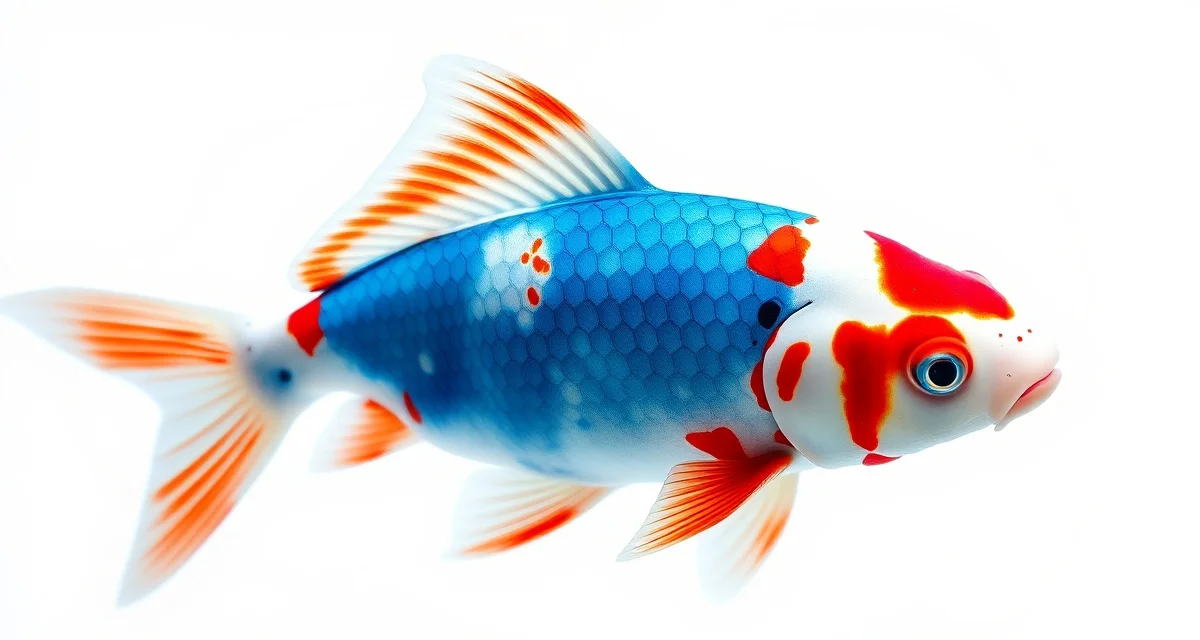
Asagi are one of the oldest koi varieties. The combination of blue reticulated scales and red (hi) markings makes them immediately recognizable and genuinely unique in the koi world.
TL;DR
- Keep nitrate below 20 ppm if blue depth and quality matters to you.
- Soft water (GH below 100 ppm) can affect scale integrity over time.
- Regular water changes of 15-20% weekly are the most reliable way to keep nitrate low and maintain the water quality that supports Asagi color depth.
- For show-season preparation, switch to color-enhancing formulas 8-12 weeks before assessment.
- Do a thorough visual inspection at water temperatures of 12-15°C and again at 18-20°C.
- Zero ammonia, zero nitrite, stable pH 7.0-8.5, dissolved oxygen above 8 mg/L.
- Keep extra emphasis on maintaining nitrate below 20 ppm to preserve blue coloration depth.
Understanding the Asagi Variety
Asagi display:
- Blue-gray reticulated dorsal scale pattern: Each scale has a darker edge creating a net-like appearance across the back
- Hi (red/orange) on the cheeks, belly, and base of fins: Most pronounced at the pectoral fins and flanks
- Pale blue or white head: Free of pattern in ideal specimens
- Clean shiroji: The blue area should be consistent in depth and clarity
The reticulated scale pattern is the defining characteristic. Scale clarity, how distinct and regular the net pattern appears, is a primary quality indicator. Muddy, inconsistent, or faded scale reticulation reduces the value and visual appeal of an Asagi.
Shusui is the Doitsu (German-scaled) form of Asagi. Instead of a full reticulated scale pattern, Shusui has scales only along the lateral line and a single row along the dorsal edge. The blue dorsal coloration and hi markings are present, but the scale pattern is dramatically simplified. Shusui tend to be more popular with hobbyists who prefer a cleaner aesthetic; Asagi remain more popular in the show world for traditionalists.
Water Quality for Asagi Pattern Maintenance
The blue coloration in Asagi comes from guanine deposits in the scale structure and blue-reflecting chromatophores. Like all koi color, it's responsive to water quality.
High nitrate is the enemy of Asagi blue. Chronic nitrate above 40 ppm causes the blue coloration to fade to a more gray-brown color, losing the distinctive blue quality that defines the variety. Keep nitrate below 20 ppm if blue depth and quality matters to you.
Dissolved oxygen above 8 mg/L supports skin health and the circulation that delivers nutrients to the pigment cells in the scale structure.
pH stability matters for scale clarity. Fluctuating pH causes stress-related melanin increases that can muddy the blue scale pattern.
Water hardness also plays a role in scale development. Soft water (GH below 100 ppm) can affect scale integrity over time. Aim for GH 100-200 ppm.
Regular water changes of 15-20% weekly are the most reliable way to keep nitrate low and maintain the water quality that supports Asagi color depth.
Feeding Asagi Koi
Asagi don't have specific dietary requirements different from other koi for basic health maintenance. But diet does influence coloration:
For blue depth: Foods containing astaxanthin or natural algae components can support chromatophore function. Look for premium koi foods with spirulina as a top ingredient.
Carotenoids for hi quality: The red hi markings in Asagi are carotenoid pigments. Diets rich in carotenoids (natural shrimp, spirulina, color-enhancing formula) support deeper, more saturated hi color.
Avoid heavy high-protein growth feeds during hi-sensitive periods. Some keepers find that growth-formula foods push general body condition but can dilute hi saturation temporarily. For show-season preparation, switch to color-enhancing formulas 8-12 weeks before assessment.
Temperature-appropriate feeding:
- 20-25°C: 2-3 times daily, premium formula
- 15-20°C: once daily, wheat germ preferred
- Below 12°C: minimal to no feeding
Monitoring Hi Development in Asagi
This is the distinctive management challenge with Asagi. The hi is not static. It develops and often rises with age. Understanding the pattern for your specific fish requires longitudinal tracking.
KoiQuanta's Asagi profiles track hi development and scale network clarity with photographic comparison, giving you a visual record of how your fish changes season to season.
What "rising hi" means: Hi typically starts at the lateral line and belly, and in many Asagi it migrates upward onto the sides as the fish ages. In young Asagi, hi is often limited to the lower body and fin bases. This is appropriate and desirable. In older fish, hi that has risen substantially onto the back disrupts the blue scale pattern and is generally considered a flaw in show assessment.
Monitoring protocol:
- Photograph each Asagi from directly above and from the side, same time of year
- Note the highest point of hi on the body each season
- Compare year-over-year to track whether hi is stable, rising, or receding seasonally (some seasonal variation is normal with temperature changes)
Seasonal hi variation: Hi tends to appear more saturated and higher on the body in warm water. In cool water, it often recedes slightly. This is normal. Concern is warranted when hi rises permanently to higher body points over multiple years.
Scale Pattern Maintenance
The reticulated blue scale network is maintenance-sensitive. Anything that damages scales affects the visual pattern:
Preventing scale damage:
- Smooth pond surfaces and liner edges
- Appropriate net type (smooth mesh, not knotted)
- Careful handling (support the fish horizontally, wet hands, minimal air time)
- Parasite monitoring (skin and gill parasites cause flashing that results in scale loss from rubbing)
Monitoring scale network clarity:
- Check for clouding or inconsistency in the blue pattern
- Cloudy or muddy scale appearance can indicate bacterial skin infection even without obvious lesions
- Compare photographs over time. Early changes in scale clarity often precede visible disease.
Common Health Issues in Asagi
Asagi are generally hardy but share common koi health vulnerabilities:
Spring disease susceptibility: Like all koi, Asagi are most vulnerable to parasites and bacterial infections as water warms in spring. Do a thorough visual inspection at water temperatures of 12-15°C and again at 18-20°C.
Ulcers and bacterial skin infection: The dense scale pattern can make early bacterial lesions harder to spot in Asagi than in white-based fish like Kohaku. Check under the scale edges for early redness or lifting.
Gill parasites: Gill flukes are a common issue and often appear first as behavioral changes. Increased surface activity, labored breathing. Regular monitoring is the only defense.
For symptoms, differential diagnosis support, and health tracking, KoiQuanta's variety-specific profiles track hi and scale observations linked to health events.
More detail on color development principles for Asagi can be found in the koi color development guide. For comparing Asagi to other varieties, see the koi variety guide.
Related Articles
- Complete Koi Care Guide: Everything You Need to Know
- Koi Ulcer Disease: Complete Treatment and Wound Care Guide
FAQ
How do I care for Asagi koi?
Asagi need the same fundamental water quality as all koi. Zero ammonia, zero nitrite, stable pH 7.0-8.5, dissolved oxygen above 8 mg/L. Keep extra emphasis on maintaining nitrate below 20 ppm to preserve blue coloration depth. Feed a quality color-enhancing diet with carotenoids and spirulina to support both hi (red) and blue expression. Photograph regularly to track hi development and scale network clarity over time, as pattern changes in Asagi are gradual and only visible through comparison.
Why is my Asagi koi's red color spreading?
Rising hi in Asagi is a natural age-related process in many individuals. Hi typically starts at the belly and fin bases in young fish and migrates upward over years. Diet (high carotenoid intake) and warm water temperature can also temporarily intensify or lift hi. If hi is rising rapidly to cover large portions of the blue dorsal pattern, it may affect show quality. This is a characteristic managed through variety selection in breeding programs rather than through husbandry changes. Document the rise with dated photographs so you know how quickly it's progressing.
Are Asagi koi difficult to keep?
No more difficult than other koi varieties. Their care requirements are standard for koi keeping. Good filtration, stable water chemistry, quality diet, and disease monitoring. The main Asagi-specific management effort is photographic tracking of hi development and scale network clarity over time, since their pattern changes gradually in ways that require comparison photos to assess properly. Their darker base color also means early bacterial infections and scale issues are slightly harder to spot than in light-colored varieties. Regular close observation matters.
What is Asagi Koi Care Guide: Blue Scale Network and Red Markings?
[FAQ_ANSWER_PLACEHOLDER: This answer needs to be generated by AI with specific data, examples, and actionable advice relevant to Asagi Koi Care Guide: Blue Scale Network and Red Markings. Target 50-150 words.]
How much does Asagi Koi Care Guide: Blue Scale Network and Red Markings cost?
[FAQ_ANSWER_PLACEHOLDER: This answer needs to be generated by AI with specific data, examples, and actionable advice relevant to Asagi Koi Care Guide: Blue Scale Network and Red Markings. Target 50-150 words.]
How does Asagi Koi Care Guide: Blue Scale Network and Red Markings work?
[FAQ_ANSWER_PLACEHOLDER: This answer needs to be generated by AI with specific data, examples, and actionable advice relevant to Asagi Koi Care Guide: Blue Scale Network and Red Markings. Target 50-150 words.]
What are the benefits of Asagi Koi Care Guide: Blue Scale Network and Red Markings?
[FAQ_ANSWER_PLACEHOLDER: This answer needs to be generated by AI with specific data, examples, and actionable advice relevant to Asagi Koi Care Guide: Blue Scale Network and Red Markings. Target 50-150 words.]
Who needs Asagi Koi Care Guide: Blue Scale Network and Red Markings?
[FAQ_ANSWER_PLACEHOLDER: This answer needs to be generated by AI with specific data, examples, and actionable advice relevant to Asagi Koi Care Guide: Blue Scale Network and Red Markings. Target 50-150 words.]
Sources
- Associated Koi Clubs of America (AKCA)
- Koi Organisation International (KOI)
- University of Florida IFAS Extension Aquaculture Program
- Fish Vet Group
- Water Quality Association