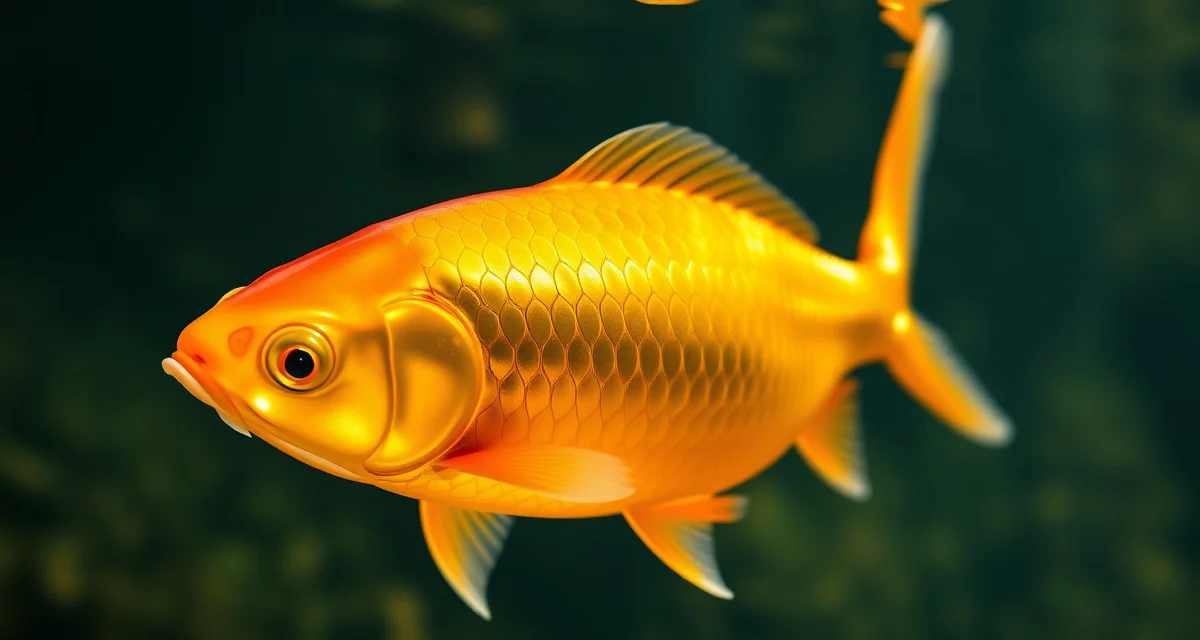
Ogon Koi Treatment Guide: Metallic Koi Health and Disease Management
Ogon are among the most visually distinctive koi in any pond, and their metallic scales are both their greatest aesthetic asset and their primary vulnerability. Ogon metallic scales are prone to edge erosion from abrasive surfaces and low pH, which can lead to rapid secondary bacterial infection. What starts as minor scale edge damage from brushing against a rough surface can turn into a bacterial entry point within days if water quality isn't ideal.
Generic koi health guides treat metallic varieties the same as standard-scaled fish. They're not the same. Ogon health management needs to account for the specific fragility of metallic scales and the conditions that most commonly compromise them.
TL;DR
- A pond with pH drifting below 7.0 will visibly affect Ogon appearance before it causes acute health problems, which makes Ogon a useful early warning indicator for pH problems in your pond.
- Within 2-5 days in suboptimal water quality, these exposed areas can develop a localized bacterial infection presenting as redness and slight swelling around the scale edges.
- Caught early, this responds well to improved water quality, salt at 0.2-0.3%, and topical antiseptic treatment to the affected scales.
- A note of "3 chipped scales, lower left flank" logged on day one gives you a baseline.
- If the same area shows redness 5 days later, the progression is immediately visible in the log.
- Isolate to a treatment tank if the infection covers more than 2-3 scale areas 2.
- Salt treatment at 0.3% for antiparasitic and supportive effect 3.
Understanding Ogon Scale Structure
Metallic Ogon luster comes from guanine crystals deposited in the scale structure. These crystals create the mirror-like reflective quality that makes Ogon so striking. But guanine crystals are sensitive to environmental conditions in ways that standard koi scales aren't.
Low pH breaks down the guanine crystal structure over time, dulling luster before causing any obvious health damage. A pond with pH drifting below 7.0 will visibly affect Ogon appearance before it causes acute health problems, which makes Ogon a useful early warning indicator for pH problems in your pond.
Scale edge erosion happens when fish brush against rough surfaces, mesh, nets, or abrasive pond liners. The metallic scale edges are more brittle than standard scales and chip more easily. Each chipped scale edge is a potential bacterial entry point.
High organic load also affects luster by depositing a slight film over the scale surface. This is reversible with improved water quality and regular water changes, but it's worth tracking as an early indicator of filtration or feeding issues.
Disease Conditions Specific to Ogon
Metallic scale edge erosion progressing to bacterial infection
This is the most Ogon-specific health concern. It starts as minor scale chipping or missing scale edges, usually on the lower flanks where fish are most likely to brush against pond surfaces. Within 2-5 days in suboptimal water quality, these exposed areas can develop a localized bacterial infection presenting as redness and slight swelling around the scale edges.
Caught early, this responds well to improved water quality, salt at 0.2-0.3%, and topical antiseptic treatment to the affected scales. Left untreated, it can progress to a classic bacterial ulcer.
KoiQuanta's Ogon profile includes a scale edge condition field for logging damage observations. A note of "3 chipped scales, lower left flank" logged on day one gives you a baseline. If the same area shows redness 5 days later, the progression is immediately visible in the log.
Luster loss as an indicator
Noticeable luster loss without physical scale damage is usually a water quality signal. Check pH first. Then check dissolved oxygen, ammonia, and nitrate. Often you'll find one parameter contributing to the dullness. The water quality tracker helps you spot which parameter has been drifting.
Treatment Protocols for Ogon Health Issues
Early bacterial scale edge infection:
- Isolate to a treatment tank if the infection covers more than 2-3 scale areas
- Salt treatment at 0.3% for antiparasitic and supportive effect
- Topical treatment to individual affected scales: Betadine (povidone iodine) diluted to 10% applied carefully with a cotton swab while the fish is briefly restrained
- Antibiotic treatment if infection spreads beyond scale edges or shows systemic involvement
- Check and correct pH if it has been below 7.0
The bacterial infection treatment tracker logs each treatment step and schedules follow-up checks.
Ulcer development:
If a bacterial infection has progressed past scale edge involvement to a visible ulcer, treat as a standard koi ulcer. Clean the wound, apply antiseptic, and if depth of penetration warrants it, consider antibiotic treatment after veterinary consultation. The ulcer treatment program in KoiQuanta provides a daily wound care tracking protocol with photo documentation.
Handling Ogon Safely
This matters more for Ogon than for most varieties. Every time you net or handle an Ogon, there's a risk of scale edge damage from the netting material or from the fish struggling.
Use soft, fine-mesh nets rather than coarse netting. Avoid letting an Ogon thrash against the side of a bucket or container. When doing topical treatments, support the fish in shallow water rather than holding it out of water if at all possible. If you need to do extended out-of-water treatment, wet your hands first and minimize contact time.
Pre-treating the net with pond water (wetting it before use) reduces abrasion. Some Ogon keepers use a soft sock-style fish bag rather than a conventional net for moving metallic fish.
Water Quality for Ogon Specifically
pH: Keep above 7.2. Below 7.0, luster degradation accelerates and scale edge integrity declines. Stable is more important than hitting a specific number. A steady 7.3 is better than one that swings from 7.0 to 8.0 daily. The pH management guide covers stability management.
Hardness: Adequate GH (general hardness above 100 mg/L) and KH (carbonate hardness above 80 mg/L) support scale integrity and pH stability. Soft water with low hardness is associated with more scale issues in metallic koi.
Ammonia: Zero tolerance. Ammonia at even 0.25 ppm damages gill and skin epithelial cells, creating entry points for bacteria.
Monitoring in KoiQuanta
The Ogon-specific disease alert in KoiQuanta flags scale edge erosion and luster loss as priority observation items in every health check. The scale condition fields in the fish profile track the location and progression of any damage over time. Photo comparison across check-ins is built into the observation workflow.
This variety-specific setup means scale edge issues get caught at the "minor chipping" stage rather than the "active bacterial infection" stage, which is where successful treatment is easiest.
Frequently Asked Questions
What diseases affect Ogon koi?
Ogon's most specific health risk is bacterial infection entering through damaged metallic scale edges. This typically starts with scale chipping or edge erosion from physical contact with rough surfaces, nets, or equipment, then progresses to localized bacterial infection if water quality is suboptimal. Luster loss is an early indicator of water quality problems, particularly low pH, before clinical disease develops. Ogon are susceptible to the same parasitic and bacterial diseases as other koi varieties, but the scale edge bacterial entry point is uniquely relevant to metallic fish.
How do I treat Ogon koi skin problems?
For early-stage bacterial scale edge infection, salt at 0.3% and topical antiseptic treatment to affected scales, combined with pH correction if needed, usually resolves the issue within 5-10 days. For infections that have progressed to visible ulcers, daily wound cleaning, antiseptic application, and antibiotic treatment if systemically involved are the standard approach. Log all treatments in KoiQuanta with photos to track healing progression and confirm that treatment is working before discontinuing it.
What water quality is best for Ogon koi?
pH between 7.2 and 8.0, stable, is the most important parameter for Ogon specifically. Adequate GH above 100 mg/L and KH above 80 mg/L support scale integrity and pH buffering. Ammonia at 0 ppm and nitrite at 0 ppm are non-negotiable. Temperature in the 15-25°C range is appropriate for active Ogon. Dissolved oxygen above 7 mg/L. Clean, well-filtered water with regular water changes maintains the optical clarity that lets you spot scale condition changes before they become infections.
What is Ogon Koi Treatment Guide: Metallic Koi Health and Disease Management?
Ogon koi are a metallic-scaled variety prized for their reflective, single-color appearance. This treatment guide addresses the specific health vulnerabilities that come with metallic scales — primarily scale edge erosion, secondary bacterial infections, and pH sensitivity. Unlike generic koi care resources, it focuses on the unique physiology of Ogon and provides targeted advice for early detection, water quality management, and topical treatments suited to metallic varieties.
How much does Ogon Koi Treatment Guide: Metallic Koi Health and Disease Management cost?
This guide is free educational content published on KoiQuanta. There is no purchase required. The treatments and protocols it recommends — such as pond salt at 0.2–0.3%, topical antiseptics, and water quality adjustments — involve common, affordable supplies available at aquatic or pond specialty retailers. Cost depends on your existing setup, but most interventions described are low-cost compared to losing a prized fish.
How does Ogon Koi Treatment Guide: Metallic Koi Health and Disease Management work?
The guide works by identifying the biological reasons Ogon are more vulnerable than standard koi, then mapping those vulnerabilities to specific warning signs and responses. You observe your fish regularly, log any scale damage, monitor pH and water parameters, and apply treatments — salt, antiseptic, improved filtration — at the earliest sign of trouble. The methodology is proactive: catch problems in the 2–5 day window before bacterial infection takes hold.
What are the benefits of Ogon Koi Treatment Guide: Metallic Koi Health and Disease Management?
The primary benefit is early intervention. Ogon metallic scales signal water quality problems — especially low pH — before other fish show symptoms, making them a living early warning system. The guide teaches you to read those signals correctly and act fast. Secondary benefits include reduced treatment costs, lower fish mortality, and a clearer understanding of how your pond's chemistry affects specific fish varieties.
Who needs Ogon Koi Treatment Guide: Metallic Koi Health and Disease Management?
Any pond keeper who owns Ogon koi needs this guide. It is especially relevant if you keep mixed ponds where Ogon share water with standard-scaled varieties, as you may be managing conditions around the average fish rather than the most vulnerable. Hobbyists new to metallic koi varieties, or those who have experienced unexplained scale degradation or recurring infections in their Ogon, will find the most immediate value.
How long does Ogon Koi Treatment Guide: Metallic Koi Health and Disease Management take?
Most of the active treatments described — salt dosing, topical antiseptic application, water quality correction — show results within 3 to 7 days when caught early. Full scale healing takes longer depending on damage severity. The guide is designed to be referenced quickly during an incident, not studied at length. Ongoing use means incorporating daily visual checks and log entries into your regular pond routine.
What should I look for when choosing Ogon Koi Treatment Guide: Metallic Koi Health and Disease Management?
Look for a guide that distinguishes between metallic and standard koi biology rather than applying generic advice. This guide specifically addresses pH thresholds, scale edge erosion mechanics, and early bacterial infection indicators unique to Ogon. When evaluating any koi health resource, prioritize specificity over breadth, practical treatment protocols over theory, and clear escalation thresholds — when to treat at home versus when to consult a vet.
Is Ogon Koi Treatment Guide: Metallic Koi Health and Disease Management worth it?
Yes, if you keep Ogon koi. Generic koi guides will not flag the early scale-edge deterioration that precedes serious infection in metallic varieties. Missing that 2–5 day intervention window often means the difference between a simple salt treatment and a systemic infection requiring medication or resulting in fish loss. The time investment is minimal, and the knowledge directly protects fish that are often among the most visually valued in a pond.
Related Articles
Sources
- Associated Koi Clubs of America (AKCA)
- Koi Organisation International (KOI)
- University of Florida IFAS Extension Aquaculture Program
- Fish Vet Group
- Water Quality Association