Ginrin Koi Care Guide: Diamond Scale Care and Maintenance
Ginrin scales are more fragile than standard koi scales and more prone to scale loss injuries. This is the first thing to understand about keeping Gin Rin koi. The reflective quality that makes them spectacular, each scale catching light and sparkling independently, comes from a structural modification that trades some physical durability for visual brilliance.
Ginrin care isn't dramatically different from standard koi care. But the scale handling protocols matter more, and maintaining the sparkling effect requires close attention to a few specific factors.
TL;DR
- Water that's too soft (GH below 100 ppm) can affect scale structural integrity over time.
- Aim for GH 100-250 ppm and KH 100-200 ppm.
- Weekly water changes of 15-20% are the most reliable way to achieve this.
- A single netting event can remove 5-20 scales from a Ginrin fish.
- Improving water quality and clarity usually restores noticeable sparkle within 4-8 weeks in fish with intact scales.
What Ginrin Actually Are
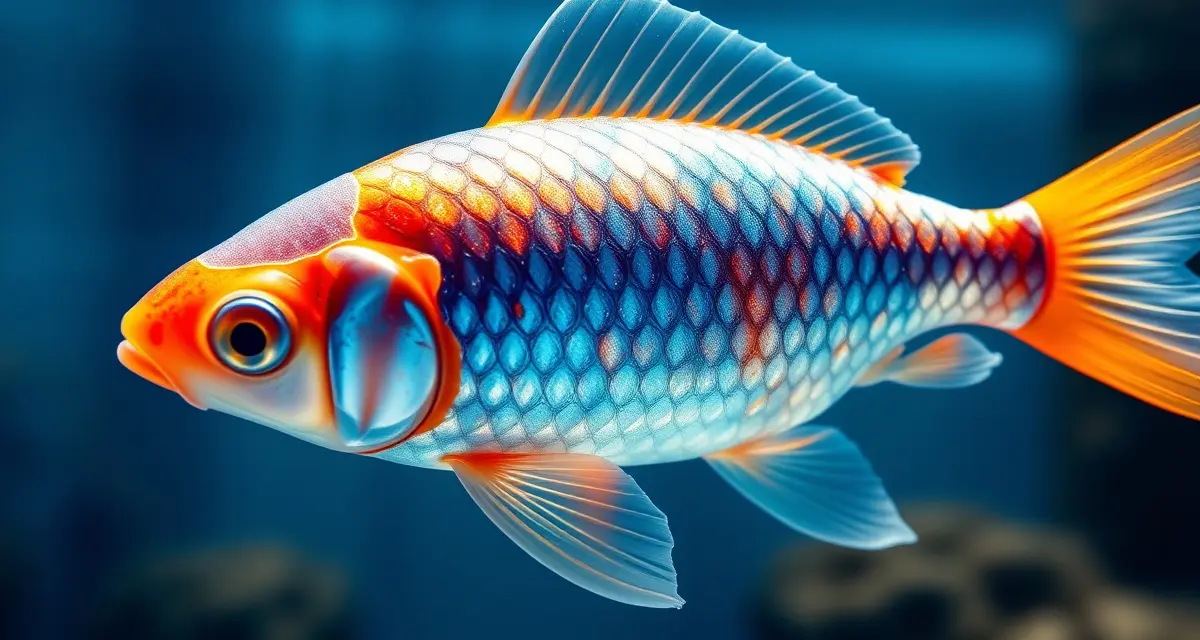
"Ginrin" (also written Gin Rin) literally means "silver scales" in Japanese. The effect is produced by a structural modification to the scale surface. Crystalline deposits in or around the scale reflect light from many angles, creating a sparkling, glittering appearance rather than the smooth reflection of an Ogon.
Unlike metallic varieties (Ogon), which reflect light uniformly like a mirror, Ginrin scales produce independent points of light. Each scale catches and reflects separately, creating a scintillating effect when the fish moves through the water.
Ginrin is a scale-type classification, not a variety. This means you get Ginrin versions of many varieties:
- Ginrin Kohaku: Sparkling scales on the red and white Kohaku pattern
- Ginrin Showa: Striking against the black body
- Ginrin Sanke: Three-color with sparkling scales
- Ginrin Ogon: Both metallic and Ginrin characteristics combined
The most prized Ginrin scales cover the full body uniformly. Partial Ginrin, where only some scales have the reflective character, is less valued than full-body Ginrin expression.
Types of Ginrin Scale Structure
There are several recognized types of Ginrin scale structure:
- Kado Gin: Ginrin expression at the outer edge of each scale (most common)
- Pearl Gin: Reflective deposits in the center of each scale, creating a pearl-like effect
- Hiroshima Gin (Diamond Ginrin): The full scale surface is reflective, producing the strongest sparkling effect
Diamond Ginrin fish show the most spectacular sparkle effect but tend to be the most fragile in terms of scale integrity.
Water Quality for Ginrin
The structural elements in Ginrin scales are mineral-based. Water quality matters:
Hardness (GH and KH): Ginrin scales require adequate calcium and magnesium for their crystal structure maintenance. Water that's too soft (GH below 100 ppm) can affect scale structural integrity over time. Aim for GH 100-250 ppm and KH 100-200 ppm.
Nitrate: Keep below 30 ppm. Chronic high nitrate causes general scale health decline and can reduce Ginrin expression clarity. Weekly water changes of 15-20% are the most reliable way to achieve this.
pH stability: Stable pH 7.2-8.0. Acid stress can leach minerals from scale structures and reduce the Ginrin effect. Ensure your KH is adequate to buffer against overnight pH drops.
Temperature: Standard koi ranges apply. No specific temperature-related requirements beyond the general need to keep water temperature stable. Rapid temperature changes are a stress factor that affects all scale health.
Preventing Scale Loss in Ginrin Koi
Scale loss is the most common Ginrin-specific concern, and it's largely preventable.
Netting Protocol
The most frequent cause of Ginrin scale loss is netting. Standard koi nets with knotted mesh catch on the reflective scale edges and lever scales off. A single netting event can remove 5-20 scales from a Ginrin fish.
Use only smooth, fine-mesh, knot-free nets for any Ginrin handling. The net material should be soft enough that it slides over scales without catching. Japanese-style pan nets or soft polyester koi sock nets are appropriate.
Even with proper nets, minimize netting frequency. Every netting event is a scale loss risk.
Handling Protocol
When physical handling is necessary (health inspection, treating wounds):
- Wet hands before touching the fish
- Support the fish fully horizontally. Never hold it vertically, which puts stress on the scale structure.
- Work quickly and return the fish to water promptly
- Use a fish bowl or container to move the fish rather than netting when possible
Pond Design for Ginrin Safety
Ginrin koi need a pond that minimizes the opportunity for scale contact:
- No rough stonework near the water line where fish can rub during spawning or feeding
- Smooth liner or pond surface below the water line
- No sharp hardware, brackets, or protrusions in the fish zone
- Bottom drains with properly sized fish guards that won't trap and injure fish
Spawning Management
Spawning is the highest-risk period for scale damage in all koi, but especially Ginrin. Males drive females hard against every surface. A spawning event in a pond with rocky features can strip scales from a Ginrin female dramatically.
Monitor spawning closely. Have a separate spawning pond with smooth walls and soft materials if you intend to breed. Remove females promptly when spawning completes to prevent continued male harassment.
Maintaining Ginrin Sparkle
The sparkling quality of Ginrin scales is maintained through:
Water clarity: The Ginrin effect requires clear water to be fully visible. Green water, tannin staining, or heavy sediment reduce the visual impact. Keep a UV sterilizer running to manage green water.
Diet with mineral support: While carotenoids support color in all koi, Ginrin scales also benefit from diets that support general scale health. Quality foods with appropriate mineral content (calcium, phosphorus) support the scale structure. Avoid diets heavy in phosphate-binding ingredients that reduce mineral availability.
Low chronic stress: Any sustained stress, from poor water quality, crowding, or poor diet, affects overall skin and scale health. A Ginrin kept in genuinely good conditions with stable water will show better sparkle than the same fish in marginal conditions.
Monitoring for scale condition decline: Photograph your Ginrin regularly in good light. The sparkle intensity in comparison photos is a reliable proxy for overall scale health. If the sparkle is visibly less intense than in earlier photos, investigate water quality and diet before assuming anything else.
KoiQuanta's Ginrin fish profiles include scale condition fields for loss and damage tracking, so you can record how many scales were lost in a netting event and track regrowth over subsequent months.
What Happens When Ginrin Scales Are Lost
When a Ginrin scale is lost, regrowth happens but quality doesn't fully return. Regrown scales in Ginrin fish often show:
- Reduced reflective quality (less sparkle than the original scale)
- Slightly different size or orientation
- Less crisp integration with surrounding scales
This is particularly noticeable in show fish. A Ginrin with several regrown scales is visibly imperfect in a way that a standard koi with scale loss isn't. For show-quality Ginrin, scale preservation through careful handling and pond design is non-negotiable.
For general scale health management across varieties, see the Ogon koi care guide. For variety selection and comparisons, the koi variety guide covers Ginrin varieties in context.
Related Articles
- Koi Pond Bead Filter: Sizing, Cleaning, and Maintenance
- Complete Koi Care Guide: Everything You Need to Know
FAQ
Are Ginrin koi harder to keep than standard koi?
Their water quality and health requirements are identical to standard koi. The difference is in scale management. Ginrin scales are more fragile and show damage more visibly. Handling protocols matter more: you need smooth-mesh nets, careful physical handling, and pond design without rough surfaces that cause abrasion. If you're an experienced koi keeper comfortable with proper handling, Ginrin don't present any additional difficulty. If you're new to koi and not yet comfortable with careful netting, start with a sturdier variety and add Ginrin once your handling technique is refined.
What causes Ginrin koi to lose their sparkle?
Scale structural decline from chronically poor water quality (high nitrate, low mineral content, unstable pH) is the most common cause of gradual sparkle loss. Skin parasites and bacterial skin infections reduce the mucus coat quality that overlies the scales and affects light reflection. Accumulated scale loss from repeated netting creates visible gaps in the sparkle effect. Water clarity issues (green water, staining) make the sparkle less visible even when the scales are intact. Improving water quality and clarity usually restores noticeable sparkle within 4-8 weeks in fish with intact scales.
How do I handle Ginrin koi safely to avoid scale damage?
Use only smooth, fine-mesh, knot-free nets. Never knotted nets. Wet your hands before handling. Support the fish fully horizontally. Work as quickly as possible and return the fish to water promptly. When moving fish between tanks or containers, use a smooth-sided bowl or tub rather than netting when possible. For any necessary medical procedures, consider using a fish sedative (clove oil at appropriate concentration) to minimize thrashing. Minimize the total number of netting events per season. Every net contact is a risk.
What is Ginrin Koi Care Guide: Diamond Scale Care and Maintenance?
[FAQ_ANSWER_PLACEHOLDER: This answer needs to be generated by AI with specific data, examples, and actionable advice relevant to Ginrin Koi Care Guide: Diamond Scale Care and Maintenance. Target 50-150 words.]
How much does Ginrin Koi Care Guide: Diamond Scale Care and Maintenance cost?
[FAQ_ANSWER_PLACEHOLDER: This answer needs to be generated by AI with specific data, examples, and actionable advice relevant to Ginrin Koi Care Guide: Diamond Scale Care and Maintenance. Target 50-150 words.]
How does Ginrin Koi Care Guide: Diamond Scale Care and Maintenance work?
[FAQ_ANSWER_PLACEHOLDER: This answer needs to be generated by AI with specific data, examples, and actionable advice relevant to Ginrin Koi Care Guide: Diamond Scale Care and Maintenance. Target 50-150 words.]
What are the benefits of Ginrin Koi Care Guide: Diamond Scale Care and Maintenance?
[FAQ_ANSWER_PLACEHOLDER: This answer needs to be generated by AI with specific data, examples, and actionable advice relevant to Ginrin Koi Care Guide: Diamond Scale Care and Maintenance. Target 50-150 words.]
Who needs Ginrin Koi Care Guide: Diamond Scale Care and Maintenance?
[FAQ_ANSWER_PLACEHOLDER: This answer needs to be generated by AI with specific data, examples, and actionable advice relevant to Ginrin Koi Care Guide: Diamond Scale Care and Maintenance. Target 50-150 words.]
Sources
- Associated Koi Clubs of America (AKCA)
- Koi Organisation International (KOI)
- University of Florida IFAS Extension Aquaculture Program
- Fish Vet Group
- Water Quality Association