Koi Variety Guide: All Major Varieties Explained
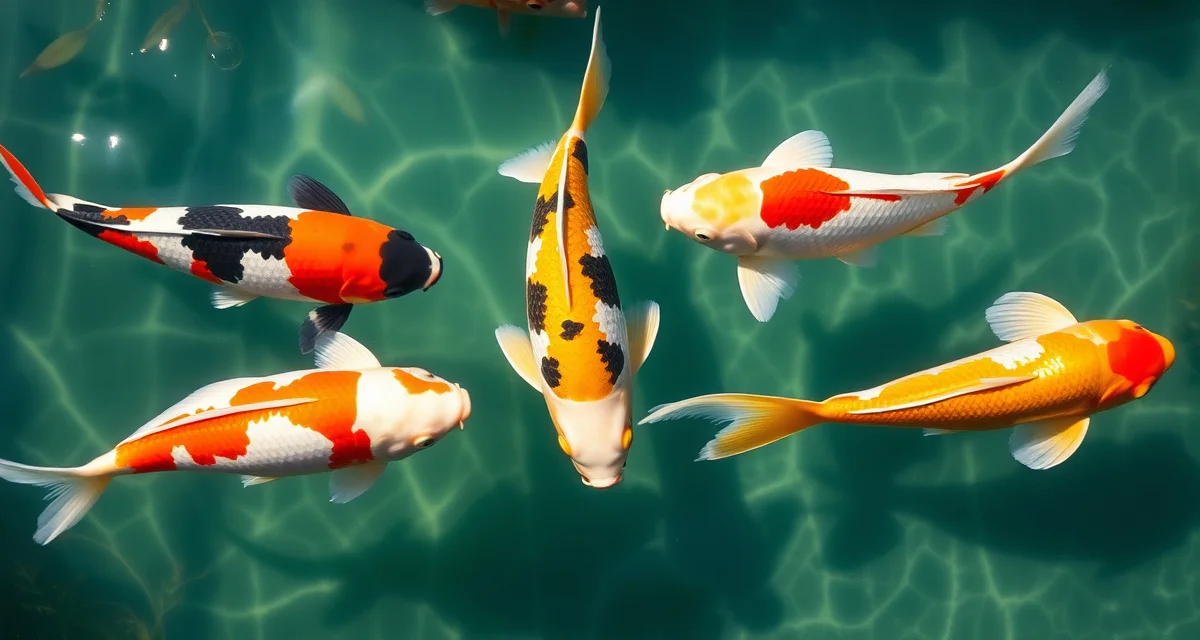
There are over 100 recognized koi varieties grouped into 13 major classification categories. If that number surprises you, you're not alone -- most hobbyists are aware of a handful of varieties and encounter the full scope of koi classification only when they start exploring Japanese breeding programs or attending shows.
This guide covers the major varieties you'll encounter as a koi keeper: what they look like, what distinguishes quality examples, and any variety-specific care considerations worth knowing. KoiQuanta's fish profiles support all standard varieties with variety-specific care notes, so you can track your fish accurately alongside their care requirements.
TL;DR
- Ensure pond depth of at least 1m with shade options.
- There are over 100 recognized varieties across 13 major classification categories.
- KoiQuanta connects observations, water data, and treatment records in one searchable history.
- Early detection based on parameter trends reduces treatment costs and fish stress.
- Seasonal changes require adjusted monitoring schedules; automated reminders help maintain consistency.
The Go-Sanke: The Big Three
The term "Go-Sanke" refers to the three most prestigious varieties in koi: Kohaku, Sanke (Taisho Sanshoku), and Showa (Showa Sanshoku). These three dominate koi shows globally and are the most studied and selectively bred varieties in the hobby.
Kohaku
A white koi with red (hi or beni) pattern. Considered the most important koi variety and the foundation of the hobby. Pattern quality in Kohaku is judged on the clarity of red-white boundaries (kiwa), the depth and consistency of red color, the white quality (should be snow-white, not yellowish), and pattern balance from head to tail.
Key quality markers: crisp kiwa (sharp edges between red and white), deep shiny red without dark spots within the red areas (shimis), pure snow-white skin.
The Kohaku pattern is described by the number of red markings: Nidan (two-step), Sandan (three-step), Yondan (four-step), and so on. Inazuma (lightning bolt pattern running continuously from head to tail) is one of the most prized patterns.
Care note: Kohaku are sensitive to UV -- prolonged intense sun can bleach the red areas. Ensure pond depth of at least 1m with shade options.
Sanke (Taisho Sanshoku)
A white koi with red and black (sumi) markings. Think of Sanke as Kohaku with added sumi. The sumi should appear as clearly defined black patches, not as scattered spots, and should not appear on the head (head sumi disqualifies a Sanke from the highest show grades).
The relationship between red, white, and black should be balanced. Sumi quality in Sanke should be deep, lacquer-like black -- any gray or faded sumi lowers the grade.
Quality markers: crisp-edged sumi on white areas (not inside red patterns), consistent beni quality matching Kohaku standards, clean white background.
Showa (Showa Sanshoku)
Also a three-color koi (white, red, and black), but Showa is fundamentally a black koi with red and white markings overlaid -- the reverse of Sanke's character as a white fish. Sumi (black) appears on the head, which is a defining characteristic of Showa versus Sanke.
Pattern standard: the motoguro (black wrapping at the pectoral fin base) is a distinctive Showa feature. Complex, dynamic patterns with bold black are preferred over Sanke-like arrangements.
Utsuri and Bekko
These two groups are often confused because they both involve two-color combinations.
Bekko: A white, red, or yellow koi with black (sumi) markings. The base color determines the type: Shiro Bekko (white base), Aka Bekko (red base), Ki Bekko (yellow base). The sumi pattern in Bekko should appear like tortoiseshell -- distinct black patches on the colored base. No head sumi.
Utsuri: A black koi with one other color -- white (Shiro Utsuri), red (Hi Utsuri), or yellow (Ki Utsuri). The two-color pattern should be evenly balanced with roughly equal areas of black and the contrasting color. Motoguro is also seen in Utsuri varieties.
Asagi and Shusui
Asagi: One of the oldest koi varieties. A blue-grey scaled body (the blue-grey comes from the indigo-colored scale reticulation) with red coloration along the sides, belly, and head. The scale pattern should be uniform and the blue color deep and consistent. The red should be bright, not muddy.
Shusui: The doitsu (scaleless/partially scaled) version of Asagi. Instead of the scaled blue-grey pattern, Shusui has a doitsu scale line along the dorsal area with blue-grey body color and the same red markings as Asagi.
Ogon and Hikari Varieties
Ogon: A metallic single-colored koi. The most common are Yamabuki (gold), Platinum (silver-white), and Orange Ogon. Quality is judged on evenness of metallic sheen across the entire body, depth of color, and clean fin edges.
Hikari Utsuri: Metallic versions of the Utsuri varieties (Kin Showa, for example). The metallic finish adds lustre to the two-color pattern.
Hikari Moyo: Metallic versions of multi-colored varieties excluding Utsuri -- things like metallic Kohaku, Sanke, and Hariwake.
Tancho
Tancho refers to any koi that has a single red marking on the head only, with no other red on the body. This is one of the most valued and rare pattern types -- the single red spot should be perfectly circular, centered, and positioned between the eyes. It can occur on any variety base: Tancho Kohaku, Tancho Sanke, and Tancho Showa are the most common.
Goshiki
A five-colored koi: white base with red, black, and additional light blue and dark blue shading from the scale reticulation. The effect is a complex, deep pattern that ranges from relatively clear at higher temperatures to very dark and muddy-looking in cold water. This temperature-driven color change can be alarming if you're not aware of it -- the fish darkens noticeably in winter and brightens in summer.
Doitsu Varieties
Doitsu refers to scale type rather than color pattern -- a doitsu koi has either no scales or only a line of enlarged mirror scales along the dorsal and lateral lines. Any color variety can occur in doitsu form: Doitsu Kohaku, Doitsu Sanke, and so on. Doitsu is the doitsu-scaled version of Asagi.
Doitsu fish are generally considered easier to evaluate (you can see the skin color without scale shadow effects) but are sometimes harder to develop excellent color in because scale structure contributes to the depth of pattern in scaled varieties.
Gin-Rin
Gin-rin (also written Ginrin) refers to a specific scale characteristic -- a sparkling, reflective quality to individual scales. Fish with gin-rin scales appear to glitter in light. Gin-rin can appear on almost any variety and adds considerable visual appeal. At shows, gin-rin varieties compete in their own class. KoiQuanta's ginrin-specific ginrin koi care guide covers the specific management notes for these fish.
Kohaku-Related Varieties for Reference
For detailed care and pattern standards for specific varieties, see the dedicated guides: the Kohaku koi care guide and Sanke koi care guide go into depth on the quality standards and care specifics for those varieties.
Variety-Specific Care Considerations
Most koi varieties share the same water quality and health requirements. But a few variety-specific notes are worth keeping:
- Pale-skinned varieties (Platinum Ogon, Shiro Bekko, Tancho): More susceptible to UV bleaching; ensure adequate pond depth and shade.
- Goshiki: Expect dramatic color change with temperature -- normal, not a disease sign.
- Butterfly koi (long-fin varieties): Longer fins are more susceptible to fin injury and fin rot -- increase monitoring if you're mixing butterfly koi with standard varieties.
- Black varieties and sumi-heavy fish: Sumi in Showa and Utsuri can take years to stabilize -- patience is required; what you see at 2 years is not the finished pattern.
Frequently Asked Questions
What are the main types of koi?
The major groups are: Go-Sanke (Kohaku, Sanke, Showa), Utsuri and Bekko, Asagi and Shusui, Ogon and Hikari varieties, Tancho, Goshiki, and specialty varieties including Doitsu (scaleless) and Gin-Rin (sparkling scale) forms. There are over 100 recognized varieties across 13 major classification categories. KoiQuanta supports all standard varieties in fish profiles with variety-specific care notes.
What is the most popular koi variety?
Kohaku is the most widely kept and most prestigious variety in the koi world. It's considered the foundation of the hobby, and at major shows the champion is often a Kohaku. The simplicity of two colors (white and red) makes pattern quality and skin quality clearly visible, which is why it's used as the benchmark for the entire hobby. After Kohaku, Showa and Sanke are the next most popular, completing the Go-Sanke grouping that dominates high-level koi keeping.
How do I identify my koi's variety?
Start with scale type (standard scaled, doitsu/scaleless, or gin-rin). Then look at colors: a white and red koi is likely Kohaku, white/red/black is Sanke or Showa, a solid metallic fish is Ogon. The presence or absence of head sumi (black on the head) distinguishes Sanke (no head sumi) from Showa (has head sumi). If you're unsure, KoiQuanta's fish profile includes a variety selector with visual references, or you can post photos in a koi club forum where experienced keepers can provide variety identification.
What is Koi Variety Guide: All Major Varieties Explained?
[FAQ_ANSWER_PLACEHOLDER: This answer needs to be generated by AI with specific data, examples, and actionable advice relevant to Koi Variety Guide: All Major Varieties Explained. Target 50-150 words.]
How much does Koi Variety Guide: All Major Varieties Explained cost?
[FAQ_ANSWER_PLACEHOLDER: This answer needs to be generated by AI with specific data, examples, and actionable advice relevant to Koi Variety Guide: All Major Varieties Explained. Target 50-150 words.]
How does Koi Variety Guide: All Major Varieties Explained work?
[FAQ_ANSWER_PLACEHOLDER: This answer needs to be generated by AI with specific data, examples, and actionable advice relevant to Koi Variety Guide: All Major Varieties Explained. Target 50-150 words.]
What are the benefits of Koi Variety Guide: All Major Varieties Explained?
[FAQ_ANSWER_PLACEHOLDER: This answer needs to be generated by AI with specific data, examples, and actionable advice relevant to Koi Variety Guide: All Major Varieties Explained. Target 50-150 words.]
Who needs Koi Variety Guide: All Major Varieties Explained?
[FAQ_ANSWER_PLACEHOLDER: This answer needs to be generated by AI with specific data, examples, and actionable advice relevant to Koi Variety Guide: All Major Varieties Explained. Target 50-150 words.]
How long does Koi Variety Guide: All Major Varieties Explained take?
[FAQ_ANSWER_PLACEHOLDER: This answer needs to be generated by AI with specific data, examples, and actionable advice relevant to Koi Variety Guide: All Major Varieties Explained. Target 50-150 words.]
What should I look for when choosing Koi Variety Guide: All Major Varieties Explained?
[FAQ_ANSWER_PLACEHOLDER: This answer needs to be generated by AI with specific data, examples, and actionable advice relevant to Koi Variety Guide: All Major Varieties Explained. Target 50-150 words.]
Is Koi Variety Guide: All Major Varieties Explained worth it?
[FAQ_ANSWER_PLACEHOLDER: This answer needs to be generated by AI with specific data, examples, and actionable advice relevant to Koi Variety Guide: All Major Varieties Explained. Target 50-150 words.]
Related Articles
Sources
- Associated Koi Clubs of America (AKCA)
- Koi Organisation International (KOI)
- University of Florida IFAS Extension Aquaculture Program
- Fish Vet Group
- Water Quality Association