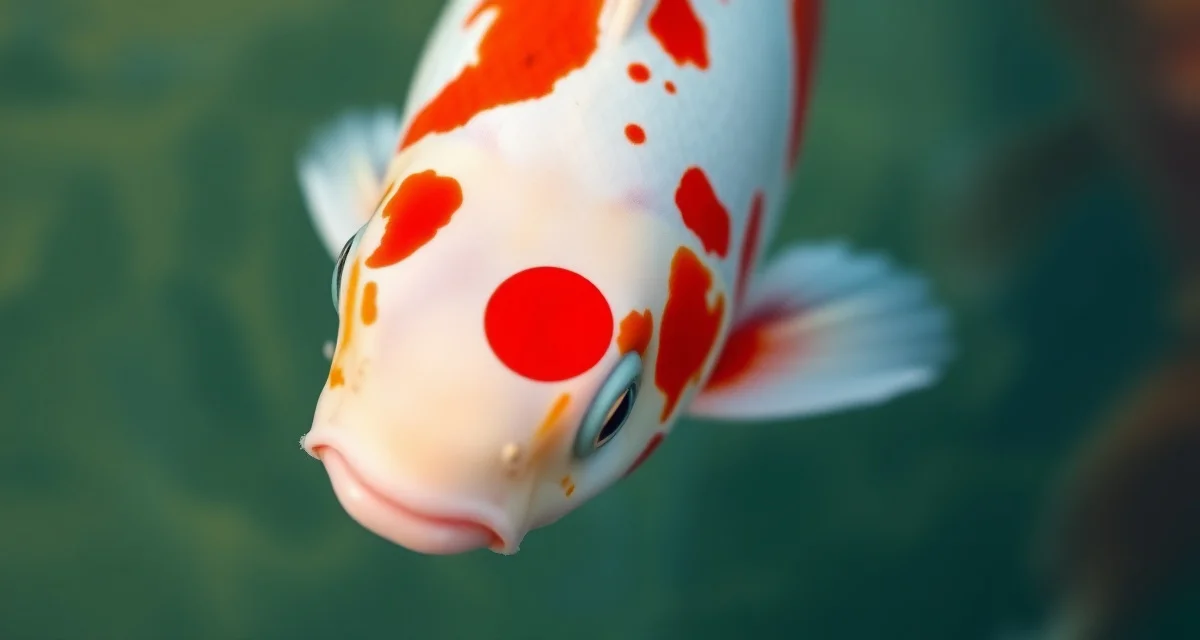
Tancho Koi Care Guide: Single Red Head Spot Maintenance
Tancho pattern integrity is so critical that hi migration can reduce value by 80% or more. This isn't hyperbole. A Tancho that develops hi bleeding from the head spot onto the body has lost its defining characteristic, which is the entire point of the variety. Understanding what drives hi migration and how to monitor pattern stability is the core of Tancho care.
The Tancho is named after the Japanese red-crowned crane, and the parallel is intentional: a single, well-placed red marking on white. Pure, clean, and unmistakable.
TL;DR
- Young fish with a perfectly circular, well-centered mark may develop slightly irregular edges or marginal expansion over 3-5 years.
- 5-20% in experienced breeders' observations.
- Maintain excellent water quality with nitrate below 20 ppm.
- Tancho x Tancho pairings typically produce a low proportion of true Tancho offspring, often 5-20%, alongside standard Kohaku-type fish, no-hi fish, and irregular multi-spot fish.
- Seasonal changes require adjusted monitoring schedules; automated reminders help maintain consistency.
What Defines a Tancho
The Tancho designation requires exactly one condition: a single red (hi) marking on the head, on an otherwise white body.
More specifically, the ideal Tancho shows:
- Single red marking on the head: Centered between and slightly above the eyes
- Circular or close-to-circular shape: Oval is acceptable; elongated or irregular marks are lesser quality
- Sharp, clean edges: The border between red and white should be crisp, not fuzzy or faded
- No other red on the body: The fins should be white, the body completely white
- Brilliant white shiroji: The white ground color should be pure, not yellow or gray
There are three main Tancho varieties based on which fish carries the marking:
- Tancho Kohaku: The Tancho marking on a Kohaku (white fish) base
- Tancho Sanke: Tancho head mark plus Sanke-type sumi (black) markings
- Tancho Showa: Tancho head mark on a Showa base with sumi
The rarest and most sought is Tancho Kohaku: white body, single red head mark, nothing else.
Why Hi Migration Happens
Hi (red pigment) in koi is produced by specialized pigment cells that are genetically positioned but environmentally responsive. In Tancho koi, the hi is literally bordered by genetics. The red area is supposed to be limited to the head region. But several factors can cause it to migrate:
Genetics: The most fundamental driver. Some Tancho bloodlines have hi that's inherently stable; others have hi that tends to spread. If you're buying a young Tancho for show potential, ask about the lineage and whether hi stability has been observed in siblings over time. A fish from stable Tancho lines is inherently lower risk.
Water temperature: Warm water intensifies and expands hi expression in many koi. This is why Tancho hi may appear to "spread" in summer and retract slightly in cooler months. Some of this is normal seasonal variation. Concern is warranted when hi doesn't retract to its cooler-water position, indicating permanent expansion.
Diet: High carotenoid diets (astaxanthin, spirulina) intensify hi pigment. For most koi, this is desirable. For Tancho, it can intensify the hi to the point where marginal areas that were previously borderline become visible. This isn't always a bad thing for edge sharpness, but for keepers concerned about spread, moderating carotenoid intake during warm months may be appropriate.
Age: Hi in Tancho koi generally expands over time. Young fish with a perfectly circular, well-centered mark may develop slightly irregular edges or marginal expansion over 3-5 years. This is a known characteristic of the variety and a real consideration in breeding selection.
Stress: Chronic stress can affect pigment cell behavior. Tancho in poor water quality, overcrowded ponds, or frequent handling show more variable hi than those in optimal, stable conditions.
Monitoring Pattern Integrity
The only way to know whether your Tancho's hi is stable, expanding, or seasonally varying is consistent photographic documentation.
Photography protocol:
- Photograph from directly above in good natural light (overcast daylight works better than direct sun, which creates glare on the white body)
- Same time of day, same season, same angle each session
- Monthly at minimum; weekly during spring and summer when change is most likely
What to look for:
- Hi spot diameter. Is it increasing?
- Edge definition. Is it getting fuzzier or more irregular?
- Satellite spots. Any small hi appearing beyond the main spot? This is a development worth tracking closely.
- Body hi. Any red appearing on the body that wasn't there before?
KoiQuanta's Tancho profiles track head spot size and shape changes with photo comparison, giving you a visual history that makes subtle change visible.
When to worry:
- Consistent size increase season to season (not just summer expansion)
- Hi that doesn't retract in cooler water to its spring measurement
- Any hi appearing on the body or fins
- Increasing edge irregularity
Environmental Management for Pattern Stability
While genetics determines the fundamental stability of a Tancho's hi, management can influence expression:
Water quality: Stable, clean water with low nitrate (under 20 ppm) supports consistent coloration. Chronic stress from water quality problems increases pattern variability.
Temperature management: If your Tancho's hi expands notably in warm water and you're showing in summer, consider whether your pond temperature can be moderated. Some dedicated keepers with show Tancho maintain slightly lower summer temperatures through partial shade and aeration.
Carotenoid modulation: For a show Tancho where hi expansion is a concern, use color-enhancing food moderately or switch to a growth/maintenance formula that has less carotenoid emphasis during warm months.
Stress reduction: Don't handle Tancho unnecessarily. Minimize netting. If your pond has aggressive fish that chase the Tancho, separate them. Chronic evasion is physical and physiological stress.
Selecting a Tancho for Show or Breeding
Given that hi migration can dramatically affect value, selection requires careful assessment.
For show Tancho:
- Buy young but not too young. A Tosai (first year) Tancho's pattern is not yet stable enough to reliably assess. Nisai (second year) or older is more predictable.
- Inspect parents' hi stability if possible
- Circular or slightly oval hi centered symmetrically on the head
- Clear, sharp-edged hi borders
- Pure white body with no hint of other hi
For Tancho breeding:
- Breed from fish with demonstrated hi stability over 3+ years
- Track offspring stability in your records. Some lines produce stable Tancho consistently, others rarely.
- Tancho are difficult to breed true. A large proportion of offspring from Tancho x Tancho pairings will not have the characteristic single mark.
Are Tancho Hard to Breed True?
Tancho pattern expression is not a simple genetic trait. It's the result of highly specific hi positioning on an otherwise white body. When you breed Tancho x Tancho, you're trying to replicate something that was already genetically unusual in the parents. Results are highly variable:
- Some offspring show Tancho marking
- Many show multi-spot hi patterns (becoming standard Kohaku-type)
- Some have no hi at all
- Some have hi in the right general area but wrong shape or off-center
The proportion of offspring showing a true Tancho mark from Tancho x Tancho pairings is typically low. 5-20% in experienced breeders' observations. This is why genuine show-quality Tancho are rare and valuable.
For more on pattern tracking across koi varieties, see the Kohaku koi care guide. For general variety information, the koi variety guide covers the full range of common varieties.
Related Articles
FAQ
How do I stop my Tancho's red spot from spreading?
You can't completely prevent hi migration in a genetically unstable Tancho, but you can minimize the rate of change. Keep water temperature stable and avoid extreme summer heat. Moderate carotenoid intake in the diet during warm months. Maintain excellent water quality with nitrate below 20 ppm. Reduce all unnecessary stress, handling, aggressive pond mates, crowding. Most importantly, track the spot with monthly photographs so you know whether it's actually expanding or just showing normal seasonal variation.
What causes hi to migrate in Tancho koi?
The primary drivers are genetics (some bloodlines have inherently unstable hi), age (hi tends to expand over time in many Tancho), and temperature (warm water activates and expands hi expression). Diet with high carotenoid content can intensify existing hi and make marginal areas more visible. Stress from poor water quality, overcrowding, or frequent handling also contributes to pigment instability. The genetic component is the most difficult to manage. It's why bloodline selection is so important when buying a Tancho.
Are Tancho koi hard to breed true?
Yes. Tancho is one of the more difficult varieties to breed consistently because the single head mark requires very specific hi positioning on an otherwise hi-free fish. Tancho x Tancho pairings typically produce a low proportion of true Tancho offspring, often 5-20%, alongside standard Kohaku-type fish, no-hi fish, and irregular multi-spot fish. This is why quality show Tancho are uncommon and carry premium prices. Breeding Tancho with documented hi stability in parents and siblings over multiple seasons improves your odds, but variation is inherent to the variety.
What is Tancho Koi Care Guide: Single Red Head Spot Maintenance?
Tancho Koi Care Guide: Single Red Head Spot Maintenance is a comprehensive resource for koi keepers focused on preserving the defining characteristic of Tancho koi—a single red hi marking on an otherwise white body. The guide covers pattern stability monitoring, water quality management, and understanding hi migration risks. Because pattern loss can reduce a fish's value by 80% or more, the guide helps owners protect both the aesthetic and financial value of this prized variety.
How much does Tancho Koi Care Guide: Single Red Head Spot Maintenance cost?
Tancho koi care itself has no fixed cost—it depends on your existing pond setup and water quality management practices. Key investments include reliable water testing equipment to keep nitrates below 20 ppm, quality nutrition to support stable pigmentation, and potentially automated monitoring tools for consistent seasonal tracking. The fish themselves can be expensive given that only 5–20% of Tancho x Tancho pairings produce true Tancho offspring, making proper care essential to protecting that investment.
How does Tancho Koi Care Guide: Single Red Head Spot Maintenance work?
Tancho koi care works by controlling the environmental and biological factors that drive hi migration—the unwanted spread of red pigment from the head spot onto the body. Keepers maintain pristine water quality with nitrates below 20 ppm, monitor the head spot regularly for edge irregularities or expansion, and adjust care schedules seasonally. Catching early signs of pattern drift allows intervention before the fish loses its defining single-spot characteristic entirely.
What are the benefits of Tancho Koi Care Guide: Single Red Head Spot Maintenance?
Proper Tancho care preserves the fish's most valuable trait: a perfectly centered, circular red marking on a pure white body. Stable pattern integrity protects significant financial value, since hi migration can reduce worth by 80% or more. Beyond value, consistent care—clean water, quality nutrition, and regular monitoring—supports overall fish health, longevity, and the visual impact that makes Tancho one of the most admired koi varieties, evoking the elegance of the Japanese red-crowned crane.
Who needs Tancho Koi Care Guide: Single Red Head Spot Maintenance?
Anyone keeping or considering Tancho koi needs this guide, particularly hobbyists who are new to pattern-sensitive varieties and may not realize how quickly hi migration can occur. Experienced koi keepers expanding into show-quality fish will also benefit, as will breeders managing Tancho x Tancho pairings where only 5–20% of offspring meet true Tancho standards. If you own a Tancho and want to maintain its pattern integrity and long-term value, this guide is essential reading.
Sources
- Associated Koi Clubs of America (AKCA)
- Koi Organisation International (KOI)
- University of Florida IFAS Extension Aquaculture Program
- Fish Vet Group
- Water Quality Association