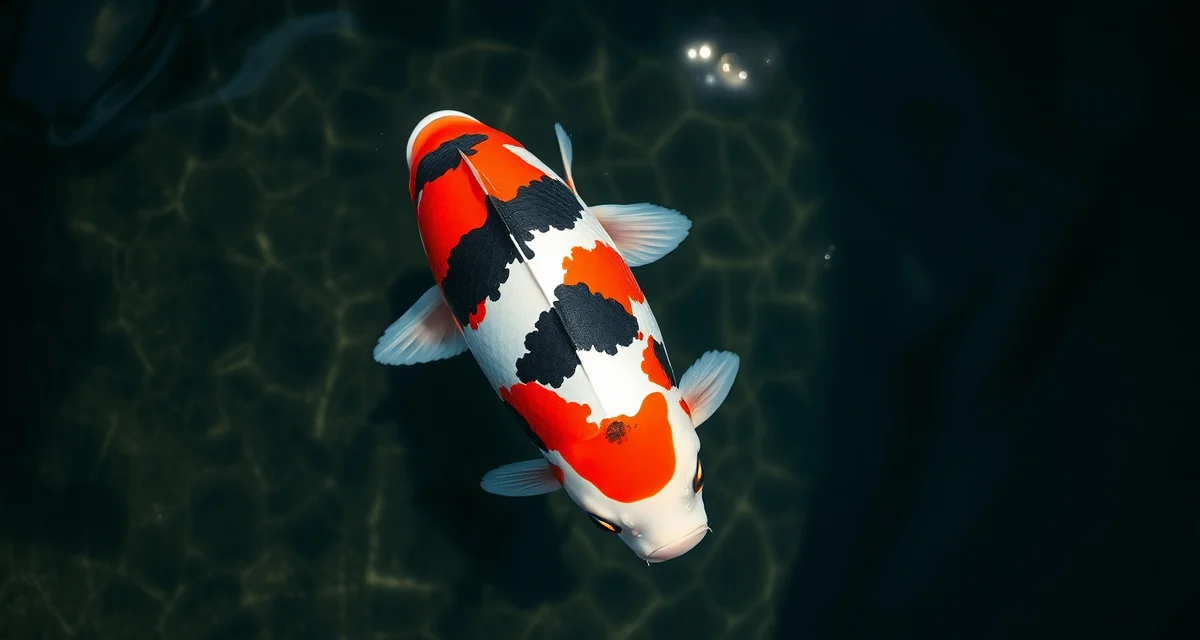
Showa Koi Care Guide: Sumi Development and Pattern Balance
Showa - formally Showa Sanshoku - is the third member of the Gosanke with red, white, and black markings. The key distinction from Sanke: Showa has a predominantly black (sumi) base with red and white markings on it, while Sanke has a white base with red and black markings on it.
In practice, the sumi in Showa is typically more extensive and more distributed across the body - including the head - than Sanke sumi. And Showa sumi behaves differently: it's often more dynamic, changing significantly across the first 5 years, and what looks like a mediocre young Showa can develop into an exceptional adult.
The most important thing to understand about Showa: it rewards patience and long-term tracking more than almost any other koi variety.
TL;DR
- And Showa sumi behaves differently: it's often more dynamic, changing significantly across the first 5 years, and what looks like a mediocre young Showa can develop into an exceptional adult.
- Showa pattern changes over a 6-week quarantine can be significant - having timestamped photos distinguishes pattern development from disease-related skin changes.
- Prophylactic praziquantel (days 3–5 and 10–12) and 0.3% salt are standard.
- A 6-month comparison of a developing Showa is often more impressive than any written description of the sumi changes.
- Seasonal temperature cycling - specifically cooler winters below 65°F followed by spring warming - drives sumi intensification in Showa in a pattern consistent with traditional Japanese pond management.
Showa vs. Sanke: The Practical Differences
| Feature | Showa | Sanke |
|---------|-------|-------|
| Base color | Black (sumi dominant) | White (shiroji dominant) |
| Head sumi | Normal and expected | Absent by standard |
| Pectoral fin markings | Motoguro (black base) typical | Striped or plain |
| Sumi distribution | Throughout body including head | Primarily above lateral line, rarely head |
| Sumi development timeline | Often more dramatic changes | Gradual development, typically less dramatic shifts |
A Showa with no head sumi and very limited body sumi can look almost like a Kohaku - these are called Kindai Showa ("modern Showa") and have become extremely popular despite departing from the traditional heavily-sumi'd pattern.
Sumi in Showa: What to Expect
Showa sumi is among the most dynamic patterns in koi keeping. A nisai Showa with disappointing sumi - mostly pale, floating sumi with little lacquered black - can transform into an outstanding sansai with rich, deep sumi across the body.
The reason: Showa carries more extensive sumi genetics than Sanke, and the full expression of that genetics often takes longer. Showa bought at auction as nisai are frequently purchased specifically because the buyer can see latent sumi potential that will emerge over the following two years.
What you're looking for in young Showa:
- Karasu (submerged sumi visible as gray/blue under white skin) - this will emerge as surface sumi with age
- The distribution pattern of current sumi, even if light, suggests where mature sumi will appear
- Hi and shiroji quality is visible now; sumi isn't always
What changes over years 2–5 in Showa:
- Sumi typically intensifies and becomes more lacquered (deeper, denser black)
- New sumi may emerge from previously gray areas
- The balance between sumi, hi, and shiroji shifts - often dramatically between year 2 and year 4
- Some Showa "go dark" (excessive sumi covers hi and shiroji) - this is usually a temporary phase in the right conditions
Temperature and Showa Sumi
Like Sanke, Showa sumi is temperature-responsive. Cool water intensifies sumi; warm water may lighten it. This is more pronounced in Showa than Sanke because of the greater extent of sumi involved.
The implications:
- A Showa photographed in October (fall cooling) will show stronger sumi than the same fish photographed in August
- For show preparation, show timing in fall/winter favors Showa sumi quality
- Don't panic if summer Showa sumi looks lighter - check the same fish in November
Health Management for Showa
Disease Vulnerability Compared to Other Varieties
Showa's extensive sumi base means that bacterial infections may be harder to detect visually than on a Kohaku. Early Aeromonas redness can be obscured by dark skin areas. This makes behavioral observation - appetite, swimming posture, fin carriage - especially important for Showa health monitoring.
Key inspection points for Showa:
- Fin bases: look for redness at the pectoral and pelvic fin bases (harder to see against dark skin but observable at angles)
- Scale lifting: any lifted scales in sumi areas are as significant as on white areas
- Hi-sumi boundary: the junction between red and black is a potential weak point for bacterial entry
- Motoguro (pectoral fin black base): any deterioration here - fraying of the fin edge, redness spreading from the black - indicates a fin health issue
Quarantine Protocol for Showa
Standard 42-day quarantine for Japanese-bred Showa (these are typically the highest-value Showa). Domestic Showa at 30 days minimum.
During quarantine, photograph both flanks on arrival and weekly. Showa pattern changes over a 6-week quarantine can be significant - having timestamped photos distinguishes pattern development from disease-related skin changes.
Prophylactic praziquantel (days 3–5 and 10–12) and 0.3% salt are standard.
Daily observations should specifically note sumi changes - not because disease causes sumi changes, but because having a record of normal sumi variation during quarantine tells you what's normal for that individual fish.
Handling and Water Quality
Showa's sumi areas have the same basic skin structure as any koi - the sumi is pigmentation in the skin cells, not structural hardening. Rough handling damages Showa skin as easily as any other variety.
Net with soft nets. Minimize time out of water. Don't grasp by the sumi areas more firmly than necessary - the sumi skin is not tougher.
For optimal sumi development and hi clarity: water quality matters. High dissolved organics, cloudy water, and poor UV filtration dull both hi and shiroji, making the overall pattern appear lower quality than it is. Showa in crystal-clear, well-managed water looks better than identical genetics in poor water.
Photo Documentation
In KoiQuanta, the photo timeline for Showa is where the real value accrues over years. Setting a consistent photographic standard - quarterly photos, both flanks, same lighting - creates the record that makes Showa pattern development visible as a continuous story rather than isolated snapshots.
The comparative view feature lets you place photos side-by-side across time periods. A 6-month comparison of a developing Showa is often more impressive than any written description of the sumi changes.
Related Articles
- Ginrin Koi Care Guide: Diamond Scale Care and Maintenance
- Koi Color Development: Diet, Environment, and Genetics
- Complete Koi Care Guide: Everything You Need to Know
- Koi Ulcer Disease: Complete Treatment and Wound Care Guide
FAQ
How is Showa different from Sanke?
Showa has a black (sumi) base with red and white markings on it; Sanke has a white base with red and black markings. In practical terms: Showa typically has sumi on the head (expected and desirable), extensive body sumi, and pectoral fins with motoguro (black base). Sanke should have no head sumi and less extensive body sumi, typically above the lateral line. Showa sumi development is often more dramatic and covers more territory; Sanke sumi is typically more stable once established.
Why does my Showa's black pattern look faded?
Showa sumi naturally lightens in warm summer water. If this lightening appears in summer and reverses in fall as temperatures cool, it's normal seasonal variation. If sumi is permanently fading - not recovering with temperature change - possible causes include chronic disease stress, extended poor water quality, or the fish being in a warm water regime year-round without the temperature cycling that drives sumi development. Check water quality parameters and ensure the fish experiences seasonal temperature variation.
What conditions improve Showa color?
Seasonal temperature cycling - specifically cooler winters below 65°F followed by spring warming - drives sumi intensification in Showa in a pattern consistent with traditional Japanese pond management. Good water clarity (UV sterilizer, regular water changes) improves hi vibrancy and shiroji clarity. High-quality color food with carotenoids improves hi intensity. Consistent low stress (stable parameters, appropriate stocking, no chronic disease) allows full genetic expression of the color potential.
What is Showa Koi Care Guide: Sumi Development and Pattern Balance?
The Showa Koi Care Guide: Sumi Development and Pattern Balance is a comprehensive resource covering the husbandry of Showa Sanshoku koi, one of the three Gosanke varieties. It focuses specifically on understanding how Showa's black (sumi) patterning develops over time, how to distinguish it from Sanke, and how to use quarantine protocols, photo tracking, and seasonal management to support healthy, impressive pattern development across the fish's first several years.
How much does Showa Koi Care Guide: Sumi Development and Pattern Balance cost?
The guide itself is free editorial content on KoiQuanta. There is no purchase required to access the care information. Costs associated with keeping Showa koi vary widely: quality Showa can range from under $50 for young tosai to several thousand dollars for mature, pattern-stable specimens. Ongoing costs include pond maintenance, quality nutrition, prophylactic treatments like praziquantel, and salt for quarantine protocols.
How does Showa Koi Care Guide: Sumi Development and Pattern Balance work?
The guide walks keepers through Showa-specific care principles: understanding the sumi-dominant base versus Sanke's white base, managing a 6-week quarantine with timestamped photos to track pattern changes, applying prophylactic praziquantel on days 3–5 and 10–12, maintaining 0.3% salt, and using seasonal temperature cycling to support sumi development. The core methodology is long-term observation — comparing photos over months rather than judging a young Showa by its immediate appearance.
What are the benefits of Showa Koi Care Guide: Sumi Development and Pattern Balance?
Following this guide helps keepers avoid prematurely dismissing young Showa with underdeveloped sumi, since pattern quality often improves dramatically over the first five years. Structured quarantine reduces disease introduction risk. Timestamped photo documentation allows keepers to distinguish normal pattern development from disease-related skin changes. Overall, the guide builds the patience and observation skills needed to get the most from a variety that rewards long-term commitment.
Who needs Showa Koi Care Guide: Sumi Development and Pattern Balance?
This guide is ideal for hobbyist and serious koi keepers who already have basic pond management experience and want to specialize in Showa. It's particularly valuable for those new to Gosanke varieties who may underestimate how much Showa sumi changes over time. Keepers who purchase young, affordable Showa and want a framework for evaluating and developing their fish's pattern potential over several years will benefit most.
Sources
- Associated Koi Clubs of America (AKCA)
- Koi Organisation International (KOI)
- University of Florida IFAS Extension Aquaculture Program
- Fish Vet Group
- Water Quality Association