Sanke Koi Care Guide: Three-Color Pattern Development
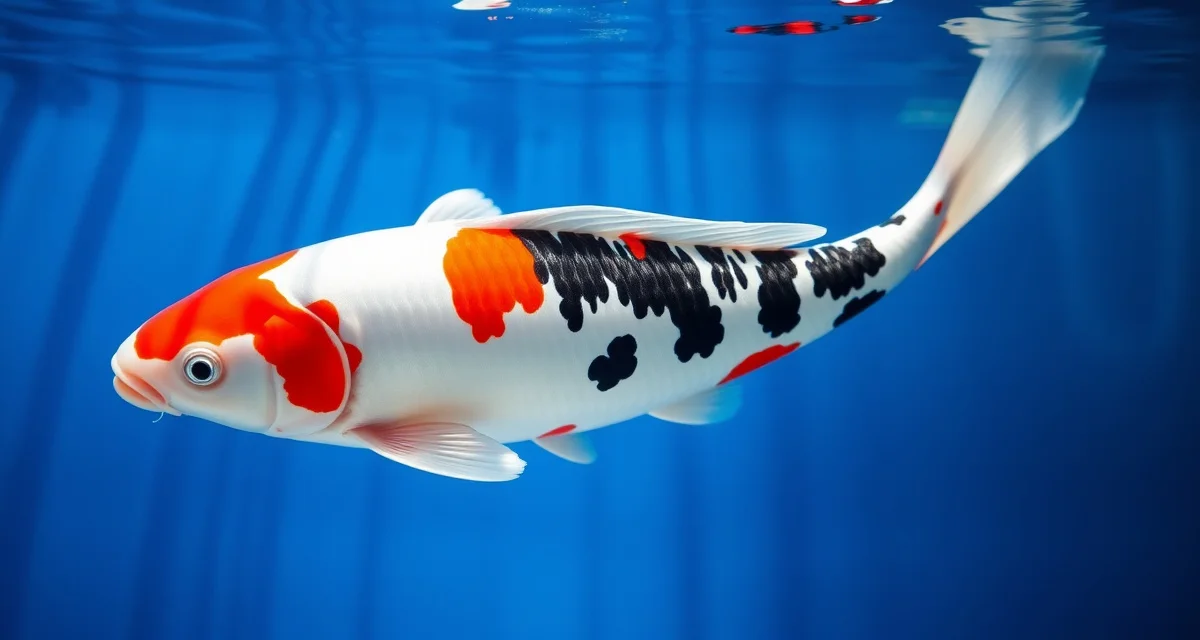
Sanke - formally Taisho Sanke - are the three-color sibling to Kohaku in the Gosanke trinity. Same base structure as Kohaku (red hi on white skin), with the addition of sumi (black) markings typically above the lateral line, predominantly on the body rather than the head.
Sanke require everything Kohaku require, plus a long-term commitment to patience. The sumi in Sanke typically doesn't stabilize until year 3–4, and the pattern you think you're getting at nisai age is not the pattern you'll have at sansai. If you're not keeping detailed photo and health logs from purchase forward, you're losing the data that makes pattern development understandable.
TL;DR
- The sumi in Sanke typically doesn't stabilize until year 3–4, and the pattern you think you're getting at nisai age is not the pattern you'll have at sansai.
- Fish managed in cooler conditions (65–70°F) through winter tend to show stronger, more stable sumi than fish kept warm year-round.
- Switch to wheat germ in cool temperatures (below 60°F).
- As temperatures drop toward 60°F, sumi typically intensifies and clears.
- The comparison view across 6 months shows what the sumi is doing better than any text description.
- Patience is the core requirement - most Sanke don't show their final sumi pattern until age 3–5.
- Water temperature is the most significant variable - cooler temperatures (below 68°F) intensify sumi, warmer temperatures may lighten it.
The Sanke Standard: What Makes a Good One
For any keeper or dealer managing high-value Gosanke, understanding the evaluation criteria helps you track what matters:
Skin quality: White (shiroji) should be bright and clear - the same quality that matters in Kohaku. Dull or yellowish white dramatically reduces appeal.
Hi pattern: The red should have clean, defined edges and even saturation. Hi that's bleeding into the white (running borders) or that's fading to pale orange loses quality points.
Sumi: Black Sanke sumi ideally appears in lacquered, deeply black solid patches - not motley or spreading poorly. Sumi that appears in stripe form along the base of the dorsal fin (tsubo sumi) or in the fins (kuchibeni is a disqualifier, but fin sumi in Sanke is generally acceptable and often desired) contributes to pattern balance.
No sumi on the head: By variety standard, Sanke should have no sumi on the head. A Sanke with significant head sumi is technically showing Showa genetics.
Body shape: Consistent Gosanke standard - round, torpedo-shaped body, good depth through the body, appropriate length-to-depth ratio.
Sumi Development: The Long Game
This is the characteristic that separates experienced Sanke collectors from beginners: understanding that sumi is not a fixed feature.
Young Sanke (tosai and early nisai) often show sumi that's partially submerged - visible as gray or bluish patches under the white skin, what Japanese breeders call "floating sumi" or "shimi." This sumi may or may not emerge fully as dark, lacquered black markings over the next 2–3 years.
Patterns to observe and log:
- Which gray areas are emerging (submerged sumi becoming visible)
- Which existing sumi patches are deepening in color (becoming more fully lacquered)
- Whether sumi is appearing in new locations or migrating
- Seasonal changes - sumi in Sanke often retreats slightly in summer (warm water) and intensifies in fall and winter
Temperature affects sumi development significantly in Sanke. Fish managed in cooler conditions (65–70°F) through winter tend to show stronger, more stable sumi than fish kept warm year-round. This is an observation consistent with Japanese breeder management practice - seasonal temperature cycling is part of developing sumi, not something to fight.
Health Management for Sanke
Sanke are not significantly more disease-prone than other koi varieties, but their white skin patches (like Kohaku) are particularly visible sites for Aeromonas ulcer development. Any bacterial infection that starts along the boundary between hi and white, or in the middle of a white patch, is immediately visible and potentially pattern-damaging if scarring occurs.
Quarantine Specifics
Standard 42-day quarantine for any Sanke from Japan, 30 days minimum for domestic. During quarantine:
- Daily skin examination with particular attention to the white skin patches where early Aeromonas often begins as subtle redness
- Praziquantel course at days 3–5 and 10–12 as standard
- 0.3% salt throughout
- Photograph both sides of the fish on arrival and again at days 14 and 28 - this creates a pattern comparison baseline that catches both health changes and the normal sumi development you'd expect during the quarantine period
Disease Observations Specific to Sanke
Sumi changes vs. disease signs: New sumi appearing as dark patches can be confused with early melanosis or pigmentation changes from bacterial infection. The key distinguishing factor: sumi development is typically bilateral-symmetrical and appears in the upper body in characteristic Sanke patterns. Bacterial pigmentation changes are irregular and often associated with scale lifting or hemorrhage.
White skin ulcers: Any reddening or scale lifting on the white (shiroji) areas warrants immediate attention. White skin has less pigmentation than colored areas and shows early infection signs sooner.
Hi boundary inspection: The junction between hi and shiroji can develop subtle redness indicating early bacterial infection before any other visible sign.
Feeding for Sanke Pattern Development
Color-enhancing foods with carotenoids (astaxanthin, spirulina, krill) primarily affect the hi (red) intensity in Sanke. The sumi is not significantly affected by diet in the short term - it's driven by genetics and temperature.
For hi development: high-quality color food through the summer growing season improves hi intensity. Switch to wheat germ in cool temperatures (below 60°F).
For shiroji (white) clarity: water quality, specifically low dissolved organics and appropriate UV filtration to prevent green water, is more important than diet for white skin quality.
General protein feeding for growth: high-quality growth food through the warm season to develop the body structure that makes a Sanke impressive. Sanke pattern looks better on a well-bodied fish.
Seasonal Care Considerations
Spring: As temperatures rise, watch closely for Aeromonas on white skin patches - this is the highest-risk time. Check for any new sumi emerging from winter (fall temperatures often cause sumi to deepen and sharpen; spring reveals how much developed).
Summer: Maintain dissolved oxygen rigorously. Growth season - feed well. Sumi may appear to lighten slightly in warm water.
Fall: Often the best time to observe sumi quality. As temperatures drop toward 60°F, sumi typically intensifies and clears. This is also when you photograph Sanke for the best pattern representation.
Winter: Cold-water dormancy. Sumi continues to develop even when fish are inactive.
Photo Documentation in KoiQuanta
For serious Sanke collectors, KoiQuanta's photo timeline is how you track sumi development over years. Set a quarterly photo standard - same angle, similar lighting, full body shots of both sides. The comparison view across 6 months shows what the sumi is doing better than any text description.
Link any health events to the photo record: if a fish had a bacterial infection in spring that required treatment, the post-treatment photos show you what the skin looked like at that stage and whether the treatment left any pattern impact.
Related Articles
- Asagi Koi Care Guide: Blue Scale Network and Red Markings
- Chagoi Koi Care Guide: The Friendly Giant
- Ginrin Koi Care Guide: Diamond Scale Care and Maintenance
- Complete Koi Care Guide: Everything You Need to Know
FAQ
How do I develop sumi in my Sanke koi?
Sumi development in Sanke is primarily genetic and temperature-driven - you can't force it, but you can support it. Seasonal temperature cycling (cooler winters, appropriate warm summers) promotes the sumi emergence pattern seen in traditional Japanese pond management. Good overall health, high-quality water, and avoiding chronic stress support the immune and pigmentation systems that drive sumi development. Patience is the core requirement - most Sanke don't show their final sumi pattern until age 3–5.
Why is my Sanke losing its black pattern?
Sumi in Sanke naturally fluctuates with water temperature - retreating slightly in warm summer water and intensifying as temperatures cool in fall. This seasonal variation is normal. If sumi is disappearing permanently (not returning after seasonal variation), possible causes include chronic disease stress, poor water quality over extended periods, or the fish having Sanke genetics that doesn't stabilize sumi well. Some Sanke never fully develop stable sumi - this is a genetic variance.
What conditions affect Sanke color development?
Water temperature is the most significant variable - cooler temperatures (below 68°F) intensify sumi, warmer temperatures may lighten it. Water quality affects hi intensity (high dissolved organics or poor water chemistry reduces hi vibrancy) and white skin clarity. Diet with carotenoids improves hi color intensity. UV filtration maintaining clear water protects shiroji quality. Disease events or chronic health issues suppress color development across all pigments.
What is Sanke Koi Care Guide: Three-Color Pattern Development?
The Sanke Koi Care Guide: Three-Color Pattern Development is a comprehensive resource for hobbyists keeping Taisho Sanke koi. It covers the unique challenges of raising this Gosanke variety, which features red hi and black sumi markings on white skin. The guide focuses specifically on how sumi patterns develop over time, what environmental factors influence them, and how to document changes so keepers can understand and anticipate their fish's long-term appearance.
How much does Sanke Koi Care Guide: Three-Color Pattern Development cost?
This is a free informational care guide published on KoiQuanta. There is no purchase required to access it. The knowledge inside — covering water temperature management, feeding adjustments, and pattern tracking — can help you avoid costly mistakes when investing in Sanke koi, which themselves can range from modest sums to thousands of dollars depending on lineage and quality.
How does Sanke Koi Care Guide: Three-Color Pattern Development work?
The guide works by walking you through the biology and timeline of Sanke pattern development, then giving you practical care protocols to support it. It explains why sumi doesn't stabilize until years 3–5, how cooler water temperatures (65–70°F) strengthen sumi, when to switch to wheat germ feed, and why consistent photo and health logging is essential for understanding what your specific fish is doing over time.
What are the benefits of Sanke Koi Care Guide: Three-Color Pattern Development?
Following this guide helps you develop stronger, more stable sumi markings, avoid common care mistakes like overfeeding in cool temperatures, and set realistic expectations for pattern development. Keepers who document their fish systematically gain insight no single observation can provide. The guide also connects Sanke care to the broader Gosanke framework, helping you apply knowledge across Kohaku and Showa keeping as well.
Who needs Sanke Koi Care Guide: Three-Color Pattern Development?
This guide is for koi hobbyists who keep or plan to keep Taisho Sanke — especially those frustrated by unpredictable sumi development or those who purchased a nisai without understanding how much the pattern will change. It's equally useful for beginners learning the Gosanke categories and experienced keepers who want a structured approach to tracking and optimizing three-color pattern development over a multi-year timeline.
Sources
- Associated Koi Clubs of America (AKCA)
- Koi Organisation International (KOI)
- University of Florida IFAS Extension Aquaculture Program
- Fish Vet Group
- Water Quality Association