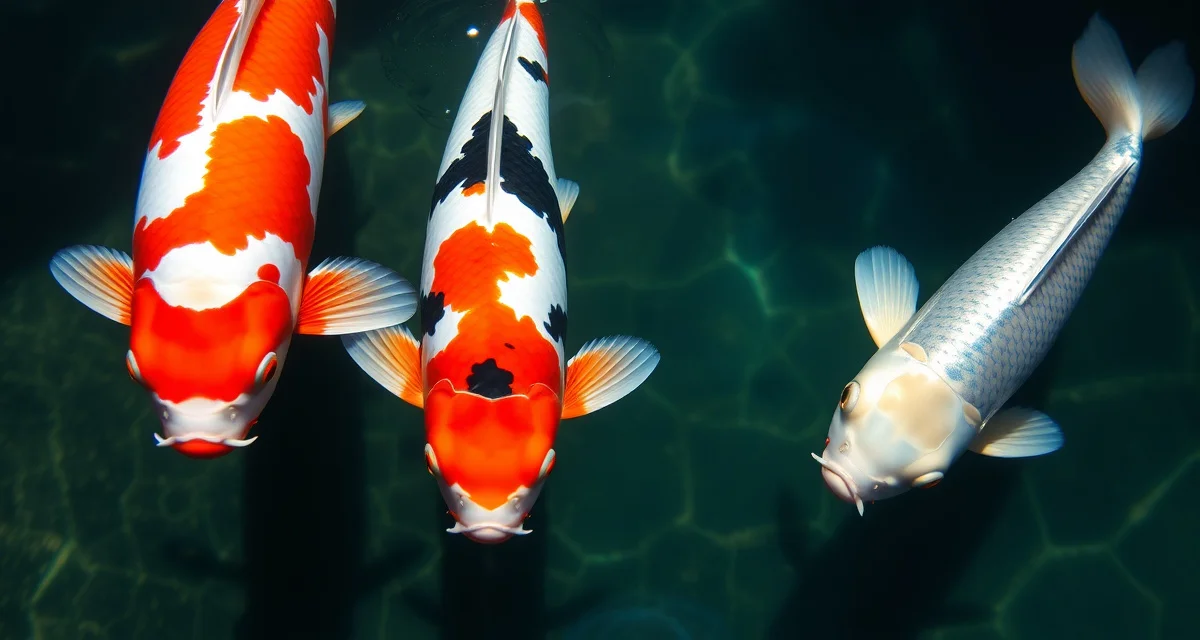
Japanese Koi Varieties: Buying Guide by Variety
The price differential between a good and exceptional jumbo Kohaku can be tenfold or more. This gap exists because koi quality assessment is genuinely complex - subtle differences in skin quality, pattern balance, and body conformation separate fish that look similar to the untrained eye but command very different prices. Understanding what you're evaluating before you buy protects against common purchasing mistakes.
KoiQuanta fish profiles capture purchase provenance including farm of origin. No competitor covers variety-specific purchase criteria in the context of collection management.
TL;DR
- Common grade Kohaku from domestic sources may be under £100.
- Japanese tosai Kohaku from top farms start around £200-500 for good grade, with exceptional fish in the thousands.
- Quality tosai-grade Japanese Kohaku from reputable farms typically starts at £200-500 and ranges to several thousand for exceptional specimens.
- At the top end, champion-quality fish from the most prestigious Japanese farms command prices that can exceed £10,000-50,000 for exceptional fish.
- Seasonal changes require adjusted monitoring schedules; automated reminders help maintain consistency.
Before Buying Any Japanese Koi
Health Is the First Priority
Quality and health are separate assessments. A stunning fish that's unwell, carrying parasites, or showing signs of chronic poor management is not a good purchase regardless of its visual appeal.
Before assessing quality, assess health:
- Is the fish swimming normally? Good posture, active swimming, appropriate depth
- Is the fish eating? (Ask the seller to feed, or observe at feeding time)
- Are the fins held properly (not clamped)?
- Is the skin clean without lesions, ulcers, or discoloration at fin bases?
- Are the eyes clear and properly positioned?
- Is there any evidence of excess mucus or irritation behaviour?
Any health concern should either be a dealbreaker or significantly affect the price. A compromised fish at a premium price is a poor investment.
Understanding the Grading System
Japanese koi are often described in grades: A, AA, AAA, or in terminology like "tosai grade" (best fish of the year class), "tategoi" (fish with significant future growth potential that isn't yet fully expressed), and "finished koi" (fish whose quality is already fully visible).
Tategoi is perhaps the highest-risk purchase category. A young fish described as tategoi may have excellent growth potential or may simply be a young fish that hasn't fully developed - telling the difference requires experience that most buyers take years to accumulate.
For buyers without extensive Japanese koi assessment experience, purchasing "finished" fish where quality is visible is lower risk than purchasing tategoi where quality is speculative.
Kohaku
Kohaku (white koi with red pattern) is the flagship variety. "Go back to Kohaku" is the phrase used to describe how even experienced koi hobbyists return to this variety for its elegance and depth.
What to look for:
Shiroji (white ground): Should be pure white with a porcelain-like quality. Not yellowish, grey, or dingy. High-quality shiroji has a luminescence that cheaper koi don't have.
Hi quality (red pattern): Deep, saturated red without orange tones (though this can shift with age and diet). Uniform saturation across the pattern - not brighter in some areas and faded in others.
Kiwa (pattern edge): The edge between hi and shiroji should be clear and crisp. Blurry or diffuse kiwa suggests lower skin quality and pattern stability.
Pattern balance: Classic Kohaku pattern has hi blocks distributed across the body with reasonable balance front to back. Pattern that's all on the rear half, or that covers too much of the body, is generally less desirable. The head hi (sashi) placement is particularly important.
Body shape: Deep-bodied, with a strong shoulder (area behind the head). The back should be gently curved, not flat or humped.
Price range: Wide. Quality tosai-grade Kohaku at shows may sell for thousands. Common grade Kohaku from domestic sources may be under £100. Japanese tosai Kohaku from top farms start around £200-500 for good grade, with exceptional fish in the thousands.
Sanke (Taisho Sanshoku)
Sanke is the three-colour variety - white, red, and black (sumi). The black pattern elements distinguish Sanke from Kohaku.
What to look for:
Shiroji and hi quality: Same criteria as Kohaku - white should be pure, red should be deep and evenly saturated.
Sumi quality: The black pattern should be deep, stable black. "Stable sumi" means the black is embedded in the skin rather than on the surface. Surface sumi can fade or shift with time. Ask whether the sumi has been stable on the fish you're considering.
Sumi placement: Sanke sumi appears on the body but traditionally not on the head. Sumi on the fins (especially pectoral fins) is valued - "motoguro" (black at the base of pectoral fins) is a classic Sanke quality marker.
Pattern balance: The combination of hi and sumi must create visual balance. Sumi that appears randomly rather than complementing the hi pattern is less desirable.
Showa (Showa Sanshoku)
Showa is also a three-colour variety - white, red, and black - but the genetic and visual difference from Sanke is significant. Showa has a black (sumi) base with red and white overlaid, while Sanke has a white base with red and black overlaid.
What to look for:
Sumi quantity and quality: Showa has more sumi than Sanke, and the sumi wraps around the body rather than appearing as spots. Stable, deep sumi is critical.
Head sumi: Unlike Sanke, Showa traditionally has sumi on the head. The head sumi pattern is an important quality indicator.
Boke or motoguro pectoral fins: Black at the pectoral fin base (motoguro) or mottled black (boke) in the pectoral fins is typical of Showa.
Hi quality: As with Kohaku and Sanke, deep saturated red without orange tones.
Showa development consideration: Young Showa can look very different from their adult form. Sumi may not be fully expressed at one year old. Assessing young Showa requires experience in judging tategoi potential.
Gin-Rin (Sparkling Scale) Varieties
Gin-Rin is a scale type rather than a variety - gin-rin scales have a reflective, sparkling quality visible as a sheen across the scale surface. Any variety can be gin-rin: Gin-Rin Kohaku, Gin-Rin Sanke, etc.
What to look for:
Gin-rin quality: The reflective effect should be consistent across the fish, not patchy. Gin-rin that appears only on some areas of the body is less valuable than consistent coverage.
Underlying variety quality: Gin-rin doesn't compensate for poor quality in the underlying variety. Assess the Kohaku or Sanke quality independently of the gin-rin - the ideal is an excellent Kohaku that also happens to have beautiful gin-rin.
Ogon and Metallic Varieties
Ogon koi are single-colour metallic fish - Yamabuki Ogon (gold), Platinum Ogon (white), and other metallic varieties. These are appreciated for their simple elegance and highly reflective scales.
What to look for:
Scale quality and coverage: Even, reflective metallic sheen across the entire body. Uneven metallic expression or dull areas reduce quality.
Skin lustre: High-quality Ogon has a depth to the metallic quality that low-quality fish lack.
Body shape: With no pattern to draw the eye, body conformation is more critical in metallic varieties than in patterned ones. Shape faults are more visible.
No blemishes: Any scale damage, missing scales, or skin marks are more visible on a single-colour metallic fish than they would be within a pattern.
What Is a Good Japanese Koi Price?
Price ranges are wide and condition-dependent. Very rough guidance as of current market:
- Good domestic grade Kohaku/Sanke/Showa (tosai): £80-300
- Good quality Japanese tosai from resputable farms: £200-800
- Select quality Japanese tosai from top farms: £500-2,000+
- Jumbo koi (60cm+) of quality grade: £1,000-10,000+
- Champion or near-champion quality at major shows: £5,000-50,000+
Prices at shows, from importers with direct farm relationships, and through auctions are all different markets with different price dynamics.
Which Japanese Koi Variety Holds Value Best?
High-quality Kohaku, Sanke, and Showa from top Japanese farms retain value best because demand from experienced collectors is highest for these traditional varieties. Metallic varieties and more unusual varieties can have strong demand but narrower collector markets.
Farm provenance matters significantly for value retention. Fish from well-known farms like Dainichi, Maruyama, and Sakai maintain buyer recognition and demand that no-provenance fish of similar quality don't.
Document purchase provenance in KoiQuanta - farm name, purchase date, and import batch. This documentation supports valuation if you ever sell or insure the fish.
Frequently Asked Questions
How do I evaluate Japanese koi quality?
Evaluate Japanese koi in the following order: health first (eating, swimming normally, no disease signs), body shape second (deep body, strong shoulder, correct conformation), and then pattern or colour quality. For patterned varieties, assess the base colour (white should be pure, not yellowish), the pattern colour (red or other pattern colours should be deep and saturated), and the pattern edge quality (crisp kiwa in Kohaku indicates skin quality). Pattern balance and visual appeal are last - they're important but less objective than skin quality and body shape. Ask to see the fish fed. A fish that won't eat is a health concern regardless of appearance.
What is a good Japanese koi price?
A good price depends on variety, size, quality grade, and farm provenance. Quality tosai-grade Japanese Kohaku from reputable farms typically starts at £200-500 and ranges to several thousand for exceptional specimens. At the top end, champion-quality fish from the most prestigious Japanese farms command prices that can exceed £10,000-50,000 for exceptional fish. Domestic-grade koi of similar varieties are significantly cheaper. The tenfold or greater price gap between adequate and exceptional quality within the same variety reflects real differences in skin quality, pattern stability, body conformation, and farm genetic lineage that experienced buyers can assess.
Which Japanese koi variety holds value best?
Traditional koi in the major judging varieties - Kohaku, Sanke, and Showa - from reputable Japanese farms with documented farm provenance hold value best. These are the varieties that experienced collectors and serious hobbyists consistently seek, and the farm provenance documentation adds buyer confidence that sustains demand. Metallic varieties (Ogon, Hikari-mono) have narrower collector markets but can hold value well in good quality specimens. More unusual varieties hold value less predictably because the collector market is smaller. Farm provenance documentation in KoiQuanta, including the farm of origin and purchase date, is the record that supports value claims when selling or insuring high-grade Japanese koi.
What is Japanese Koi Varieties: Buying Guide by Variety?
The Japanese Koi Varieties Buying Guide by Variety is a comprehensive resource covering how to evaluate and purchase different koi varieties from Japanese farms. It explains the quality criteria specific to each variety — such as Kohaku pattern balance, skin quality, and body conformation — helping buyers understand why seemingly similar fish can differ dramatically in price and long-term value.
How much does Japanese Koi Varieties: Buying Guide by Variety cost?
The guide itself is free to read on KoiQuanta. The fish it covers range widely in price: domestic grade koi can be under £100, while quality Japanese tosai from reputable farms typically start at £200–500. Exceptional specimens from top farms can reach several thousand pounds, and champion-quality fish from the most prestigious breeders may exceed £10,000–50,000.
How does Japanese Koi Varieties: Buying Guide by Variety work?
The guide walks you through variety-specific evaluation criteria before you buy. It covers health assessment first, then quality factors like skin lustre, pattern balance, and body shape. KoiQuanta fish profiles also record purchase provenance — including farm of origin — so collectors can track where each fish came from and make informed comparisons across their collection.
What are the benefits of Japanese Koi Varieties: Buying Guide by Variety?
The guide helps you avoid costly purchasing mistakes by training your eye before you spend. Understanding subtle quality differences — the kind that separate a good Kohaku from an exceptional one at ten times the price — means you buy with confidence. It also gives context on seasonal care considerations and how to maintain consistent monitoring schedules after purchase.
Who needs Japanese Koi Varieties: Buying Guide by Variety?
This guide is for anyone considering buying Japanese koi, from first-time pond owners evaluating entry-level tosai to serious collectors pursuing champion-grade fish. It's especially useful for buyers who can see that two fish look similar but want to understand why one commands a dramatically higher price — and whether that premium is justified for their collection goals.
How long does Japanese Koi Varieties: Buying Guide by Variety take?
Reading the guide takes around 10–15 minutes. Applying its principles takes longer — developing an eye for koi quality is an ongoing process built through repeated evaluation at farms, auctions, and shows. Using KoiQuanta's fish profiles to log provenance and track your collection over time helps build that knowledge base incrementally with each purchase you make.
What should I look for when choosing Japanese Koi Varieties: Buying Guide by Variety?
Prioritise health first — a beautiful fish in poor condition is a poor purchase. Then assess variety-specific quality markers: for Kohaku, look at skin quality, the depth and consistency of red pigment, pattern balance, and body conformation. Consider farm of origin, as fish from established Japanese farms carry more predictable quality consistency. Always verify provenance before paying premium prices.
Is Japanese Koi Varieties: Buying Guide by Variety worth it?
Yes, if you're investing meaningful money in Japanese koi. The price differential between an average and exceptional fish of the same variety can be tenfold or more. Without understanding what drives that gap, it's easy to overpay for mediocre fish or miss genuine quality. The guide provides the framework to evaluate purchases objectively, protecting your investment from the outset.
Related Articles
- Sourcing Koi from Japanese Breeders: Dealer Import Guide
- Japanese Koi Import Documentation: Complete Guide
- Why Is My Koi Flashing and Rubbing Against Rocks? Diagnosis Guide
- How to Buffer pH in a Koi Pond: Stable Chemistry Guide
Sources
- Associated Koi Clubs of America (AKCA)
- Koi Organisation International (KOI)
- University of Florida IFAS Extension Aquaculture Program
- Fish Vet Group
- Water Quality Association