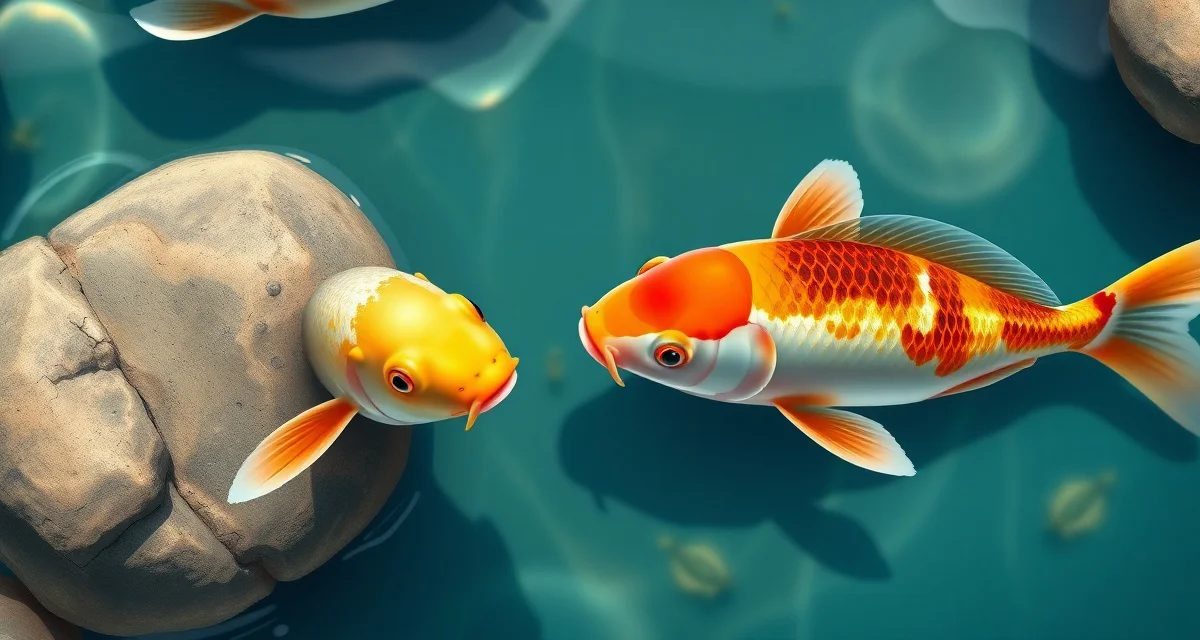
Why Is My Koi Flashing and Rubbing Against Rocks? Diagnosis Guide
Koi that flash more than 3 times per 10-minute observation window have a parasite burden large enough to require treatment. "Flashing," where a koi turns on its side briefly to expose its belly and scales, and rubbing against rocks, gravel, or the pond wall are not normal behaviors. They're attempts to dislodge something irritating the fish's skin or gills.
KoiQuanta's timestamped behavior log tracks flashing frequency changes over days to measure parasite burden and treatment response. One or two flashes in an hour may be borderline. Ten flashes in ten minutes is a clear treatment signal.
TL;DR
- Flashing (rapid side-rolling) and rubbing against surfaces are the primary behavioral signs of skin or gill irritation in koi.
- Occasional isolated flashing is normal; frequent, repeated flashing by multiple fish is a clear signal of a problem.
- Ectoparasites including gill flukes, Costia, Trichodina, and koi ich white spot are the most common cause of flashing behavior.
- Poor water quality, particularly low pH and elevated ammonia, can also cause flashing as fish try to relieve gill irritation.
- Identifying the specific cause before treatment is important; different parasites require different treatments.
- Microscopic skin scraping is the definitive diagnostic tool for distinguishing between ectoparasite species.
What Causes Koi to Flash and Rub
Flashing and rubbing are almost always caused by ectoparasites. The specific behavior pattern can help narrow down which parasite is involved:
Gill flukes (Dactylogyrus). Fish with gill fluke infestations often flash and may rub their gill covers against surfaces. You'll often see them gasping at the surface as well, because heavy gill fluke burdens impair respiration. Flashing from gill flukes tends to look like the fish is trying to shake its head or rub the gill area.
Skin flukes (Gyrodactylus). Skin flukes cause intense skin irritation. Fish flash continuously and may rub their entire body length against any available surface. Visible excess mucus on the body surface is common with skin fluke infestations.
Trichodina. Trichodina is a protozoan parasite that moves across the skin surface, creating an itching irritation. Infected fish flash and may develop a faint cloudiness or grayish cast to their skin from increased mucus production.
Costia (Ichthyobodo necator). Costia attaches to skin and gills, causing similar flashing and rubbing behavior to skin flukes. Costia is particularly active in cool water (5 to 15 degrees Celsius), so spring flashing in cold water often points to Costia.
Ich (Ichthyophthirius multifiliis). Ich causes the classic "white spot" visible symptoms, but fish will flash and rub well before white spots are visible. Early Ich infestation, before the trophonts have matured and become visible, looks exactly like other parasite-driven flashing.
Anchor worm and fish louse. These larger parasites can cause flashing when they're attached in areas that the fish can scratch against surfaces. The fish will often target one specific surface area rather than flashing generically.
High ammonia. Ammonia is a chemical irritant to fish skin and gills. Fish in high-ammonia water flash and rub in ways that closely mimic parasite behavior. Always test water quality before assuming parasites are the cause.
How to Distinguish Parasite Types
The definitive way to identify the specific parasite causing flashing behavior is microscopic examination of a gill or skin scraping. If you have access to a microscope and basic slide preparation skills, this is the most accurate diagnostic approach.
Without a microscope, you can make a strong working diagnosis from:
Season and temperature. Costia is most active in cool water (spring, early fall). Ich peaks in warm water. Skin and gill flukes are present year-round with peaks in spring and fall. If you're seeing spring flashing in cool water, Costia and flukes are more likely than Ich.
Visible white spots. If white spots are visible, it's Ich. If no visible spots are present, other parasites are more likely.
Mucus appearance. Heavy excess mucus covering the body surface suggests Trichodina or skin flukes. Localized mucus patches suggest possible Costia.
Gill vs. body. Rubbing focused on gill covers and head area suggests gill flukes. Full-body rubbing suggests skin parasites.
KoiQuanta's symptom checker guides you through this differential process. Enter the flashing frequency, body areas being rubbed, water temperature, and any other symptoms, and the system narrows the most likely diagnosis.
Treatment Approach
The treatment for flashing behavior depends on the identified cause:
Flukes: Praziquantel is the most effective treatment. Retreatment at 7 to 14 days (temperature-dependent) is required to address new hatch.
Trichodina and Costia: Salt at 0.3% is effective for mild infestations. Formalin or potassium permanganate for more serious cases.
Ich: Multi-stage treatment cycle calibrated to water temperature. See KoiQuanta's Ich treatment protocol.
Ammonia: Water change and filter adjustment. No medication needed.
Log every treatment in KoiQuanta with dose and temperature. The parasitic infection tracker covers full treatment protocols for each parasite type.
The Costia and Trichodina treatment tracker covers protozoan parasite treatment specifically.
Frequently Asked Questions
How do I tell if koi flashing is caused by Ich or flukes?
Ich causes visible white spots on the fish's skin once trophonts mature. If no white spots are visible, flashing is more likely caused by flukes, Costia, or Trichodina. Season and water temperature provide additional clues: Costia is most active in cool water below 15 degrees Celsius, Ich is most problematic in warmer water, and flukes are active year-round with spring and fall peaks. KoiQuanta's symptom checker guides you through a differential diagnosis based on the full symptom picture.
What is the treatment for koi that are flashing?
Treatment depends on the identified cause. Praziquantel for flukes, salt (0.3%) or formalin treatment guide/PP for protozoan parasites (Trichodina, Costia), and temperature-adjusted Ich treatment protocols for white spot disease. Always test water quality before treating to rule out ammonia as the cause. Log all treatments in KoiQuanta with dose, date, and retreatment schedule.
Can koi flash because of high ammonia?
Yes. High ammonia is a chemical irritant to fish skin and gills and causes flashing and rubbing behavior that looks very similar to parasite-driven flashing. Always test ammonia before assuming parasites are responsible. KoiQuanta's behavior-parameter correlation analysis connects the timing of flashing behavior to recent water quality changes, which can identify ammonia-driven flashing from water quality events.
How do I tell if flashing is caused by parasites or poor water quality?
Test water parameters first. If ammonia or nitrite is elevated or pH is outside 7.0-8.5, water quality is the likely cause and should be corrected before considering parasite treatment. If water quality is good and multiple fish are flashing frequently, ectoparasites are the more likely cause. Ideally, confirm with a skin scraping before treating. Fish that flash only occasionally in otherwise healthy conditions may simply be responding to minor irritation that does not require intervention.
What parasites cause koi to flash?
The most common are gill flukes (Dactylogyrus), skin flukes (Gyrodactylus), Costia (Ichthyobodo necator), Trichodina, and Ich (Ichthyophthirius multifiliis). Each requires a slightly different treatment approach. Flukes respond well to praziquantel dose calculator or formalin. Costia and Trichodina respond to salt at therapeutic concentrations, potassium permanganate, or formalin. Ich requires treatment targeting the free-swimming tomite stage. A skin scraping identifies which organism is present so you treat with the correct medication.
Can I treat flashing koi without a microscope?
Yes, but with less precision. If you cannot get a microscopic scraping, a broad-spectrum approach using potassium permanganate or formalin (which cover most common ectoparasites) is reasonable when combined with salt. Document the treatment and response in KoiQuanta. If the flashing does not resolve after two treatment courses, escalate to professional diagnosis rather than continuing empirical treatment, as some conditions require specific medications that broad-spectrum treatments do not cover.
What is Why Is My Koi Flashing and Rubbing Against Rocks? Diagnosis Guide?
Koi flashing and rubbing against rocks are stress behaviors where fish roll onto their sides or scrape against surfaces to relieve skin or gill irritation. This guide explains how to diagnose the root cause — whether parasites like gill flukes, Trichodina, or Costia, or water quality issues like low pH or elevated ammonia. It walks you through observation thresholds, water testing, and microscopic skin scraping to identify the specific problem before treating.
How much does Why Is My Koi Flashing and Rubbing Against Rocks? Diagnosis Guide cost?
This diagnostic guide is completely free. The information covers how to observe, log, and identify the cause of koi flashing behavior at no cost. KoiQuanta's timestamped behavior logging tool is also available to track flashing frequency over time and measure treatment response, helping you determine whether the problem is improving or worsening without any expense.
How does Why Is My Koi Flashing and Rubbing Against Rocks? Diagnosis Guide work?
The guide works by helping you move from symptom to cause systematically. You start by counting flash frequency — more than 3 flashes per 10-minute window signals a likely parasite burden. You then test water parameters to rule out ammonia or pH issues. If water quality is good, a microscopic skin scrape confirms which ectoparasite is present, allowing you to select the correct treatment rather than guessing.
What are the benefits of Why Is My Koi Flashing and Rubbing Against Rocks? Diagnosis Guide?
Using this guide helps you avoid the most common koi treatment mistake: applying the wrong remedy. Different parasites require different treatments, and misidentifying the cause wastes time and stresses fish further. The guide gives you a clear decision framework, reduces guesswork, and helps you act at the right threshold — neither under-reacting to early symptoms nor over-medicating a pond that just has a minor water quality fluctuation.
Who needs Why Is My Koi Flashing and Rubbing Against Rocks? Diagnosis Guide?
Any koi keeper who has noticed their fish flashing, rubbing, or behaving restlessly needs this guide. It is especially useful for pond owners dealing with new fish introductions, seasonal temperature swings, or recent water chemistry changes — all situations that elevate parasite and irritation risk. Both beginners unsure whether flashing is normal and experienced keepers troubleshooting a recurring problem will find the structured diagnostic approach practical and actionable.
Sources
- University of Florida IFAS Extension Aquaculture Program
- Fish Vet Group
- American Fisheries Society
- Koi Organisation International (KOI)
Get Started with KoiQuanta
Flashing can go from occasional to constant quickly when parasites are multiplying in warm water. KoiQuanta's retreatment scheduler calculates the correct interval between treatment doses based on your logged water temperature so you never miss the life-cycle window that makes retreatment effective. Log your first treatment and let KoiQuanta schedule the follow-up.