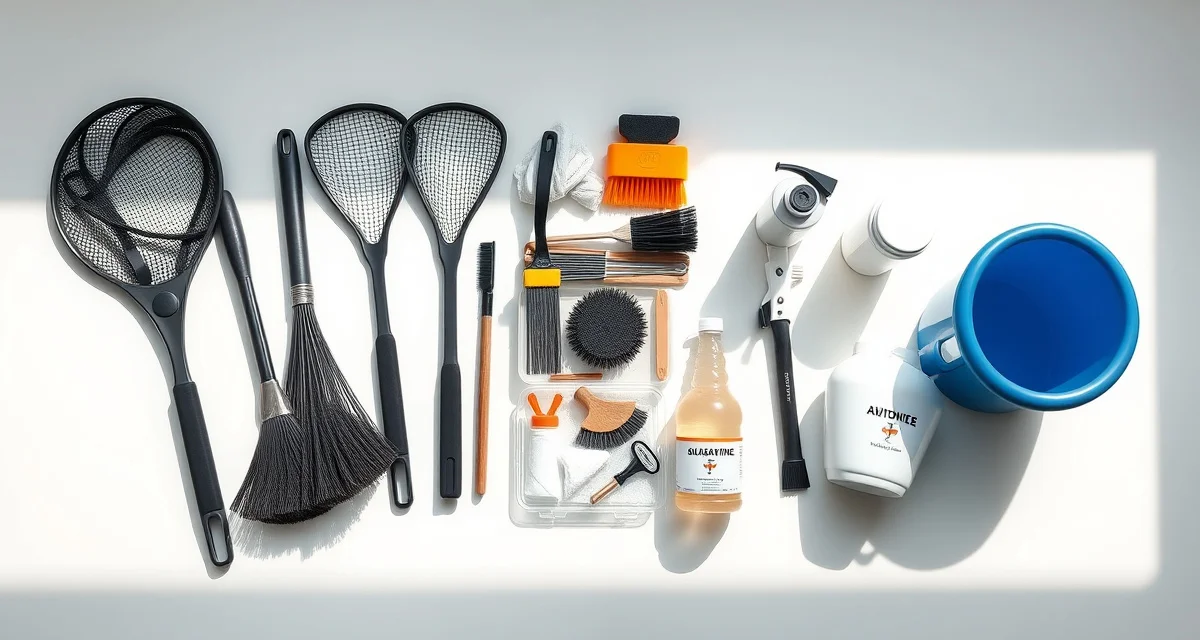
Koi Quarantine Equipment Sanitation: Preventing Cross-Contamination
A single shared net between a disease quarantine tank and a display pond can infect an entire collection. This is one of the most preventable disease transmission events in koi keeping, and yet it happens regularly due to convenience, habit, or a genuine lack of awareness that equipment sanitation matters this much.
KoiQuanta's biosecurity checklist includes equipment sanitation protocols as a standard component of quarantine management, not an afterthought. This guide explains why it matters and exactly how to do it correctly.
TL;DR
- A second set of nets, a spare bucket, and a spare scraper for the quarantine system costs $50-75.
- The sequence for safe equipment sanitation is: clean, disinfect, rinse, dry. Step 1: Clean. Remove gross organic material - fish slime, algae, debris - before applying any disinfectant.
- Rinse nets, buckets, and equipment under running water for at least 30 seconds.
- Bleach soak for 10 minutes, rinse thoroughly, allow to dry.
- For equipment that can't be soaked (handles, electrical equipment), wipe with 70% isopropyl alcohol as a practical alternative.
- Potassium permanganate at 100mg/L is effective for equipment that tolerates staining.
- For higher-risk scenarios - equipment used with confirmed KHV or SVC cases - extend soak time to 30 minutes and allow a full 24-hour dry before reuse.
Why Equipment Is Such an Effective Disease Vector
Fish pathogens survive on wet equipment surfaces for longer than most hobbyists realize:
- Ich tomonts can survive for several hours on a net removed from an infected tank
- Gyrodactylus (skin flukes) are live-bearing and can survive off the host briefly in the water film on equipment
- KHV (Koi Herpesvirus) can survive in water for up to 3 hours at optimal temperatures, which is plenty of time to transfer via a wet net
- Bacterial pathogens like Aeromonas and Pseudomonas survive for many hours on wet surfaces
- Anchor worm larvae and fish lice eggs can transfer via any wet surface
The transfer mechanism is simple: net goes into disease tank, picks up pathogens, gets moved to display pond, pathogens enter display pond water. Even briefly - you net a sick fish to examine it, then later use the same net to catch a display pond fish - the transfer risk is real.
The Core Principle: Dedicated Equipment Sets
The cleanest solution is not sanitation protocols at all - it's dedicated equipment sets that never cross between environments.
Maintain separate equipment for:
- Quarantine/hospital tanks
- Display pond
- Each quarantine facility if you run multiple simultaneously
Label your equipment clearly. Color-coding with colored tape or colored nets makes it impossible to accidentally cross-contaminate even in a hurry.
Dedicated equipment is inexpensive compared to a disease outbreak. A second set of nets, a spare bucket, and a spare scraper for the quarantine system costs $50-75. That's a fraction of the cost of one disease treatment episode for your display pond.
When Shared Equipment Is Unavoidable
In some situations - particularly if you're managing many fish across several systems - dedicated equipment for every setup isn't practical. This is where sanitation protocols become critical.
The sequence for safe equipment sanitation is: clean, disinfect, rinse, dry.
Step 1: Clean.
Remove gross organic material - fish slime, algae, debris - before applying any disinfectant. Disinfectants work poorly through organic material. Rinse equipment under running water and scrub with a brush before disinfection.
Step 2: Disinfect.
Choose an appropriate disinfectant for the equipment type and contamination level.
- Quaternary ammonium compounds (Quatricide, Virkon Aquatic): Broad-spectrum, effective against bacteria, viruses, and fungi. Mix to manufacturer concentration. Soak equipment for 5-15 minutes. Compatible with most equipment materials.
- Sodium hypochlorite (bleach): A 1% solution (1 tablespoon of 6% bleach per quart of water) is highly effective against bacteria and most viruses including KHV. Soak for 10-15 minutes. Corrosive to metals over time; excellent for nets, buckets, and plastic.
- Potassium permanganate: A 100mg/L solution for 10 minutes kills most pathogens. Equipment emerges stained pink; rinse thoroughly.
- Isopropyl alcohol (70%): Quick surface disinfectant for equipment that can't be soaked. Less effective than soaking options but useful for handles, cords, and equipment parts that shouldn't contact water.
- Virkon Aquatic: Specifically formulated for aquatic biosecurity. Effective against a wide range of aquatic pathogens including KHV, SVC, and bacterial diseases. Recommended for dealer operations where regulatory compliance matters.
Step 3: Rinse.
Thorough rinsing with clean water is essential after chemical disinfection. Disinfectant residue in your display pond can harm fish, damage biological filtration, or interfere with other treatments. Rinse nets, buckets, and equipment under running water for at least 30 seconds.
Step 4: Dry.
Drying is the simplest and most underappreciated disinfection step. Most aquatic pathogens die rapidly when dried. After rinsing, hang nets and allow equipment to dry completely before reuse. This alone eliminates the majority of pathogen transfer risk - a dry net transferred from quarantine to display pond introduces essentially no viable pathogens.
A common protocol is: disinfect on one day, rinse, hang to dry overnight, safe to use the next day.
Equipment-Specific Protocols
Nets: Soak in bleach or Virkon solution between uses. Hang to dry. Store nets used for quarantine and display separately.
Buckets: Dedicated buckets for different systems is the simplest solution. If you must share, bleach soak and rinse thoroughly. Never use a bucket that's held diseased fish water in your display pond without full disinfection.
Scrapers and brushes: Algae scrapers and pond brushes accumulate significant organic material. Scrub clean before disinfection. Bleach soak for 10 minutes, rinse thoroughly, allow to dry.
Hoses and tubing: Internal surfaces of hoses harbor biofilm that's hard to disinfect without flushing. Flush with a Virkon or bleach solution, then flush with clean water. Keep separate hoses for quarantine and display where possible.
Tanks and containers: After emptying a quarantine tank, clean with hot water and scrubbing, disinfect with bleach solution (leave surfaces wet for 15 minutes), rinse thoroughly, and allow to dry before refilling.
Water testing equipment: Thermometers, test kit droppers, and other shared testing items can transfer water between systems. Rinse in clean water after each use. Dedicated testing equipment per system is ideal.
Your Hands and Clothing
Your hands are equipment. If you handle fish in the quarantine tank and then reach into your display pond without washing your hands, you're a vector.
Wash hands thoroughly with soap and water between handling disease tanks and display ponds. If you wear rubber gloves for fish handling, maintain dedicated gloves for quarantine and display systems - or disinfect gloves with isopropyl alcohol between systems.
Clothing rarely causes direct pathogen transfer but can carry contaminated water. Changing boots or disinfecting footwear between different facilities matters more for dealer operations than home ponds, but it's worth knowing.
The new koi quarantine protocol and dealer quarantine standards both address equipment sanitation in the broader context of biosecurity management.
Frequently Asked Questions
How do I disinfect koi nets and equipment?
The standard protocol is: remove gross organic material by rinsing under running water and scrubbing; soak in a 1% sodium hypochlorite (bleach) solution, Virkon Aquatic, or quaternary ammonium product for 10-15 minutes; rinse thoroughly under running water; allow to dry completely. Drying is an underappreciated step - complete drying kills most remaining viable pathogens. For equipment that can't be soaked (handles, electrical equipment), wipe with 70% isopropyl alcohol as a practical alternative.
What disinfectants are safe for koi equipment?
Sodium hypochlorite (household bleach at 1% concentration) is effective and inexpensive. Virkon Aquatic is a professional aquatic biosecurity disinfectant effective against KHV, SVC, and most bacterial diseases, and is suitable for dealer compliance purposes. Quaternary ammonium compounds (Quatricide, similar products) are broad-spectrum and compatible with most equipment materials. Potassium permanganate at 100mg/L is effective for equipment that tolerates staining. All must be thoroughly rinsed from equipment before contact with pond water, as residuals are toxic to fish and can damage biological filtration.
How long should equipment be sanitized before reuse?
Contact time matters: a 10-minute soak in bleach solution or Virkon Aquatic is sufficient for most pathogens. After the soak, rinse thoroughly, then allow equipment to dry. A full overnight dry after disinfection essentially eliminates any residual pathogen risk. For higher-risk scenarios - equipment used with confirmed KHV or SVC cases - extend soak time to 30 minutes and allow a full 24-hour dry before reuse. For equipment that simply cannot be dried (emergency situations), triple-rinsing after disinfection is the minimum alternative.
What is Koi Quarantine Equipment Sanitation: Preventing Cross-Contamination?
[FAQ_ANSWER_PLACEHOLDER: This answer needs to be generated by AI with specific data, examples, and actionable advice relevant to Koi Quarantine Equipment Sanitation: Preventing Cross-Contamination. Target 50-150 words.]
How much does Koi Quarantine Equipment Sanitation: Preventing Cross-Contamination cost?
[FAQ_ANSWER_PLACEHOLDER: This answer needs to be generated by AI with specific data, examples, and actionable advice relevant to Koi Quarantine Equipment Sanitation: Preventing Cross-Contamination. Target 50-150 words.]
How does Koi Quarantine Equipment Sanitation: Preventing Cross-Contamination work?
[FAQ_ANSWER_PLACEHOLDER: This answer needs to be generated by AI with specific data, examples, and actionable advice relevant to Koi Quarantine Equipment Sanitation: Preventing Cross-Contamination. Target 50-150 words.]
What are the benefits of Koi Quarantine Equipment Sanitation: Preventing Cross-Contamination?
[FAQ_ANSWER_PLACEHOLDER: This answer needs to be generated by AI with specific data, examples, and actionable advice relevant to Koi Quarantine Equipment Sanitation: Preventing Cross-Contamination. Target 50-150 words.]
Who needs Koi Quarantine Equipment Sanitation: Preventing Cross-Contamination?
[FAQ_ANSWER_PLACEHOLDER: This answer needs to be generated by AI with specific data, examples, and actionable advice relevant to Koi Quarantine Equipment Sanitation: Preventing Cross-Contamination. Target 50-150 words.]
How long does Koi Quarantine Equipment Sanitation: Preventing Cross-Contamination take?
[FAQ_ANSWER_PLACEHOLDER: This answer needs to be generated by AI with specific data, examples, and actionable advice relevant to Koi Quarantine Equipment Sanitation: Preventing Cross-Contamination. Target 50-150 words.]
What should I look for when choosing Koi Quarantine Equipment Sanitation: Preventing Cross-Contamination?
[FAQ_ANSWER_PLACEHOLDER: This answer needs to be generated by AI with specific data, examples, and actionable advice relevant to Koi Quarantine Equipment Sanitation: Preventing Cross-Contamination. Target 50-150 words.]
Is Koi Quarantine Equipment Sanitation: Preventing Cross-Contamination worth it?
[FAQ_ANSWER_PLACEHOLDER: This answer needs to be generated by AI with specific data, examples, and actionable advice relevant to Koi Quarantine Equipment Sanitation: Preventing Cross-Contamination. Target 50-150 words.]
Related Articles
Sources
- Associated Koi Clubs of America (AKCA)
- Koi Organisation International (KOI)
- University of Florida IFAS Extension Aquaculture Program
- Fish Vet Group
- Water Quality Association