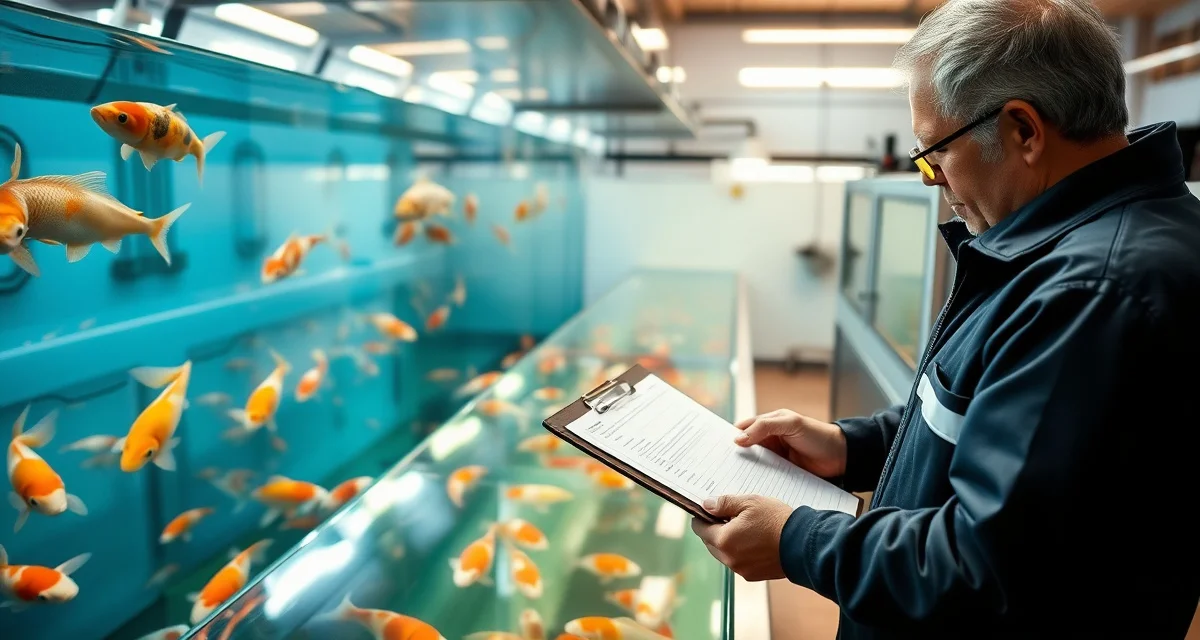
Koi Dealer Quarantine Standards: Professional Requirements
Dealers with documented protocols report significantly fewer customer complaints. That correlation isn't coincidental. A documented quarantine protocol produces two things a verbal guarantee never can: proof that you did the work, and a specific record of what you found. Both of those protect you and build real confidence with serious buyers.
Here's what a professional quarantine standard looks like, and why it matters for how you run your business.
TL;DR
- The serious collector shopping for a $3,000 tosai nisai from Sakai Fish Farm isn't going to take your word for it.
- The 21-day minimum covers the basic disease observation window.
- The 42-day standard gives you more confidence with KHV, covers parasite lifecycle windows more completely, and shows customers you're not taking shortcuts.
- A log showing 14 consecutive clean observations is documentation, not just absence of bad news.
- Standard sanitation: dilute bleach (1:10), 15-20 minute soak, thorough rinse, air dry.
- Most professional dealers use 42 days as their standard, with documentation covering each day.
- The dealers I respect most run 42-day protocols on everything and have the records to show it.
Why Documentation Is the Difference
Any dealer can tell a customer "I quarantined those fish for 30 days." Without documentation, that claim is unverifiable - and sophisticated buyers know it. The serious collector shopping for a $3,000 tosai nisai from Sakai Fish Farm isn't going to take your word for it. They want to see the records.
Beyond customer trust, documentation protects you legally. If a buyer claims a fish was sick when they received it, your quarantine records showing clean daily observations, treatment logs, and discharge sign-off are your defense. If you have nothing on paper, it's their word against yours.
And beyond legal protection, documentation forces operational discipline. When you're required to record daily observations, you actually do them. When you're recording treatment doses, you don't wing it. The act of documentation improves the protocol itself.
Minimum Quarantine Period for Professional Dealers
Domestic Arrivals
Twenty-one days minimum, but 42 days is increasingly the industry standard for reputable operations. The 21-day minimum covers the basic disease observation window. The 42-day standard gives you more confidence with KHV, covers parasite lifecycle windows more completely, and shows customers you're not taking shortcuts.
Japanese and International Imports
Forty-two days minimum, no exceptions. For imports from premium breeders (Sakai, Dainichi, Marudo, Momotaro, and others), you've paid for quality fish. A rigorous quarantine protocol protects that investment.
USDA APHIS requirements for importing koi from Japan include health certificates from Japan's Ministry of Agriculture and inspection at the US port of entry. Your domestic quarantine protocol picks up after the fish clear import requirements and arrive at your facility.
Show and Event Returns
Treat the same as new imports: 42 days, full documentation. Your fish have been in a high-exposure environment.
Documentation Requirements: What to Record
Per-Batch Records
For each quarantine batch:
- Arrival date
- Source (dealer, breeder, auction name and lot number)
- Number of fish by variety and size
- Transport conditions (temperature, transit time, bag parameters on arrival)
- Quarantine tank assignment
- Quarantine start date
- Planned discharge date
Daily Observation Logs
Record twice daily during active quarantine:
- Observation time and observer name
- All fish present (count)
- Behavioral status: normal, lethargic, flashing, isolated
- Appetite at feeding
- Any clinical signs: lesions, fin erosion, abnormal posture, respiratory distress
- Water parameters: temperature, ammonia, nitrite, pH (daily minimum; twice daily if there are problems)
The "all clear" entries matter as much as the problem entries. A log showing 14 consecutive clean observations is documentation, not just absence of bad news.
Treatment Records
For each treatment administered:
- Date and time
- Treatment product name, active ingredient, and concentration
- Calculated dose and actual amount added
- Water volume at time of treatment
- Reason for treatment
- Fish response observations at 30 minutes, 2 hours, and 24 hours post-treatment
- Water changes associated with treatment
- Course end date (or planned end date for ongoing courses)
For antibiotics specifically: drug name, dose per fish or per liter, route (bath, food, injection), duration, and outcome.
Discharge Sign-Off
Before fish are moved from quarantine to display or sold, document:
- Discharge date
- Days elapsed in quarantine
- Discharge criteria check: all criteria met or any exceptions noted
- Name of person authorizing discharge
- Destination (tank or sale)
For sold fish, the discharge record feeds directly into the buyer documentation.
Buyer Packs and Quarantine Certificates
A professional buyer pack for a sold fish should include:
Quarantine summary:
- Quarantine period (start and end dates)
- Water parameters during quarantine (summary)
- Treatments administered
- Any health events and outcomes
- Discharge date and criteria
Fish-specific documentation:
- Fish ID or description (variety, approximate size, photo)
- Source and acquisition date
- Health status at discharge
Care recommendations:
- Temperature the fish was quarantined at
- Salt concentration at discharge (so buyer knows what the fish is acclimated to)
- Diet during quarantine
- Any ongoing treatment needs
KoiQuanta generates this documentation automatically from your quarantine records. The same data you're recording daily feeds the buyer pack without additional work. That's the operational advantage of a digital system over paper logs.
Biosecurity Procedures for Dealers
A documented protocol isn't just about fish records - it includes your operational biosecurity procedures.
Equipment sanitation: Every net, bucket, scraper, or hand that enters a quarantine tank should be dedicated to that tank or sanitized before entering another. Dealers running multiple tanks without sanitation between them are defeating the purpose of separate quarantine systems.
Standard sanitation: dilute bleach (1:10), 15-20 minute soak, thorough rinse, air dry. Potassium permanganate solution works as an alternative for equipment that shouldn't contact bleach.
Personnel protocols: Anyone handling fish in quarantine should sanitize hands (or better, use dedicated waterproof gloves) before and after each tank. This matters more than most people realize - human hands carry bacteria, and wet hands touching multiple systems spread it.
Dead fish protocol: Any death in quarantine is an event. Document it immediately. Don't flush or dispose of dead fish without a written record. If deaths are suspicious (multiple fish, rapid decline, unusual presentation), preserve the fish for veterinary examination. A necropsy on a suspicious quarantine death might be the thing that saves your whole display system.
Visitor access: Keep non-essential traffic away from active quarantine systems. This is relevant if you're running a public-facing retail operation - the people who want to look at your new Japanese arrivals before they clear quarantine are a biosecurity risk, even if they're not touching anything.
Comparing Documentation Approaches
Paper Logs
Work. Are cheap. Require discipline and don't prompt you. Can be lost, damaged, or illegible. Hard to search or compile into buyer documentation. Don't calculate anything automatically.
Spreadsheets
Better than paper. Still require manual entry and don't prompt observation. Parameter calculations have to be done manually. Easy to mess up dose calculations. Adequate for small operations.
KoiQuanta
Built for this specific workflow. Observation prompts you at scheduled times. Treatment dose calculations are automated. Buyer documentation generates from your records. Discharge criteria are tracked against a live checklist. For dealers running multiple tanks and batches simultaneously, the operational difference versus a spreadsheet is significant. Spreadsheets cannot produce auditable quarantine records at the level buyers and regulators expect.
Legal Considerations
Documented quarantine records can be important in several scenarios:
- A customer claims a fish they purchased was sick when they received it
- A disease outbreak is traced to your facility
- Regulatory inspection (USDA APHIS or state fish health authority)
- Insurance claims for fish losses
In most US states, there's no law requiring a specific quarantine period for koi dealers. But there are laws about misrepresentation of goods, and selling fish represented as healthy with no documentation to support that claim creates legal exposure.
Talk to your business insurance provider about what documentation they require for any livestock loss or liability coverage. Many policies have requirements you may not be meeting.
Related Articles
- Koi Dealer Software for California: Compliance, Quarantine, and Tracking
- Koi Dealer Software for Florida: Tropical Climate Quarantine Management
- Koi Dealer Software for New York: Compliance and Seasonal Quarantine Planning
FAQ
What quarantine period do koi dealers use?
Most professional dealers use 42 days as their standard, with documentation covering each day. Twenty-one days is a common minimum but is increasingly seen as insufficient for high-risk situations (imports, show fish, unknown-source fish). The dealers I respect most run 42-day protocols on everything and have the records to show it.
Can KoiQuanta produce quarantine certificates for customers?
Yes. KoiQuanta generates buyer documentation from your quarantine records - including the quarantine period, water parameters, treatments administered, and discharge sign-off. These can be printed or sent digitally with a fish sale. The documentation looks professional and gives buyers verifiable information about what was done with their fish before they received it.
How do I document quarantine for import compliance?
USDA APHIS import requirements cover the import event itself (health certificates, port inspection). Your domestic quarantine protocol is separate from the import compliance documentation, though maintaining both in organized records is valuable. State fish health authorities may have additional requirements depending on your state. KoiQuanta's compliance reporting module helps organize both import documentation and ongoing quarantine records.
What is Koi Dealer Quarantine Standards: Professional Requirements?
[FAQ_ANSWER_PLACEHOLDER: This answer needs to be generated by AI with specific data, examples, and actionable advice relevant to Koi Dealer Quarantine Standards: Professional Requirements. Target 50-150 words.]
How much does Koi Dealer Quarantine Standards: Professional Requirements cost?
[FAQ_ANSWER_PLACEHOLDER: This answer needs to be generated by AI with specific data, examples, and actionable advice relevant to Koi Dealer Quarantine Standards: Professional Requirements. Target 50-150 words.]
How does Koi Dealer Quarantine Standards: Professional Requirements work?
[FAQ_ANSWER_PLACEHOLDER: This answer needs to be generated by AI with specific data, examples, and actionable advice relevant to Koi Dealer Quarantine Standards: Professional Requirements. Target 50-150 words.]
What are the benefits of Koi Dealer Quarantine Standards: Professional Requirements?
[FAQ_ANSWER_PLACEHOLDER: This answer needs to be generated by AI with specific data, examples, and actionable advice relevant to Koi Dealer Quarantine Standards: Professional Requirements. Target 50-150 words.]
Who needs Koi Dealer Quarantine Standards: Professional Requirements?
[FAQ_ANSWER_PLACEHOLDER: This answer needs to be generated by AI with specific data, examples, and actionable advice relevant to Koi Dealer Quarantine Standards: Professional Requirements. Target 50-150 words.]
Sources
- Associated Koi Clubs of America (AKCA)
- Koi Organisation International (KOI)
- University of Florida IFAS Extension Aquaculture Program
- Fish Vet Group
- Water Quality Association