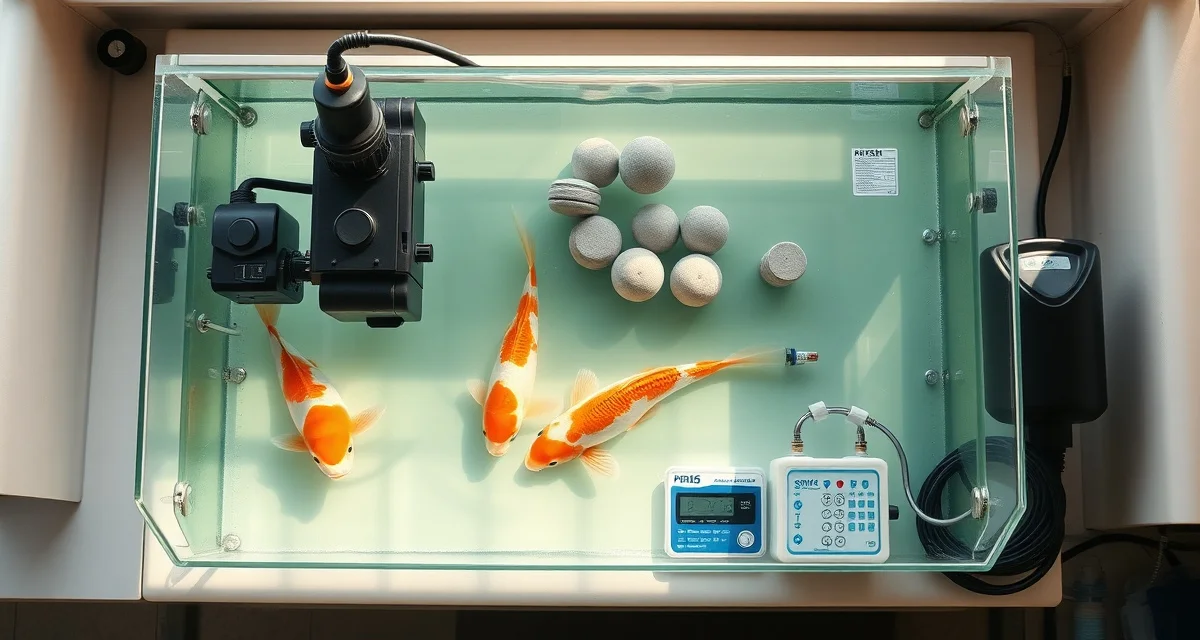
Koi Quarantine Checklist: Equipment, Medications, and Protocol
Missing one item from this checklist at the wrong moment costs you fish. The salt you forgot to buy when the fish arrive. The second thermometer that would have caught the heater malfunction on day-best-medications) 8. The written observation log you meant to start but didn't.
This checklist is built from hard experience. Use it.
TL;DR
- The second thermometer that would have caught the heater malfunction on day 8.
- "Evening" isn't enough - "6:45 PM" is documentation.
- KoiQuanta connects observations, water data, and treatment records in one searchable history.
- Early detection based on parameter trends reduces treatment costs and fish stress.
- Seasonal changes require adjusted monitoring schedules; automated reminders help maintain consistency.
Before Fish Arrive: Facility Checklist
Tank Setup
- [ ] Tank clean and sanitized (bleach 1:10, rinsed thoroughly, dechlorinated)
- [ ] Tank bare-bottom (no gravel, no plants, no decoration)
- [ ] Volume calculated and confirmed (at minimum 100 gallons per group of small tosai, 300+ gallons for nisai)
- [ ] Tank filled and at temperature for 48 hours minimum before fish arrive
- [ ] Good lighting installed above or beside tank for observation
Filtration and Aeration
- [ ] Filter seeded from established system (or bacterial product added 48 hours before fish)
- [ ] Filter running 48 hours before fish arrive
- [ ] Air stone installed and running
- [ ] Backup air pump on hand
- [ ] Air line and check valve confirmed functional
Temperature Control
- [ ] Heater installed and set to 65-68°F
- [ ] Temperature confirmed at target 24 hours before arrival
- [ ] Calibrated thermometer separate from heater display (heater thermostats drift)
- [ ] Backup heater available
Water Quality
- [ ] Ammonia: 0 ppm confirmed on day before arrival
- [ ] Nitrite: 0 ppm confirmed
- [ ] pH: 7.2-7.8 confirmed
- [ ] KH: 100-150 ppm confirmed
- [ ] Dechlorinator on hand (sodium thiosulfate or commercial product)
Equipment - Quarantine-Dedicated Only
- [ ] Net(s) - labeled for quarantine use only, NOT shared with display system
- [ ] Bucket - labeled quarantine only
- [ ] Siphon/hose - labeled quarantine only
- [ ] Rubber gloves
- [ ] Bleach and clean container for equipment sanitation
Medications and Treatment Supplies
Always Have On Hand
- [ ] Non-iodized salt - enough for at least 0.5% in your tank volume
- 0.5% in 300 gallons = 12.5 lbs
- 0.5% in 500 gallons = 21 lbs
- [ ] Praziquantel - for flukes (two treatment rounds needed)
- [ ] Water conditioner/dechlorinator
- [ ] Clove oil or MS-222 (anesthetic for examination)
- [ ] Povidone-iodine for wound treatment
For Known Risks or High-Risk Fish
- [ ] Potassium permanganate (PP) - external bacterial/parasitic treatment
- [ ] Malachite green and/or formalin (ich, external parasites)
- [ ] Methylene blue (antifungal, supportive)
- [ ] Antibiotic (oxytetracycline or other appropriate choice - check regulations)
- [ ] Epsom salt (magnesium sulfate, for swim bladder and bloat support)
Diagnostic Supplies
- [ ] Ammonia test kit (liquid reagent)
- [ ] Nitrite test kit (liquid reagent)
- [ ] pH test kit or meter
- [ ] KH test kit
- [ ] Thermometer (separate from heater)
- [ ] Refractometer (if using salt dose calculator - for accurate salinity measurement)
- [ ] Microscope and slides (optional but recommended for dealers)
Observation and Record-Keeping Checklist
Log Setup (Before Fish Arrive)
- [ ] Observation log created (paper or KoiQuanta profile set up)
- [ ] Quarantine start date recorded
- [ ] Source information recorded
- [ ] Fish count and descriptions recorded
- [ ] Planned quarantine end date calculated
Daily Observation Items
- [ ] Fish count (is everyone present?)
- [ ] Behavioral status: normal / lethargic / flashing / isolated
- [ ] Feeding response (yes/partial/refused)
- [ ] Fin position: extended or clamped?
- [ ] Breathing rate: normal or elevated?
- [ ] Skin and fin condition: any new lesions, mucus changes, discoloration?
- [ ] Water temperature
- [ ] Ammonia reading
- [ ] Nitrite reading
- [ ] pH reading
- [ ] Any treatment administered: product, dose, time
Observe morning and evening. Record the actual time. "Evening" isn't enough - "6:45 PM" is documentation.
Treatment Schedule Reference
Week 1 (Days 1-7)
- Day 1-3: Observation only, no treatment
- Day 4: Begin salt at 0.1% (1 lb per 100 gal)
- Day 5: Increase salt to 0.2%
- Day 6: Increase salt to 0.3%
- Day 5-6: Begin praziquantel dose 1 (2.5-5 ppm)
Week 2 (Days 8-14)
- Maintain salt at 0.3-0.5%
- Continue daily observations
- Watch for hatching parasites (eggs from first treatment window)
- Days 14-16: Praziquantel dose 2
Weeks 3-6 (Days 15-42)
- Continue salt maintenance at 0.3%
- Daily observations, can reduce to once daily if no problems
- Any disease event restarts the 14-day clean observation requirement
Discharge Criteria - Sign Off Before Moving Fish
Minimum Requirements
- [ ] Minimum 21 days elapsed (42 days for imports, show fish, unknown sources)
- [ ] Zero mortality in past 14 days
- [ ] All fish eating normally for 14+ days
- [ ] No flashing or abnormal behavior for 14+ days
- [ ] No visible lesions, wounds, or clinical signs
- [ ] Water parameters stable: ammonia 0, nitrite 0
- [ ] All treatments completed and course dates documented
- [ ] Second praziquantel dose completed
For Imports or High-Value Fish
- [ ] PCR testing results negative (if conducted)
- [ ] 42 days elapsed minimum
- [ ] Buyer documentation prepared from quarantine records
Post-Quarantine: Tank Reset Checklist
- [ ] Dead fish disposed of and documented (not flushed without record)
- [ ] All water drained
- [ ] All surfaces scrubbed
- [ ] Bleach solution (1:10) applied to all surfaces and equipment
- [ ] Soak time 20-30 minutes
- [ ] Thorough rinse (3+ times)
- [ ] Re-fill with dechlorinated water to verify no bleach residue
- [ ] Filter media decision: sanitize or preserve (sanitize if disease occurred, preserve for faster cycling if clean quarantine)
Related Articles
- Japanese Koi Import Quarantine: USDA Requirements and Domestic Protocol
- Koi Dealer New Arrivals Protocol: From Delivery to Quarantine
- Moving Koi from Quarantine to Display Pond: Protocol
FAQ
What medications should I always have in my quarantine kit?
The core kit: non-iodized salt (buy it in bulk - you'll use it), praziquantel, malachite green or a commercial equivalent, potassium permanganate, and a broad-spectrum antibiotic. Add povidone-iodine for wound care and clove oil for anesthesia when handling fish for examination. These seven items cover the majority of quarantine scenarios you'll encounter.
How often should I test water in quarantine?
Daily during active quarantine, minimum. Test ammonia, nitrite, and pH every morning. If you've had any problems or added treatments that might affect filtration, test twice daily. The cost of a test kit is trivial compared to the cost of losing fish to an ammonia spike you didn't catch until it was too late.
What records does a quarantine checklist need to include?
Daily observation logs with actual water parameter readings (not just "looks ok"), treatment dates and doses, arrival information (source, date, fish count and description), and a discharge sign-off showing all criteria were met. These records should be complete enough that someone who wasn't there could reconstruct exactly what happened to each fish. That's the test for good documentation.
What is Koi Quarantine Checklist: Equipment, Medications, and Protocol?
[FAQ_ANSWER_PLACEHOLDER: This answer needs to be generated by AI with specific data, examples, and actionable advice relevant to Koi Quarantine Checklist: Equipment, Medications, and Protocol. Target 50-150 words.]
How much does Koi Quarantine Checklist: Equipment, Medications, and Protocol cost?
[FAQ_ANSWER_PLACEHOLDER: This answer needs to be generated by AI with specific data, examples, and actionable advice relevant to Koi Quarantine Checklist: Equipment, Medications, and Protocol. Target 50-150 words.]
How does Koi Quarantine Checklist: Equipment, Medications, and Protocol work?
[FAQ_ANSWER_PLACEHOLDER: This answer needs to be generated by AI with specific data, examples, and actionable advice relevant to Koi Quarantine Checklist: Equipment, Medications, and Protocol. Target 50-150 words.]
What are the benefits of Koi Quarantine Checklist: Equipment, Medications, and Protocol?
[FAQ_ANSWER_PLACEHOLDER: This answer needs to be generated by AI with specific data, examples, and actionable advice relevant to Koi Quarantine Checklist: Equipment, Medications, and Protocol. Target 50-150 words.]
Who needs Koi Quarantine Checklist: Equipment, Medications, and Protocol?
[FAQ_ANSWER_PLACEHOLDER: This answer needs to be generated by AI with specific data, examples, and actionable advice relevant to Koi Quarantine Checklist: Equipment, Medications, and Protocol. Target 50-150 words.]
Sources
- Associated Koi Clubs of America (AKCA)
- Koi Organisation International (KOI)
- University of Florida IFAS Extension Aquaculture Program
- Fish Vet Group
- Water Quality Association