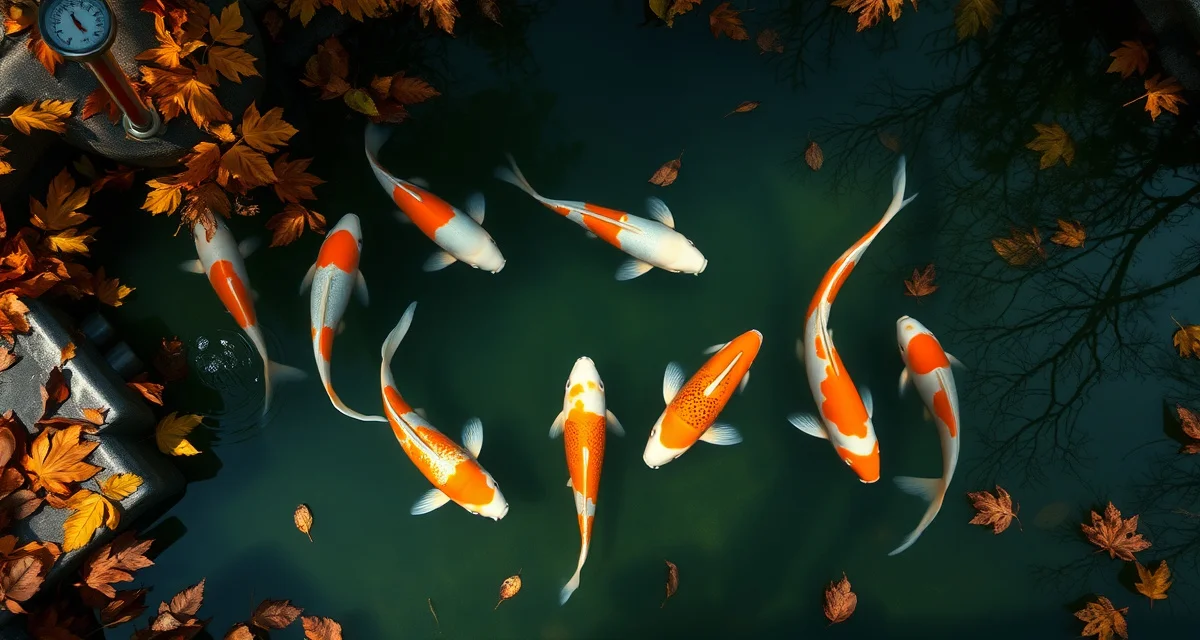
Koi Pond Winter Preparation: Step-by-Step Checklist
Spring disease outbreaks are largely determined by how well winter preparation was executed. This is one of those counterintuitive truths about koi keeping: the work you do in October and November shapes what happens the following April and May. Fish that go into winter in good condition, in a clean pond, with adequate fat reserves, emerge in spring with better immune function and less disease susceptibility than fish that went into winter poorly prepared.
KoiQuanta's autumn prep checklist is triggered when water temperatures drop below 12°C, walking you through each step with the right timing.
TL;DR
- KoiQuanta's autumn prep checklist is triggered when water temperatures drop below 12°C, walking you through each step with the right timing.
- This is when you're building the fat reserves that carry your fish through 3-4 months of no feeding.
- From late summer through early autumn (while water is above 18°C): feed 2-3 times daily with quality high-protein food.
- Food fed below 10°C sits undigested in the gut, ferments, and causes fatal impaction.
- Don't feed based on fish behavior -- koi come to the surface for food even when temperatures are below 10°C if you've trained them to associate human presence with feeding.
- The deicer maintains a small ice-free opening for gas exchange -- CO2 out, some oxygen in.
- The window for effective treatment closes when water drops below 10°C.
Why Winter Preparation Matters
In cold climates (anywhere water temperature drops below 10°C seasonally), koi enter a state of dormancy. Their metabolism slows dramatically, they stop feeding, and they spend winter in near-stasis at the deepest part of the pond.
During this dormancy:
- Fish can't fight infection actively -- immune function is suppressed
- Any bacterial infections that were low-grade in autumn can worsen through winter
- Organic waste in the pond sediment decomposes slowly, releasing CO2 and ammonia
- Ice cover can seal gas exchange, making CO2 buildup lethal
- Fish that went into winter in poor body condition may not have the fat reserves to survive until spring
Good winter preparation addresses each of these risks systematically.
Step 1: Build Fish Condition Through Late Summer and Early Autumn
Winter preparation starts in August and September, not October. This is when you're building the fat reserves that carry your fish through 3-4 months of no feeding.
From late summer through early autumn (while water is above 18°C): feed 2-3 times daily with quality high-protein food. The fish should be in their best body condition of the year going into the temperature transition.
This is also the time to treat any existing health problems. A fish with an untreated ulcer or active parasite burden going into winter is a fish that may not survive winter. Address health issues while the fish has enough metabolic activity to fight infection and heal.
Step 2: Transition Feeding as Temperature Drops
When water temperature consistently drops below 18°C (typically September to October depending on region):
- Switch to wheat germ-based food (easier to digest at lower temperatures)
- Reduce feeding frequency to once or twice daily
- Begin reducing portion sizes
When temperature drops to 10-15°C:
- Feed wheat germ food once daily or every other day
- Portion sizes should be 25-50% of summer rations
- Remove all uneaten food promptly
When should I stop feeding koi before winter?
Stop feeding when water temperature consistently stays below 10°C. This is the threshold where koi digestion effectively stops. Food fed below 10°C sits undigested in the gut, ferments, and causes fatal impaction.
Don't feed based on fish behavior -- koi come to the surface for food even when temperatures are below 10°C if you've trained them to associate human presence with feeding. The thermometer is the guide, not the fish.
Step 3: Clean the Pond Thoroughly
Before water temperature drops below 10°C, do a thorough pond cleaning:
Remove all dead and dying plant material: Decomposing plant matter in the pond is a primary source of CO2 and ammonia production during winter. Remove marginal plants that are dying back, cut emergent plants close to the water surface, and pull out any blanketweed or algae accumulations.
Vacuum the pond bottom: Use a pond vacuum to remove as much settled organic sediment as possible. Under ice, this sediment decomposes slowly and continuously, contributing to gas buildup. The cleaner the pond bottom, the lower the gas load through winter.
Check and clean the filter: Run the filter clean heading into winter. Remove any accumulated sludge from vortex chambers and settlement tanks. Don't backwash aggressively enough to kill all biofilter bacteria -- just remove the heavy organic load.
Remove equipment that could freeze and crack: Pump heads, UV sterilizers, and other equipment that holds water can crack if they freeze while full. If you're shutting down the main pump for winter, empty and store UV sterilizers and other vulnerable components.
Step 4: Reduce or Stop Filtration as Appropriate
For cold climates:
Cold climates (sustained ice): Suspend the main circulation pump to avoid circulating near-freezing surface water through the deepest zone where fish are resting. Koi prefer the thermal stability of a deep, still pond during winter. The exception is a deicer -- that should continue running.
Mild climates (frost but rarely sustained ice): Reduced filtration at 30-50% of summer flow rate is often appropriate through winter. This keeps bacteria alive and some circulation going without the thermal disruption of full circulation.
Step 5: Install Winter Equipment
Pond deicer (floating heater): Essential for any climate with freezing temperatures. The deicer maintains a small ice-free opening for gas exchange -- CO2 out, some oxygen in. This doesn't heat the pond; it prevents complete ice-over.
Install the deicer before you expect the first freeze. Test that it's working before temperatures drop to the critical range.
Do I need to remove my koi for winter?
In most cases, no -- koi can overwinter in a properly deep pond (1.5m minimum in the deepest zone) with a functioning deicer. The fish naturally enter winter dormancy and don't need to be disturbed. Removing koi for winter is appropriate for: ponds too shallow to maintain an unfrozen zone, ponds with structural issues, or very valuable fish where any risk is unacceptable.
Step 6: Pre-Winter Health Assessment
Before fish go dormant, assess each fish visually:
- Any active ulcers or wounds that need treatment before winter
- Unusual body condition (thin fish that may not have enough reserves)
- Swollen areas or behavioral abnormalities that could worsen during winter dormancy
- Signs of parasites that should be addressed before fish immune function drops further
If you find health problems, treat them as an autumn priority. The window for effective treatment closes when water drops below 10°C.
For the seasonal management context, the koi seasonal management guide covers the full year-round cycle. For cold-climate-specific winter management, the koi keeping in cold climates guide provides regional guidance.
Step 7: Winter Monitoring
Once koi are in dormancy, minimal monitoring is needed:
Check the deicer daily: Make sure the gas exchange opening is maintained. This is the one non-negotiable daily task.
Check for fish at the surface: Koi that appear at the surface in winter may be there because CO2 is building up (deicer failure, ice-over), not because they're hungry.
Don't disturb dormant fish: Avoid netting, checking, or otherwise disturbing fish during deep winter. Disrupting dormant koi at cold temperatures causes real physiological stress.
Frequently Asked Questions
When should I stop feeding koi before winter?
Stop when water temperature consistently stays below 10°C. Don't use calendar date as the trigger -- use the thermometer. Some years autumn arrives early; others the warm weather extends. Below 10°C, koi digestion effectively stops, and food left in the gut ferments and causes fatal impaction. Start transitioning to wheat germ food at 15°C, reduce portions at 12°C, and stop entirely below 10°C. Fish will still approach for food at these temperatures -- this is trained behavior, not genuine hunger.
Do I need to remove my koi for winter?
Not if your pond is deep enough (minimum 1.5m in the deepest zone) and you have a functioning deicer to maintain a gas exchange opening in the ice. Koi evolved to survive cold winters in dormancy and handle it well in a properly prepared pond. Remove fish for winter only if the pond is too shallow to maintain an unfrozen zone, if there are structural issues that can't be addressed, or if your fish are of exceptional value and you want to eliminate all risk.
How do I prepare my koi pond filter for winter?
Clean the filter of accumulated organic sludge heading into winter -- vacuum the settlement chambers and flush the biofilter gently. In cold climates where you're suspending the main pump, protect the biological filter from freezing by covering or moving pump components indoors (or leaving filter media submerged in pond water to prevent bacterial die-off). Don't aggressively backwash or clean the biofilter to the point of removing all bacteria -- you want some bacterial colony to survive through winter so the biofilter restarts quickly in spring.
What is Koi Pond Winter Preparation: Step-by-Step Checklist?
KoiQuanta's Koi Pond Winter Preparation checklist is a step-by-step guide that walks koi keepers through every action needed to safely transition their fish and pond through winter. It activates when water temperatures drop below 12°C and covers feeding adjustments, pond cleaning, equipment setup, and fish health protocols. The core insight is that spring disease outcomes are largely determined by how well autumn preparation was executed — making this checklist a proactive investment in your fish's health.
How much does Koi Pond Winter Preparation: Step-by-Step Checklist cost?
KoiQuanta's winter preparation checklist is free to use. There are associated costs for the physical supplies you'll need — such as a pond deicer, net cover, and pre-winter fish food — but the checklist guidance itself costs nothing. The real financial case for following it is prevention: fish lost to spring disease outbreaks or winter kills are far more expensive than the modest cost of proper autumn preparation.
How does Koi Pond Winter Preparation: Step-by-Step Checklist work?
The checklist works by using water temperature as its trigger. Once your pond drops below 12°C, it walks you through timed actions in sequence: shifting to a wheat-germ-based diet, then stopping feeding entirely below 10°C, removing debris, checking filtration, and installing a deicer. Each step is tied to a specific temperature threshold rather than a calendar date, because seasonal timing varies year to year and region to region.
What are the benefits of Koi Pond Winter Preparation: Step-by-Step Checklist?
Proper winter preparation builds fat reserves that sustain your koi through 3-4 months of dormancy, reduces the bacterial and fungal load entering the pond over winter, and ensures gas exchange continues under ice. Fish that are well-conditioned going into winter emerge in spring with stronger immune function and significantly lower susceptibility to the disease outbreaks — bacterial infections, parasites, ulcers — that typically peak in April and May.
Who needs Koi Pond Winter Preparation: Step-by-Step Checklist?
Any koi keeper in a climate where water temperatures drop below 10°C needs a structured winter preparation process. This is especially critical for those who have experienced spring disease outbreaks and didn't understand why — the answer is almost always rooted in autumn neglect. Keepers with larger or more valuable fish, deeper investment in pond infrastructure, or less experience managing seasonal transitions will get the most value from a systematic checklist approach.
How long does Koi Pond Winter Preparation: Step-by-Step Checklist take?
The active preparation window runs from late summer through mid-autumn — roughly 6 to 10 weeks depending on your climate. High-protein feeding begins when water is above 18°C and continues until temperatures fall to around 10°C, at which point feeding stops entirely. Pond cleaning, equipment checks, and deicer installation should be completed before the first hard freeze. Done properly, the total active effort is a few hours spread across several weeks.
What should I look for when choosing Koi Pond Winter Preparation: Step-by-Step Checklist?
Look for a checklist that is temperature-triggered rather than calendar-based, since water temperature is what actually governs koi metabolism and feeding safety. It should clearly specify when to stop feeding — and explain why feeding below 10°C causes fatal gut impaction. It should also address gas exchange under ice, not just temperature management. KoiQuanta's checklist includes the reasoning behind each step, which helps you make judgment calls when conditions don't follow a standard pattern.
Is Koi Pond Winter Preparation: Step-by-Step Checklist worth it?
Yes — the consequences of skipping or rushing winter preparation are serious. Koi cannot be easily treated for disease during dormancy, so problems that develop over winter typically don't become visible until spring, when they're already advanced. Fish going into winter in poor condition, with a dirty pond and depleted fat reserves, face a significantly higher mortality risk. The time invested in autumn prep is modest compared to the cost of losing fish or managing a spring disease outbreak.
Related Articles
Sources
- Associated Koi Clubs of America (AKCA)
- Koi Organisation International (KOI)
- University of Florida IFAS Extension Aquaculture Program
- Fish Vet Group
- Water Quality Association