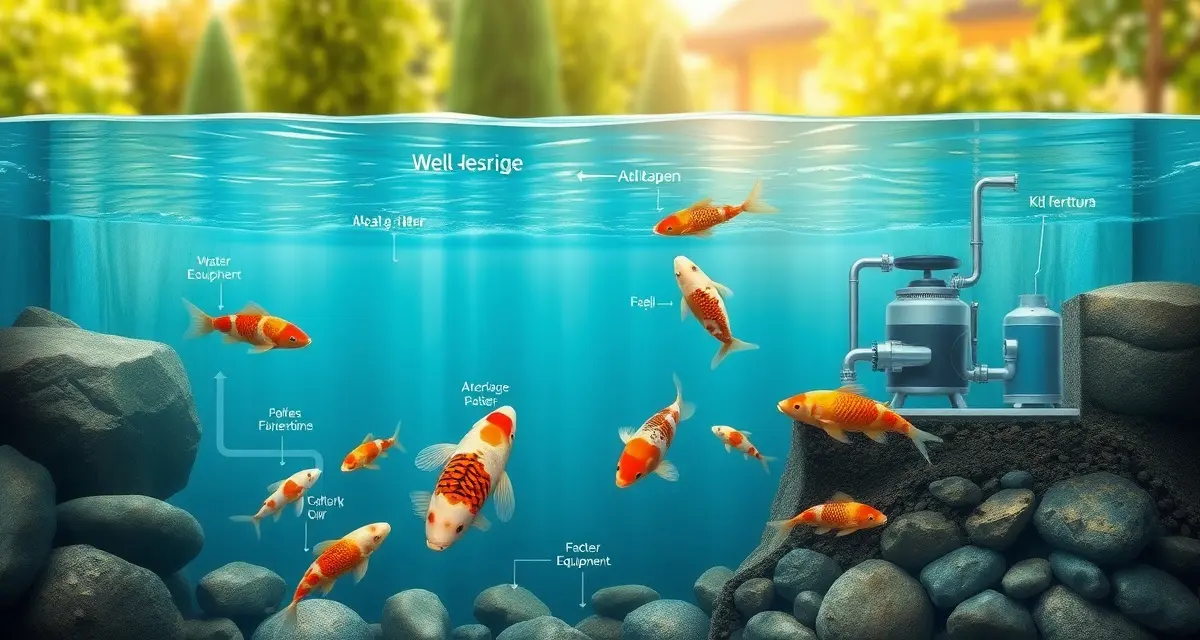
Koi Pond Construction Health Checklist: Build It Right From Day One
Over 60% of long-term koi pond problems originate in construction decisions that could have been avoided with better initial planning. The most common pattern: a new hobbyist builds a beautiful pond, stocks it with beautiful fish, and then spends years fighting poor koi pond water quality tracker, oxygen depletion, or disease-after-pond-treatment) problems that trace directly back to a pump that's too small, a filter that can't handle the load, or a pond shape that creates dead zones. KoiQuanta's interactive pond setup checklist addresses every one of these decisions before you pour the first concrete.
This guide covers every health-relevant construction decision in sequence, from initial design through first fill. Use it alongside the KoiQuanta new pond setup wizard, which walks you through each step and configures your account to match your specific pond.
TL;DR
- A minimum of 1,000 gallons is recommended for koi; 3,000+ gallons is the comfortable starting point for anyone planning to keep more than three or four fish.
- In warmer climates where freezing isn't a concern, 3 feet provides adequate thermal mass.
- If you're building from scratch, slope the bottom at least 1:12 toward the drain point.
- For a 3,000-gallon pond, that means a minimum 3,000 GPH pump, with 6,000 GPH being a better target if you plan to stock reasonably well.
- A pump rated at 3,000 GPH at zero head may deliver only 1,500 GPH at 4 feet of head.
- Better to build 50% more filtration than you think you need and never face that problem.
- In temperate or warm climates where freezing isn't a concern, 3 feet provides adequate thermal mass.
Design Decisions That Drive Long-Term Health
Pond volume. The most common construction mistake is building a pond that's too small for the fish load the owner eventually wants to keep. More water volume means more dilution of waste, more thermal stability, and more time to respond before water quality problems reach dangerous levels. A minimum of 1,000 gallons is recommended for koi; 3,000+ gallons is the comfortable starting point for anyone planning to keep more than three or four fish.
Depth. Depth matters for health more than most hobbyists expect. The absolute minimum depth for year-round koi health is 4 feet in climates where the pond will be used through winter - you need enough depth that the surface can freeze without creating oxygen-depleted conditions throughout the water column. In warmer climates where freezing isn't a concern, 3 feet provides adequate thermal mass. Shallow ponds heat rapidly in summer, and elevated water temperature accelerates pathogen replication while suppressing koi immune function.
Shape and circulation. Pond shape affects water circulation and the presence of dead zones. Round or oval ponds circulate more efficiently than square or L-shaped designs. Any design with corners or narrow bays needs dedicated circulation to prevent stagnant zones where organic matter accumulates. Dead zones are where hydrogen sulfide builds, anaerobic bacteria thrive, and pathogens concentrate.
Bottom gradient. Ponds with gently sloping bottoms that direct settled waste toward a bottom drain are dramatically easier to maintain and have lower organic loads. A flat-bottomed pond accumulates waste evenly and requires manual vacuum removal. If you're building from scratch, slope the bottom at least 1:12 toward the drain point.
Filtration: Sizing It Correctly From the Start
Undersized filtration is the single most common construction error that drives ongoing water quality problems. The biology is straightforward: beneficial bacteria convert ammonia to nitrite and nitrite to nitrate, but only if there's enough biological media surface area to support the bacterial colony your fish load requires.
Biological filtration sizing. For a koi pond, plan biological filtration media to turn over the total pond volume at least once every 2 hours, and size for the fish load you intend to reach rather than the fish you're starting with. Undersizing your filter and planning to add more later costs more in the long run than building adequate filtration from the start.
Mechanical filtration first. Biological filtration performs best when it receives pre-filtered water. Include a mechanical pre-filter (drum filter, settlement chamber, or vortex) to remove suspended solids before water reaches biological media. This extends media life, reduces cleaning frequency, and keeps biological performance consistent.
UV sterilizer. A UV sterilizer in the filtration return line provides ongoing control of free-swimming pathogens and algae. Size the UV unit for your pond volume and flow rate - a UV sterilizer that's bypassed by flow moving too fast provides no benefit. Install it after biological filtration in the return line.
Bottom drain. A bottom drain is not optional in a well-designed koi pond - it's the mechanism that moves settled waste out of the pond continuously. Gravity-fed drainage to a settlement chamber removes far more organic matter than surface skimmers alone. If your site allows it, gravity drainage is preferable to pump-fed drainage.
Aeration: More Than You Think You Need
Dissolved oxygen is the most immediately critical parameter for koi health. Koi are high-oxygen-demand fish, and the oxygen demand of a loaded koi pond at summer temperatures is substantial.
Plan aeration from two independent sources: pump-driven water movement creating surface agitation at the return, and dedicated air pump-driven aeration through air stones in the deepest part of the pond. Independent air pump aeration provides oxygen when the main pump is stopped for cleaning or maintenance - which is exactly when you need it.
Build in electrical capacity for at least twice the air pump you're installing initially. Aeration needs increase as fish grow and as stock levels increase. Having the electrical infrastructure in place avoids the need to run extension cords across the garden later.
KoiQuanta Pond Setup Integration
When you complete your pond build, KoiQuanta's new pond setup wizard configures your account with the specific parameters for your pond. You enter your pond volume, filtration type, and equipment list, and KoiQuanta sets up your initial monitoring schedule, parameter targets, and cycling monitoring.
The setup wizard also connects to your quarantine tank setup guide - because your quarantine system should be built and running before your display pond is stocked. Having an established quarantine tank before your first fish purchase is the single most important disease prevention step for a new pond.
Your koi pond water quality guide covers the parameter management that begins the day you introduce your first fish.
Frequently Asked Questions
What size pump do I need for a healthy koi pond?
Your main pump should turn over the total pond volume at least once per hour - ideally twice per hour for heavily stocked ponds. For a 3,000-gallon pond, that means a minimum 3,000 GPH pump, with 6,000 GPH being a better target if you plan to stock reasonably well. Pump sizing should also account for head pressure - the height the pump needs to push water to reach your filter. A pump rated at 3,000 GPH at zero head may deliver only 1,500 GPH at 4 feet of head. Check the pump's performance curve against your actual installation head to get the real delivered flow rate.
How much filtration capacity does a new koi pond need?
A common rule of thumb is that your biological filtration should be capable of processing the ammonia output of your intended maximum fish load. In practice, this means sizing biological filter media to handle the pond volume at the stocking density you're aiming for, not the stocking density you're starting with. Most hobbyists undersize their filter at build time and then struggle with water quality as their fish grow. Better to build 50% more filtration than you think you need and never face that problem.
What is the minimum pond depth for year-round koi health?
In climates where the pond surface freezes in winter, a minimum depth of 4 feet is necessary to maintain an unfrozen zone at the bottom where fish can overwinter. In temperate or warm climates where freezing isn't a concern, 3 feet provides adequate thermal mass. Deeper is generally better for koi health: it provides temperature stability, predator protection (herons can't wade in water deeper than 18 inches), and more water volume per unit of surface area. Very shallow ponds - under 2 feet - heat rapidly in summer, often to temperatures that stress koi immune function.
What is Koi Pond Construction Health Checklist: Build It Right From Day One?
The Koi Pond Construction Health Checklist: Build It Right From Day One is a comprehensive guide from KoiQuanta covering every health-relevant construction decision when building a koi pond. It addresses common mistakes that cause long-term problems—undersized pumps, inadequate filtration, poor pond geometry—and walks you through each decision in sequence from initial design through first fill, paired with KoiQuanta's interactive new pond setup wizard.
How much does Koi Pond Construction Health Checklist: Build It Right From Day One cost?
The Koi Pond Construction Health Checklist is free to use on KoiQuanta. The real investment is in your pond build itself: costs vary widely based on size, materials, and filtration chosen, but the checklist helps you avoid expensive mistakes upfront. Getting construction right the first time saves significantly more than correcting filtration failures, water quality problems, or structural issues after fish are already in the pond.
How does Koi Pond Construction Health Checklist: Build It Right From Day One work?
The checklist walks you through every critical construction decision in chronological order—pond size, depth, bottom slope, drain placement, pump sizing, filter capacity, and pond shape. Each step connects to KoiQuanta's new pond setup wizard, which configures your account to your specific pond parameters. This ensures your monitoring, stocking guidance, and water quality targets are all calibrated to what you actually built.
What are the benefits of Koi Pond Construction Health Checklist: Build It Right From Day One?
Using this checklist before breaking ground prevents the most common and costly koi-keeping failures. Over 60% of long-term pond problems originate in avoidable construction decisions. The checklist helps you size filtration correctly for your fish load, design out dead zones, ensure adequate oxygenation, and build in proper drainage—so you spend time enjoying healthy koi rather than troubleshooting chronic water quality or disease issues.
Who needs Koi Pond Construction Health Checklist: Build It Right From Day One?
Anyone planning to build a new koi pond needs this checklist, especially first-time hobbyists who may not yet understand how construction choices affect fish health years later. It's also valuable for experienced keepers planning a rebuild or significant upgrade. If you're considering keeping more than three or four koi, the checklist helps you plan the 3,000+ gallon foundation that makes long-term success realistic.
How long does Koi Pond Construction Health Checklist: Build It Right From Day One take?
Working through the checklist itself takes under an hour. The construction timeline it informs depends on your pond's scale and complexity—a basic backyard pond might take a weekend with professional help, while larger builds take weeks. The checklist is designed to be completed before any digging begins, ensuring every downstream decision about plumbing, filtration, and stocking is made with the full picture in mind.
What should I look for when choosing Koi Pond Construction Health Checklist: Build It Right From Day One?
Look for a checklist that covers the full construction sequence, not just the obvious items. Key areas to verify: minimum pond volume guidance (1,000 gallons absolute minimum; 3,000+ recommended), depth recommendations for your climate, bottom slope specifications (at least 1:12 toward the drain), filtration sizing relative to fish load, and integration with ongoing water quality monitoring. The KoiQuanta checklist addresses all of these in health-specific context.
Is Koi Pond Construction Health Checklist: Build It Right From Day One worth it?
Yes—if you're building a koi pond, using this checklist is one of the highest-leverage things you can do. Correcting construction mistakes after the fact is expensive, disruptive, and sometimes impossible without a full rebuild. The checklist costs nothing and takes less than an hour, but the decisions it guides can determine whether your pond thrives for decades or becomes a source of constant problems. Getting it right from day one is always worth it.
Related Articles
Sources
- Associated Koi Clubs of America (AKCA)
- Koi Organisation International (KOI)
- University of Florida IFAS Extension Aquaculture Program
- Fish Vet Group
- Water Quality Association