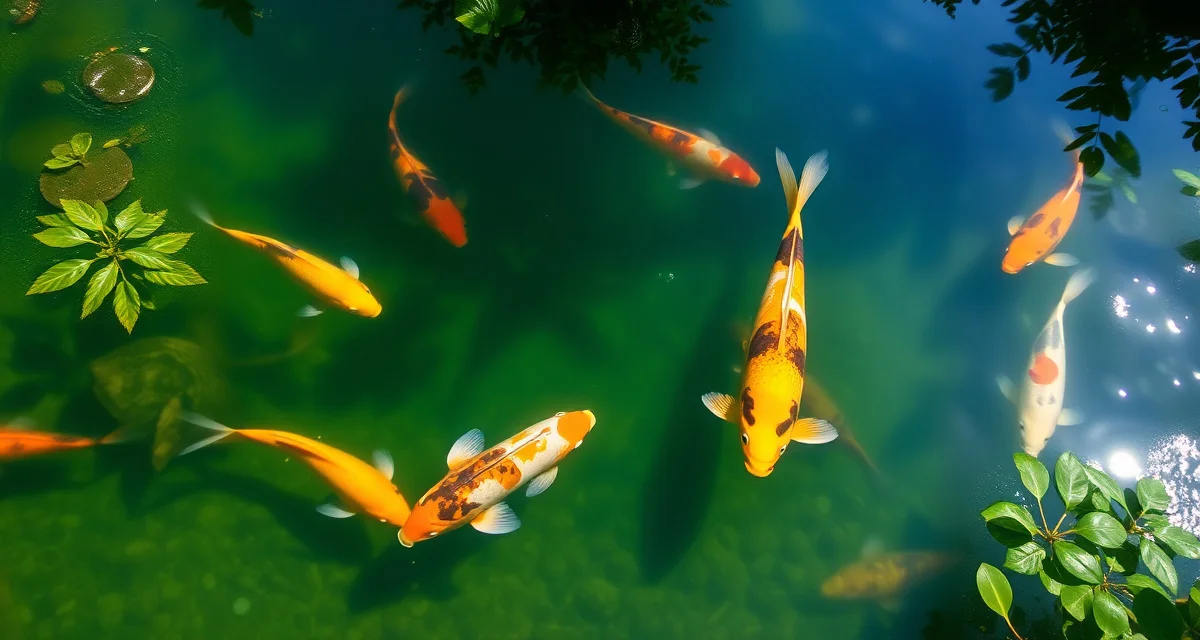
Seasonal Koi Pond Management: Spring to Winter Guide
Koi keeping is not the same activity in February as it is in July or October. The fish's needs, the disease risks, the water chemistry dynamics, and the management priorities are different in each season - sometimes dramatically so.
More koi die in spring than any other season. Not because spring is inherently more dangerous, but because keepers who manage well in summer often let vigilance slip in fall, and their fish enter winter compromised. Then spring arrives with temperature-triggered disease and fish whose immune systems aren't ready.
This guide covers what to do and when across all four seasons.
TL;DR
- The temperature windows that pass through spring - 50°F through 65°F - are where Aeromonas bacteria are most active and where koi immune function is coming back online but hasn't peaked.
- The display pond receives new fish only after: 1.
- All existing fish have been inspected and cleared 2.
- New fish have completed a minimum 30-day quarantine at 65–68°F 3.
- High-protein food (38–40% protein) fed multiple times daily drives growth.
- Don't overfeed - anything not consumed in 5 minutes is organic load.
- Reduce feeding quantity (not frequency) when temperatures exceed 82°F.
Spring (Water Rising Through 50–68°F)
Spring is the highest-risk season. The temperature windows that pass through spring - 50°F through 65°F - are where Aeromonas bacteria are most active and where koi immune function is coming back online but hasn't peaked. The intersection of "pathogens active" and "immune function recovering" is where spring disease outbreaks live.
When to Start: 50°F
Begin feeding again. At 50°F, digestive function is coming back. Start with wheat germ-based food, very small amounts, once daily. Don't switch to growth food yet.
First full parameter test of the season:
- Ammonia
- Nitrite
- pH
- KH
- Temperature
Don't assume the pond chemistry is where you left it in fall. Winter can shift pH and KH. If the pond was covered, ammonia may have accumulated from fish waste during partial dormancy.
Spring Health Inspection
Before fish become fully active and any new fish arrive, inspect every pond resident:
- Any fish that didn't make it through winter (found on the bottom)
- Any fish showing spring ulcers - redness at fin bases, scale lifting, open wounds
- Behavior: are all fish coming to the surface and responding normally?
Any fish with spring ulcers: isolate immediately into a quarantine tank and begin antibiotic treatment. Don't leave them in the pond - they're shedding Aeromonas into the water.
Spring Quarantine for New Arrivals
If you're buying fish in spring - the peak purchase season - the quarantine protocol is more critical than any other time of year. See the spring quarantine guide for the specific protocol adjustments.
The display pond receives new fish only after:
- All existing fish have been inspected and cleared
- New fish have completed a minimum 30-day quarantine at 65–68°F
- The pond temperature is stable enough that the transfer won't cause significant thermal stress
Filter Restart
If you turned off or reduced your filter over winter, restart carefully:
- Don't do a full filter clean at spring startup - you'll crash your biofilter and create an ammonia spike
- Just restart the pump and let the existing biofilm reactivate
- Monitor ammonia and nitrite closely for 2 weeks post-restart
Summer (68–82°F)
Summer is when koi thrive - and when the oxygen and algae problems peak. The management focus shifts from disease prevention to environmental stability.
Dissolved Oxygen: The Summer Priority
Every heavily-stocked pond needs DO monitoring in summer. Test dissolved oxygen:
- Daily, in the morning (lowest point of the day)
- Before and during any oxygen-consuming treatments (formalin, KMnO4)
- Any time fish show surface-gasping or unusual lethargy
If morning DO is below 7 mg/L consistently, the aeration system is undersized for summer conditions. Add a supplemental air pump or diffuser.
Feeding in Summer
Summer is peak growth season. High-protein food (38–40% protein) fed multiple times daily drives growth. Don't overfeed - anything not consumed in 5 minutes is organic load.
Reduce feeding quantity (not frequency) when temperatures exceed 82°F. Fish are more stressed, oxygen is lower, and metabolic efficiency decreases at high temperatures.
Water Changes
Summer organic load (algae, fish waste, higher feeding amounts) means higher nitrate production. 25–30% weekly water changes are appropriate for well-stocked summer ponds.
Summer Disease Watch
Columnaris: Warm water Columnaris is a genuine emergency. Any fish showing saddle-shaped lesions or rapid fin deterioration in summer needs immediate isolation and same-day antibiotic treatment. Columnaris in water above 75°F can kill within 24–48 hours.
Algae management: Heavy algae blooms create overnight oxygen crashes (the algae photosynthesizes during the day but respires all night). UV sterilizer, shade cloth, and vegetable filter competition help control bloom intensity.
Autumn (Falling from 68°F to 50°F)
Autumn is the preparation season. What you do in fall directly determines how your fish emerge from winter.
Disease Treatment Window: Now, Not Winter
Any health issues - existing ulcers, mild bacterial infections, suspected parasites - must be addressed before temperatures drop below 55°F. Antibiotics and most antiparasitic treatments are significantly less effective in cold water. If a fish enters winter with an untreated bacterial infection, it has a significantly higher mortality risk during winter dormancy when immune function is suppressed.
Complete all disease treatments before water consistently reaches 55°F. This means starting treatment in early fall, not waiting for a problem to become obvious in October.
Feeding Reduction
Begin switching to wheat germ food when temperatures drop below 65°F. Reduce feeding frequency to once daily. As temperatures approach 55°F, reduce to every other day.
Stop feeding entirely when water temperature is consistently below 50°F.
Pre-Winter Health Check
Before the final temperature drop, inspect every fish:
- Any ulcers, open wounds, or bacterial lesions must be treated now
- Any fish with signs of internal disease (dropsy onset, obvious emaciation) may not survive winter - make treatment decisions now
- All scale surfaces, fin conditions, and behavior should be documented
Fall Parameter Testing
Test KH before winter - a low KH going into winter means pH instability risk when biological activity resumes in spring. Correct KH to 100+ mg/L before temperatures drop.
Test nitrate - high nitrate going into winter means poor koi pond water quality tracker for dormant fish. Do a 30–40% water change if nitrate is above 60 mg/L.
Winter (Below 50°F)
Winter is the simplest season operationally - and the one where action (disturbing dormant fish, feeding, cleaning) can cause more harm than inaction.
Stop Feeding
Below 50°F, koi cannot digest food properly. Undigested food in the gut ferments anaerobically, causing internal bacterial infection. This is a preventable cause of winter and spring mortality.
Don't feed. Not even a little. Not "just one pellet." Stop feeding.
Gas Exchange Is the Critical Winter Job
The one thing that can kill an entire pond over winter: ice sealing the pond surface completely, preventing gas exchange. Toxic gases (CO2, ammonia, hydrogen sulfide from decomposing substrate) accumulate under a sealed ice surface to lethal concentrations.
Keep a small area of the pond surface open:
- A floating de-icing device (pool-type heater is most reliable)
- A small recirculating pump that keeps one surface area from freezing
- A pond heater maintaining a small liquid zone
Do not break ice by hitting it - the shock wave stresses dormant fish. If ice has sealed over, pour hot water to melt a hole or use a de-icer.
Minimal Disturbance
Dormant koi at low temperatures have suppressed everything - metabolism, immune function, responsiveness. Disturbing them (netting, handling, major water changes, filter cleaning) forces them to expend metabolic energy they don't have to spare in winter.
Don't clean the filter in winter. Don't do large water changes unless there's a specific water quality problem. Don't net fish without a genuine reason.
Check on the pond regularly - weekly at minimum - but observe without disturbing.
KoiQuanta Seasonal Mode
KoiQuanta's seasonal mode adjusts the management framework automatically by calendar:
- Increased parameter test reminders in spring and fall transition periods
- Reduced feeding log prompts in winter (with dormancy reminder at 50°F)
- Disease alert thresholds adjusted for the seasonal risk profile (higher Aeromonas alertness in the 50–65°F spring window)
- Pre-winter checklist prompted in late fall
- Spring startup checklist prompted when temperatures rise toward 50°F
Related Articles
- Koi Pond Ice Management: Safe Winter Strategies
- Spring Koi Quarantine Guide: Seasonal Considerations
- Water Temperature and Koi Health: Seasonal Management
FAQ
What should I do with my koi pond in spring?
Begin by testing all water parameters after winter. Inspect every fish for ulcers, wounds, or abnormal behavior as they become active. Start feeding wheat germ at 50°F - small amounts, once daily. Restart the filter without a full clean. Watch closely for Aeromonas (spring ulcer disease) as temperatures pass through 50–65°F. Any new fish purchases go into 30-day quarantine before entering the display pond.
How do I prepare my koi pond for winter?
Complete all disease treatments before water temperatures consistently reach 55°F - antibiotics are significantly less effective in cold water. Feed wheat germ only below 65°F; stop entirely below 50°F. Test KH and correct to 100+ mg/L if needed. Do a pre-winter water change if nitrate is above 60 mg/L. Inspect all fish and treat any health issues before final temperature drop. Install a de-icing device to maintain gas exchange through the ice surface.
What water tests matter most in summer?
Dissolved oxygen is the critical summer parameter - test daily in the morning when levels are lowest, and before and during any oxygen-consuming treatments. Temperature directly affects all other parameters and should be logged daily. Ammonia and nitrite should be tested weekly even in summer; higher temperatures mean faster metabolism and more waste production. Nitrate tends to build faster in summer - monthly testing and more frequent water changes keep it in range.
What is Seasonal Koi Pond Management: Spring to Winter Guide?
Seasonal Koi Pond Management: Spring to Winter Guide is a comprehensive care guide covering how to manage a koi pond through all four seasons. It addresses how fish needs, disease risks, water chemistry, and feeding priorities shift dramatically with temperature changes — from spring's high-risk warming period through summer growth, fall preparation, and winter dormancy. The guide helps keepers understand why most koi deaths occur in spring and how to prevent them.
How much does Seasonal Koi Pond Management: Spring to Winter Guide cost?
This is a free educational guide published on KoiQuanta. There is no purchase required. The information covers seasonal pond management practices, quarantine protocols, feeding schedules, and water quality monitoring — all provided at no cost to help koi keepers maintain healthier fish year-round.
How does Seasonal Koi Pond Management: Spring to Winter Guide work?
The guide walks keepers through temperature-triggered milestones across the year. In spring, it focuses on the critical 50–68°F window when Aeromonas bacteria peak and fish immunity is still recovering. Summer guidance covers high-protein feeding and heat management. Fall prepares fish for winter by ensuring they enter dormancy in strong condition. Winter advice covers reduced feeding and safe overwintering practices.
What are the benefits of Seasonal Koi Pond Management: Spring to Winter Guide?
Following seasonal management practices reduces koi mortality, particularly in spring when most losses occur. Benefits include healthier fish entering and exiting winter, reduced disease outbreaks, better growth rates through optimized summer feeding, and cleaner water quality by avoiding overfeeding. Keepers who follow a seasonal approach are less likely to face cascading problems caused by neglect in fall carrying over into spring.
Who needs Seasonal Koi Pond Management: Spring to Winter Guide?
Any koi pond owner benefits from this guide, especially those who have experienced unexplained spring losses or inconsistent fish health. It is particularly valuable for keepers who manage well in summer but lack a structured fall and winter routine. Hobbyists introducing new fish to an existing pond will also benefit from the quarantine protocols and seasonal inspection guidelines outlined in the guide.
Sources
- Associated Koi Clubs of America (AKCA)
- Koi Organisation International (KOI)
- University of Florida IFAS Extension Aquaculture Program
- Fish Vet Group
- Water Quality Association