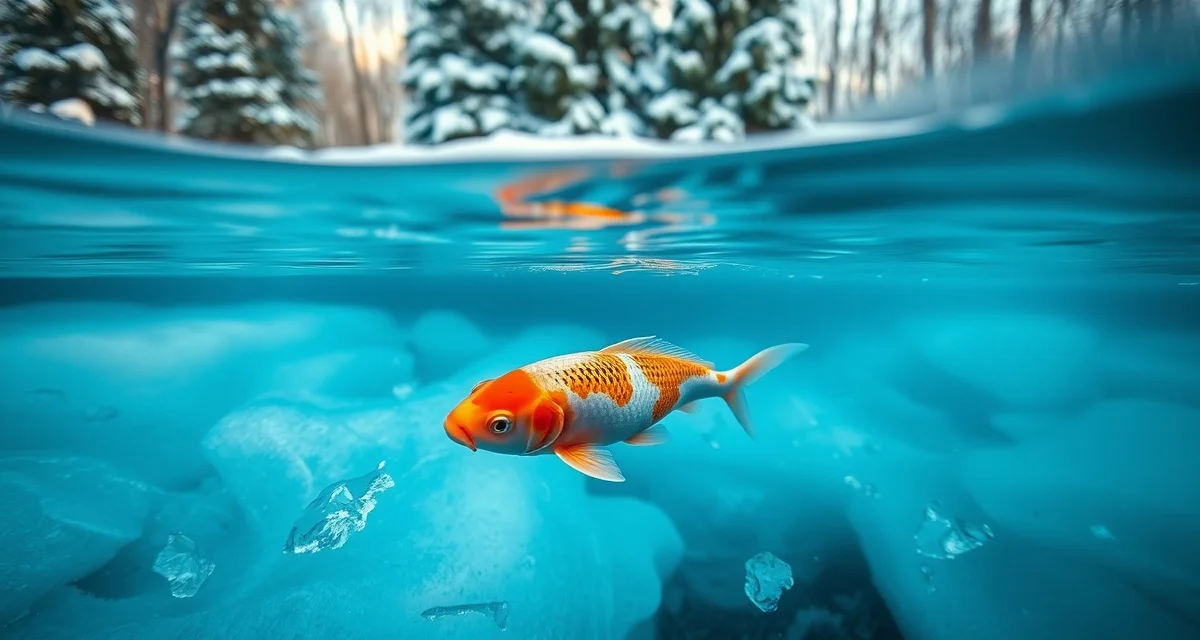
Koi Keeping in Cold Climates: Winter Management Guide
Spring cold-to-warm water transitions cause more koi disease than any other seasonal event. Not winter itself, as most people assume. The dangerous period is when ice melts, water starts warming, and fish immune systems begin reactivating in water that's still too cold for full immune function, but warm enough for parasites and bacteria to become active.
Koi keeping in cold climates means managing both the winter dormancy period and the higher-risk spring transition. Both require specific preparation and protocols.
TL;DR
- As water temperature drops below 10°C, koi metabolism slows dramatically.
- Below 8°C, they enter a torpor state: dramatically reduced movement, no feeding, suppressed immune function, and minimal waste production.
- In most temperate climates, a pond 4-5 feet deep won't freeze to the bottom.
- If your winters are extreme (sustained temperatures of -20°C or colder), 5-6 feet is safer.
- Turn off the main pump when water consistently drops below 10°C.
- CO2 from the small biological activity at the bottom can't escape, and oxygen can't enter.
- This rarely kills in 24 hours but becomes dangerous over days.
Understanding Koi Torpor in Cold Water
Koi are ectothermic. Their body temperature matches the surrounding water. As water temperature drops below 10°C, koi metabolism slows dramatically. Below 8°C, they enter a torpor state: dramatically reduced movement, no feeding, suppressed immune function, and minimal waste production.
During torpor, koi don't die easily from cold. They die from:
- Ice sealing the pond surface and preventing gas exchange (carbon dioxide builds up, oxygen depletes)
- Ammonia spikes from organic matter decomposition in an unfrozen bottom (rare in properly maintained ponds)
- Disease that was subclinical going into winter and progresses slowly during torpor
- Spring immune vulnerability when water warms but immunity hasn't fully reactivated
Fall Preparation: Setting Up for a Safe Winter
What you do in October and November determines how your koi come through winter.
Step 1: Health Assessment Before Cold
As water temperatures drop to 15°C, conduct a thorough health inspection of every fish in the pond. This is your last opportunity to treat effectively:
- Examine each fish in good light for ulcers, lesions, or unusual scale condition
- Watch for behavioral signs. Fish that are hanging back during feeding, showing clamped fins, or rubbing against surfaces
- Check gill condition by gently lifting a gill cover and looking for normal red tissue (pale, brown, or damaged gills indicate a problem)
- Any active health issues must be treated before water drops below 12°C. Treatments work poorly below this temperature and some (formalin, potassium permanganate) become dangerous in cold water
Don't ignore a fish that "seems a bit off" in fall with the assumption that you'll deal with it in spring. That fish will go into winter compromised and may not come out the other side.
Step 2: Adjust Feeding for Temperature
This is the feeding shutdown schedule for cold climates:
| Water Temperature | Food Type | Frequency |
|---|---|---|
| 18-20°C | Standard or wheat germ | Twice daily |
| 15-18°C | Wheat germ only | Once daily |
| 12-15°C | Wheat germ only | Every other day |
| 10-12°C | Wheat germ only | 2-3 times per week maximum |
| Below 10°C | Stop completely | Nothing |
Wheat germ is recommended in cooler months because it's more easily digested at low temperatures. Protein-heavy foods (high fish meal content) require more digestive energy and can cause digestive problems in cold-water fish. Undigested food in the gut of a torpid koi can become a source of internal bacterial infection.
Step 3: Winter-Proof the Pond
Pond depth: Minimum 4 feet (1.2m) of unfrozen water below the ice layer. In most temperate climates, a pond 4-5 feet deep won't freeze to the bottom. If your winters are extreme (sustained temperatures of -20°C or colder), 5-6 feet is safer.
Stop mechanical filtration: Running a pump in winter circulates water and prevents thermal stratification. In very cold climates, this means the entire pond chills to the coldest surface temperature, removing the warmer bottom layer where torpid koi rest. Turn off the main pump when water consistently drops below 10°C. Run only an air pump with diffuser for gas exchange.
Maintain an ice hole: Ice sealing the pond completely prevents gas exchange. CO2 from the small biological activity at the bottom can't escape, and oxygen can't enter. This rarely kills in 24 hours but becomes dangerous over days.
Options:
- Air pump and diffuser: The bubbles maintain a small opening. Position it at the side of the pond rather than centered. Gentle circulation, not pond-wide mixing.
- Pond heater/de-icer: Electric heaters designed for ponds maintain a small open area without heating the whole pond.
- Float: A ball floating on the surface prevents complete freeze-over and can be removed to create a ventilation hole.
Do not break ice by hitting it. The percussion wave travels through water and stuns or damages koi in torpor. Pour warm water on the surface to melt a hole instead.
Step 4: Adjust or Stop Filtration
In cold climates, biological filter bacteria become increasingly inactive as temperatures drop:
- Below 10°C: biofilter bacteria are dormant
- Running water through a dormant biofilter just chills the pond without benefit
- Consider routing flow through a bypass valve so the filter maintains minimal flow without circulating the whole pond volume
Some cold-climate keepers run their main filter year-round at very low flow. This keeps the biofilter bacteria alive at minimum activity levels so they recover faster in spring. If you do this, monitor for temperature stratification disruption.
Winter Monitoring
You can't entirely stop monitoring because of one real risk: fish that entered winter with subclinical disease can deteriorate slowly during torpor. Check the pond visually every 2-3 days:
- Is there an opening in the ice? If not, create one immediately.
- Count fish if possible. A fish dead on the bottom can generate ammonia even in cold water.
- Any fish showing activity at the surface should be examined. In genuine torpor at very cold temperatures, fish rest at the bottom. Surface activity in winter suggests distress.
- Note any behavioral changes in the few fish that may be active at warmer temperatures in mild weather.
KoiQuanta's seasonal mode adjusts monitoring schedules for cold-climate winter dormancy, so you're prompted appropriately rather than maintaining the same monitoring frequency you use in summer.
Spring Startup: The Highest-Risk Period
This is where most cold-climate koi losses occur. Here's what happens:
- Water warms from 5°C to 12°C
- Parasites (Costia, gill flukes, Trichodina) become active and begin reproducing rapidly
- Koi immune systems are still suppressed by cold. Immunity doesn't fully reactivate until water exceeds 15-18°C
- Fish that were debilitated by disease over winter show obvious signs for the first time
- Spring spawning stress adds to the load
The danger window is roughly 8-18°C. Warm enough for parasites, cold enough for suppressed immunity.
Spring Startup Protocol
As water approaches 10°C:
- Resume aeration
- Restart filtration slowly. Run at half capacity initially
- Watch fish daily for activity and behavior changes
At 10-12°C:
- Resume wheat germ feeding at minimal amounts (once every 2-3 days)
- Full health inspection of every fish
- Consider a prophylactic potassium permanganate treatment at 2 ppm if your pond had parasite issues the previous season. KMnO4 is effective at these temperatures and clears many common parasites
At 12-15°C:
- Increase feeding gradually
- Watch for flashing, clamped fins, or surface-hanging (all early parasite signs)
- Test koi pond water quality tracker daily. The biofilter is reactivating and may struggle to keep up with increasing fish metabolism
At 15-18°C:
- Resume normal feeding on appropriate food
- If any fish showed disease signs, treat now while temperatures support effective treatment
- Full water quality test panel
The koi seasonal management guide covers seasonal transitions in detail. For spring quarantine protocols after winter, see the spring quarantine guide.
Do Koi Need a Heater in Cold Climates?
This depends on your climate and goals.
You don't need a heater for survival if your pond is deep enough (4+ feet), you have a means to keep an ice-free area, and you've prepared properly in fall.
You benefit from supplemental heat if:
- Your pond is too shallow (under 4 feet) and at risk of freezing to the bottom
- Your climate has extended periods of -15°C or colder
- You're keeping tosai (first-year fish) that are more cold-vulnerable than adults
- You want to maintain some winter feeding and fish activity for growth
You need a heater if:
- You're keeping koi indoors over winter (common in very cold climates)
- You want to show your fish in early spring shows and need them in good condition
If heating, don't heat the whole outdoor pond to summer temperatures. A stable 10-12°C is enough to prevent true torpor while keeping disease risk manageable.
Related Articles
FAQ
How do I keep koi alive in cold winters?
Ensure your pond is at least 4 feet deep so there's unfrozen water below the ice layer. Maintain an ice-free area for gas exchange. Either with a de-icer, air pump, or floating object. Stop feeding completely when water drops below 10°C. Do a thorough health inspection in fall before water drops below 12°C and treat any issues before winter. Stop running your main pump when temperatures consistently stay below 10°C. Run only a gentle air pump to maintain the ice-free area and minimal gas exchange.
Do koi need a heater in cold climates?
Most koi survive temperate winters (where water reaches 2-4°C but not below freezing to the pond bottom) without heating, provided the pond is deep enough and the ice-free area is maintained. Supplemental heat is helpful for ponds that are too shallow, in climates with extended severe cold, or when keeping first-year fish (tosai) that are more vulnerable. Indoor systems for very cold climates (where ponds genuinely freeze solid) need heating. A stable 10-12°C is sufficient if heating. You don't need to maintain summer temperatures.
What diseases attack koi when water warms up in spring?
The spring disease window, when water is 8-18°C, is prime time for Costia (the most common cold-water parasite), gill flukes (Dactylogyrus and Gyrodactylus species), Trichodina, and opportunistic bacterial infections from Aeromonas. These pathogens thrive at temperatures where koi immunity is still suppressed. Signs to watch for in spring include flashing behavior, clamped fins, excess mucus production, surface-hanging, and fish that were active in fall but are clearly slower or less alert when water begins to warm. Treat promptly. Spring disease escalates quickly in weakened fish.
What is Koi Keeping in Cold Climates: Winter Management Guide?
This guide covers winter management for koi ponds in cold climates, focusing on two critical periods: winter dormancy and the spring transition. It explains how koi enter torpor below 8°C, when to stop feeding and turn off pumps, how to maintain gas exchange under ice, and how to safely manage the spring warm-up — the season when koi are most vulnerable to parasites, bacteria, and immune suppression.
How much does Koi Keeping in Cold Climates: Winter Management Guide cost?
This is a free informational guide published on KoiQuanta. There is no purchase required. The content is available to any koi keeper looking to understand cold-climate pond management, from winterizing equipment to navigating the high-risk spring transition period when fish immune systems are reactivating but water temperatures are still too low for full immune function.
How does Koi Keeping in Cold Climates: Winter Management Guide work?
The guide walks through the biology of koi torpor, explains why pond depth matters (4–6 feet depending on your climate), outlines when to turn off main pumps as temperatures drop below 10°C, and covers gas exchange management under ice. It then addresses spring protocols, since warming water activates pathogens before fish immunity fully recovers — making targeted intervention during that transition essential.
What are the benefits of Koi Keeping in Cold Climates: Winter Management Guide?
Following this guide helps you avoid the most common cold-climate koi losses: fish killed not by ice, but by oxygen depletion under frozen ponds or spring disease outbreaks during immune suppression. Understanding the torpor cycle prevents overfeeding in marginal temperatures, reduces ammonia spikes, and prepares you to act during the spring window when parasites and bacteria become active before koi defenses catch up.
Who needs Koi Keeping in Cold Climates: Winter Management Guide?
Any koi keeper in a temperate or cold climate where pond water drops below 10°C seasonally. This includes hobbyists in New England, the UK, Northern Europe, Canada, and similar regions. It is especially useful for those new to cold winters with koi, anyone who has lost fish in spring without understanding why, and keepers upgrading pond depth or filtration ahead of their first serious winter.
Sources
- Associated Koi Clubs of America (AKCA)
- Koi Organisation International (KOI)
- University of Florida IFAS Extension Aquaculture Program
- Fish Vet Group
- Water Quality Association