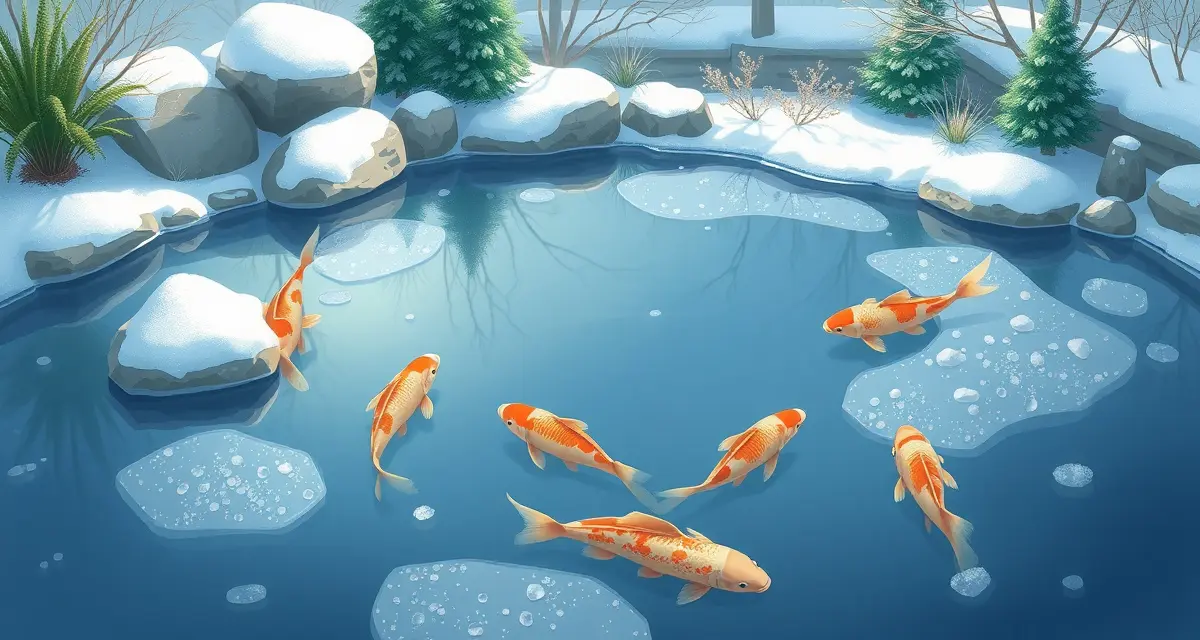
Koi Pond Ice Management: Safe Winter Strategies
Hitting ice to break it creates shockwaves that can cause barotrauma and instant death in koi. This is the single most important thing to know about winter pond management. Every year, koi keepers who mean well shatter ice with a hammer or boot, instantly killing the fish below through the pressure wave transmitted through the water.
KoiQuanta's winter alerts flag dangerous ice coverage conditions. No competitor has winter-specific emergency protocols that prompt timely intervention before ice creates welfare problems.
TL;DR
- Ammonia and CO2 accumulation under ice can reach toxic concentrations within days of complete ice coverage.
- What they need is: Stable temperature rather than fluctuating. Koi that stay in cold water (2-8°C) throughout winter are fine.
- The time window between complete ice coverage and dangerous gas accumulation can be 24-48 hours depending on pond volume, organic load, and temperature.
- If your pond has frozen over completely: 1.
- Create a hole using hot water immediately - don't delay 2.
- Keep the hole from refreezing (float a de-icer immediately if you haven't already) 3.
- Resume feeding in spring when temperature consistently exceeds 10°C, starting with easy-to-digest wheat germ food before switching back to high-protein summer diets as temperature continues to rise above 15°C.
Why Ice Is Dangerous for Koi
Ice on its own doesn't harm koi. Koi naturally overwinter in frozen ponds throughout much of their native range in East Asia. The danger isn't the ice - it's what ice does to the pond environment.
Trapped toxic gases: Fish respiration, bacterial decomposition, and plant decay all produce carbon dioxide and hydrogen sulphide in winter. In an open pond, these gases escape to the atmosphere. Under a sealed ice sheet, they accumulate in the water. Ammonia and CO2 accumulation under ice can reach toxic concentrations within days of complete ice coverage.
Oxygen depletion: While koi have reduced oxygen demand in cold water, the demand doesn't reach zero. Under ice, photosynthesis stops (no light), and bacterial decomposition continues consuming oxygen. Long periods of complete ice coverage progressively deplete dissolved oxygen.
Pressure waves from physical impact: Water transmits pressure waves very efficiently. A hammer blow on ice creates an instantaneous pressure wave that travels through the water and can rupture swim bladders and cause internal haemorrhage in fish below. Deaths from well-intentioned ice-breaking happen the same day.
What Temperature Do Koi Need in Winter?
Koi don't need a specific winter temperature - they're coldwater fish adapted to wide temperature variation. What they need is:
Stable temperature rather than fluctuating. Koi that stay in cold water (2-8°C) throughout winter are fine. Koi that experience repeated freeze-thaw cycles with temperature fluctuations are stressed.
An ice-free hole for gas exchange. Even when the pond is mostly frozen, maintaining an opening in the ice prevents toxic gas accumulation and oxygen depletion.
Depth sufficient to avoid freezing solid. In most climates, koi ponds deeper than 60-90cm at their deepest point will not freeze completely. Fish will shelter at depth where the water is coldest but above freezing.
Safe Ice Prevention Methods
Pond Heater/De-Icer
A floating pond heater or de-icer is the most reliable method for maintaining an ice-free hole. These devices don't heat the pond - they warm a small area of the surface just enough to prevent ice forming in that zone.
Most models are thermostatically controlled and activate only when the surface temperature approaches freezing. They're economical to run compared to what you'd expect, because they're preventing ice formation in a small area rather than heating the whole pond.
Placement: Float the de-icer in the centre or upwind side of the pond. It should be in the area where you want to maintain an opening. Near pond edges is less effective - edges freeze first anyway and the opening is less useful if it's at an inaccessible edge.
What is a pond heater? In the UK and other European markets, a pond heater typically refers to a floating de-icing device specifically designed to prevent surface ice formation rather than raise water temperature. This is different from the submersible aquarium heaters used in quarantine tanks. The pond de-icer maintains a hole; it doesn't significantly affect the overall pond water temperature.
Running Water Features in Winter
Running water is harder to freeze than still water. Maintaining a waterfall, fountain, or return jet running during winter can prevent ice from forming around the inflow area.
The risk with waterfalls in very cold conditions is that the waterfall itself can freeze, disrupting your filtration. In severe freezing conditions, turn off waterfalls to prevent ice blockages and loss of water over frozen edges.
A bottom return from your filter, rather than a surface waterfall, keeps water circulation going without the freezing risk of surface exposure.
Polystyrene Floating on the Surface
A polystyrene sheet floating on the pond surface acts as insulation. It doesn't prevent all ice formation but reduces the rate of cooling and can keep an area ice-free longer than an uninsulated surface.
This is a low-tech backup option rather than a primary strategy for severe winters, but combined with a de-icer it adds margin.
Is It Safe to Break Ice on a Koi Pond?
No, not by physical impact. Never use:
- A hammer or mallet
- Your boot or foot
- A heavy object dropped onto the ice
- Any method involving sharp impact
Any physical impact transmits a pressure wave through the water. This shockwave can kill koi instantly through barotrauma - pressure-related rupture of internal organs and swim bladder.
Safe ice removal methods:
Boiling water: Pour boiling or very hot water onto the ice surface slowly. The heat melts the ice locally without any pressure impact. Use a watering can or kettle and work slowly from one side. This creates a hole for gas exchange safely.
Floating the de-icer before the event: The best ice management is preventing it. A de-icer floating before ice forms maintains the opening without requiring reactive intervention.
Solar or battery pond heaters: Some designs warm from below and prevent freezing through heat, not mechanical action.
Winter Monitoring and KoiQuanta Alerts
Winter monitoring is typically less intensive than summer monitoring, but ice events require immediate attention. KoiQuanta's winter alert configuration watches for:
- Temperature approaching 0°C (triggering ice risk notification)
- Extended periods of complete ice coverage
- Equipment failure (de-icer running but temperature still dropping)
Set weather-based alerts in your KoiQuanta dashboard for the winter season. Many ice-related fish losses occur when keepers don't notice a rapid cold snap and don't check the pond quickly enough.
For multi-day severe cold spells, check the pond at least twice daily. The time window between complete ice coverage and dangerous gas accumulation can be 24-48 hours depending on pond volume, organic load, and temperature.
What If the Whole Pond Freezes?
If your pond has frozen over completely:
- Create a hole using hot water immediately - don't delay
- Keep the hole from refreezing (float a de-icer immediately if you haven't already)
- Don't clean the filter or do water changes during freezing conditions - this would disturb the fish and add cold water stress
If fish are showing signs of stress from gas accumulation (hanging near the hole area, visible distress), creating the opening and allowing gas exchange to occur often produces rapid improvement as toxic gases escape.
Stopping Feeding in Winter
Stop feeding koi when water temperature drops below 10°C. Below this temperature, fish digestion slows significantly. Food not digested passes through the gut and becomes ammonia, polluting the water and adding to winter gas load.
A cold koi that has been fed is worse off than a cold koi that hasn't been fed. Uneaten food decomposing in a winter pond contributes to the organic load and gas problems that make ice events dangerous.
Resume feeding in spring when temperature consistently exceeds 10°C, starting with easy-to-digest wheat germ food before switching back to high-protein summer diets as temperature continues to rise above 15°C.
Frequently Asked Questions
How do I manage ice on my koi pond?
The primary strategy is preventing complete ice coverage using a floating pond de-icer or heater positioned in the centre of the pond. Running pond circulation during cold weather also helps. If ice has formed, create a hole using hot water poured slowly onto the surface - never by physical impact. Maintain the opening through persistent cold spells. Stop feeding below 10°C to reduce organic waste and gas production. Monitor twice daily during severe cold. KoiQuanta winter alerts notify you when pond temperatures approach freezing conditions before ice forms.
Is it safe to break ice on a koi pond?
No. Breaking ice by physical impact - hammer, boot, dropped object, or any striking method - transmits a pressure wave through the water that causes barotrauma in koi. Fish can die instantly from the pressure wave even in areas of the pond away from the impact point. This is a documented cause of koi loss. Instead, use hot water poured slowly onto the ice to melt a hole through heat rather than impact. A de-icer floating on the pond before ice forms is the preferred approach - it prevents ice in its coverage area without any reactive intervention needed.
What is a pond heater and does it prevent ice formation?
A pond heater in the context of winter pond management typically refers to a floating de-icing device that warms a small area of the pond surface to prevent ice forming in that zone. It doesn't significantly raise the overall pond water temperature - it maintains an ice-free opening for gas exchange and oxygen. Most models are thermostatically controlled, activating only near freezing temperatures, making them economical to run. They're designed for floating at the pond surface with a cable to a power source. A de-icer (another common name for these devices) is the recommended standard equipment for koi ponds in climates where surface ice formation occurs.
What is Koi Pond Ice Management: Safe Winter Strategies?
Koi Pond Ice Management: Safe Winter Strategies covers the essential practices for keeping koi alive through freezing temperatures. It addresses the critical dangers of complete ice coverage — toxic gas buildup, ammonia spikes, and CO2 accumulation — and outlines safe methods to maintain a gas exchange hole in the ice. The guide also covers why common instincts like breaking ice with a hammer are lethal, and what to do if your pond freezes over completely.
How much does Koi Pond Ice Management: Safe Winter Strategies cost?
Koi pond ice management requires no special purchase — the core strategies use accessible tools like a floating de-icer or a pot of hot water. A quality pond de-icer typically costs $30–$100 depending on wattage and brand. This is a one-time investment that protects fish worth hundreds or thousands of dollars. Preventive equipment is far cheaper than replacing koi lost to toxic gas buildup or the shock of a frozen-over pond.
How does Koi Pond Ice Management: Safe Winter Strategies work?
Safe koi pond ice management works by maintaining a small open hole in the ice surface year-round during freezing conditions. This hole allows toxic gases — ammonia and CO2 — to escape and oxygen to enter. A floating de-icer keeps one area ice-free without heating the whole pond. If ice coverage is complete, hot water poured carefully onto the surface melts a hole without the shockwaves that kill fish.
What are the benefits of Koi Pond Ice Management: Safe Winter Strategies?
The primary benefit is keeping your koi alive through winter. Complete ice coverage can become dangerous within 24–48 hours as toxic gases accumulate beneath the surface. Maintaining a gas exchange hole stabilises water chemistry, prevents hypoxia, and eliminates the pressure risk from ice breaking. Koi in stable cold water between 2–8°C overwinter safely — the threat isn't cold, it's gas toxicity and the physical shock of impact.
Who needs Koi Pond Ice Management: Safe Winter Strategies?
Any koi keeper in a climate where ponds freeze needs these strategies. Beginners are especially at risk, as the instinct to break ice by hitting it is exactly what kills fish. Keepers with heavily stocked ponds or high organic loads face faster gas accumulation and have a shorter response window. Anyone without a de-icer already running before the first hard freeze should read this guide before winter arrives.
How long does Koi Pond Ice Management: Safe Winter Strategies take?
Prevention takes minutes: a de-icer plugged in before freezing conditions begin requires no further intervention. Emergency response to a fully frozen pond should happen immediately — the window between complete ice coverage and dangerous gas concentrations is as short as 24–48 hours depending on pond size and organic load. Spring feeding resumes gradually once temperatures consistently exceed 10°C, starting with wheat germ food before returning to high-protein diets.
What should I look for when choosing Koi Pond Ice Management: Safe Winter Strategies?
Look for strategies that prioritise gas exchange over water temperature. A good approach avoids heating the whole pond — koi don't need warmth, they need breathable water. Choose de-icers sized to your pond's surface area and climate severity. Avoid any method involving impact on the ice. Reliable winter monitoring tools, like KoiQuanta's ice coverage alerts, add an important early-warning layer so you act before conditions become critical.
Is Koi Pond Ice Management: Safe Winter Strategies worth it?
Yes — for any koi keeper in a freezing climate, these strategies are essential. Koi can survive winter cold without issue, but they cannot survive toxic gas buildup under a sealed ice sheet or the barotrauma from someone hitting the ice to help them. The cost of a de-icer and a few minutes of winter monitoring is negligible compared to losing a pond of mature koi. These are not optional precautions — they are the difference between live fish and dead ones.
Related Articles
- Koi Dealer Software for Arizona: Desert Climate Koi Pond Management
- Koi Dealer Software for Colorado: High-Altitude Koi Pond Management
- Koi Dealer Software for Nevada: Desert Koi Pond Management
- Koi Dealer Software for South Carolina Lowcountry: Coastal Pond Management
Sources
- Associated Koi Clubs of America (AKCA)
- Koi Organisation International (KOI)
- University of Florida IFAS Extension Aquaculture Program
- Fish Vet Group
- Water Quality Association