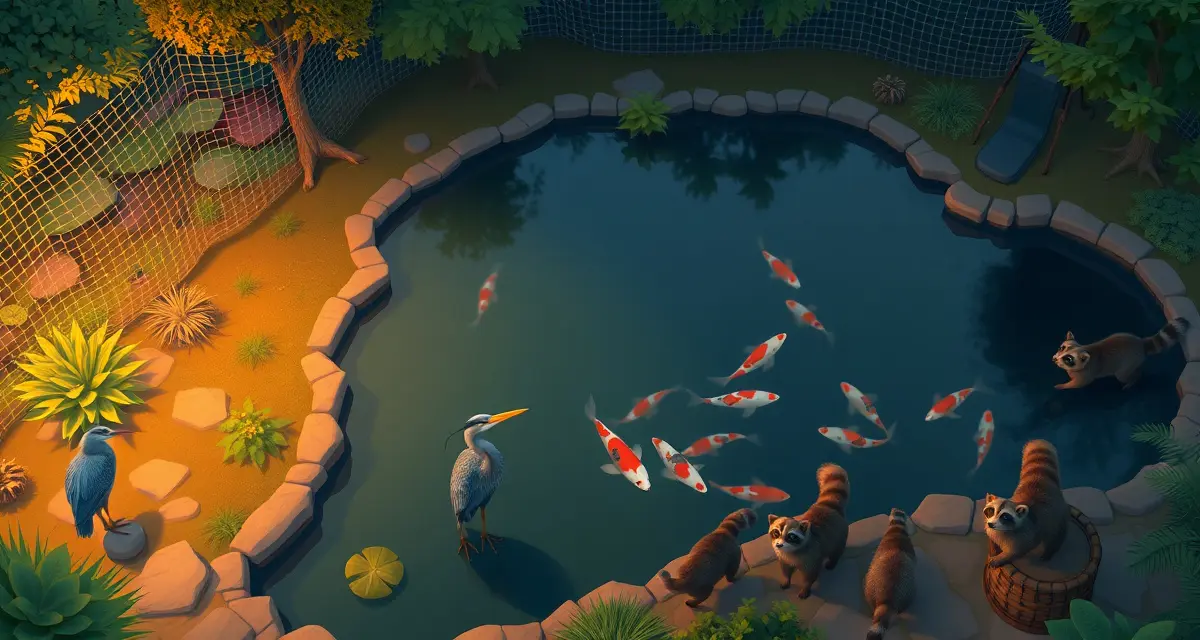
Koi Pond Predator Protection: Herons, Raccoons, and Other Threats
A well-planted pond with thriving koi can attract unwanted attention fast. Great blue herons are the most notorious predator threat, capable of clearing a pond of fish in a single visit if conditions favor them. Raccoons, minks, cats, and occasionally otters or kingfishers round out the threat list depending on your region. Understanding how each predator operates tells you what defenses actually work.
TL;DR
- Great blue herons are the most damaging koi predator in North America. They wade and stab fish from shore or shallow water.
- Herons are creatures of habit and return to feeding sites repeatedly once they succeed.
- Raccoons hunt at night and reach into ponds to grab fish, especially in shallow areas.
- Effective protection layers multiple deterrents; no single method is foolproof long-term.
- Pond depth, steep sides, and physical barriers are the most reliable long-term solutions.
- KoiQuanta lets you log predator attacks with photos and notes to track patterns over time.
Great Blue Herons
Great blue herons are patient, methodical hunters. They stand motionless at the water's edge or wade in shallow areas, then strike with explosive speed. A heron can take several large koi in a single visit, and because they hunt at dawn and dusk when most pond owners aren't watching, you often discover the damage hours later.
The key heron behavior to understand: they almost always land some distance from the pond and walk to the water's edge. They also prefer to approach on foot rather than landing directly at the pond. This shapes what deterrents work.
What works against herons:
Steep pond sides dropping immediately to depth make it difficult for herons to wade. A depth of 4 to 5 feet on all sides of the pond, with walls that drop sharply rather than gently sloping, makes wading uncomfortable and dangerous for the bird. This is the most passive and durable solution.
Netting stretched over the pond is highly effective but affects aesthetics and makes maintenance more difficult. Full pond covers with rigid frames are used by serious hobbyists and commercial operations with high-value stock.
Motion-activated sprinklers (brands like Orbit Yard Enforcer or Contech Scarecrow) trigger a burst of water when the sensor detects movement. These work well against herons but require reliable sensor positioning and regular battery checks. Herons do eventually learn which angles avoid the sensor, so repositioning periodically helps.
Heron decoys work initially, but herons habituate to stationary decoys quickly. If you use a decoy, move it every few days to maintain any deterrent effect.
Electric pond fencing with a single strand 6 to 8 inches off the ground around the pond perimeter is highly effective. Herons need to walk to the pond, and the fence interrupts that approach. Solar-powered fence chargers make installation practical without running permanent wiring.
Raccoons
Raccoons hunt ponds at night, reaching into shallow water to grab fish. They are particularly effective in ponds with shallow shelves, plant pots, or ledges that allow them to sit comfortably while fishing. A raccoon can reach 12 to 18 inches into water effectively.
What works against raccoons:
Eliminating shallow areas and ledges removes the comfortable working platform raccoons need. A pond design with steep sides dropping immediately to at least 3 feet of depth is less attractive to raccoon predation.
Motion-activated lights startle raccoons and interrupt their visits. They habituate over time, but combined with other measures, lighting is a useful layer.
Motion-activated sprinklers work well against raccoons for the same reasons they work against herons.
Removing food sources near the pond matters more than most pond owners realize. Dog food left outside, bird feeders, unsecured trash, and garden produce all attract raccoons to your property. A property that's unattractive to raccoons in general will see fewer visits to the pond.
If raccoons are actively predating your pond, live trapping and relocation is the most direct response. Check your local regulations before trapping, as rules vary by state.
Cats and Other Predators
Domestic and feral cats rarely take large koi but can take smaller fish and juveniles, and will stress fish by reaching into the water. Cats are deterred by the same motion-activated sprinkler setups used for herons and raccoons.
Minks are highly effective predators if present in your area. A mink can clear a pond quickly. They are largely nocturnal and extremely capable in and around water. Pond netting or full fencing is the only reliable mink deterrent.
Kingfishers take smaller fish and juveniles. Their impact on an established pond with large koi is usually limited. They become a more significant concern for koi breeding operations where fry and small fish are present.
Pond Design as First-Line Defense
The most durable predator protection comes from pond design rather than deterrents that can fail, be ignored, or be adapted to. Key design principles:
- Minimum depth of 5 feet throughout most of the pond with steep walls
- No shallow ledges or sloped entry points
- Overhangs or vertical walls at the pond edge rather than gently sloped margins
- Dense submerged plantings provide cover for fish to retreat
If your existing pond has shallow shelves, consider adding structures that give fish a refuge zone unreachable from the surface.
Logging Predator Incidents
When predation does occur, documenting it in your fish health records helps you identify patterns, assess losses, and demonstrate the extent of the problem if you need to take additional measures. KoiQuanta's health event log accepts photos and notes, so you can record predator attacks alongside other health events and maintain an accurate count of your current stock.
Frequently Asked Questions
How do I know if a heron or raccoon took my fish?
Herons typically leave no evidence except missing fish, though you may occasionally find a dropped fish near the pond edge. Raccoons often leave claw or drag marks on soft pond surrounds, wet muddy footprints, and sometimes partially eaten fish at the pond edge. Motion cameras are the most reliable way to confirm what is visiting your pond.
Do fake herons actually work?
Heron decoys work initially, but most herons habituate to stationary decoys within days to weeks. Moving the decoy every two to three days extends its effectiveness. Decoys work better as one layer of a multi-deterrent strategy than as a standalone solution.
Is pond netting safe for fish?
Properly installed pond netting is safe. Netting should be held above the water surface rather than lying on it, so fish cannot become entangled. Rigid framing that keeps the net elevated is ideal. Loose netting resting on the water surface can trap fish or birds.
What is Koi Pond Predator Protection: Herons, Raccoons, and Other Threats?
Koi pond predator protection refers to the strategies and physical measures pond owners use to defend their fish from threats like great blue herons, raccoons, minks, cats, and otters. These predators can devastate a koi collection quickly—herons alone can empty a pond in one visit. Effective protection combines pond design, physical barriers, deterrents, and monitoring to reduce the risk of fish loss from wildlife attacks.
How much does Koi Pond Predator Protection: Herons, Raccoons, and Other Threats cost?
Most predator protection methods involve a one-time cost ranging from under $20 for decoy herons or motion-activated sprinklers to several hundred dollars for pond netting or electric fencing. Deep pond construction or steep-sided redesigns are more expensive but offer the most durable protection. Ongoing costs are minimal once barriers are in place, making prevention far cheaper than replacing lost koi, which can cost hundreds per fish.
How does Koi Pond Predator Protection: Herons, Raccoons, and Other Threats work?
Predator protection works by targeting how each animal hunts. Herons require standing water access, so steep pond edges and netting block them. Motion-activated sprinklers startle approaching animals. Decoys exploit territorial behavior in some species. Raccoons are deterred by electric fence strips or removing shallow wading areas. Layering multiple methods is most effective because predators adapt to single deterrents over time, especially intelligent ones like raccoons and herons.
What are the benefits of Koi Pond Predator Protection: Herons, Raccoons, and Other Threats?
The primary benefit is preserving your koi investment and the years of growth each fish represents. Beyond financial value, effective protection reduces stress for fish, which improves their immune health and coloration. It also gives pond owners peace of mind. Secondary benefits include reduced pond disturbance, cleaner water from less debris, and the ability to spot predator activity patterns early using tools like KoiQuanta's attack logging feature.
Who needs Koi Pond Predator Protection: Herons, Raccoons, and Other Threats?
Any pond owner with koi or ornamental fish needs to consider predator protection, particularly those in suburban or rural areas near water sources, wetlands, or wooded land. Heron populations are widespread across North America, meaning virtually every outdoor pond is at risk. Owners of valuable or large koi are especially vulnerable given the financial stakes. New pond builders should plan protection into the design phase rather than reacting after their first loss.
How long does Koi Pond Predator Protection: Herons, Raccoons, and Other Threats take?
Setting up basic predator deterrents like netting, decoys, or motion sprinklers typically takes an afternoon. More involved solutions such as installing electric fence strips or restructuring pond edges may take a weekend. The real time investment is observation—tracking when attacks occur, which entry points predators use, and whether your current methods are working. Using a log to record incidents over weeks helps identify patterns and guide smarter, faster adjustments.
What should I look for when choosing Koi Pond Predator Protection: Herons, Raccoons, and Other Threats?
Look for solutions that address your specific predators first. Identify whether attacks are daytime (likely herons) or nighttime (likely raccoons or minks). Prioritize physical barriers over deterrents alone, as animals habituate to decoys and sound devices. Choose netting with small enough mesh to block herons without trapping wildlife. Favor pond designs with steep sides and depths over four feet. Combine passive barriers with active deterrents for layered, more reliable defense.
Is Koi Pond Predator Protection: Herons, Raccoons, and Other Threats worth it?
Yes, for anyone keeping valuable koi, predator protection is absolutely worth the investment. A single heron visit can wipe out fish worth thousands of dollars and years of growth. The cost of netting, fencing, or pond redesign is almost always less than replacing lost fish. Beyond money, losing koi to predators is emotionally difficult for dedicated hobbyists. Proactive protection preserves both your investment and your enjoyment of the pond long-term.
Related Articles
- What Is the Correct Salt Percentage for Koi Ponds? Complete Guide
- Koi Pond Bead Filter: Sizing, Cleaning, and Maintenance
Sources
- Cornell Lab of Ornithology
- Wildlife Management Institute
- University of California Integrated Pest Management Program
- National Koi Club of Great Britain
Get Started with KoiQuanta
Predator protection is an ongoing management task rather than a one-time fix. Logging your current stock count in KoiQuanta gives you an accurate baseline to assess losses and track your pond population over time. Start your fish inventory today and keep records that matter when something goes wrong.