What to Do When a Koi Dies: Removal, Testing, and Pond Protection
Finding a dead koi is alarming, but what you do in the next hour matters enormously. A koi that dies from bacterial disease can release bacterial loads into the pond water that infect remaining fish within hours. Fast, deliberate action limits the damage. Freezing up and hoping it was just natural causes is how one dead fish becomes five.
KoiQuanta's fish death response checklist guides you through removal, water testing, disease screening, and the decision to treat remaining fish, so you have a clear protocol when you're stressed and thinking isn't as easy as it normally is.
TL;DR
- A dead koi should be removed from the pond within minutes, not hours; decomposition accelerates ammonia spikes and spreads pathogens.
- Never touch a dead koi with bare hands; use gloves and dispose of carcasses in sealed bags, not in compost or drains.
- After any fish death, run a complete water quality test and check remaining fish for the same signs.
- A dead fish found in the morning typically died overnight, giving pathogens hours to spread before discovery.
- If the death appears disease-related, any recently introduced fish koi quarantine program restarts from the death date.
- Documenting every death with date, condition, and suspected cause in KoiQuanta reveals patterns over time.
Step 1: Remove the Fish Immediately
Use a net, not your hands. Double-bag the fish in plastic for disposal or for sending to a veterinary laboratory if you want a cause of death determination. Do not compost, bury shallowly, or leave in or near the pond. Other fish may attempt to eat a dead pond-mate, spreading whatever killed it.
Note the exact time you found the fish. This matters for your log and for any vet assessment.
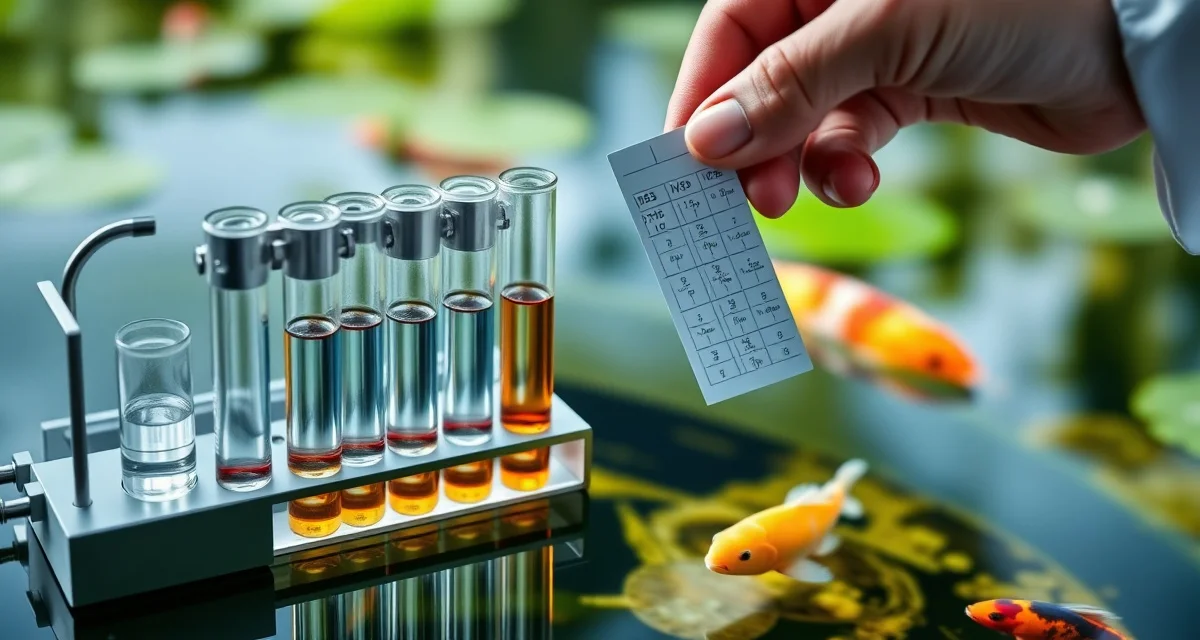
Step 2: Test Your Water Now
Before you do anything else to the pond, test:
- Ammonia
- Nitrite
- Dissolved oxygen
- pH
- Temperature
A water quality emergency can cause rapid fish death, and if your readings are off, more fish are at immediate risk. An ammonia reading above 0.5 ppm or dissolved oxygen below 5 mg/L is an emergency requiring immediate intervention. Do a large water change (20-25%) and increase aeration immediately if either threshold is breached.
Record these in your water quality tracker. If readings are normal, the cause of death is more likely disease-related.
Step 3: Observe Your Remaining Fish
Immediately after removing the dead fish, spend 15-20 minutes watching your other fish closely. Look for:
- Flashing or rubbing
- Clamped fins
- Isolation from the group
- Surface breathing
- Lethargy or loss of balance
- Visible lesions, ulcers, or koi hemorrhagic septicemia
Any of these symptoms in remaining fish suggest the death wasn't isolated. Begin your disease treatment tracker with today's observations documented.
Step 4: Decide on a Response
If water quality is fine and no other fish show symptoms, continue close monitoring for 3-5 days. Increase water test frequency to daily.
If other fish show symptoms or the deceased fish had obvious lesions (ulcers, fin erosion, hemorrhaging), act immediately. Isolate visibly sick fish, perform a skin scrape if you have a microscope, and treat based on your diagnosis.
If you want a cause of death determination, refrigerate (don't freeze) the dead fish and contact a fish health veterinarian or state diagnostic laboratory within 24 hours.
Frequently Asked Questions
How quickly should I remove a dead koi from the pond?
Remove it as soon as you discover it, ideally within an hour. Decomposing fish rapidly release bacteria and organic compounds into the water that spike ammonia and provide a pathogen bloom source. If a fish died from a contagious bacterial infection, the bacterial load released into the water can reach infectious concentrations for other fish within hours. Leaving a dead fish overnight substantially increases the risk to remaining pond-mates. Even if you can't fully investigate the cause of death immediately, removal always comes first.
Should I test my water when a koi dies?
Always, and do it before anything else. Water quality emergencies can cause sudden fish death, and if the cause was an ammonia spike, oxygen crash, or toxic substance, your other fish are in immediate danger right now. Testing takes three minutes and tells you whether you're in an emergency response situation. If water quality is normal, you can rule out environmental cause and focus your investigation on disease. Without testing, you're guessing about the most important variable. Log the readings in KoiQuanta immediately so you have a timestamped record of pond conditions at the time of death.
How do I find out why my koi died?
For a definitive diagnosis, refrigerate (not freeze) the dead fish in a sealed bag and contact a fish health veterinarian or your state's aquatic animal health diagnostic laboratory within 24 hours. They can perform a necropsy (post-mortem examination) to identify the cause of death. Many state extension services or university veterinary schools offer this service for a fee. In the meantime, your own observation and water testing data provides important context. Photographs of the fish before removal, noting any visible lesions or physical abnormalities, can help the veterinarian even if the fish has deteriorated by the time it reaches the lab.
How do I dispose of a dead koi?
Place the fish in a sealed plastic bag and dispose of it in household waste, or bury it away from water sources. Do not flush dead fish down toilets or drains, as this can spread pathogens to waterways. Do not compost dead fish as household compost does not reach temperatures sufficient to destroy fish pathogens. In some jurisdictions, if disease is suspected, disposal according to local animal health regulations may apply.
Should I do a water change after a koi dies?
Yes. A partial water change of 20-30% is recommended after any fish death to dilute pathogens or toxins released by the carcass. Test water quality tracker first. If the death appears disease-related, a larger water change of 30-50% may be appropriate. Continue daily testing for at least a week to monitor stability and detect secondary issues in remaining fish.
When should I be concerned that more fish will die after one loss?
Investigate immediately if other fish in the pond are displaying the same symptoms the dead fish showed, if multiple fish have died in a short period, if water quality tests show elevated ammonia or nitrite, or if the dead fish had visible infectious signs such as ulcers, heavy mucus, or hemorrhaging. These indicate a systemic problem rather than an isolated loss.
What is What to Do When a Koi Dies: Removal, Testing, and Pond Protection?
When a koi dies, the first priority is removing the carcass from the pond immediately—within minutes, not hours. Decomposition releases ammonia and pathogens that can infect remaining fish rapidly. After removal, run a full water quality test, inspect surviving fish for signs of illness, and document the death with date, condition, and suspected cause. This article provides a step-by-step response checklist to guide pond owners through a stressful situation with clear, deliberate action.
How much does What to Do When a Koi Dies: Removal, Testing, and Pond Protection cost?
This is a free educational resource on KoiQuanta. There is no cost to access the article or its fish death response checklist. KoiQuanta provides koi keeping guidance, water quality protocols, and disease management resources at no charge, helping hobbyists and serious pond keepers protect their fish without needing to hire a specialist for every health incident.
How does What to Do When a Koi Dies: Removal, Testing, and Pond Protection work?
The protocol works in sequential steps: remove the dead koi immediately using gloves, seal it in a bag for disposal, test pond water for ammonia, nitrite, nitrate, and pH, then inspect all remaining fish for matching symptoms. If disease is suspected, any active quarantine program resets from the death date. The checklist is designed to work under stress, giving owners a clear decision tree rather than guessing.
What are the benefits of What to Do When a Koi Dies: Removal, Testing, and Pond Protection?
Following this protocol protects the rest of your koi by stopping pathogen spread before it escalates. Acting within the first hour dramatically reduces the risk of a single loss becoming multiple losses. Additional benefits include better long-term pond management through death documentation, earlier disease detection across your stock, and reduced reliance on reactive treatments by addressing root causes—water quality or disease—before they compound.
Who needs What to Do When a Koi Dies: Removal, Testing, and Pond Protection?
Any koi pond owner who has experienced or wants to prepare for a fish death needs this protocol. It is especially relevant for owners who have recently introduced new fish, are managing a pond with multiple koi, or have previously lost more than one fish in quick succession. New hobbyists benefit from having a clear action plan before panic sets in, while experienced keepers use it to reinforce disciplined response habits.
Related Articles
Sources
- Fish Vet Group
- USDA Animal and Plant Health Inspection Service (APHIS)
- University of Florida IFAS Extension Aquaculture Program
- Associated Koi Clubs of America (AKCA)
Get Started with KoiQuanta
Every fish death recorded in KoiQuanta adds to a health history that can reveal patterns across seasons and water conditions. When you lose a fish and want to understand why, a complete record of water parameters, treatments, and prior observations from that fish's profile makes investigation far more productive. Start documenting fish health now so the history is there when you need it.