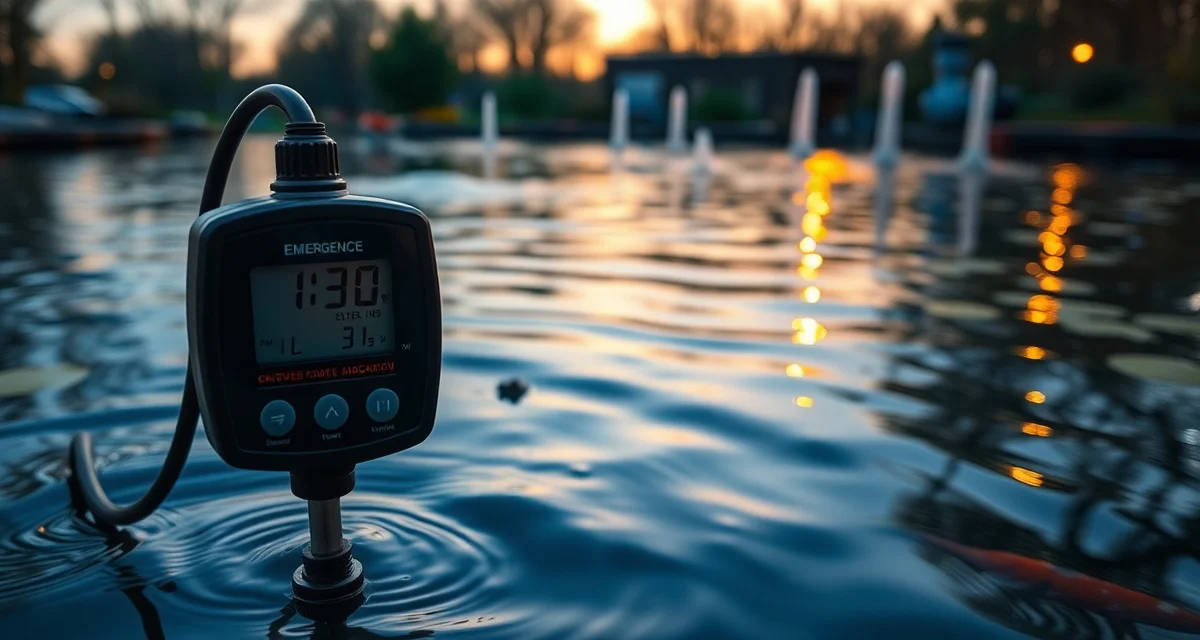
Koi Oxygen Depletion Emergency: Recognition and Response
An oxygen depletion event doesn't announce itself with a warning. One moment the pond looks normal; 90 minutes later fish are dying.
I've dealt with two mass mortality events in my keeping career that were oxygen-related. Both happened during hot summer nights. Both were preventable. The first I didn't recognize fast enough. The second time I had monitoring in place that woke me at 1 a.m. and I got there before it was catastrophic.
If you have a heavily stocked koi pond, understanding oxygen depletion as a genuine emergency - not just a "be careful in summer" footnote - is essential.
TL;DR
- One moment the pond looks normal; 90 minutes later fish are dying.
- The second time I had monitoring in place that woke me at 1 a.m.
- Warm water physically holds less dissolved oxygen than cool water - the maximum DO at 86°F is only 7.5 mg/L compared to 11.3 mg/L at 50°F.
- A pond with heavy algae growth that seemed fine all afternoon can be in an oxygen deficit by 3 a.m.
- A DO meter that alerts at 6.5 mg/L gives you a 30–60 minute head start before fish are visibly in distress.
- KoiQuanta's DO tracking alerts when readings drop below your configured threshold - set it at 6.5 mg/L, well above the danger zone.
- If morning DO readings in summer are consistently below 7.5 mg/L, your stocking is too high for summer conditions.
Why Oxygen Crashes Happen Suddenly
Dissolved oxygen crashes often follow a predictable sequence:
Warm weather: Water temperature rises. Warm water physically holds less dissolved oxygen than cool water - the maximum DO at 86°F is only 7.5 mg/L compared to 11.3 mg/L at 50°F.
Nighttime algae respiration: During the day, pond algae produce oxygen through photosynthesis. At night, they only respire - consuming oxygen without producing it. A pond with heavy algae growth that seemed fine all afternoon can be in an oxygen deficit by 3 a.m.
High fish density: More fish means more oxygen consumption. The combination of higher consumption + lower ceiling + additional demand from algae respiration and biological filtration can push DO below survival threshold.
Sudden organic load: A die-off event - dead algae from a chemical treatment or temperature change, decaying plant material - can spike bacterial decomposition demand and consume oxygen rapidly.
Aeration failure: A pump failure at 2 a.m. removes the oxygen input mechanism entirely. How long until crisis depends on the pond's baseline DO and the total oxygen demand.
The Warning Signs
Visual signs in the pond:
- Fish gasping at the surface, particularly near waterfalls, returns, or any aeration source
- Fish congregating at the surface and along the edges of the pond
- Unusual lethargy - fish that normally swim actively are stationary
- Loss of schooling behavior - fish that normally move together are scattered
- Rapid, visible gill movement (normal koi at rest have gill beats of approximately 30–60/minute; during oxygen stress this accelerates dramatically)
Timing context:
- Hot, humid night (especially after several hot days)
- Shortly after a thunderstorm or heavy cloud cover (photosynthesis was suppressed, CO2 built up)
- Morning observations (DO is lowest at sunrise - the nadir of the overnight respiration period)
- After any aeration equipment change or maintenance
The problem with relying on visual signs: By the time fish are surface-gasping in significant numbers, DO is typically already below 5 mg/L. You're responding to an emergency that's already in progress.
A DO meter that alerts at 6.5 mg/L gives you a 30–60 minute head start before fish are visibly in distress. That head start saves fish.
Immediate Response Protocol
Every second counts in an active oxygen depletion event. The goal is to increase oxygen input while reducing the differential between current DO and the lethal threshold.
Step 1: Maximize All Aeration (First 60 seconds)
Turn on every aeration source you have:
- All air pumps to maximum flow
- All diffuser circuits open
- Waterfall returns at full flow
- Any venturi fittings opened
- Any supplemental battery-powered aerators activated
Don't take time to diagnose the cause - that comes later. Aeration first.
Step 2: Emergency Water Change (If Safe)
If you have a dechlorinated water source available (or your tap water can be added in a controlled way with dechlorinator), a 20–30% partial water change introduces higher-DO water directly into the pond.
Fresh tap water, even before equilibration, is typically more oxygen-saturated than a depleted pond. The water change simultaneously:
- Adds higher-DO water
- Dilutes any chemical cause (if a treatment event triggered the crash)
- Reduces organic load per gallon
- Potentially lowers water temperature slightly
Step 3: Remove Organic Load
If there's visible dead algae, decaying plant material, or uneaten food visible in the pond, removing it removes the bacterial decomposition oxygen demand. This is a secondary action - aeration first - but it helps stabilize the situation.
Step 4: Measure DO
Once you've implemented emergency aeration, measure DO to understand how bad the situation is and whether your response is working:
- Above 5 mg/L: Crisis likely averted. Monitor closely.
- 3–5 mg/L: Serious situation. Continue maximum aeration, additional water change if possible.
- Below 3 mg/L: Mass mortality likely in progress. Emergency water change essential.
Step 5: Identify and Fix the Cause
After the crisis passes:
- What failed? Equipment check - pumps, aerators, power.
- Was it an algae issue? Consider UV sterilizer, algaecide (with extreme caution - algae die-off consumes oxygen), or shade.
- Was it overstocking for the current summer conditions? Consider reducing fish load for the heat season.
- Was it a one-time event (algae die-off, power cut) or a structural problem?
Prevention
DO Monitoring
A dissolved oxygen meter that logs continuously or can be set to alert is the most valuable prevention investment. KoiQuanta's DO tracking alerts when readings drop below your configured threshold - set it at 6.5 mg/L, well above the danger zone.
This is the single intervention most likely to prevent oxygen depletion mortality. You can't respond to what you don't know is happening.
Aeration Redundancy
Every koi pond needs at least two independent aeration sources. Not a backup that you have somewhere - a backup that's connected and will activate automatically on pump failure.
For serious operations: one electrically-powered aerator system + one battery-powered backup that runs when grid power fails. The battery backup doesn't need to maintain full aeration indefinitely - it needs to maintain fish alive until you can respond.
Algae Management
Heavy algae in a hot summer koi pond is an oxygen time bomb. UV sterilizer for green water, shading to reduce algae growth, and plant-based filtration (water hyacinth, water lettuce) that competes with algae all reduce the nighttime oxygen demand.
Don't treat heavy algae blooms chemically during hot weather without DO monitoring active - the algae die-off event itself consumes oxygen.
Stocking for Conditions
A pond that's adequately stocked at 65°F may be dangerously overstocked at 82°F. The same fish load consumes more oxygen in warm water while the water's oxygen capacity decreases.
Know your pond's oxygen safety margin across the temperature range. If morning DO readings in summer are consistently below 7.5 mg/L, your stocking is too high for summer conditions.
Related Articles
- Koi Gasping at Surface: Emergency Response Guide
- Koi Pond Chemical Overdose Response: Emergency Treatment for Poisoning
- Koi Pond Emergency Response: What to Do When Something Goes Wrong
- Emergency Response to Nitrite Spike in Koi Pond
FAQ
What are the signs of oxygen depletion in a koi pond?
Fish gasping at the surface, especially near waterfalls or aeration sources, is the most visible sign. Fish may congregate at the pond edge or near any aeration return. Unusual lethargy, rapid visible gill movement, and loss of normal schooling behavior are earlier signs. These visual signs appear when DO is typically already below 5 mg/L. A dissolved oxygen meter with an alert threshold provides earlier warning than visual observation.
How do I increase oxygen in a koi pond emergency?
Immediately turn on all available aeration sources - air pumps, diffusers, waterfalls, venturis. Perform a partial water change (20–30%) with dechlorinated water, which introduces higher-DO fresh water while diluting any contributing factors. Remove visible organic matter (dead algae, plant debris) that contributes to bacterial oxygen demand. Measure DO to confirm the response is working and monitor continuously until stable above 7 mg/L.
What causes sudden oxygen drops in koi ponds?
The most common causes are: high water temperature reducing oxygen saturation capacity; overnight algae respiration consuming oxygen without photosynthesis to replenish it; aeration equipment failure (pump seizure, power cut); sudden organic load from algae die-off or decomposing material; and overstocking relative to summer oxygen capacity. Storms and prolonged cloud cover suppress daytime photosynthesis, which can set up overnight crashes. These factors frequently combine - a hot week with heavy algae and an aeration pump running at reduced flow is a high-risk setup.
What is Koi Oxygen Depletion Emergency: Recognition and Response?
Koi Oxygen Depletion Emergency: Recognition and Response is a guide covering how dissolved oxygen crashes happen in koi ponds, how to spot the warning signs before fish die, and the immediate steps to take when a depletion event occurs. It draws on real mass mortality incidents to explain why oxygen levels drop suddenly—especially during hot summer nights—and how monitoring tools can give you a critical head start before visible distress appears.
How much does Koi Oxygen Depletion Emergency: Recognition and Response cost?
The article itself is free to read on KoiQuanta. The monitoring solution referenced—KoiQuanta's dissolved oxygen tracking with configurable alerts—is a paid feature of the KoiQuanta platform. Pricing for KoiQuanta's pond monitoring tools is available on the KoiQuanta website. The emergency response steps described in the article, however, require no special equipment beyond what most serious koi keepers already own or can source quickly.
How does Koi Oxygen Depletion Emergency: Recognition and Response work?
The guide works by explaining the science behind oxygen depletion—warm water holds less dissolved oxygen, heavy algae consumes oxygen overnight, and heavily stocked ponds drain reserves fast. It then walks through recognition (fish gasping at the surface, clustering near inflows) and response (emergency aeration, water changes, reducing load). It also covers how DO meters with threshold alerts around 6.5 mg/L provide a 30–60 minute window before fish show visible distress.
What are the benefits of Koi Oxygen Depletion Emergency: Recognition and Response?
The core benefit is preventing fish loss during an event that typically strikes at night with little warning. Understanding the mechanisms—temperature, algae cycles, stocking density—lets you take preventive action before crisis hits. For keepers who already have monitoring, configuring alerts at 6.5 mg/L means being woken up with enough time to intervene. For those without monitoring, the article provides the knowledge framework to act decisively the moment early warning signs appear.
Who needs Koi Oxygen Depletion Emergency: Recognition and Response?
Any koi keeper with a heavily stocked pond needs this information, particularly those in warmer climates or keeping fish through summer. Ponds with dense algae growth, limited water circulation, or high fish loads are at elevated risk. If your morning dissolved oxygen readings in summer regularly fall below 7.5 mg/L, an emergency is not a distant possibility—it is a near-term risk. Hobbyists who keep koi as a serious investment of time and money should treat oxygen management as a core competency.
Sources
- Associated Koi Clubs of America (AKCA)
- Koi Organisation International (KOI)
- University of Florida IFAS Extension Aquaculture Program
- Fish Vet Group
- Water Quality Association