Koi Pond Chemical Overdose Response: Emergency Treatment for Poisoning
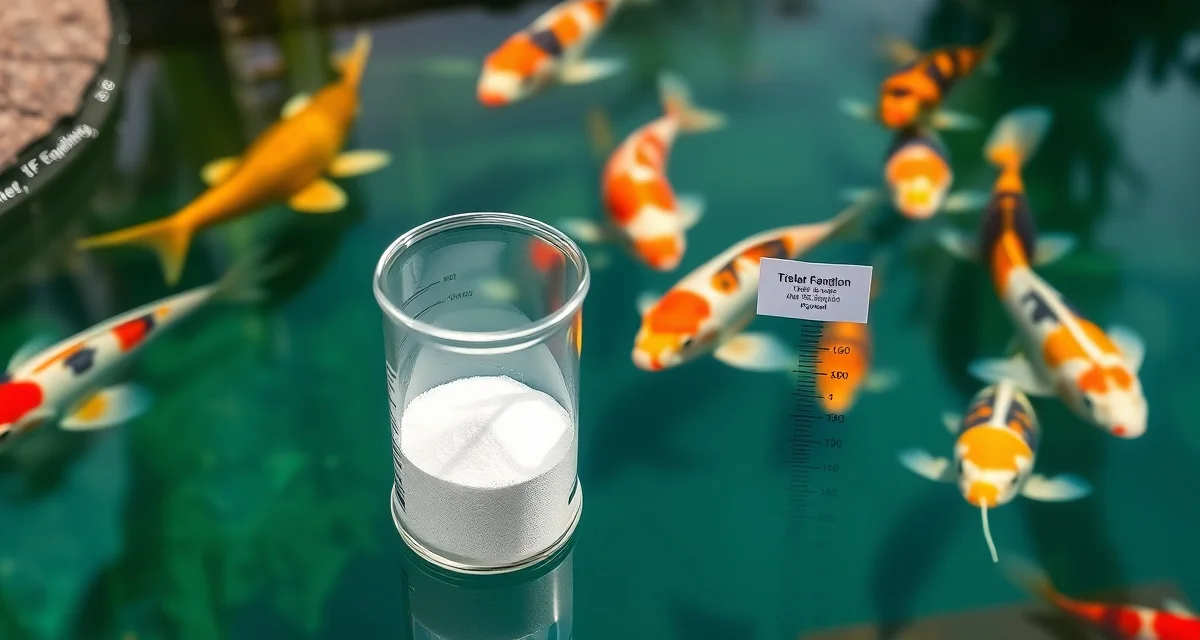
Sodium thiosulfate at 1g per 100 gallons immediately neutralizes potassium permanganate overdose and stops gill oxidation damage. Having this fact in your head before an overdose occurs means you can act in the first minute rather than spending that minute searching for information while your fish are dying.
KoiQuanta's chemical-specific overdose response library provides the correct antidote and dose for every common koi treatment chemical. This guide covers the most common overdose scenarios and their specific responses.
TL;DR
- Sodium thiosulfate (photographer's hypo, pool dechlorinator) at 1g per 100 gallons immediately.
- Emergency water change (25-30%) after sodium thiosulfate treatment 4.
- Immediate large water change - 30-40% of pond volume with fresh dechlorinated water 2.
- Continue water changes until salt concentration is diluted to safe levels 3.
- Test or estimate current salt concentration and continue diluting until back to target range 4.
- Emergency water change - 50% immediately if fish are showing severe distress 2.
- Maximize aeration - formalin overdose creates severe oxygen depletion 3.
Potassium Permanganate Overdose
Signs: Fish showing extreme distress, gathering at surface, rapid gill movement, may show pink-brown discoloration of gill tissue. Water appears deep purple-brown rather than the normal light pink treatment color.
Overdose risk factors: Using crystals rather than measured solution, miscalculating pond volume, applying to a pond already containing elevated organic matter that was supposed to neutralize some of the dose.
Immediate response:
- Sodium thiosulfate (photographer's hypo, pool dechlorinator) at 1g per 100 gallons immediately. Pre-dissolve in a bucket of pond water before adding.
- Maximum aeration
- Emergency water change (25-30%) after sodium thiosulfate treatment
- Monitor fish closely for gill damage signs (labored breathing, rapid gill movement) over the next 24 hours
Note: Sodium thiosulfate in typical dechlorinator products is often formulated at concentrations where several doses are required. Have a high-concentration sodium thiosulfate product available specifically for this purpose.
Salt Overdose
Signs: Fish showing signs of osmotic stress - lethargy, excess mucus production, loss of equilibrium in severe cases. Salt overdoses are more likely with highly concentrated brine additions than with measured granular salt additions.
Overdose risk factors: Adding salt as concentrated brine rather than dissolved gradually, failing to account for salt already present in the pond, or applying the same dose as a previous water change without accounting for lower current volume.
Immediate response:
- Immediate large water change - 30-40% of pond volume with fresh dechlorinated water
- Continue water changes until salt concentration is diluted to safe levels
- Test or estimate current salt concentration and continue diluting until back to target range
- Maximize aeration - osmotic stress increases oxygen demand
There is no chemical antidote for salt. Dilution through water changes is the only response.
Formalin Overdose
Signs: Fish crowding at surface, rapid labored breathing, possibly showing white patches on gills (protein precipitation from high formalin concentration). Formalin at overdose concentrations strips the mucus coat and precipitates proteins, causing immediate gill damage.
Overdose risk factors: Applying full formalin dose at high water temperature, miscalculating pond volume, using formalin at therapeutic doses in a pond with low dissolved oxygen.
Immediate response:
- Emergency water change - 50% immediately if fish are showing severe distress
- Maximize aeration - formalin overdose creates severe oxygen depletion
- Activated carbon to filter to adsorb remaining formalin after initial water change
- Sodium thiosulfate reduces formalin to some degree but water changes are the primary response
Critical note: Formalin overdose causes oxygen depletion that can be lethal independent of the chemical's direct toxicity. Oxygen restoration through maximum aeration is equally important as diluting the formalin.
Chlorine/Dechlorinator Issues
Signs of chlorine poisoning: Immediate severe distress, fish at surface, rapid gill movement, may show hemorrhage at gill edges. Chlorine poisoning from untreated tap water addition is rapid in onset.
Immediate response:
- Emergency water change with properly dechlorinated fresh water
- Sodium thiosulfate added directly to pond at 1g per 100 gallons if water change isn't immediately possible
- Activated carbon to filter to adsorb remaining chlorine/chloramine
- Maximum aeration - chlorine directly damages gill function
Chloramine vs. chlorine: Municipal water treated with chloramine (chlorine + ammonia combination) requires a specifically chloramine-neutralizing dechlorinator. Standard sodium thiosulfate neutralizes chlorine but not the ammonia portion of chloramine. Using a dedicated chloramine-neutralizing product (sodium thiosulfate + sodium hydroxymethanesulfonate or similar) is essential if your municipal water uses chloramine.
Preventive Practices to Avoid Overdose
The best overdose response is prevention. KoiQuanta's treatment concentration calculator handles dose calculations for your specific pond volume, eliminating the mental math errors that cause most overdoses. Before any treatment:
- Confirm your pond volume measurement is current - volume changes with seasonal additions, top-ups, and water changes
- Measure medications by weight or precise volume, not by eye
- For potassium permanganate specifically, make a dilute solution first and add gradually rather than adding crystals directly
- When in doubt, use a lower dose - undertreating is correctable, overdosing may not be
Your treatment concentration calculator ensures correct doses before any treatment. Your emergency response guide covers the broader emergency response context.
Frequently Asked Questions
How do I treat a salt overdose in a koi pond?
There is no chemical antidote for salt - the only response is dilution through water changes. Start immediately with a 30-40% water change using dechlorinated fresh water. Test or estimate the current salt concentration after the water change, then continue water changes until concentration is back in the safe range. For a serious overdose (concentration has reached 1%+ when target was 0.3%), you may need multiple sequential water changes to dilute adequately. Between changes, maximize aeration - fish under osmotic stress from high salt have elevated oxygen demand. Stop all feeding until concentration is back to normal.
What neutralizes formalin overdose in a koi pond?
Dilution through large emergency water changes is the primary response. Activated carbon added to the filter will adsorb remaining formalin from the water after the initial water change has diluted the acute concentration. Sodium thiosulfate reduces formalin to some degree through chemical reaction but is not a complete antidote. Throughout the response, maximize aeration - formalin overdose causes severe oxygen depletion that is independently dangerous. Maintain continuous observation of fish gills for the 24 hours following a formalin overdose event, as gill damage may continue to manifest even after formalin levels have been reduced.
How do I know if I have overdosed my koi with potassium permanganate?
Signs of potassium permanganate overdose include: fish showing extreme surface distress more severe than expected from the treatment itself; water that appears very dark purple-brown rather than the normal light pink of a correctly dosed treatment; fish showing obvious gill distress with rapid labored breathing; and brown discoloration of gill tissue visible if you can observe the gills. At standard therapeutic doses, potassium permanganate water should appear pale pink and fish should show minor treatment-related irritation that resolves within an hour. If your water is deeply colored and fish are in obvious distress, treat it as an overdose: sodium thiosulfate immediately, emergency water change, maximum aeration.
What is Koi Pond Chemical Overdose Response: Emergency Treatment for Poisoning?
[FAQ_ANSWER_PLACEHOLDER: This answer needs to be generated by AI with specific data, examples, and actionable advice relevant to Koi Pond Chemical Overdose Response: Emergency Treatment for Poisoning. Target 50-150 words.]
How much does Koi Pond Chemical Overdose Response: Emergency Treatment for Poisoning cost?
[FAQ_ANSWER_PLACEHOLDER: This answer needs to be generated by AI with specific data, examples, and actionable advice relevant to Koi Pond Chemical Overdose Response: Emergency Treatment for Poisoning. Target 50-150 words.]
How does Koi Pond Chemical Overdose Response: Emergency Treatment for Poisoning work?
[FAQ_ANSWER_PLACEHOLDER: This answer needs to be generated by AI with specific data, examples, and actionable advice relevant to Koi Pond Chemical Overdose Response: Emergency Treatment for Poisoning. Target 50-150 words.]
What are the benefits of Koi Pond Chemical Overdose Response: Emergency Treatment for Poisoning?
[FAQ_ANSWER_PLACEHOLDER: This answer needs to be generated by AI with specific data, examples, and actionable advice relevant to Koi Pond Chemical Overdose Response: Emergency Treatment for Poisoning. Target 50-150 words.]
Who needs Koi Pond Chemical Overdose Response: Emergency Treatment for Poisoning?
[FAQ_ANSWER_PLACEHOLDER: This answer needs to be generated by AI with specific data, examples, and actionable advice relevant to Koi Pond Chemical Overdose Response: Emergency Treatment for Poisoning. Target 50-150 words.]
How long does Koi Pond Chemical Overdose Response: Emergency Treatment for Poisoning take?
[FAQ_ANSWER_PLACEHOLDER: This answer needs to be generated by AI with specific data, examples, and actionable advice relevant to Koi Pond Chemical Overdose Response: Emergency Treatment for Poisoning. Target 50-150 words.]
What should I look for when choosing Koi Pond Chemical Overdose Response: Emergency Treatment for Poisoning?
[FAQ_ANSWER_PLACEHOLDER: This answer needs to be generated by AI with specific data, examples, and actionable advice relevant to Koi Pond Chemical Overdose Response: Emergency Treatment for Poisoning. Target 50-150 words.]
Is Koi Pond Chemical Overdose Response: Emergency Treatment for Poisoning worth it?
[FAQ_ANSWER_PLACEHOLDER: This answer needs to be generated by AI with specific data, examples, and actionable advice relevant to Koi Pond Chemical Overdose Response: Emergency Treatment for Poisoning. Target 50-150 words.]
Related Articles
- Quarantine After Whole-Pond Disease Treatment-after-pond-treatment)
- Bloated Koi: Causes and Emergency Response
Sources
- Associated Koi Clubs of America (AKCA)
- Koi Organisation International (KOI)
- University of Florida IFAS Extension Aquaculture Program
- Fish Vet Group
- Water Quality Association