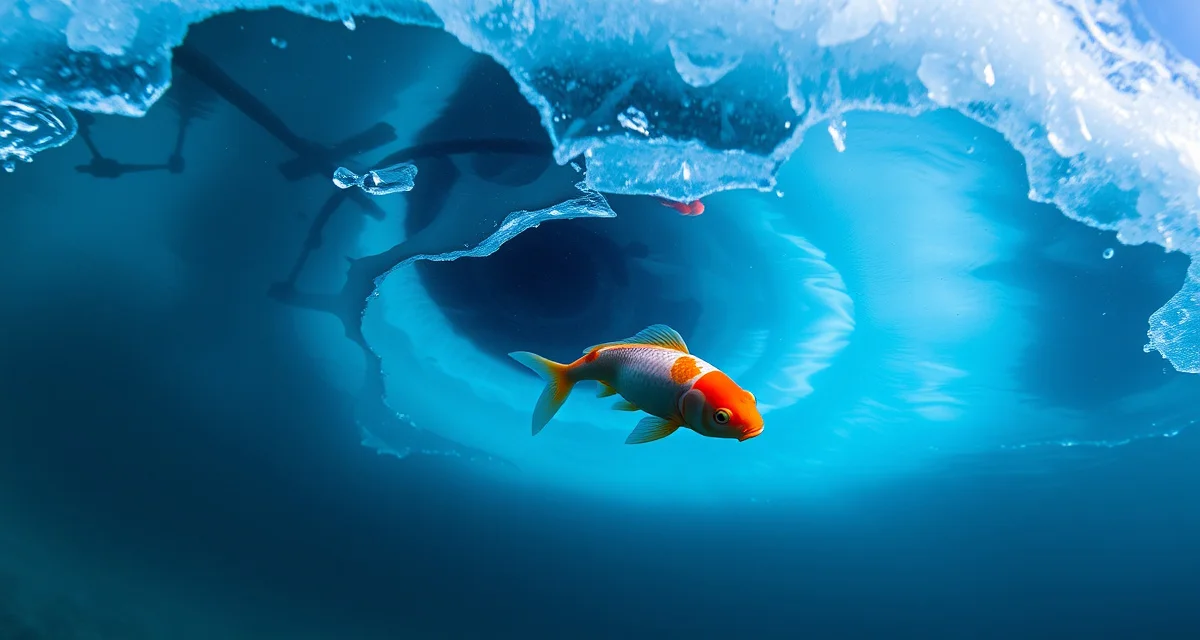
Koi Keeping in New England: Winter Survival Guide
Ice covering over 80% of a pond surface can cause lethal CO2 buildup within days. This is the central risk of New England winters for koi keepers. When ice seals the pond surface, gas exchange stops. CO2 from fish respiration and decomposition of organic matter in the sediment builds up beneath the ice while oxygen depletes. Koi can survive cold temperatures in a torpor state with very low oxygen needs -- but they cannot survive CO2 poisoning, and they cannot survive without any oxygen at all.
Managing the ice is the most critical winter skill for New England koi keepers.
TL;DR
- CO2 from fish respiration and decomposition of organic matter in the sediment builds up beneath the ice while oxygen depletes.
- Koi can survive cold temperatures in a torpor state with very low oxygen needs -- but they cannot survive CO2 poisoning, and they cannot survive without any oxygen at all.
- Maine, Vermont, and New Hampshire see extended periods with air temperatures well below -10°C.
- The fish barely need oxygen at winter temperatures; they need the CO2 to have somewhere to go.
- A 1,500-watt deicer is adequate for a well-insulated pond; larger or very cold ponds may need 2,000-3,000 watts or multiple units.
- The fish naturally enter a torpor state around 10°C, dramatically reducing their metabolism and oxygen needs.
- Fish appearing at the surface of an iced pond in winter are usually there because CO2 is accumulating, not because they're hungry.
The New England Winter Challenge
New England's winters are genuinely severe by koi keeping standards. Maine, Vermont, and New Hampshire see extended periods with air temperatures well below -10°C. Massachusetts and Connecticut have milder winters on average but still experience sustained freezing. Even coastal Rhode Island gets ice-over events.
The challenges:
- Extended periods of complete ice cover (weeks, not days)
- Deep freeze events that can freeze pond edges solid
- CO2 and ammonia accumulation under ice
- Risk of fish entering spring in very poor condition
- Spring disease outbreaks triggered by winter stress
KoiQuanta's cold-climate mode adjusts monitoring, stops feeding prompts in winter, and provides spring startup checklists designed for the New England recovery period.
Pond Design for New England Winters
If you're designing a new pond for New England, winter survivability should be a primary design consideration:
Depth: Build to at least 1.5-1.8m (5-6 feet) in the deepest zone. In most of New England, this depth ensures a zone of unfrozen water at the bottom where koi can shelter even in severe cold. The thermocline in a pond this deep stays above freezing even when the surface is fully iced.
Steep sides: Gradually sloping pond edges freeze solid and can push against koi that are resting near the bottom. Steep or vertical sides in the deeper zone allow ice to form at the surface without creating pressure on the fish below.
Minimal sediment: Decomposing organic matter in the pond sediment is a major source of CO2 and ammonia under winter ice. Deep-clean your pond in autumn before temperatures drop -- remove as much sediment as possible to reduce the gas load during ice-over.
Ice Management: Keeping an Opening
The only requirement during winter ice is maintaining a gas exchange opening -- a hole in the ice that allows CO2 to escape and some oxygen to enter. The fish barely need oxygen at winter temperatures; they need the CO2 to have somewhere to go.
Pond heaters (deicers): The most reliable solution. Floating pond deicers (also called stock tank heaters) are designed specifically to maintain an ice-free opening by heating a small area of water surface. They don't heat the whole pond -- they maintain a hole. Run these continuously from the time ice threatens until consistent thaw. A 1,500-watt deicer is adequate for a well-insulated pond; larger or very cold ponds may need 2,000-3,000 watts or multiple units.
Running pump/waterfall: Some keepers maintain a small water pump or return flow through winter to keep water moving and prevent complete ice-over. This works in mild New England winters but may not be sufficient in the coldest stretches. Circulation can also chill the water more than is optimal in extreme cold -- deep, still water in a properly designed pond holds warmth better than circulated water. Suspend the main pump in a severe cold event and rely on a deicer instead.
Never break ice with force: Pounding on ice near fish causes pressure waves that can rupture the swim bladder or injure koi in torpor. If ice needs to be removed, thaw it with a pan of hot water placed on the surface -- never impact the ice directly.
Should You Remove Koi for Winter?
Most New England keepers leave koi in the pond through winter, provided the pond is deep enough. Koi evolved in environments with cold winters and are genuinely cold-hardy when managed correctly. The fish naturally enter a torpor state around 10°C, dramatically reducing their metabolism and oxygen needs.
Exceptions -- situations where removing koi for winter is worth considering:
- Shallow ponds (under 1 meter deep) that may freeze completely
- Very small ponds (under 500 gallons) with high surface-area-to-volume ratio
- Ponds with structural issues that can't be corrected before winter
- Fish of extraordinary value where any risk is unacceptable
If you do bring fish inside, you'll need a holding tank large enough (100 gallons per fish minimum), functioning filtration, and ideally a controlled temperature around 10-12°C to maintain the winter torpor state without letting water get too cold or too warm.
Winter Feeding: Stop Before Ice
Stop feeding when water temperature drops below 10°C and doesn't recover. Some New England keepers have a date-based rule (typically late October or early November), but temperature is the correct trigger -- some years autumn comes late and feeding can continue into November; other years, an early cold snap makes stopping necessary in September.
The last feeding before winter should use easily digestible wheat germ food, not high-protein summer food. Leave the gut as clear as possible before the fish go into torpor.
Do not feed through holes in the ice in winter, even if fish appear active near the surface. Fish appearing at the surface of an iced pond in winter are usually there because CO2 is accumulating, not because they're hungry.
Spring Recovery: The High-Risk Window
New England springs are notoriously tricky for koi. The transition from winter torpor to active fish happens over several weeks as water temperature rises from 5-8°C through the 10-15°C range. This transition window is when koi are most vulnerable to disease.
Immune function is at its seasonal lowest in early spring. Any minor injuries from winter (physical damage from ice, abrasions from lying on the bottom), low-grade bacterial infections that were suppressed during cold, or fluke loads that have been building under the ice all become active problems as temperatures rise.
KoiQuanta's spring startup protocol for cold-climate ponds includes an elevated monitoring phase in the 10-15°C window, prophylactic parasite treatment before the system fully warms, and gradual feeding resumption guidance calibrated for the New England spring temperature curve. For the complete winter-to-spring transition protocol, the koi seasonal management guide covers the full year cycle, and the koi keeping in cold climates guide provides the overarching framework for all cold-climate management decisions.
Frequently Asked Questions
How do I keep koi alive through New England winters?
The key requirements are a pond deep enough (1.5-1.8m minimum) to have an unfrozen zone at the bottom, and a method to maintain a gas exchange opening in the ice. Floating pond deicers are the most reliable ice management tool -- they keep a small hole open without heating the whole pond. Stop feeding when temperatures drop below 10°C, and don't break ice with force near fish. KoiQuanta's cold-climate mode removes feeding prompts in winter and provides spring startup checklists for the recovery period.
Do I need a pond heater in New England?
You don't need to heat the entire pond -- koi can survive in near-freezing water. What you do need is a deicer to maintain an ice-free opening for gas exchange. A floating deicer prevents the CO2 buildup that can kill fish under complete ice cover within days. For ponds that repeatedly see complete ice cover, a deicer is not optional -- it's the difference between fish that survive winter and fish that don't. A 1,500-2,000 watt deicer is the right size for most residential koi ponds.
How do I manage ice on my koi pond?
Run a floating pond deicer continuously from the first freeze threat until consistent spring thaw. If ice does form around the deicer or in areas not covered by it, remove it by placing hot water in a pan on the surface to melt through gradually -- never hammer or pound ice near fish, as the concussive force can injure fish in torpor. Keep the gas exchange opening clear as the priority. A hole as small as 12-18 inches in diameter is adequate if it stays open continuously.
What is Koi Keeping in New England: Winter Survival Guide?
Koi Keeping in New England: Winter Survival Guide is a practical resource for pond owners in the northeastern United States who need to protect their koi through harsh winter conditions. It covers the core risks of ice-sealed ponds — specifically CO2 buildup and oxygen depletion — and walks keepers through proven strategies for maintaining safe gas exchange, managing torpor states, and sizing heating equipment for ponds in states like Maine, Vermont, New Hampshire, and Connecticut.
How much does Koi Keeping in New England: Winter Survival Guide cost?
The guide itself is free to read on KoiQuanta. The real costs are in equipment: a quality pond deicer runs $80–$200, with 1,500-watt units adequate for well-insulated ponds and 2,000–3,000-watt units needed for larger or more exposed setups. You may also spend on aeration equipment and insulating materials. These are one-time or seasonal investments that directly protect fish worth far more than the hardware.
How does Koi Keeping in New England: Winter Survival Guide work?
The guide works by explaining the underlying biology and physics of winter pond dynamics — why ice is dangerous, how koi enter torpor around 10°C, and why CO2 removal matters more than oxygen addition at cold temperatures. It then translates that science into actionable steps: keeping a hole open in the ice, sizing deicers correctly, and avoiding common mistakes like breaking ice with force, which can shock torpid fish.
What are the benefits of Koi Keeping in New England: Winter Survival Guide?
Following this guide helps New England koi keepers avoid the most common cause of winter fish loss: CO2 poisoning from a fully sealed pond. Benefits include understanding why gas exchange — not just oxygenation — is the priority, how to size equipment correctly for cold climates, and how to keep fish safely through extended sub-zero periods common in northern New England states without over-engineering or over-spending.
Who needs Koi Keeping in New England: Winter Survival Guide?
This guide is essential for any koi keeper in New England, particularly those in Maine, Vermont, New Hampshire, and Connecticut where air temperatures regularly drop well below -10°C for extended periods. It's also valuable for keepers in milder mid-Atlantic states who experience surprise cold snaps. If you have an outdoor pond with koi and face freezing winters, the risks described here apply directly to you.
How long does Koi Keeping in New England: Winter Survival Guide take?
Reading the guide takes under 15 minutes. Implementing the recommendations — selecting and installing a deicer, checking insulation, and establishing a winter monitoring routine — typically takes a few hours in late autumn before freeze-up. Once set up, daily winter maintenance is minimal: a quick check that the deicer is keeping a hole open and that no unusual behavior is visible through the ice or open water.
What should I look for when choosing Koi Keeping in New England: Winter Survival Guide?
When evaluating winter pond advice, look for guidance grounded in the actual biology: CO2 toxicity and gas exchange, not just oxygenation. Good guidance will recommend appropriately sized deicers (1,500–3,000 watts depending on pond size and climate), caution against breaking ice by force, and explain torpor so you're not alarmed by fish sitting motionless on the bottom. Be wary of advice that over-complicates or under-addresses the ice management problem.
Is Koi Keeping in New England: Winter Survival Guide worth it?
Yes — for any New England koi keeper, understanding and acting on this information is essential. Koi can be expensive, and losing a pond full of fish to a preventable CO2 buildup is both costly and avoidable. The equipment investment is modest relative to the fish value, and the knowledge itself is free. If you keep koi outdoors through a New England winter without a solid ice-management plan, you are taking a serious and unnecessary risk.
Related Articles
- Koi Dealer Software for New Hampshire: Northern New England Koi Compliance
- Koi Keeping in Arizona: Extreme Heat Survival
Sources
- Associated Koi Clubs of America (AKCA)
- Koi Organisation International (KOI)
- University of Florida IFAS Extension Aquaculture Program
- Fish Vet Group
- Water Quality Association