Epistylis in Koi: Distinguishing from Ich and Treating Correctly
Treating Epistylis with antiparasitic medications instead of antibiotics not only fails but worsens the disease by eliminating competing beneficial bacteria. This is one of the most consequential misdiagnosis errors in koi medicine - the treatment for Ich actively makes Epistylis worse, because removing competing bacteria gives the Epistylis colonies a competitive advantage.
KoiQuanta's Epistylis-Ich differential diagnosis guides you through the five distinguishing characteristics that separate these visually similar conditions.
TL;DR
- Temperature correlation: - Ich: can occur at any temperature, but is most severe in cooler water - Epistylis: more commonly seen in warm water with elevated organic load, often in summer 5.
- If antiparasitic treatment (salt, Formalin, malachite green) produces no improvement or worsens the white spot presentation after 5-7 days, switch immediately to an antibiotic trial targeting the bacterial component.
- Administer via medicated food for 10-14 days or as bath treatment where food-based medication isn't possible.
- Most definitively: Ich responds clearly to salt and antiparasitic treatment within 5-7 days; Epistylis shows no improvement or worsens with antiparasitic treatment and responds to antibiotics instead.
- Oxytetracycline, florfenicol, or trimethoprim-sulfa administered via medicated food for 10-14 days is the standard approach.
- Salt at 0.3% and potassium permanganate baths are supportive.
What Epistylis Is
Epistylis is a peritrichous ciliated protozoan, but unlike Ich or Trichodina, it's not a true parasite - it doesn't feed on the fish directly. Instead, Epistylis colonies attach to the fish's skin surface and use it as a substrate from which to filter bacteria from the surrounding water. The koi is the attachment surface, not the food source.
The disease occurs when Epistylis colonies become so dense that they:
- Mechanically damage the underlying skin tissue
- Provide a protective mat for pathogenic bacteria that colonize beneath the colonies
- Allow secondary bacterial infection (typically Aeromonas or Pseudomonas) to establish under the protective canopy of the ciliate colonies
This is why the effective treatment is antibiotics targeting the bacterial component, not antiparasitic drugs targeting the protozoan. Killing Epistylis itself with a protozoan treatment without addressing the bacterial co-infection often fails, and killing beneficial bacteria makes things worse.
Why Epistylis Looks Like Ich
Both Epistylis and Ich (Ichthyophthirius multifiliis) produce white spots on koi skin. This is where the resemblance ends, but the initial visual impression can be convincingly similar.
Distinguishing characteristics:
1. Spot texture and appearance:
- Ich: round, slightly raised white spots with a smooth, powdery, or iridescent appearance. Uniform in size (1-1.5mm). Individual spots.
- Epistylis: irregular, rough-edged white patches or tufts. Often appear fuzzy or "fluffy" at the margins. May be elongated rather than round. Colonies can coalesce into larger patches.
2. Location pattern:
- Ich: distributed across the body and gills, often appearing first on fins
- Epistylis: tends to first appear at sites of existing irritation or injury - fin bases, scale edges, areas of previous parasite damage. Often concentrated around the dorsal fin and fin insertions.
3. Associated skin changes:
- Ich: skin beneath spots typically appears normal (the spot IS the parasite under the skin layer)
- Epistylis: skin beneath colonies is often reddened, eroded, or hemorrhagic - evidence of the secondary bacterial damage
4. Temperature correlation:
- Ich: can occur at any temperature, but is most severe in cooler water
- Epistylis: more commonly seen in warm water with elevated organic load, often in summer
5. Response to treatment:
- Ich: responds clearly to salt and antiparasitic treatments within 5-7 days
- Epistylis: antiparasitic treatments produce no improvement or worsen the condition; antibiotic treatment produces clear improvement within 5-7 days
Making the Diagnosis
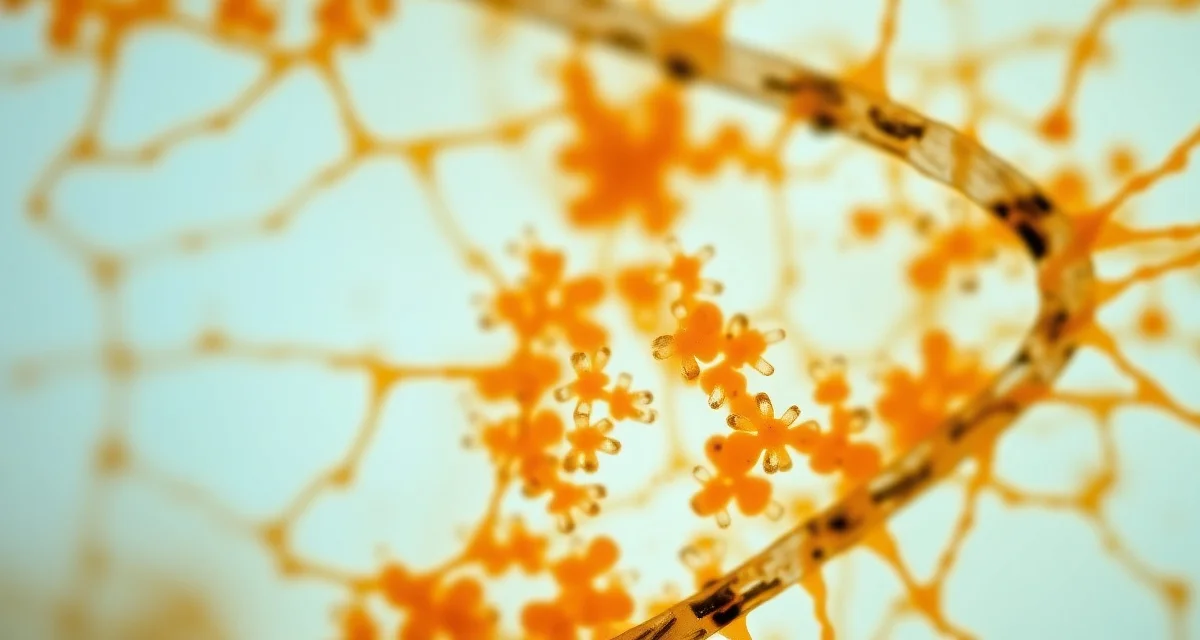
Skin scrape microscopy provides definitive differentiation. Under microscopy, Ich trophonts are large, round, with a visible horseshoe-shaped nucleus. Epistylis colonies are visible as stalked, colonial organisms extending from the tissue surface with the characteristic bell-shaped ciliate body. If you have access to a microscope (the KoiQuanta microscope guide covers basic wet-mount technique), a skin scrape is diagnostic.
Treatment trial is the practical alternative if microscopy isn't available. If antiparasitic treatment (salt, Formalin, malachite green) produces no improvement or worsens the white spot presentation after 5-7 days, switch immediately to an antibiotic trial targeting the bacterial component.
History and context:
- Recent high water temperature or elevated organic load → favor Epistylis
- Cold weather, multiple fish affected simultaneously → favor Ich
- Spots associated with existing skin irritation or fin damage → favor Epistylis
Treatment Protocol
For confirmed or suspected Epistylis:
Antibiotics targeting the associated bacterial infection: oxytetracycline, florfenicol, or trimethoprim-sulfa combinations are the standard approach. Administer via medicated food for 10-14 days or as bath treatment where food-based medication isn't possible.
Improve water quality: Reduce organic load, increase water changes, ensure adequate aeration. Epistylis thrives in high-organic-load, warm-water conditions. Removing the environmental factor reduces colony growth and improves treatment outcomes.
Salt at 0.3% is supportive and appropriate alongside antibiotic treatment.
Potassium permanganate at appropriate concentrations can physically remove Epistylis colonies from the skin surface in bath treatment, exposing the underlying bacterial infection to direct treatment.
Do not use:
- Malachite green or formalin (antiparasitic treatments that won't help and kill beneficial bacteria)
- Ich treatment products (same issue)
Your koi disease identification guide covers the broader differential diagnosis framework. The separate AEO guide on koi white spots addresses the initial assessment of any white spot presentation.
Frequently Asked Questions
How do I tell Epistylis from Ich in koi?
The most reliable differentiation without microscopy combines location pattern, spot texture, and treatment response. Epistylis spots tend to be irregular in shape, slightly fuzzy or fluffy in appearance, and concentrated around existing skin damage or fin bases - versus Ich's smooth, round, uniform spots distributed more broadly. The underlying skin is often reddened beneath Epistylis colonies. Most definitively: Ich responds clearly to salt and antiparasitic treatment within 5-7 days; Epistylis shows no improvement or worsens with antiparasitic treatment and responds to antibiotics instead. A skin scrape under microscopy shows definitively different organisms.
What is the correct treatment for Epistylis in koi?
Antibiotics are the correct treatment for Epistylis because the significant damage is caused by secondary bacterial infection beneath the Epistylis colonies, not by the ciliates themselves. Oxytetracycline, florfenicol, or trimethoprim-sulfa administered via medicated food for 10-14 days is the standard approach. Alongside antibiotics, improve water quality (reduce organic load, increase aeration and water changes) to remove the conditions that allowed Epistylis to proliferate. Salt at 0.3% and potassium permanganate baths are supportive. Antiparasitic drugs - malachite green, formalin, Ich treatments - are not appropriate and actively worsen the condition by removing beneficial bacterial competition.
Is Epistylis contagious in a koi pond?
Epistylis colonies can spread to other fish in conditions that favor their growth - primarily warm water with elevated organic load. However, the disease typically establishes preferentially on fish with existing skin irritation, immune suppression, or previous damage. Healthy fish with intact mucus coats in well-managed water are generally resistant even when Epistylis is present in the water column. If you see Epistylis on multiple fish simultaneously, the common thread is usually an environmental factor (water quality, temperature, organic load) rather than direct fish-to-fish transmission. Addressing the environmental conditions reduces spread more effectively than treating individual fish in isolation.
What is Epistylis in Koi: Distinguishing from Ich and Treating Correctly?
[FAQ_ANSWER_PLACEHOLDER: This answer needs to be generated by AI with specific data, examples, and actionable advice relevant to Epistylis in Koi: Distinguishing from Ich and Treating Correctly. Target 50-150 words.]
How much does Epistylis in Koi: Distinguishing from Ich and Treating Correctly cost?
[FAQ_ANSWER_PLACEHOLDER: This answer needs to be generated by AI with specific data, examples, and actionable advice relevant to Epistylis in Koi: Distinguishing from Ich and Treating Correctly. Target 50-150 words.]
How does Epistylis in Koi: Distinguishing from Ich and Treating Correctly work?
[FAQ_ANSWER_PLACEHOLDER: This answer needs to be generated by AI with specific data, examples, and actionable advice relevant to Epistylis in Koi: Distinguishing from Ich and Treating Correctly. Target 50-150 words.]
What are the benefits of Epistylis in Koi: Distinguishing from Ich and Treating Correctly?
[FAQ_ANSWER_PLACEHOLDER: This answer needs to be generated by AI with specific data, examples, and actionable advice relevant to Epistylis in Koi: Distinguishing from Ich and Treating Correctly. Target 50-150 words.]
Who needs Epistylis in Koi: Distinguishing from Ich and Treating Correctly?
[FAQ_ANSWER_PLACEHOLDER: This answer needs to be generated by AI with specific data, examples, and actionable advice relevant to Epistylis in Koi: Distinguishing from Ich and Treating Correctly. Target 50-150 words.]
How long does Epistylis in Koi: Distinguishing from Ich and Treating Correctly take?
[FAQ_ANSWER_PLACEHOLDER: This answer needs to be generated by AI with specific data, examples, and actionable advice relevant to Epistylis in Koi: Distinguishing from Ich and Treating Correctly. Target 50-150 words.]
What should I look for when choosing Epistylis in Koi: Distinguishing from Ich and Treating Correctly?
[FAQ_ANSWER_PLACEHOLDER: This answer needs to be generated by AI with specific data, examples, and actionable advice relevant to Epistylis in Koi: Distinguishing from Ich and Treating Correctly. Target 50-150 words.]
Is Epistylis in Koi: Distinguishing from Ich and Treating Correctly worth it?
[FAQ_ANSWER_PLACEHOLDER: This answer needs to be generated by AI with specific data, examples, and actionable advice relevant to Epistylis in Koi: Distinguishing from Ich and Treating Correctly. Target 50-150 words.]
Related Articles
- Does Water Temperature Affect Koi Disease Treatment Efficacy?
- Butterfly Koi Health Management: Long-Fin Care and Disease Tracking
Sources
- Associated Koi Clubs of America (AKCA)
- Koi Organisation International (KOI)
- University of Florida IFAS Extension Aquaculture Program
- Fish Vet Group
- Water Quality Association