Koi Ich (White Spot Disease): Fast Treatment Before It Kills Your Fish
A single Ich trophont can produce 1,000 new parasites within 7 to 10 days at 25 degrees Celsius. The math of Ich is terrifying when you understand it. One adult Ich trophont drops off a fish, encysts at the bottom of the pond, and produces approximately 1,000 free-swimming tomites within a week. Those tomites each find a host fish. Each of those then becomes an adult trophont that produces another 1,000 each. The exponential growth in a warm pond without treatment is why fish can go from "a few white spots" to "covered in white spots and gasping" in under two weeks.
KoiQuanta's temperature-adjusted retreatment scheduler calculates the exact date when Ich tomites will hatch based on your pond water temperature, so your retreatment hits the vulnerable free-swimming stage rather than the resistant encysted stage.
TL;DR
- Ich (Ichthyophthirius multifiliis) presents as small white spots resembling grains of salt on the skin and fins.
- The parasite is only vulnerable to treatment during the free-swimming tomite stage; trophonts embedded in fish tissue are not killed by most treatments.
- Water temperature determines the length of the Ich life cycle and therefore the retreatment interval.
- At 25 degrees Celsius the life cycle completes in approximately 5-7 days; at 15 degrees Celsius it may take 3-4 weeks.
- Raising water temperature to 25-28 degrees Celsius (where safe) speeds up the life cycle and shortens treatment duration.
- Multiple treatment rounds at the correct life-cycle interval are required to achieve clearance.
Recognizing Koi Ich
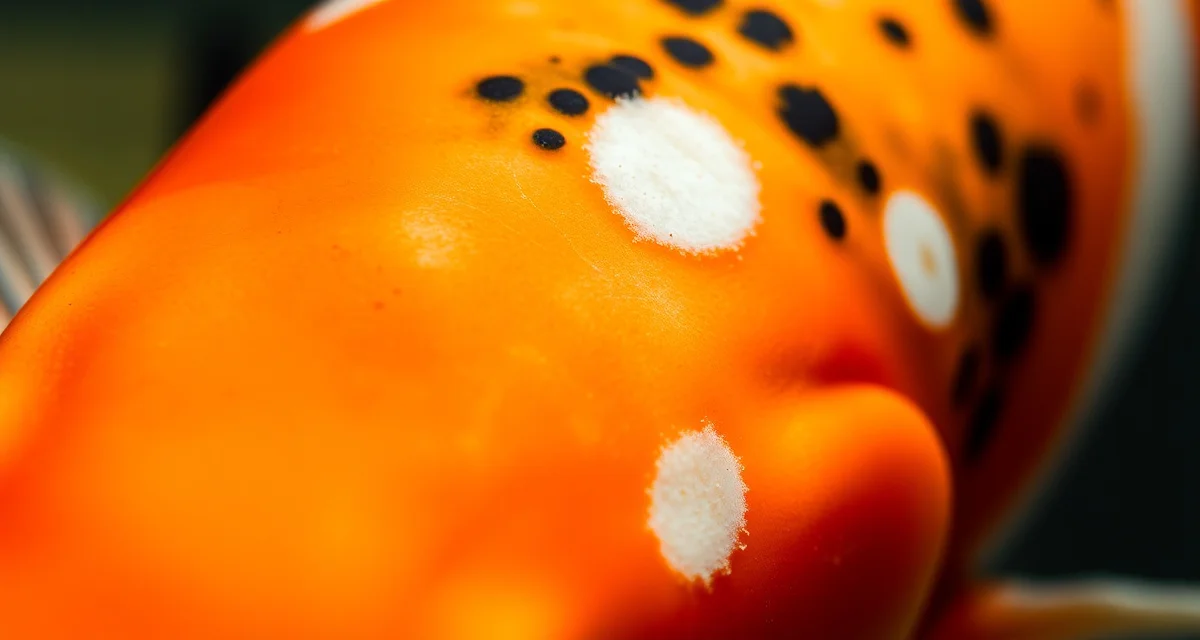
Ich is caused by Ichthyophthirius multifiliis, a protozoan parasite that burrows under koi skin and feeds on skin cells and body fluids. The adult trophont on the fish creates a visible white spot 0.5 to 1.5mm in diameter, visible to the naked eye.
Classic symptoms:
- White spots resembling salt grains or sugar crystals on body, fins, and around the eyes
- Flashing and rubbing behavior (may appear before white spots are visible, during early infestation)
- Increased mucus production, giving skin a slightly slimy appearance
- Respiratory distress in heavy infestations as gills become involved
- Lethargy and loss of appetite in advanced cases
Important: Early Ich infestation, before trophonts mature and become visible, looks exactly like other parasitic infestations causing koi flashing and rubbing. You may treat for Ich based on flashing before white spots are visible. This is reasonable when other causes have been eliminated.
The Ich Life Cycle and Why It Matters
Understanding the life cycle is the key to effective treatment, because different life stages have different drug susceptibility:
Trophont (feeding stage, on fish): Visible white spots. CANNOT be killed by most chemical treatments. The skin covering the trophont protects it from medication. Treatments applied while trophonts are on fish do nothing to those trophonts but prevent the next generation.
Tomont (encysted stage, on pond substrate): The trophont drops off the fish and encysts. CANNOT be effectively killed by most chemical treatments in this stage either.
Tomite (free-swimming larval stage): After the tomont hatches, free-swimming tomites emerge and must find a host within 48 hours or they die. This is the stage that IS susceptible to chemical treatment. This is your treatment window.
The time from tomont encystment to tomite hatching is temperature-dependent:
- 15 degrees Celsius: approximately 5 to 7 days
- 20 degrees Celsius: approximately 3 to 5 days
- 25 degrees Celsius: approximately 2 to 3 days
- 30 degrees Celsius: 24 to 48 hours
This temperature dependency is why retreatment timing is critical. At 25 degrees Celsius, you need to retreat every 2 to 3 days to continuously kill each new tomite generation before they can reinfest fish and become treatment-resistant trophonts. At 15 degrees Celsius, your treatment interval extends to 5 to 7 days.
KoiQuanta's temperature-adjusted retreatment scheduler calculates your specific retreatment dates based on logged pond temperature.
Treatment Protocol
Step 1: Increase temperature if possible (for indoor/quarantine systems).
Raising water temperature accelerates the Ich life cycle, moving trophonts through to the susceptible tomite stage faster. This is only practical in quarantine systems, not large outdoor ponds.
Step 2: First chemical treatment.
Apply treatment (formalin treatment, malachite green where legal, salt, or KoiQuanta-recommended protocols for your region) on day one. This treatment kills current free-swimming tomites. Trophonts on fish are not affected.
Step 3: Continue observing fish.
White spots on fish will continue to look the same or even increase for the first few days as trophonts mature and drop off normally. Don't interpret this as treatment failure. The treatment is killing tomites, not the visible trophonts.
Step 4: Retreatment at the temperature-adjusted interval.
KoiQuanta's retreatment scheduler sends a notification when it's time to retreat. This typically requires 3 to 5 treatment cycles to fully break the Ich cycle.
Step 5: Confirm clearance.
Ich is cleared when you see no new white spots developing for two full temperature-adjusted life cycles after the last visible trophont disappeared.
The parasitic infection tracker logs the full Ich treatment course. The related Costia and Trichodina treatment tracker covers other protozoan parasites that may co-infest with Ich.
Frequently Asked Questions
How do I treat ich in koi?
Begin chemical treatment (appropriate for your region and legal in your jurisdiction) targeting free-swimming tomites. Retreat at temperature-adjusted intervals using KoiQuanta's retreatment scheduler. Continue treatment cycles until no new white spots appear for two complete life cycles. Salt at 0.3% provides supportive care alongside chemical treatment. Log every treatment in KoiQuanta with date, dose, and temperature.
How many treatments does koi ich require?
Typically 3 to 5 treatment applications spaced at temperature-adjusted intervals. At 25 degrees Celsius, this means treating every 2 to 3 days for about 10 to 14 days total. At 15 degrees Celsius, treatment intervals extend to 5 to 7 days, and the complete treatment course takes longer. KoiQuanta's temperature-adjusted scheduler manages the timing.
Can ich kill koi in a large pond?
Yes. Ich can kill koi in any pond. The speed of progression depends on water temperature (faster in warm water) and the initial infestation level. Large ponds don't provide inherent protection. In fact, large ponds with many fish provide more hosts for rapid population buildup. Any pond showing Ich white spots needs treatment started immediately, regardless of pond size.
How do I know if my koi has Ich or just natural white markings?
Ich spots are small, uniform, raised white dots resembling grains of salt that appear over days on skin, fins, and sometimes gills. They are not part of the fish's natural pattern and will appear on fish without white markings. Natural markings are present from the fish's normal coloration. If spots are increasing in number over 24-48 hours, affecting multiple fish, or the fish is flashing and rubbing, Ich is likely. A skin scraping under microscopy confirms the diagnosis definitively.
Why did my koi get Ich even in a well-maintained pond?
Ich is introduced through new fish, shared equipment, or contaminated water. It can also be present in a subclinical state in established ponds and flare up when fish are stressed by temperature swings, poor water quality, or other health events. Strict quarantine of all new fish is the most effective prevention. Any fish showing stress behavior during or after introduction to the main pond should be isolated for observation.
How many treatment rounds does it take to clear Ich?
At minimum two to three treatment rounds are required, spaced at the correct life-cycle interval for your water temperature. A single treatment kills the current generation of free-swimming tomites but does not prevent the next generation from hatching. KoiQuanta's retreatment scheduler calculates the interval based on your logged water temperature so each treatment dose lands when the next generation of tomites is in the vulnerable free-swimming stage.
What is Koi Ich (White Spot Disease): Fast Treatment Before It Kills Your Fish?
Koi Ich, caused by the parasite Ichthyophthirius multifiliis, is a highly contagious freshwater disease that appears as tiny white salt-like spots on koi skin and fins. It spreads rapidly because a single parasite can produce up to 1,000 offspring within a week. Without fast intervention, fish can go from showing a few spots to being completely covered and gasping for air in under two weeks, making early identification and treatment critical.
How much does Koi Ich (White Spot Disease): Fast Treatment Before It Kills Your Fish cost?
Treating Koi Ich itself is low-cost — common treatments like salt, malachite green, or formalin-based medications are inexpensive and widely available. The real cost comes from losing fish if treatment is delayed. A full treatment course may require multiple applications over 1–3 weeks depending on water temperature. Using a retreatment scheduler like KoiQuanta's temperature-adjusted tool helps you time doses correctly, avoiding wasted medication and repeat infestations.
How does Koi Ich (White Spot Disease): Fast Treatment Before It Kills Your Fish work?
Ich treatment works by targeting the parasite's free-swimming tomite stage, the only phase vulnerable to medication. Trophonts buried in fish tissue are protected from most treatments. Water temperature controls how fast the life cycle progresses — at 25°C the cycle completes in roughly 5–7 days. Effective treatment requires dosing during the tomite window, then retreating on a temperature-calculated schedule to catch each new wave before parasites re-embed in host fish.
What are the benefits of Koi Ich (White Spot Disease): Fast Treatment Before It Kills Your Fish?
Fast, correctly timed Ich treatment saves fish lives, prevents exponential parasite spread, and protects your entire pond population from a single infected fish. Accurate retreatment timing based on water temperature means you hit the vulnerable tomite stage rather than wasting doses on resistant life stages. Resolving an outbreak quickly also reduces secondary infections from skin damage, lowers stress on fish, and prevents the cascade of health problems that follow a prolonged parasite load.
Who needs Koi Ich (White Spot Disease): Fast Treatment Before It Kills Your Fish?
Any koi keeper with an active pond needs to know how to identify and treat Ich, especially those with new fish introductions, mixed-temperature ponds, or recent stress events that lower fish immunity. Beginners are particularly at risk because Ich can escalate fast before they recognise the signs. Pond owners who buy fish from dealers, attend koi shows, or add new stock regularly face the highest exposure risk and benefit most from having a treatment plan ready before an outbreak occurs.
Sources
- University of Florida IFAS Extension Aquaculture Program
- Fish Vet Group
- American Fisheries Society
- Aquaculture Network Information Center (AquaNIC)
Get Started with KoiQuanta
Ich clearance depends on hitting every generation of free-swimming tomites at the correct life-cycle interval. Miss one retreatment window and the cycle resets. KoiQuanta's retreatment scheduler calculates the right interval from your actual water temperature log so you never miscalculate. Log your first treatment dose and let KoiQuanta schedule the follow-up automatically.