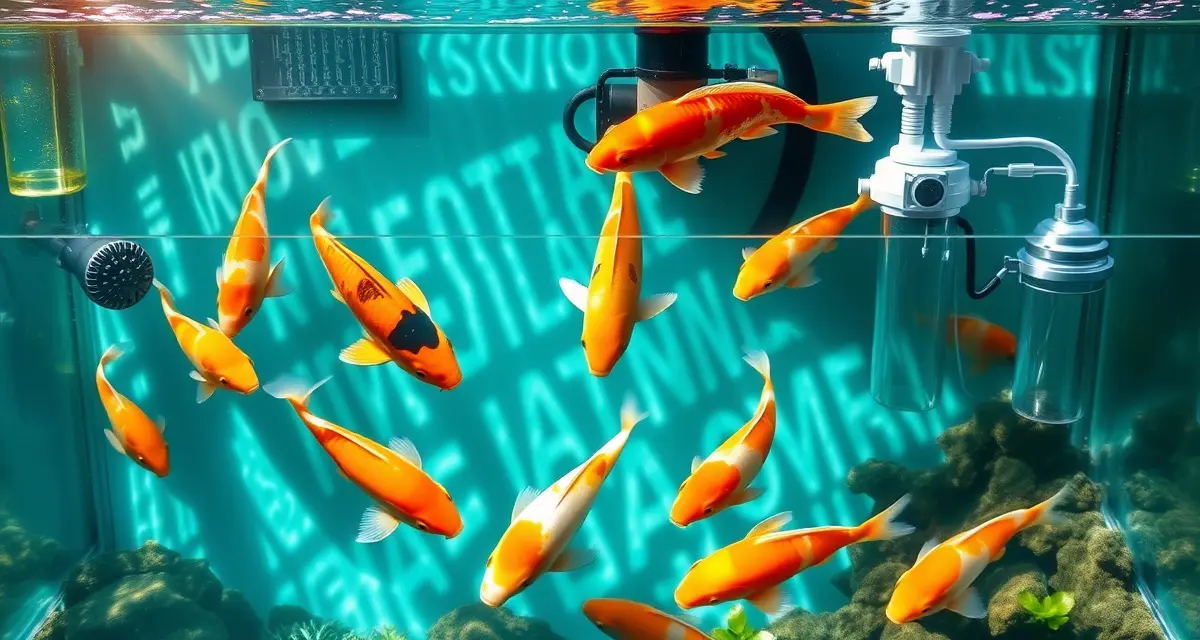
How to Prevent Koi Disease: The 5 Most Important Steps
Most koi disease outbreaks are preventable. Ponds that achieve all five prevention pillars have a 90% reduction in spontaneous disease outbreaks compared to unmanaged ponds. That number reflects the compounding power of prevention: each pillar reduces risk independently, and together they make disease the exception rather than the rule.
The problem isn't that koi keepers don't know the prevention steps. It's that without an integrated system, they follow some and miss others. KoiQuanta's five-pillar disease prevention dashboard shows compliance with quarantine, water quality, treatment readiness, nutrition, and stocking density in a single view, so nothing falls through the cracks.
TL;DR
- Most bacterial and parasitic outbreaks are opportunistic, exploiting fish already stressed by poor water conditions.
- Ammonia above 0.25 ppm causes gill damage that significantly impairs the immune response.
- koi quarantine program for a minimum of 30 days is the single most effective disease prevention practice.
- spring disease prevention period as fish immune systems are depressed from winter and pathogens become active first.
- Dissolved oxygen below 6 mg/L suppresses immune function and increases susceptibility to bacterial and parasitic challenges.
- koi pond overstocking increases disease transmission, reduces dissolved oxygen, and elevates ammonia simultaneously.
Pillar 1: Rigorous Quarantine
Every new fish entering your pond is a potential disease vector. Quarantine every new acquisition for a minimum of 30 days in a separate, cycled tank. During quarantine, observe daily for behavioral changes, lesions, flashing, and labored breathing. Run a structured prophylactic treatment protocol including salt and Praziquantel to address subclinical parasite loads that won't show visible symptoms until stress drops the fish's guard.
See the complete koi quarantine guide for the full 30-day protocol.
Pillar 2: Consistent Water Quality
The fastest route to disease is chronic water quality stress. Target: pH 7.2-8.0, ammonia 0 ppm, nitrite 0 ppm, nitrate under 40 ppm, dissolved oxygen above 7 mg/L, KH 100-200 ppm. Test at minimum twice weekly in summer, weekly in cooler seasons. KoiQuanta's water quality tracking logs every reading and alerts you when parameters trend toward dangerous territory.
Pillar 3: Disease Screening and Observation
Active observation is a skill that separates experienced koi keepers from beginners. Spend 10-15 minutes watching your fish every day, ideally at feeding time. Watch for: reduced feeding response, isolation, abnormal posture, clamped fins, excessive mucus, visible lesions, or rubbing against surfaces. Any of these signs warrants immediate testing and possibly a skin scrape for parasite identification. Catching disease at the earliest sign reduces treatment time and fish losses dramatically.
Pillar 4: Proper Nutrition
A well-nourished koi has an immune system operating at capacity. Feed a varied diet with quality protein, spirulina for immune and color support, and vitamin-stabilized pellets. Avoid overfeeding, which degrades water quality, and never feed in water below 10°C. Immune support supplements containing beta-glucan, vitamin C, and astaxanthin can be added seasonally, particularly during spring when fish are most vulnerable after winter.
Pillar 5: Appropriate Stocking Density
Overcrowding is a disease multiplier. It elevates ammonia, reduces dissolved oxygen, increases stress hormones, and when one fish gets sick, the pathogen dose every other fish receives is maximized. Target 1 inch of fish per 10 gallons as a conservative baseline. In practice, 500 gallons per adult koi gives adequate margin for the fish to grow and for your filter to handle bioload. Resist adding fish faster than your filtration and pond volume can support.
Frequently Asked Questions
What is the most important thing I can do to prevent koi disease?
Quarantine every new fish without exception. The majority of serious disease outbreaks, including KHV, Aeromonas ulcers, and parasitic infections, trace back to an unquarantined fish being added to an established healthy pond. No single action delivers a bigger disease prevention dividend. A proper 30-day quarantine with daily observation and a structured prophylactic treatment protocol catches problems before they can spread. Water quality management is equally important long-term, but quarantine is the single intervention with the highest .
Does quarantine really prevent disease in established ponds?
Yes, meaningfully. Quarantine prevents you from introducing new pathogens. Your established pond likely already has background levels of common bacteria and parasites that your fish's immune systems keep in check. What tips the balance into active disease is usually a new pathogen introduction, an immune-suppressing stress event, or a sudden increase in pathogen load. A new fish that skips quarantine can introduce a pathogen (KHV, flukes, specific Aeromonas strains) your fish have never been exposed to and have no immunity against. That's when catastrophic losses happen.
How do I build a disease prevention routine for my koi pond?
Build around three daily habits: feed and observe simultaneously (10-15 minutes watching fish behavior), record any observations in your log, and check equipment function. Add weekly habits: water testing for ammonia, nitrite, nitrate, pH, and KH, followed by a water change if nitrate warrants it. Seasonally, run the full prevention checklist before spring startup and before winter preparation. In KoiQuanta, the five-pillar dashboard shows your current compliance status at a glance, turning disease prevention from an abstract principle into a concrete daily practice.
What water parameters have the greatest impact on koi disease resistance?
Ammonia and nitrite are the most immediately damaging, causing direct gill and tissue damage that opens pathways for secondary infections. Dissolved oxygen below 6 mg/L suppresses immune function. Stable pH between 7.0 and 8.5 maintains normal mucus layer integrity. KH above 80 ppm buffers against pH crashes. Temperature stability matters as much as the temperature itself; rapid swings of more than 3-4 degrees Celsius in 24 hours significantly stress fish.
How often should I treat my koi pond prophylactically?
Routine prophylactic treatment of a healthy, well-managed pond is generally not recommended. Unnecessary treatment adds chemical stress, disrupts the biological filter, and can contribute to treatment resistance. Appropriate times for prophylactic treatment include quarantine of new fish, after purchasing from higher-risk sources, during spring startup, and after stressful events such as spawning or shows. Targeted treatment at specific risk windows is far preferable to fixed-calendar chemical addition.
Does salt help prevent koi disease?
Salt at 0.1-0.15% provides mild osmoregulatory support and has some antiparasitic effect against certain ectoparasites. It is a useful adjunct during high-risk periods such as spring startup and quarantine, not a replacement for good water quality management or proper quarantine practice. Maintaining low-level salt indefinitely affects aquatic plants and reduces salt's effectiveness as a treatment tool when you actually need therapeutic concentrations.
What is How to Prevent Koi Disease: The 5 Most Important Steps?
KoiQuanta's koi disease prevention guide outlines the five most critical pillars every pond keeper must follow to stop outbreaks before they start. It covers quarantine protocols, water quality management, treatment readiness, nutrition, and stocking density. Ponds that implement all five pillars see a 90% reduction in spontaneous disease outbreaks. The guide also introduces KoiQuanta's five-pillar dashboard, which gives keepers a single integrated view of their compliance across every prevention category.
How much does How to Prevent Koi Disease: The 5 Most Important Steps cost?
The guide and KoiQuanta's disease prevention resources are free to access on the KoiQuanta website. There is no cost to read the five-pillar framework or apply its principles to your pond. KoiQuanta's goal is to make professional-grade koi health management accessible to hobbyists and serious keepers alike, without a paywall standing between your fish and the information that protects them.
How does How to Prevent Koi Disease: The 5 Most Important Steps work?
The five-pillar system works by addressing every major disease risk factor simultaneously. A 30-day quarantine blocks new pathogens from entering the pond. Water quality management keeps ammonia below 0.25 ppm to protect gill function. Treatment readiness ensures medications are on hand before an outbreak escalates. Proper nutrition strengthens immune response. Correct stocking density eliminates chronic stress. Each pillar reduces risk independently, but together their effect compounds dramatically.
What are the benefits of How to Prevent Koi Disease: The 5 Most Important Steps?
Following the five-pillar prevention system dramatically lowers the likelihood of bacterial and parasitic outbreaks, which are almost always opportunistic and triggered by stressed fish. Keepers gain confidence knowing their pond is systematically protected rather than reactively managed. Fish live longer, show better color and growth, and require fewer treatments. The integrated dashboard approach also eliminates the common problem of following some prevention steps while unknowingly neglecting others.
Who needs How to Prevent Koi Disease: The 5 Most Important Steps?
Any koi keeper with an outdoor pond benefits from this guide, but it is especially important for those adding new fish, managing ponds through spring when fish immunity is depressed and pathogens become active first, or dealing with recurring disease problems. Keepers who have lost fish to outbreaks they could not explain will often find a missing pillar is the root cause. Both beginners and experienced hobbyists benefit from the structured, checklist-driven approach.
Related Articles
Sources
- Associated Koi Clubs of America (AKCA)
- University of Florida IFAS Extension Aquaculture Program
- Fish Vet Group
- Koi Organisation International (KOI)
- Water Quality Association
Get Started with KoiQuanta
Preventing disease starts with knowing what your water is doing before problems appear. KoiQuanta's parameter logging and trend analysis identifies ammonia rises, temperature instability, and pH drift before they stress fish to the point of disease. Start a free trial and see how consistent monitoring changes your approach from reactive treatment to proactive prevention.