Black Spots on Koi: Healing Ulcers, Melanophore Migration, or Disease?
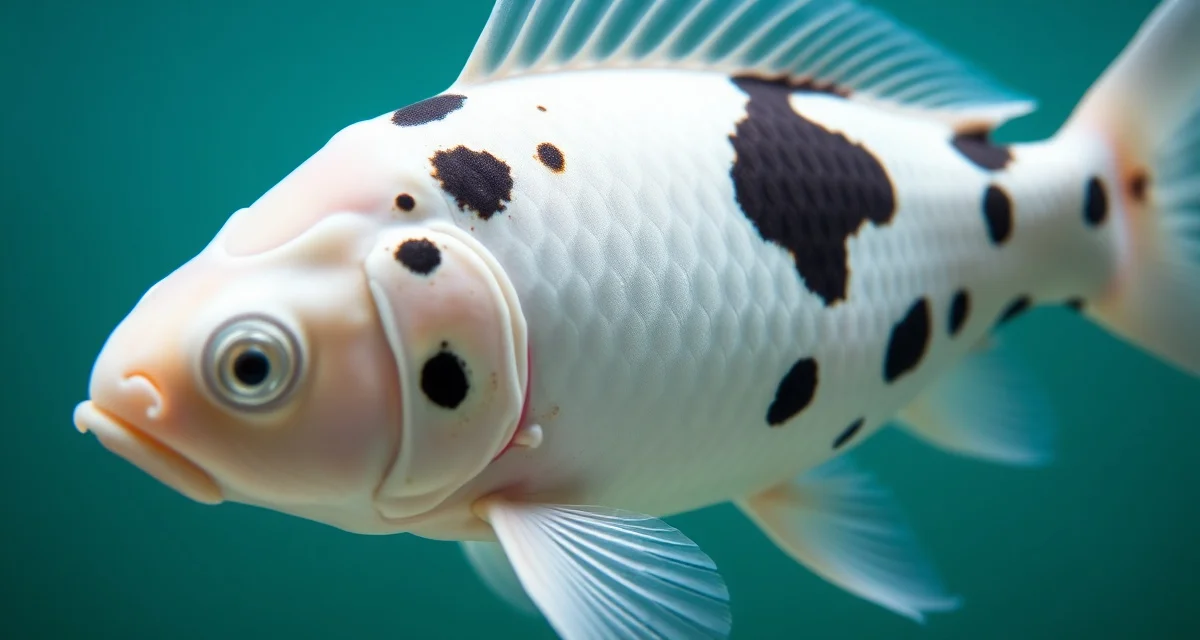
Black spots that appear suddenly on white koi skin areas are usually melanophore migration from healed ulcers, not new disease. This is one of the most anxiety-provoking observations for koi owners who haven't encountered it before: a koi that had no black spots suddenly has several black marks on its skin. The instinct is to assume disease. In most cases, those black marks are the sign of healing.
KoiQuanta's observation timeline view shows exactly when new markings appeared and whether they correlate with any health events, turning a confusing observation into a documented health history.
TL;DR
- Black spots are most often melanophore migration, a normal koi wound healing tracking following resolved skin irritation.
- Black spot disease caused by trematode metacercariae is a distinct condition requiring a three-host life cycle involving birds, snails, and fish.
- New spots appearing on fish with no prior illness often signal recent subclinical parasitic infection tracker.
- Distinguishing healing pigmentation from active parasitic black spots matters because the treatments are completely different.
- Eliminating snail populations removes one required intermediate host and breaks the black spot disease life cycle.
- KoiQuanta photo comparison lets you track whether spots are resolving, stable, or multiplying over time.
What Causes Black Spots on Koi
Melanophore migration (healed ulcer marks). When a koi heals from a bacterial ulcer or other skin injury, the healing process often deposits excess pigment (melanin from melanophore cells) at the healed site. This creates a dark patch, ranging from gray to black, that marks the former ulcer location. This is the most common cause of new black spots on koi. The black mark may take months to fade, or it may be permanent.
The diagnostic clue is history: if the black spot appeared in an area where you previously observed a red lesion, wound, or ulcer, it's almost certainly healed ulcer pigmentation. KoiQuanta's photo timeline shows the progression from wound to healing to black pigmentation mark clearly.
Carp pox (Cyprinid herpesvirus 1). Carp pox causes raised, waxy lesions that are often dark gray to black. Unlike melanophore migration marks, carp pox lesions are raised above the skin surface and have a distinctive smooth, waxy texture that's different from normal scales. Carp pox is caused by a herpesvirus and is generally self-limiting (the lesions appear and disappear with temperature changes). It's not the same virus as KHV.
Black cell syndrome (black spot disease). In some cases, particularly in fish purchased recently from koi shows or high-density holding facilities, sudden black spots can indicate a fluke-related response where the fish's immune system deposits melanin around parasitic cysts in the skin. This is uncommon in typical backyard ponds.
Natural pattern development. In Showa and other three-color koi, Sumi (black) pattern development is a normal ongoing process. New black areas developing in predictable pattern areas for the variety are pattern development, not disease. KoiQuanta's pattern tracking for Showa and Sanke helps distinguish pattern development from unexpected new marks.
Carbon deposits from activated charcoal filter media. Very rarely, activated carbon from filter media that hasn't been fully buffered can deposit particles on fish skin, creating dark marks. This is extremely uncommon and resolves when the carbon source is removed.
How to Diagnose the Cause
Check the surface texture. Melanophore migration marks and natural pattern development are flush with the skin surface. Carp pox lesions are raised and waxy. If a dark spot is raised above the surrounding scale surface, it's more likely carp pox.
Review health history. KoiQuanta's observation timeline shows whether there was a previous wound or lesion in the same location. Healed ulcer marks appear at the site of former lesions. If there's no history of a prior lesion in that location, the cause is more likely pattern development, carp pox, or another non-ulcer cause.
Note the appearance timing. Did black spots appear during warm water months (carp pox more likely) or following a disease event (ulcer marks more likely)?
Assess the fish's overall health. A fish with new black spots that is otherwise healthy, eating normally, and behaving normally is very unlikely to have an active disease causing those spots. A fish showing concurrent behavioral changes or other symptoms warrants more careful investigation.
The koi disease identification guide covers visual differentiation of black spots from other causes in detail. The ulcer treatment program covers the bacterial ulcer healing process that produces melanophore migration marks.
Frequently Asked Questions
Are black spots on koi always a sign of illness?
No. Black spots that appear after a healed wound or ulcer are normal melanophore migration, not active disease. Natural Sumi pattern development in three-color varieties also creates new black areas over time. Carp pox causes waxy raised lesions that look black or dark gray and are self-limiting. Only in rare cases are sudden black spots an active disease concern.
What disease causes black spots on koi?
Carp pox (Cyprinid herpesvirus 1) causes raised, waxy dark lesions that are the primary disease associated with black spots on koi. These lesions appear and disappear with water temperature changes and are generally not serious. Black cell syndrome from fluke-associated immune responses is an uncommon cause. KoiQuanta's symptom checker guides you through distinguishing between these causes based on spot characteristics and fish history.
How do I tell healing ulcer marks from disease spots on koi?
Healing ulcer marks are flat, match the surrounding skin surface, and appear at the location of a previous wound or lesion. Disease-related marks (carp pox) are raised above the skin surface and waxy in texture. KoiQuanta's photo timeline is particularly helpful here: if you can see the progression from an earlier red lesion to the current dark mark in the observation history, you're looking at healed ulcer pigmentation, not active disease.
Are black spots on koi dangerous?
It depends on the cause. Melanophore migration at healed wound sites is not dangerous and resolves on its own over weeks to months. Black spot disease caused by trematode metacercariae is more concerning in heavy infestations, as the cysts cause tissue damage and can affect organ function if they encyst internally. Light infestations are generally tolerated well. The key is determining which type you are dealing with by observing whether new spots continue to develop.
How do I tell if new black spots are appearing or old ones are fading?
Photographing affected fish under consistent lighting at regular intervals is the most reliable method. KoiQuanta's photo comparison feature lets you place time-stamped photos side by side to see whether spot distribution is changing. New spots appearing in areas not previously affected while old spots fade suggests ongoing activity rather than simple pigmentation changes. If new spots continue to appear over 2-3 weeks with no clear injury or illness explanation, investigate for active fluke activity.
Can black spots on koi be prevented?
Melanophore migration cannot be prevented as it is a natural healing response, but reducing the underlying causes through good water quality and proper quarantine practice reduces its frequency. For true black spot disease, eliminating snail populations in the pond removes one required intermediate host and breaks the parasite life cycle. Preventing bird access to the pond eliminates the primary definitive host that introduces the pathogen.
What is Black Spots on Koi: Healing Ulcers, Melanophore Migration, or Disease??
[FAQ_ANSWER_PLACEHOLDER: This answer needs to be generated by AI with specific data, examples, and actionable advice relevant to Black Spots on Koi: Healing Ulcers, Melanophore Migration, or Disease?. Target 50-150 words.]
How much does Black Spots on Koi: Healing Ulcers, Melanophore Migration, or Disease? cost?
[FAQ_ANSWER_PLACEHOLDER: This answer needs to be generated by AI with specific data, examples, and actionable advice relevant to Black Spots on Koi: Healing Ulcers, Melanophore Migration, or Disease?. Target 50-150 words.]
How does Black Spots on Koi: Healing Ulcers, Melanophore Migration, or Disease? work?
[FAQ_ANSWER_PLACEHOLDER: This answer needs to be generated by AI with specific data, examples, and actionable advice relevant to Black Spots on Koi: Healing Ulcers, Melanophore Migration, or Disease?. Target 50-150 words.]
What are the benefits of Black Spots on Koi: Healing Ulcers, Melanophore Migration, or Disease??
[FAQ_ANSWER_PLACEHOLDER: This answer needs to be generated by AI with specific data, examples, and actionable advice relevant to Black Spots on Koi: Healing Ulcers, Melanophore Migration, or Disease?. Target 50-150 words.]
Who needs Black Spots on Koi: Healing Ulcers, Melanophore Migration, or Disease??
[FAQ_ANSWER_PLACEHOLDER: This answer needs to be generated by AI with specific data, examples, and actionable advice relevant to Black Spots on Koi: Healing Ulcers, Melanophore Migration, or Disease?. Target 50-150 words.]
Sources
- University of Florida IFAS Extension Aquaculture Program
- American Fisheries Society
- Fish Vet Group
- Koi Organisation International (KOI)
Get Started with KoiQuanta
Tracking whether black spots are resolving, stable, or multiplying is far easier with consistent photo records tied to fish health history. KoiQuanta's individual fish profiles store photos with timestamps so changes over weeks are visible without relying on memory. Add a photo to a fish profile today and start building the visual record that makes pattern changes obvious.