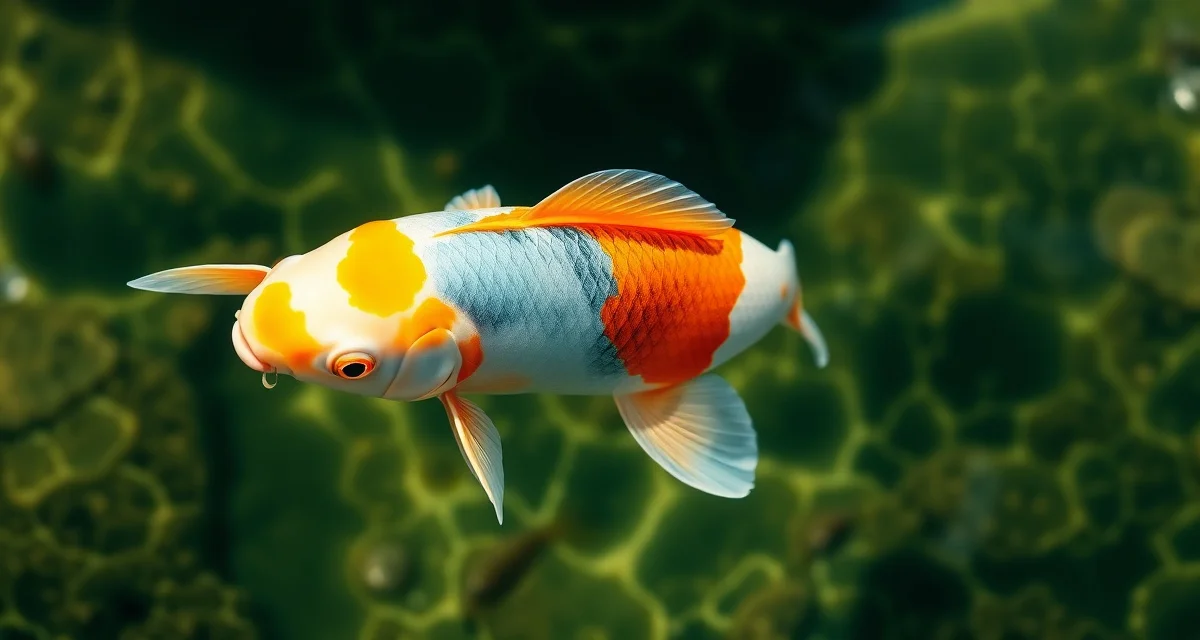
Koi Buying Guide: How to Select Healthy Fish
The best quarantine protocol in the world starts with a smart purchase decision. A fish that arrived at the dealer sick, that's been in declining health for a week, that's carrying a heavy parasite burden - that fish is going to be a quarantine problem regardless of how well you manage the next 42 days.
What you observe at the dealer, and the questions you ask before buying, are the first line of health defense. This guide covers what to look for, what to ask, and what to decline.
TL;DR
- Observe the fish swimming naturally for 5 minutes before purchasing.
- Tracking trends over time reveals issues before they become visible in fish behavior.
- KoiQuanta connects observations, water data, and treatment records in one searchable history.
- Early detection based on parameter trends reduces treatment costs and fish stress.
- Seasonal changes require adjusted monitoring schedules; automated reminders help maintain consistency.
What to Look For: Health Indicators
Body Posture and Movement
The most reliable health indicator: observe the fish swimming naturally in the dealer's tank for 5 minutes before you commit.
Healthy koi move: Active, horizontal swimming at mid-depth. Responsive to activity near the tank. Eating when food is offered.
Concerning movement: Fish tilting off horizontal (listing). Fish spending extended time at the surface or the bottom. Fish swimming with clamped fins against the body. Fish that are unresponsive or slow to react. Fish that isolate themselves in corners away from tankmates.
Fin Condition
Healthy fins: Held fully extended when swimming, smooth edges, consistent coloration (in colored fin areas).
Watch for: Fin rot - progressive erosion from the fin tips creating frayed, deteriorating edges. Clamped fins held against the body instead of extended. Torn fins from mechanical injury (usually V-shaped cuts - not disease, but indicates rough handling). Hemorrhage at the fin base (redness tracking into the fin from where it attaches).
Skin and Scale Condition
Healthy skin: Scales lie flat against the body in an even, consistent pattern. Skin has appropriate slime coat - should look slightly moist and luminous, not dry or rough.
Watch for: Raised scales - any scale that stands out from the body creates a tiny pocket underneath it. This is sometimes a bacterial infection early sign (scale lifting is a classic Aeromonas indicator) or early dropsy. Any open wound, sore, or discolored patch. Visible parasites - flukes aren't usually visible but anchor worm (small worm protruding from skin) and fish lice (small flat disc-shaped organisms) are.
Respiration
Healthy: Steady, regular gill movement at rest (30–60 beats per minute).
Concerning: Rapid gill movement (rapid, shallow breathing suggests oxygen stress, parasitic gill infestation, or bacterial gill disease). Asymmetric gill movement - one side much faster than the other suggests a one-sided problem. Any fish holding one gill cover (operculum) open or fanned out.
Appetite
If you can observe feeding or ask the dealer to feed - do it. A fish that eats aggressively and competitively is demonstrating one of the clearest health indicators available. Fish that don't feed when companions do are showing something worth investigating.
Evaluating Koi Quality by Variety
Kohaku
- Hi (red) clarity: clean, sharp edges between hi and shiroji (white). Running borders or indistinct edges indicate lower quality.
- Hi intensity: rich red rather than orange. Hi that's pale or orange-toned may improve with diet but starts lower.
- Shiroji quality: bright, luminous white. Yellowish or cloudy white is a defect.
- Body shape: well-developed, round, good depth through the middle
Sanke and Showa (Gosanke)
Same skin quality standards as Kohaku, plus:
- Sumi quality: deeply black, lacquered sumi in the current stage (remembering that young Gosanke sumi will develop over years)
- Balance of the three colors - proportional representation without one completely overwhelming
- For Sanke: note whether the pattern has a "go" - a path of hi across the body that creates visual movement
Buying Young Fish (Tosai)
At tosai age (under 1 year), the final pattern isn't established. You're buying the fish for genetic potential, body quality, and current health. Genetic potential comes from knowing the parents (ask which breeder, which pairing) or trusting the dealer's reputation.
The one thing you can fully evaluate at tosai age: health and skin quality. A tosai with brilliant white skin and active movement may become an outstanding adult. Don't buy a tosai that's not thriving already.
What to Ask the Dealer
A reputable koi dealer expects health-related questions and answers them transparently. Hesitance or evasion on any of these is a signal:
"What is your quarantine protocol for incoming fish?"
The answer you want: a specific period (at least 21 days, ideally 42 for imports), specific treatments (praziquantel, salt), specific discharge criteria. Vague answers like "we quarantine everything" without specifics are a yellow flag.
"When did these fish arrive, and how long have they been in your facility?"
The longer they've been in and the healthier they look, the better. Fish that arrived this week haven't been through meaningful quarantine.
"Have you had any disease events in this tank or adjacent tanks recently?"
This is the direct question. Watch the dealer's response. Honesty here is more reassuring than a "no" delivered with discomfort.
"Can you show me documentation of where these fish came from?"
For Japanese imports: ask to see the health certificate or at minimum the importer's documentation. For domestic fish: ask about the source.
"Is there any KHV history in your facility?"
This is the most important disease-specific question for anyone with high-value fish in their pond. You're not expecting "definitely not" - you're listening to how the dealer approaches the question.
Making the Decision
Decline the purchase if:
- Any fish in the same tank shows active disease signs
- The fish you're interested in has visible lesions, lifting scales, or hemorrhage
- Respiration is clearly abnormal
- The dealer can't or won't answer basic quarantine questions
- The fish was just received and hasn't had meaningful quarantine
Consider accepting but plan for extended quarantine:
- Fish looks healthy but dealer quarantine is minimal or unverified
- Purchased online (no facility visit possible)
- Fish is from a show or auction (high mixing exposure)
Higher confidence purchase:
- Dealer has documented quarantine with records available
- Fish has been in the facility for 4+ weeks and is in established good health
- You can visit the facility and see how it's managed
- For Japanese imports: KHV testing documented
After You Buy
Have the quarantine tank ready before you purchase. Not "I'll set it up when I get home" - ready and running, with treated water at temperature.
Set up a fish profile in KoiQuanta before or on the day of purchase: note the source, the purchase date, the dealer's name, any health information provided, and the variety. Log the quarantine entry that day.
Related Articles
- Japanese Koi Varieties: Buying Guide by Variety
- Koi Necropsy Guide: How to Gather Information After a Fish Dies
- Koi Photography for Health Records: How to Document Fish Properly
FAQ
How do I tell if a koi is healthy before buying?
Observe the fish swimming naturally for 5 minutes before purchasing. Healthy koi swim horizontally at mid-depth, hold fins extended, respond actively to their environment, and eat aggressively when food is offered. Watch for clamped fins, surface-hanging, listing (swimming at an angle), rapid abnormal gill movement, raised scales, or visible wounds. Any fish in the same tank showing active disease signs is reason to decline the whole tank.
What should I look for when buying Kohaku?
Skin quality is the primary indicator: bright, luminous white shiroji and rich, deep hi with clean, defined edges between colors. Body shape should be full and round with good depth. At tosai age, the final pattern isn't fixed - you're buying skin quality, health, and genetic potential. Ask about the breeder (Sakai, Omosako, Marudo are top names) and the pedigree if it's a significant purchase.
What questions should I ask a koi dealer?
Ask specifically: what is the quarantine protocol and how long have these fish been in the facility? Have there been any disease events in this or adjacent tanks? Where did these fish originate (importer, breeder, or domestic source)? Is any documentation available (health certificates for imports)? A reputable dealer answers these questions directly and specifically - vagueness on quarantine protocol is a yellow flag that warrants caution about the purchase.
What is Koi Buying Guide: How to Select Healthy Fish?
[FAQ_ANSWER_PLACEHOLDER: This answer needs to be generated by AI with specific data, examples, and actionable advice relevant to Koi Buying Guide: How to Select Healthy Fish. Target 50-150 words.]
How much does Koi Buying Guide: How to Select Healthy Fish cost?
[FAQ_ANSWER_PLACEHOLDER: This answer needs to be generated by AI with specific data, examples, and actionable advice relevant to Koi Buying Guide: How to Select Healthy Fish. Target 50-150 words.]
How does Koi Buying Guide: How to Select Healthy Fish work?
[FAQ_ANSWER_PLACEHOLDER: This answer needs to be generated by AI with specific data, examples, and actionable advice relevant to Koi Buying Guide: How to Select Healthy Fish. Target 50-150 words.]
What are the benefits of Koi Buying Guide: How to Select Healthy Fish?
[FAQ_ANSWER_PLACEHOLDER: This answer needs to be generated by AI with specific data, examples, and actionable advice relevant to Koi Buying Guide: How to Select Healthy Fish. Target 50-150 words.]
Who needs Koi Buying Guide: How to Select Healthy Fish?
[FAQ_ANSWER_PLACEHOLDER: This answer needs to be generated by AI with specific data, examples, and actionable advice relevant to Koi Buying Guide: How to Select Healthy Fish. Target 50-150 words.]
Sources
- Associated Koi Clubs of America (AKCA)
- Koi Organisation International (KOI)
- University of Florida IFAS Extension Aquaculture Program
- Fish Vet Group
- Water Quality Association