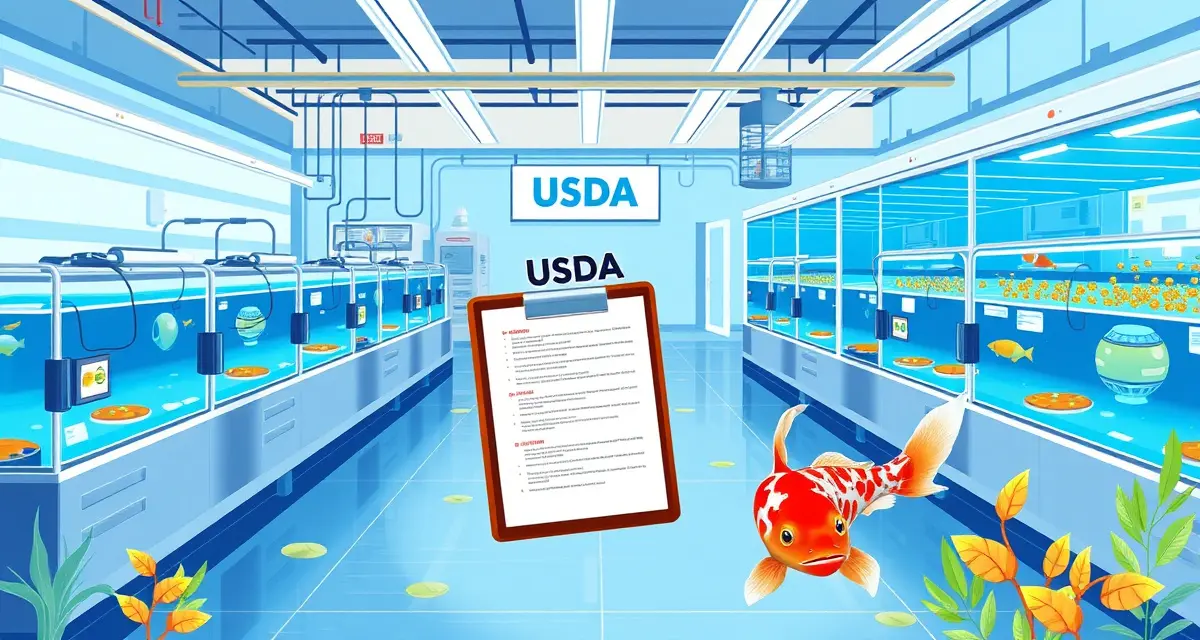
USDA Fish Import Facility Registration Guide
USDA facility registration can take 60-90 days -- planning ahead is critical for import timelines. If you're planning to import koi from Japan and you haven't started the registration process, you need to start before your intended first import date, not when you're ready to buy fish. Missing this timeline can mean your fish arrive in Japan's autumn harvest season while your registration is still pending.
This guide covers the USDA APHIS registration requirements for koi import facilities, the application process, and the ongoing compliance obligations.
TL;DR
- The entire process typically takes 60-90 days, so start well before your intended first import.
- Tracking trends over time reveals issues before they become visible in fish behavior.
- KoiQuanta connects observations, water data, and treatment records in one searchable history.
- Early detection based on parameter trends reduces treatment costs and fish stress.
- Seasonal changes require adjusted monitoring schedules; automated reminders help maintain consistency.
Who Needs to Register
If you're importing koi directly from Japan, South Korea, Israel, or other countries with USDA APHIS aquatic animal import requirements, you need a registered import facility. This applies to:
- Commercial koi dealers importing directly from Japanese breeders
- Wholesale operations bringing fish from overseas suppliers
- Facilities receiving consignments from abroad, even if you're not the named importer on the paperwork
Hobbyists purchasing fish from US-based importers do not need import facility registration -- the responsibility sits with the importer of record.
The regulatory framework: USDA APHIS regulates aquatic animal imports under the Animal Health Protection Act to prevent introduction of listed foreign animal diseases. Koi from Japan require compliance because Japan is a country with known listed disease status for koi (particularly for KHV, SVC, and other notifiable diseases in certain contexts).
KoiQuanta's import documentation module aligns with USDA APHIS requirements, generating the record formats needed for compliance documentation and inspection readiness.
USDA APHIS Requirements for Koi Import Facilities
The specific requirements have evolved over time, and the current detailed requirements are best confirmed directly with USDA APHIS Veterinary Services. The core elements consistently required include:
Facility biosecurity standards:
- Physical containment preventing escape of imported fish to natural waterways
- Drainage system that prevents effluent containing live fish or unsterilized wastewater from reaching natural waterways
- Quarantine facilities capable of maintaining imported fish isolated from resident fish for the required holding period
- Sterilization capability for effluent (typically UV sterilization, chlorination, or other approved methods)
Record-keeping requirements:
- Records of all imported fish: species, quantity, source facility, shipping date, arrival date
- Quarantine records: observation logs, disease signs noted, treatments administered
- Health certificate documentation from the country of origin
- Mortality records
- Records of any notifiable disease diagnoses or suspicions
Personnel:
- A responsible person (owner or designated manager) who is accountable for compliance
- Access to a licensed veterinarian for fish health inspections as required
Inspection readiness:
- Facilities must be available for inspection by USDA APHIS upon reasonable notice
- Records must be available for inspection
How Do I Register My Facility to Import Koi?
Step 1: Contact USDA APHIS Veterinary Services. The process starts with your regional USDA APHIS Veterinary Services office. Contact information is available at aphis.usda.gov. Introduce your operation, describe the species you intend to import and the countries of origin, and ask for the current registration requirements for your specific situation.
Step 2: Complete the application. USDA APHIS will provide the appropriate application forms. Complete these with accurate information about your facility, your biosecurity measures, your quarantine capacity, and your operational plans.
Step 3: Facility inspection. Your facility will typically be inspected before registration is granted. The inspector will verify that your physical setup meets the containment and quarantine requirements. Address any deficiencies identified in a pre-inspection visit before the formal inspection.
Step 4: Obtain a facility registration number. Upon approval, you receive a USDA facility registration number that must appear on import documentation.
Step 5: Import permit applications. For each import shipment, you may need to apply for a specific import permit well in advance of the fish arriving. The permit process involves health certificate review and may require additional documentation from the exporting country.
What Are the USDA Requirements for Koi Import Facilities?
Beyond the baseline registration requirements, ongoing compliance obligations include:
Import permit per shipment: Each import shipment typically requires a separate import permit. Apply well in advance -- the permit review process can take weeks.
Health certificates from country of origin: All fish must arrive with health certificates issued by a government-accredited veterinarian in the source country, certifying disease-free status for listed diseases. The certificate requirements are specific -- not just any vet certificate qualifies.
Mandatory holding period: Imported fish must typically be held in your registered facility under quarantine for a defined period (requirements vary -- check current APHIS guidance). During this period, the fish cannot be sold or distributed.
Disease testing: Some import scenarios require testing for specific diseases before fish can be moved from quarantine status. KHV testing requirements vary by source country and current APHIS policy.
For the documentation side of maintaining compliance, the koi import documentation guide covers the record-keeping requirements in detail. For the Japanese koi import quarantine specifics, the Japanese koi import quarantine guide covers sourcing and quarantine from Japan specifically.
How Often Do I Renew My Fish Import Facility Registration?
Registration renewal requirements vary. Historically, USDA APHIS import facility registrations have required periodic renewal (annual or biennial), but the specific current renewal schedule should be confirmed directly with APHIS.
Key renewal considerations:
- Any notable change to your facility (physical changes, change in responsible person, change in species imported) may require notification to APHIS and potentially a new inspection
- Failure to renew on schedule can lapse your registration, potentially creating legal issues if you receive an import shipment during the lapse period
- Keep your APHIS contact information current -- renewal notices and compliance communications go to the contact on file
Working with a Licensed Fish Health Veterinarian
Having a working relationship with a licensed veterinarian who has aquatic animal health experience is important for import compliance:
- Health inspections and disease testing may require a licensed vet
- Notifiable disease reporting requires vet involvement
- Import health certificates from the source country need government vet endorsement
- Your own facility's disease response protocols should have vet guidance
Building this relationship before you need it urgently is much easier than finding a qualified vet during a disease event.
Frequently Asked Questions
How do I register my facility to import koi?
Contact your regional USDA APHIS Veterinary Services office to get the current application process and requirements for your specific operation. Submit the required application with accurate facility, biosecurity, and operational information. Expect a facility inspection before approval. Once approved, you'll receive a facility registration number required on import documentation. The entire process typically takes 60-90 days, so start well before your intended first import. For current forms and detailed requirements, consult aphis.usda.gov directly as requirements can be updated.
What are the USDA requirements for koi import facilities?
Core requirements include: physical containment preventing fish escape to natural waterways, quarantine facilities capable of isolating imports from resident fish, effluent sterilization, record-keeping (import records, quarantine logs, health certificates, mortality records), access to a licensed veterinarian, and availability for APHIS inspection. Each import shipment typically also requires a separate import permit and valid health certificates issued by government-accredited veterinarians in the source country. Specific requirements should be confirmed directly with APHIS as they can change.
How often do I renew my fish import facility registration?
Renewal schedules vary -- confirm the current requirement directly with USDA APHIS. Any significant changes to your facility, responsible personnel, or the species you're importing may require APHIS notification and potentially a new inspection or amended registration regardless of renewal schedule. Keep your APHIS contact information current so you receive renewal notices. Lapsing your registration while continuing to receive imports creates compliance risk, so build renewal into your operational calendar proactively.
What is USDA Fish Import Facility Registration Guide?
The USDA Fish Import Facility Registration Guide is a comprehensive resource covering APHIS registration requirements for facilities that import live koi and other ornamental fish into the United States. It outlines who must register, how to apply, what inspections involve, and what ongoing compliance looks like. Whether you're a commercial koi dealer or a serious hobbyist importing directly from Japan or South Korea, this guide walks you through every step of the federal registration process.
How much does USDA Fish Import Facility Registration Guide cost?
USDA APHIS facility registration itself carries federal application fees, but total costs vary depending on facility size, required infrastructure upgrades, and whether you hire a compliance consultant. Budget for potential quarantine pond construction or modification, biosecurity equipment, and veterinary oversight if not already in place. While upfront investment can be significant, registered importers avoid costly shipment holds, fish seizures, and fines that result from non-compliance with federal aquatic animal import regulations.
How does USDA Fish Import Facility Registration Guide work?
The registration process begins with an APHIS application, followed by a facility inspection verifying biosecurity standards, quarantine capacity, and water treatment systems. Once submitted, APHIS reviews your application and schedules an on-site inspection. After passing inspection, you receive your facility registration number, which must accompany all future import paperwork. You'll then work with your exporter and a licensed customs broker to prepare health certificates, import permits, and APHIS declarations for each shipment.
What are the benefits of USDA Fish Import Facility Registration Guide?
Registering your facility gives you legal authority to import koi directly from Japan, South Korea, Israel, and other APHIS-regulated countries, bypassing third-party importers and their markups. Direct imports mean fresher fish, faster transit, and full control over sourcing. Registration also builds credibility with high-end breeders who prefer selling to vetted buyers. Long-term, it lowers per-fish acquisition costs and opens access to premier auction houses like ZNA and Saki-Hiroi.
Who needs USDA Fish Import Facility Registration Guide?
Any commercial koi dealer, wholesaler, or serious hobbyist importing live koi directly from countries subject to USDA APHIS aquatic animal import regulations must register. This includes dealers sourcing fish from Japanese breeders or auction houses, importers working with South Korean or Israeli farms, and aquaculture operations bringing in broodstock. If you purchase through a domestic importer who handles customs and holds the registration, you typically do not need your own registration.
How long does USDA Fish Import Facility Registration Guide take?
The full registration process typically takes 60 to 90 days from initial application to approval. This includes APHIS application review, scheduling and completing the facility inspection, and processing final approval. Because of this timeline, you must begin registration well before your first intended import date — not when you've already selected fish. Missing the window means your koi could arrive during Japan's prime autumn harvest season while your registration is still pending review.
What should I look for when choosing USDA Fish Import Facility Registration Guide?
When navigating the registration process, look for a facility that already meets or can be upgraded to meet APHIS biosecurity standards: proper quarantine pond isolation, reliable water treatment and filtration, dedicated waste disposal, and verifiable fish health monitoring records. Consulting an aquatic animal health veterinarian familiar with APHIS regulations can prevent costly application errors. Also evaluate whether your facility layout supports the separation requirements APHIS inspectors will verify during their on-site review.
Is USDA Fish Import Facility Registration Guide worth it?
For anyone serious about importing koi directly from Japan or other top breeding countries, USDA facility registration is absolutely worth it. The process is demanding and the timeline is long, but registered importers gain direct breeder access, better fish selection, lower acquisition costs, and full chain-of-custody control. Without registration, you depend entirely on third-party importers, limiting your sourcing options and margins. If importing is central to your business or hobby at scale, registration is a foundational investment.
Related Articles
- Sourcing Koi from Japanese Breeders: Dealer Import Guide
- Finding a Koi Veterinarian: What to Look For
Sources
- Associated Koi Clubs of America (AKCA)
- Koi Organisation International (KOI)
- University of Florida IFAS Extension Aquaculture Program
- Fish Vet Group
- Water Quality Association