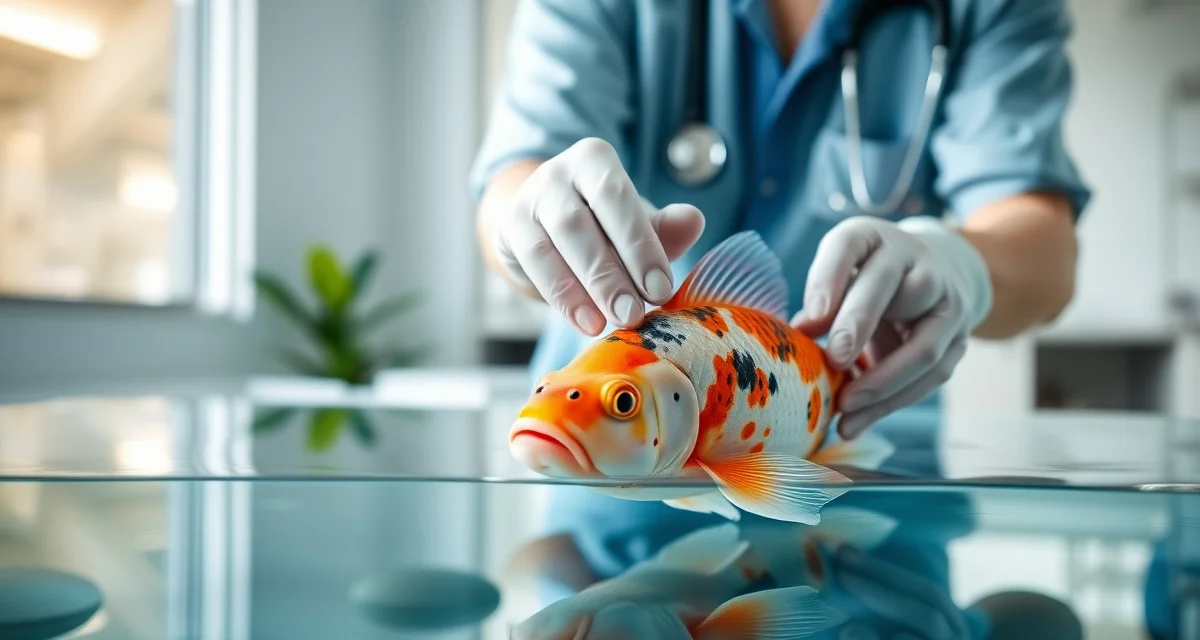
Finding a Koi Veterinarian: What to Look For
Less than 5% of licensed veterinarians have fish medicine training. Finding a fish veterinarian who can competently treat koi requires more effort than finding a vet for any other pet, but the right vet makes a significant difference in serious disease situations.
KoiQuanta exports a complete health history for veterinary review. No competitor positions health records as veterinary consultation tools the way KoiQuanta does.
TL;DR
- History review (where KoiQuanta's export is invaluable) 2.
- Water quality assessment (your brought sample or their in-clinic testing) 3.
- Physical examination of the fish out of water (brief handling) 4.
- Possible skin scrape and microscopic examination 5.
- Possible blood sampling for systemic disease assessment 6.
- The consultation duration is typically 30-60 minutes for complex cases.
Why a Regular Vet Isn't Enough
Standard veterinary training covers dogs, cats, horses, and some farm animals. Fish medicine is a specialized subspecialty that requires additional training in aquatic pathology, koi pond water quality tracker interpretation, and the specific diseases that affect fish species.
A general practice vet who hasn't worked with fish may mean well but lacks the specific knowledge to diagnose fish diseases, interpret water quality in the context of disease, or prescribe appropriate treatments at correct fish doses.
When your koi has a serious disease situation, you need someone who knows the difference between Aeromonas and Pseudomonas presentations, understands the significance of KHV in the context of temperature, and can correctly dose an injectable antibiotic for a 5-kilogram koi.
How to Find a Qualified Fish Veterinarian
American Association of Fish Veterinarians (AAFV): The AAFV maintains a directory of veterinarians with fish medicine training and practice. Visit their website to search for a fish vet in your region.
American Veterinary Medical Association (AVMA): The AVMA member search allows filtering by specialty. Search for aquatic veterinarians in your state or region.
Local koi clubs: Members of established koi clubs often have personal recommendations for fish vets in the region who have treated koi successfully. Local knowledge from other hobbyists is often the most reliable way to find a vet who actually has experience with koi specifically.
Aquarium societies and fish stores: Large aquarium specialty stores sometimes maintain referral lists for fish vets in their area.
University veterinary schools: Many veterinary schools have aquatic medicine programs with clinics that see fish patients. Even if distant, they can often provide telemedicine consultations.
What to Look for in a Fish Veterinarian
When you've identified a potential fish vet, ask these questions:
- How often do you see fish patients specifically?
- What species of fish do you most commonly treat?
- Do you have experience with koi and with koi-specific diseases (KHV, SVC, Aeromonas)?
- Can you perform a fish necropsy and tissue sample analysis if needed?
- Do you perform water quality assessment as part of fish consultations?
A vet who sees fish monthly has more relevant experience than one who sees a fish patient once per year. Koi-specific experience matters because koi diseases differ from tropical fish diseases.
Telemedicine Consultations
For hobbyists without a qualified fish vet within practical driving distance, telemedicine consultations have become a valuable option. Many fish veterinarians provide video consultations where you:
- Show the affected fish via video call
- Describe symptoms and history
- Share water quality data
- Receive a diagnosis and treatment recommendation
The veterinarian can't physically examine the fish, but with good video quality and water quality history from KoiQuanta, telemedicine consultations can be highly effective for many conditions.
How KoiQuanta Records Help Your Vet
A veterinarian consulting on a sick koi needs context. Water quality in the preceding weeks. Recent disease events. Treatment history including what's been tried and how the fish responded. Individual fish health history. A verbal summary of these things is imprecise and incomplete.
KoiQuanta generates a complete exportable health record for any fish that includes:
- Water parameter history for the past 3 months with trend charts
- All logged health events chronologically
- All treatments applied with dates, doses, and duration
- All behavioral observations logged including appetite, activity, and specific signs
- Photos attached to health events
You share this as a link or PDF before or during the consultation. The vet sees the complete history immediately.
This dramatically changes the quality of consultation. Instead of "my fish has been sick for about two weeks and I treated it with something, I can't remember what" (a frustratingly common consultation opener), you're saying "here is the complete record; you can see the ammonia trend three weeks ago, the first behavioral observation five days later, and the two treatments we've tried." That's actionable clinical information.
The koi disease reference manual accessible through KoiQuanta also helps you communicate accurately about what you're seeing, using the correct terminology for the symptoms your vet needs to hear.
What to Bring to a Fish Vet Appointment
The fish: Transport in an adequately sized bag or container with oxygen-enriched or aerated water from the pond. Keep the fish at pond temperature during transport.
Water sample: Bring a sample of pond water (at least 1 liter) in a clean, lidded container. The vet may want to run their own water quality tests.
KoiQuanta health record: Print the health record export or have the shareable link ready on your phone.
Recent test results: If you've tested in the past 24-48 hours, have those specific numbers available.
All medications you've used: Bring the actual containers so the vet can see exactly what you've used, at what dose.
What to Expect from a Fish Consultation
A thorough fish veterinary consultation typically includes:
- History review (where KoiQuanta's export is invaluable)
- Water quality assessment (your brought sample or their in-clinic testing)
- Physical examination of the fish out of water (brief handling)
- Possible skin scrape and microscopic examination
- Possible blood sampling for systemic disease assessment
- Diagnosis or differential diagnosis
- Treatment recommendation with specific doses
Be prepared for the possibility that definitive diagnosis requires additional testing such as bacterial culture, sensitivity testing for antibiotic selection, or histopathology (tissue examination).
Frequently Asked Questions
How do I find a vet who treats koi?
The American Association of Fish Veterinarians (AAFV) maintains a directory of vets with aquatic medicine training. University veterinary schools often have aquatic medicine programs and are worth contacting even if distant, as many offer telemedicine. Local koi clubs frequently have regional referrals to vets who have successfully treated koi for their members. When you find a candidate, ask specifically about their koi experience: frequency of seeing koi patients, familiarity with koi-specific diseases, and whether they can perform diagnostic procedures like skin scrapes and water quality testing.
What does a koi veterinary consultation involve?
A standard fish vet consultation involves history review (your records, water quality data), physical examination of the fish, diagnostic procedures appropriate to the presentation (skin scrape and microscopy, water quality testing, blood sampling in serious cases), and a treatment recommendation with specific doses. Bring the fish in appropriate transport water, a pond water sample, your KoiQuanta health record export, and all medications you've already tried. The consultation duration is typically 30-60 minutes for complex cases. Injectable antibiotic therapy administered at the clinic is a significant advantage of in-person vet visits compared to treating at home.
What information should I bring to a fish vet?
Bring the fish (in adequately aerated transport water at pond temperature), a pond water sample (1+ liter), and documentation of the fish's history. KoiQuanta's health record export is the most complete format for this: it includes water parameter history with trend charts, all logged health events, all treatment records with doses and dates, and behavioral observations. Also bring physical containers for any medications you've used so the vet can verify exactly what you've applied. The more complete your pre-existing documentation, the more useful the consultation will be. A vet who can see your ammonia trend for the past six weeks alongside the disease timeline is in a much better position to diagnose than one working from verbal summary alone.
What is Finding a Koi Veterinarian: What to Look For?
Finding a Koi Veterinarian: What to Look For is a guide to identifying qualified aquatic veterinarians capable of treating koi fish. Since fewer than 5% of licensed vets have fish medicine training, this resource helps koi keepers locate specialists with proper aquatic pathology knowledge, water quality interpretation skills, and hands-on fish examination experience—ensuring your koi receives competent, specialized care rather than generic veterinary treatment.
How much does Finding a Koi Veterinarian: What to Look For cost?
Consultation costs vary by location and practice, but expect to pay more than a standard vet visit given the specialization involved. A typical 30–60 minute koi consultation may range from $100–$300 or more, depending on diagnostics like skin scrapes or blood sampling. Bringing organized health records—such as a KoiQuanta export—can reduce consultation time and potentially lower costs by giving the vet immediate context.
How does Finding a Koi Veterinarian: What to Look For work?
A qualified koi vet begins by reviewing your fish's health history, then assesses water quality using a sample you bring or in-clinic testing. They perform a brief out-of-water physical examination, possibly followed by a skin scrape for microscopic analysis or blood sampling for systemic disease assessment. The full consultation typically runs 30–60 minutes for complex cases, resulting in a diagnosis and treatment plan.
What are the benefits of Finding a Koi Veterinarian: What to Look For?
The primary benefit is accurate diagnosis and effective treatment during serious disease situations where guesswork fails. A qualified aquatic vet understands koi-specific diseases, interprets water quality data correctly, and knows appropriate medications and dosages. Early expert intervention can save fish that would otherwise die. Using tools like KoiQuanta's health history export further improves outcomes by giving the vet complete background before the appointment begins.
Who needs Finding a Koi Veterinarian: What to Look For?
Any koi keeper whose fish show signs of disease, injury, or unexplained behavior changes needs access to a qualified aquatic veterinarian. This is especially critical for keepers with high-value koi, large collections, or recurring health problems that haven't resolved with standard treatments. Proactively identifying a fish vet before an emergency occurs is strongly recommended—scrambling to find one during a crisis costs precious treatment time.
How long does Finding a Koi Veterinarian: What to Look For take?
The search process itself varies, but budget time for research since qualified aquatic vets are rare. Once found, a standard consultation runs 30–60 minutes for complex cases. This includes history review, water quality assessment, physical examination, and any diagnostics like skin scrapes or blood work. Having a KoiQuanta health export ready before the appointment streamlines the history review portion significantly.
What should I look for when choosing Finding a Koi Veterinarian: What to Look For?
Look for vets with specific aquatic or fish medicine training, ideally with koi or pond fish experience. Ask whether they perform out-of-water exams, skin scrapes, and blood sampling. Confirm they can interpret water quality parameters. Membership in organizations like the World Aquatic Veterinary Medical Association (WAVMA) is a positive signal. Avoid general practice vets who simply claim willingness to try—specialized knowledge is non-negotiable for accurate koi diagnosis.
Is Finding a Koi Veterinarian: What to Look For worth it?
Yes, for serious health situations it is absolutely worth it. Koi can live 20–35 years and represent significant financial and emotional investment. A qualified aquatic vet provides accurate diagnoses that generic vets cannot, preventing prolonged suffering and costly trial-and-error treatments. Combining expert veterinary care with detailed health records from a tool like KoiQuanta gives your fish the best possible chance of recovery during critical illness events.
Related Articles
- USDA Fish Import Facility Registration Guide
- Koi Necropsy Guide: How to Gather Information After a Fish Dies
Sources
- Associated Koi Clubs of America (AKCA)
- Koi Organisation International (KOI)
- University of Florida IFAS Extension Aquaculture Program
- Fish Vet Group
- Water Quality Association