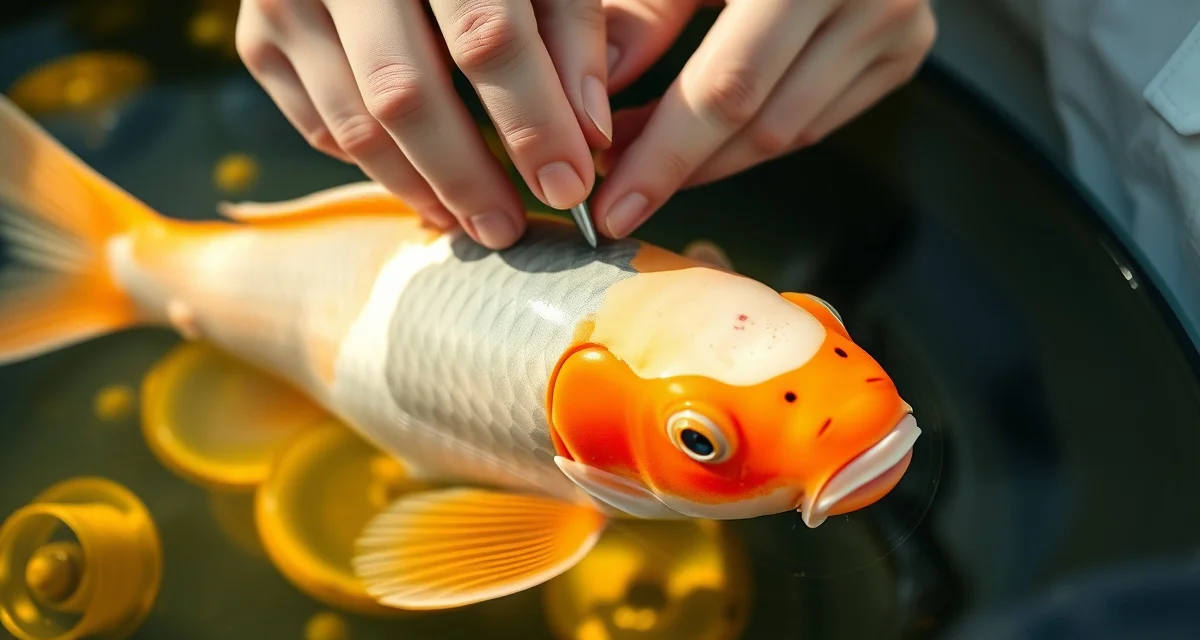
How to Treat Koi Ulcers: Step-by-Step From Diagnosis to Healing
Koi ulcers that are left untreated for more than 72 hours have a 3x higher mortality rate due to systemic bacterial spread. The wound itself isn't always what kills the fish, it's the secondary Aeromonas bacteria that enter the bloodstream through the open lesion.
Speed matters. But so does doing the right things in the right order. This guide covers how to treat koi ulcers from first detection through wound closure, and how to track healing progress in KoiQuanta.
TL;DR
- Apply to the wound, let it contact for 30–60 seconds, then return fish to pond water.
- Apply, let contact for 30 seconds, return.
- Systemic antibiotic treatment is recommended for any ulcer beyond Stage 1.
- Feed at the prescribed rate for the full treatment course (typically 10 days minimum).
- Seasonal changes require adjusted monitoring schedules; automated reminders help maintain consistency.
Direct Answer: How to Treat a Koi Ulcer
The treatment protocol for a koi ulcer involves three components working simultaneously:
- Topical antiseptic: clean and disinfect the wound directly
- Systemic antibiotic: address any internal bacterial infection (via medicated food or vet-prescribed injection)
- Supportive water treatment: salt at 0.3% and clean, well-oxygenated water to support the immune system
The topical treatment is the part most hobbyists skip or do inadequately. You need to physically clean the wound.
Step 1: Identify the Ulcer and Assess Severity
A koi ulcer starts as a raised red area or a spot where scales have lifted. As it progresses, you see actual tissue loss, a crater-like depression in the body wall with red, inflamed edges. Advanced ulcers may expose underlying muscle tissue.
KoiQuanta's photo-attached wound log lets you compare healing progress week over week and share with your vet at a glance. Take a photo at first detection. Take one at every treatment session. The visual record is your most useful tracking tool.
Severity assessment:
- Early (Stage 1): Raised, reddened area, scales slightly lifted. Treat aggressively and outcomes are excellent.
- Moderate (Stage 2): Scale loss with shallow tissue erosion, inflamed edges. Treatable at home with good technique.
- Advanced (Stage 3): Deep tissue exposure, possible muscle involvement, marked inflammation. Vet consultation strongly recommended.
Step 2: Prepare for Out-of-Water Treatment
For effective topical treatment, you need to work on the fish out of water. This is one of the most common hesitations hobbyists have, but keeping the fish in the water while trying to clean a wound is both ineffective and stressful to the fish.
What you need:
- A clean basin with pond water and additional salt (0.5% in the treatment container)
- Net and wet towel for handling
- Clove oil solution (fish-safe anaesthetic, ~40 mg/L in the holding vessel)
- Cotton buds and clean gauze
- Iodine, Betadine, or Tricide Neo antiseptic
- Wound sealant (Propolis or Orabase if available)
Sedate the fish in a separate aerated container with clove oil solution before handling. A sedated fish is less stressed and easier to treat properly.
Step 3: Clean the Wound
Remove the fish from the anaesthetic solution. Keep it wrapped in a wet towel, never let it dry out. Work quickly but carefully.
Cleaning process:
- Use cotton buds to gently remove any necrotic (dead) tissue at the ulcer edges. It will look whitish or grey-green, distinct from healthy pink-red tissue.
- Clean the wound with a cotton swab soaked in dilute iodine solution or Betadine. Apply gently to the wound crater.
- If scales around the ulcer are loose but not fully detached, leave them in place, they provide some protection. Remove only fully dead scales that will fall off with minimal handling.
Step 4: Apply Topical Treatment
After cleaning, apply your chosen antiseptic directly:
Tricide Neo: A commonly used wound preparation that combines chloramine-T and other antimicrobials. Apply to the wound, let it contact for 30–60 seconds, then return fish to pond water.
Betadine/Povidone Iodine: Direct application to the wound. This is one of the safest topical antiseptics for koi. Apply, let contact for 30 seconds, return.
Propolis spray: A natural antiseptic with wound-healing properties. Apply as a surface sealant after the primary antiseptic. Provides some physical barrier.
What antiseptic is safe for koi ulcers? Tricide Neo, Betadine (povidone iodine), and Propolis are the most widely used. Avoid alcohol-based antiseptics, they damage healing tissue. Hydrogen peroxide should not be used on koi wounds.
Step 5: Systemic Treatment
Topical care treats the surface. But Aeromonas, the primary cause of most koi ulcers, can penetrate the bloodstream through an active wound. Systemic antibiotic treatment is recommended for any ulcer beyond Stage 1.
Medicated food: The most practical option for hobbyists. Medikoi Medicated food or similar products containing oxytetracycline are widely available. Feed at the prescribed rate for the full treatment course (typically 10 days minimum).
Injected antibiotics: For severe or rapidly progressing ulcers, an aquatic vet can administer amoxicillin, enrofloxacin, or other antibiotics by injection. This is the highest-efficacy option for advanced cases.
Step 6: Optimise Water Quality
A koi with an active ulcer has a compromised immune system. Water quality becomes even more critical than usual.
- Salt at 0.3% reduces osmotic stress and has mild antiseptic properties
- Ammonia at zero, any ammonia exposure during recovery sharply worsens outcomes
- High dissolved oxygen, increase aeration during treatment
- Temperature, avoid temperature swings; stable at 20–22°C is ideal for bacterial immune response
AquaticVet software is clinic-focused and expensive. KoiQuanta gives hobbyists a structured ulcer treatment protocol at $39/mo, including the ulcer treatment program with daily monitoring prompts and a connected bacterial infection treatment tracker.
Step 7: Monitor Healing Progress
Check the wound every 2–3 days during active treatment. Photo log every check. Signs of improvement:
- Wound edges starting to turn pink rather than inflamed red
- Granulation tissue forming (small pinkish-white tissue growth at wound edges)
- No increase in wound size
- Fish behavioural improvement (feeding, activity)
Signs that treatment isn't working:
- Wound enlarging
- Edges darkening or showing necrosis
- Fish going off food, sitting on the bottom
- Other fish developing lesions
If you're not seeing improvement within 5–7 days, consult an aquatic vet. This is when a second opinion can save the fish.
What does a koi ulcer look like?
A koi ulcer starts as a raised, reddened area with slightly lifted scales. As it progresses it becomes a depressed, crater-like wound with inflamed edges, visible tissue erosion, and often a whitish or yellowish discharge from the wound site. Advanced ulcers may expose underlying muscle tissue. Early-stage ulcers are sometimes confused with scale injuries or bruising, the key distinguishing sign is inflammation and progressive tissue loss. KoiQuanta's wound log lets you photograph each inspection so you can track progression objectively.
Should I take my koi out of the pond to treat an ulcer?
Yes, for effective topical treatment, you need to work on the fish out of water. In-water treatment attempts are rarely thorough enough to properly clean and treat the wound. Use a clove oil anaesthetic solution to sedate the fish before handling, work quickly with the fish wrapped in a wet towel, and return it to pond water as soon as you're done. The short out-of-water period during a proper treatment is far less stressful than leaving a wound untreated.
What antiseptic is safe to use on koi ulcers?
The safest and most effective options are Tricide Neo (a commercial koi wound treatment), povidone iodine (Betadine), and Propolis spray. All three can be applied directly to the wound without causing additional tissue damage. Avoid alcohol-based antiseptics, they damage healing tissue. Do not use hydrogen peroxide on koi wounds. After applying your primary antiseptic, a Propolis-based wound sealant provides an additional protective layer between treatment sessions.
FAQ
What is How to Treat Koi Ulcers: Step-by-Step From Diagnosis to Healing?
This guide walks koi keepers through the complete process of identifying, treating, and monitoring koi ulcers — open sores caused by bacterial infection, typically Aeromonas. It covers how to stage the severity of a wound, apply topical antiseptics correctly, use systemic antibiotics via medicated food or injection, and support recovery with salt treatment and clean water. It also explains how to use KoiQuanta to track healing progress and set automated reminders.
How much does How to Treat Koi Ulcers: Step-by-Step From Diagnosis to Healing cost?
The treatment protocol itself uses products you likely already own or can source affordably — topical antiseptics like iodine or hydrogen peroxide, pond salt, and medicated food. Costs vary depending on whether a vet-prescribed antibiotic injection is needed for advanced ulcers. KoiQuanta's tracking tools are available through the platform's standard subscription and help reduce costly losses by catching deterioration early.
How does How to Treat Koi Ulcers: Step-by-Step From Diagnosis to Healing work?
Treatment works on three simultaneous fronts: topical antiseptic cleans and disinfects the wound directly (applied for 30–60 seconds during handling); systemic antibiotics — delivered via medicated food over a minimum 10-day course — address internal bacterial spread; and supportive water treatment using 0.3% salt improves immune function and reduces osmotic stress. All three must run concurrently for effective results.
What are the benefits of How to Treat Koi Ulcers: Step-by-Step From Diagnosis to Healing?
Treating koi ulcers promptly reduces mortality risk significantly — untreated ulcers beyond 72 hours show a 3x higher death rate due to Aeromonas entering the bloodstream. A structured protocol prevents guesswork, reduces the chance of incomplete treatment, and gives fish the best conditions to regenerate tissue. Logging progress in KoiQuanta helps you spot stalled healing early and adjust before an ulcer becomes systemic.
Who needs How to Treat Koi Ulcers: Step-by-Step From Diagnosis to Healing?
Any koi keeper who has found an open sore, red patch, or raised scale cluster on their fish needs this protocol. Ulcers are common across all pond sizes and koi varieties, especially after temperature fluctuations, water quality dips, or physical injury. If you've noticed a fish flashing, isolating, or showing lethargy alongside a visible wound, this guide is directly relevant to your situation.
How long does How to Treat Koi Ulcers: Step-by-Step From Diagnosis to Healing take?
The active treatment phase typically runs a minimum of 10 days for medicated food courses. Visible wound closure can take two to six weeks depending on ulcer stage, water temperature, and the fish's immune response. Seasonal changes affect healing speed — cooler water slows metabolism and immune activity. KoiQuanta's automated reminders help maintain dosing schedules across the full recovery window without relying on memory alone.
What should I look for when choosing How to Treat Koi Ulcers: Step-by-Step From Diagnosis to Healing?
Look for a protocol that addresses all three treatment layers — topical, systemic, and water quality — not just wound cleaning. Confirm the antibiotic approach matches ulcer severity: Stage 1 wounds may respond to topical treatment alone, but anything deeper requires systemic antibiotics. Prioritize sources that give clear application times, dosing rates, and escalation criteria so you know exactly when to involve a vet.
Is How to Treat Koi Ulcers: Step-by-Step From Diagnosis to Healing worth it?
Yes — for any koi keeper dealing with an active ulcer, following a structured treatment protocol is essential. The wound itself is rarely fatal; it's the secondary bacterial infection that kills fish. A systematic approach combining antiseptic application, antibiotic treatment, and water support gives your fish a strong chance of full recovery. Tracking healing with a tool like KoiQuanta adds the consistency that makes the difference between a fish that recovers and one that doesn't.
Sources
- Associated Koi Clubs of America (AKCA)
- Koi Organisation International (KOI)
- University of Florida IFAS Extension Aquaculture Program
- Fish Vet Group
- Water Quality Association
Track Every Healing Step
The ulcer treatment program in KoiQuanta guides you through every step, logs each treatment session, and generates a photo-linked healing timeline. Connect to the bacterial infection treatment tracker for systemic antibiotic monitoring.
Start your free KoiQuanta trial and treat your first ulcer with confidence.