What Happens If You Overstock a Koi Pond? Signs and Solutions
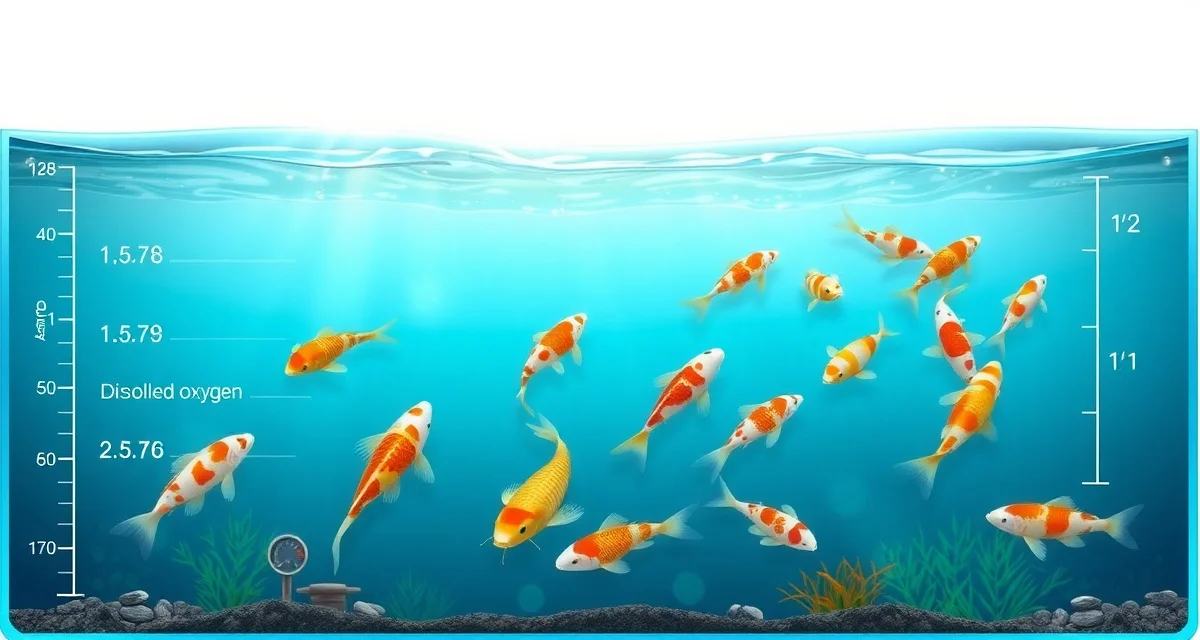
The recommended koi stocking density is 1 inch of fish per 10 gallons of pond water for adequate dissolved oxygen and ammonia management. A 1,000-gallon pond has a safe capacity of roughly 100 inches of fish. That sounds like a lot until you consider that a typical adult koi is 18 to 24 inches long. The math leaves most hobbyists with far less capacity than they expect, and most overstocked ponds got that way gradually, one fish at a time, until the water quality started failing.
KoiQuanta's stocking density calculator and water quality alerts catch overstocking problems early, before fish start dying. The stocking density calculator computes maximum safe fish load based on pond volume, filtration capacity, and current fish weight, showing you exactly where you stand before you buy the next fish.
TL;DR
- Signs and Solutions The recommended koi stocking density is 1 inch of fish per 10 gallons of pond water for adequate dissolved oxygen and ammonia management.
- A 1,000-gallon pond has a safe capacity of roughly 100 inches of fish.
- That sounds like a lot until you consider that a typical adult koi is 18 to 24 inches long.
- Even at low levels (0.25 mg/L and above), chronic ammonia exposure damages gill tissue, reduces oxygen uptake efficiency, and suppresses immune function.
- A 1,000-gallon pond with good filtration and aeration might support 80 to 100 inches of fish under optimal conditions.
- A 2,500-gallon pond with a large filter could support 200 to 250 inches.
What Overstocking Actually Does
Overstocking doesn't kill fish immediately. It creates conditions that slowly degrade, increasing the probability of a water quality crash or disease outbreak at any moment.
Ammonia accumulation: Every koi excretes ammonia continuously through its gills. In a properly stocked pond with adequate biological filtration, the nitrogen cycle converts ammonia to nitrite and then to nitrate at the same rate fish produce it. In an overstocked pond, fish produce ammonia faster than the biological filter can convert it. Even at low levels (0.25 mg/L and above), chronic ammonia exposure damages gill tissue, reduces oxygen uptake efficiency, and suppresses immune function.
Dissolved oxygen competition: Every fish requires oxygen from the same water. Koi are large fish with substantial oxygen requirements, and those requirements increase markedly during feeding, warm weather, and stress. In an overstocked pond, the combined oxygen demand of all fish plus the oxygen demand of an overloaded biological filter can consume available DO faster than surface gas exchange and aeration can replace it. Warm summer nights, when water holds less oxygen, are when overstocked ponds crash.
Elevated stress and immunosuppression: Koi in crowded conditions exhibit chronic territorial stress. Constant low-level cortisol elevation from crowding suppresses immune function. Fish that would fight off a minor Costia infestation in a well-stocked pond develop a full-blown outbreak in an overstocked one because their immune systems are already operating below capacity.
Rapid disease spread: More fish in less water means any pathogen introduced finds more potential hosts within a shorter distance. Disease that would infect two or three fish in a well-stocked pond can spread to every fish in a heavily overstocked pond before you identify the first case.
Filter overload and cycling instability: A biological filter sized for a certain fish load can be overwhelmed when that load is exceeded. An overwhelmed filter produces ammonia and nitrite spikes rather than processing them, creating water quality instability on top of the chronic overstocking baseline.
Warning Signs of an Overstocked Koi Pond
Ammonia never fully drops to zero: In a properly stocked and cycled pond, ammonia stays at or near zero except briefly after feeding. In an overstocked pond, ammonia is chronically detectable even with a healthy filter.
Frequent disease outbreaks: If your pond seems to cycle through one parasite or bacterial problem after another with little time between outbreaks, stocking density is one of the first things to assess. Chronic immune suppression from overstocking makes fish continuously vulnerable.
Fish showing non-specific stress signs: Clamped fins, reduced appetite, and lethargy in multiple fish simultaneously without a clear disease diagnosis often reflect chronic water quality stress from overstocking.
Rapid parameter swings: In an overstocked pond, parameters change faster after routine events like feeding or a hot day. A well-stocked pond with adequate filtration is buffered against small inputs. An overstocked pond is at the edge of its capacity all the time.
Visible competition for food: If feeding time involves obvious fighting and not all fish get access to food, stocking density may be too high for the available space.
Solving an Overstocked Pond
Option 1: Rehome fish. Reducing fish load is the most direct solution. This is often the hardest decision for koi hobbyists who are attached to their fish, but it's the only solution that addresses the root cause.
Option 2: Expand pond volume. Adding additional pond volume (extending an existing pond or adding a supplementary holding pond) increases total capacity. This is practical for some setups and not others.
Option 3: Upgrade filtration. Adding mechanical and biological filtration capacity doesn't directly address dissolved oxygen competition but does improve ammonia and nitrite processing. Better filtration helps an overstocked pond but doesn't eliminate the oxygen and stress problems of crowding.
Option 4: Add aeration. Maximum aeration helps buffer DO in overstocked ponds, particularly overnight. This is a supportive measure, not a solution to the underlying overstocking.
KoiQuanta's koi pond water quality tracker logs ammonia, nitrite, nitrate, pH, and dissolved oxygen over time, making overstocking-related water quality patterns visible across weeks and months. The ammonia tracking guide covers the early warning signs of ammonia accumulation specifically.
Frequently Asked Questions
How many koi can I keep in my pond?
The guideline of 1 inch of fish per 10 gallons of water is a conservative starting point for ponds with adequate biological and mechanical filtration. A 1,000-gallon pond with good filtration and aeration might support 80 to 100 inches of fish under optimal conditions. A 2,500-gallon pond with a large filter could support 200 to 250 inches. The actual safe limit depends on filtration capacity, aeration, and whether the pond has seasonal temperature extremes that reduce dissolved oxygen. KoiQuanta's stocking calculator provides a more precise estimate based on your specific setup.
What are the first signs of an overstocked koi pond?
The first signs are typically water quality-based rather than visible on the fish. Ammonia that doesn't fully clear between water changes, nitrate levels that rise faster than expected, and dissolved oxygen that drops lower overnight than it should are early indicators. On the fish, non-specific stress signs appear next: clamped fins, reduced feeding enthusiasm, and increased mucus production. By the time fish are visibly ill, the overstocking problem has usually been building for weeks or months.
How do I fix an overstocked koi pond?
The direct fix is reducing stocking density by rehoming fish to reduce the total fish load per gallon. If rehoming isn't possible, the next best steps are maximizing filtration (adding filter media volume or upgrading the filter system), maximizing aeration (adding diffusers and surface agitation), and increasing water change frequency to manually dilute ammonia and nitrate between filter cycles. All of these are supportive measures that help manage an overstocked pond but don't substitute for actually having the right number of fish for the pond volume.
What is What Happens If You Overstock a Koi Pond? Signs and Solutions?
Overstocking a koi pond occurs when the number of fish exceeds the water volume's ability to maintain safe oxygen and ammonia levels. The standard rule is 1 inch of fish per 10 gallons of water. A 1,000-gallon pond can safely hold roughly 100 inches of fish total — meaning fewer than six adult koi. Most ponds become overstocked gradually as fish grow or new fish are added without recalculating the load.
How much does What Happens If You Overstock a Koi Pond? Signs and Solutions cost?
Addressing an overstocked koi pond is free in terms of information, but solutions carry real costs. Upgrading filtration can run $200–$2,000+. Pond expansion varies widely based on size and materials. Rehoming fish is often free but requires effort. KoiQuanta's stocking density calculator is a no-cost tool that helps you assess your current load and plan corrections before expensive problems develop.
How does What Happens If You Overstock a Koi Pond? Signs and Solutions work?
When a pond is overstocked, fish waste produces ammonia faster than beneficial bacteria can convert it. Oxygen gets depleted as more fish compete for it. Even at 0.25 mg/L, chronic ammonia damages gill tissue, reduces oxygen uptake, and suppresses immunity. Signs appear progressively: lethargy, surface gasping, fin clamping, increased disease susceptibility, and eventually unexplained deaths. Water testing confirms what visual observation may miss.
What are the benefits of What Happens If You Overstock a Koi Pond? Signs and Solutions?
Understanding overstocking risks helps you act before fish die. Early detection preserves water quality, reduces disease outbreaks, and saves money on treatments. Knowing the warning signs — gasping at the surface, rapid gill movement, appetite loss — lets you intervene quickly. Proper stocking also means healthier, faster-growing koi with better color. Prevention is far less costly than treating ammonia poisoning or a full disease outbreak.
Who needs What Happens If You Overstock a Koi Pond? Signs and Solutions?
Any koi keeper benefits from understanding overstocking, but it's especially critical for hobbyists with ponds under 2,000 gallons, those who've recently added fish, or anyone whose koi are approaching adult size. Beginners who started with small fish often underestimate how quickly stocking limits are reached. If you've noticed declining water clarity, increased algae, or lethargic fish, overstocking is one of the first things to rule out.
How long does What Happens If You Overstock a Koi Pond? Signs and Solutions take?
Overstocking problems don't resolve overnight. Beneficial bacteria colonies that process ammonia take 4–6 weeks to establish or re-establish after changes. If you're rehoming fish or upgrading filtration, expect water parameters to stabilize over several weeks. Daily water testing during this period is essential. Ammonia spikes can persist for days after a single overcrowding event, so consistent monitoring is more useful than a one-time test.
What should I look for when choosing What Happens If You Overstock a Koi Pond? Signs and Solutions?
When managing an overstocked pond, look for solutions that address root causes rather than symptoms. Prioritize a reliable test kit to measure ammonia, nitrite, and dissolved oxygen. Choose biological filtration sized generously above your current fish load. If adding aeration, position it for maximum surface agitation. For tools like stocking calculators, confirm they factor in fish weight and filtration capacity — not just fish count — for accurate results.
Is What Happens If You Overstock a Koi Pond? Signs and Solutions worth it?
Yes — learning to recognize and correct overstocking is one of the highest-value things a koi keeper can do. The cost of a water test kit and a few hours of research prevents losses that can run into hundreds of dollars in fish, treatments, and emergency filtration upgrades. Koi can live 20–35 years in good conditions. Keeping stocking density within safe limits is the single most controllable factor in their long-term health.
Related Articles
- How Deep Does a Koi Pond Need to Be? Minimum Depth by Region
- Koi Pond Filtration: What System Do You Need for Healthy Water?
Sources
- Associated Koi Clubs of America (AKCA)
- Koi Organisation International (KOI)
- University of Florida IFAS Extension Aquaculture Program
- Fish Vet Group
- Water Quality Association