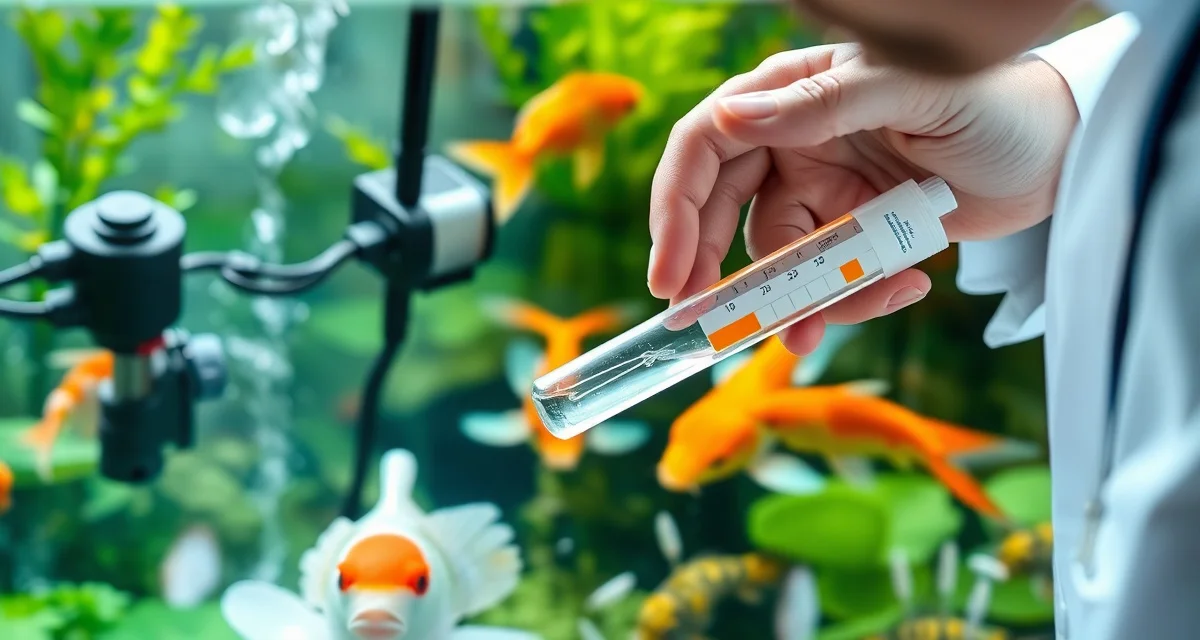
Koi Water Quality Emergency: Rapid Response Guide
Koi can die within 4 hours of an ammonia or oxygen emergency -- response time is critical. When you find fish gasping at the surface, behaving erratically, or dying for no apparent reason, water quality is your first suspect and your first test. Not disease, not parasites -- water quality. Getting this right in the first 15 minutes of an emergency can save a pond full of fish.
KoiQuanta's emergency mode activates a rapid response checklist with step-by-step guidance when you flag a water quality emergency.
TL;DR
- Getting this right in the first 15 minutes of an emergency can save a pond full of fish.
- This takes 30 seconds and addresses the most immediately life-threatening scenario (low dissolved oxygen) before you've even confirmed what's happening.
- Critical threshold: below 4 mg/L requires emergency intervention.
- Below 2 mg/L is immediately life-threatening.
- Ammonia:** Even 0.5 mg/L at pH 7.5 is stressful; at pH 8.0 the same reading is more toxic.
- Even 0.5 mg/L causes serious fish stress.
- Often triggered by heavy rainfall, long-term acidification without monitoring, or plant-heavy systems with nighttime CO2 accumulation.
Recognize the Signs
Gasping at the surface or near waterfall/aerator: Fish seeking oxygenated water. Could be dissolved oxygen emergency, ammonia toxicity (which damages gills and reduces oxygen uptake), or chlorine exposure.
Erratic swimming, rolling, or loss of balance: Severe chemical stress. Ammonia, chlorine, and sudden pH crashes all cause neurological signs before they cause death.
Sudden death of multiple fish: If multiple fish die suddenly and simultaneously, water quality is strongly implicated. Disease rarely kills multiple fish simultaneously -- it typically progresses over days.
Lethargy and bottom-sitting: A less urgent presentation that may indicate chronic water quality stress rather than an acute emergency. Still needs investigation.
Flashing and rubbing without other water quality signs: More typical of parasites than acute water quality crisis, but elevated ammonia can also cause surface irritation behavior.
Step 1: Maximize Aeration Immediately
Before you even test anything, maximize aeration. Turn on every air pump, increase waterfall flow to maximum, and add any supplemental aeration you have. This takes 30 seconds and addresses the most immediately life-threatening scenario (low dissolved oxygen) before you've even confirmed what's happening.
Oxygen depletion and ammonia toxicity are the two fastest-killing water quality emergencies. Both are addressed by maximizing aeration -- oxygen depletion directly, and ammonia because improved oxygen helps fish cope with ammonia stress while you work on fixing the chemistry.
Step 2: Test in Priority Order
Don't waste time running every test in alphabetical order. Test in this sequence:
1. Dissolved oxygen: If you have a DO meter, test first. Critical threshold: below 4 mg/L requires emergency intervention. Below 2 mg/L is immediately life-threatening.
2. Ammonia: Even 0.5 mg/L at pH 7.5 is stressful; at pH 8.0 the same reading is more toxic. If ammonia is detectable and fish are showing stress, this is your likely culprit.
3. Nitrite: Nitrite blocks oxygen transport in blood. Even 0.5 mg/L causes serious fish stress. Elevated nitrite with fish gasping is an emergency.
4. pH: A rapid pH crash (several units in hours) causes severe shock. Test and compare to your recent baseline.
5. Chlorine/chloramine: If you recently did a water change, test for residual chlorine. This is easily missed but causes rapid gill damage.
What do I do when koi are gasping at the surface? Maximize aeration first. Test dissolved oxygen and ammonia. If either is elevated, begin a partial water change with dechlorinated, temperature-matched water while aeration is running. Don't wait for test results to maximize aeration -- do that first.
Step 3: Identify the Source of the Problem
High ammonia: What caused it? Recent overfeeding, a dead fish decomposing in the pond, a filter failure or bypass, extreme weather killing filter bacteria, or antibiotic treatment that disrupted the biofilter. Find and address the source while treating the symptom.
Low dissolved oxygen: Heat (oxygen capacity drops with temperature), algae bloom that switched to oxygen consumption at night, biofilm respiration in an overloaded filter, high stocking density in hot weather, or a pump failure that stopped aeration.
Low pH (crash): KH depletion -- carbonate hardness has run out and the pond no longer has buffer capacity. Often triggered by heavy rainfall, long-term acidification without monitoring, or plant-heavy systems with nighttime CO2 accumulation.
Chlorine in the water: A water change was done without adequate dechlorination, or water utility changed to chloramine and your old dechlorinator is no longer sufficient.
Nitrite spike: A young biofilter that hasn't fully established, antibiotic treatment that damaged biofilter bacteria, or a sudden increase in fish load overwhelming an established filter.
Step 4: Immediate Correction
For ammonia emergency:
- 20-30% water change with dechlorinated, temperature-matched water
- Add zeolite if you have it (emergency ammonia adsorption)
- Do not feed until ammonia is resolved
- Investigate and fix the source
For dissolved oxygen emergency:
- Maximum aeration already running (you did step 1)
- If temperature is high, consider adding ice or cool water to lower temperature and increase oxygen capacity
- Remove any decaying material contributing to oxygen consumption
For pH crash:
- Add sodium bicarbonate slowly (1 tsp per 100 gallons) and retest after 30 minutes
- Multiple smaller additions are safer than one large addition
- Add KH buffer (crushed coral in filter bag) as a longer-term fix
For chlorine exposure:
- Immediately add dechlorinator (sodium thiosulfate handles chlorine; you need an ammonia-binder product for chloramine)
- 25-30% water change to dilute
- Monitor gills closely -- chlorine damage causes gill hemorrhage and rapid death in some exposures
For nitrite spike:
- Add salt at 0.3-0.5% (chloride ions compete with nitrite for gill transport, reducing toxicity)
- 20-30% water change to dilute
- Stop feeding
- Investigate why the biofilter failed
Step 5: Monitor Intensively
After emergency correction, the emergency isn't over. Test ammonia and dissolved oxygen every 2 hours for the first 12 hours after an acute event. Fish that appear to recover initially may deteriorate hours later from gill damage they've already received.
Watch all fish for secondary signs: clamped fins, surface hanging, abnormal behavior. Fish that were severely stressed may develop disease over the following 1-2 weeks as their immune function recovers.
How do I test for water quality emergency in a koi pond? Keep a test kit readily accessible -- not stored away -- so you can test in under 5 minutes when needed. For DO, a handheld meter gives faster results than a test kit and is worth the investment if you have any pond over 1,000 gallons. KoiQuanta's emergency mode provides the sequential testing and correction checklist so you don't forget steps under stress.
For the ammonia-specific management protocol, the koi ammonia guide covers the full context. For oxygen depletion emergencies specifically, the koi oxygen depletion emergency guide provides the detailed immediate response.
Frequently Asked Questions
What do I do when koi are gasping at the surface?
Maximize aeration immediately -- turn on every air pump and increase waterfall flow to maximum. Don't wait for test results for this step. Then test dissolved oxygen and ammonia in that order. If DO is below 5 mg/L or ammonia is detectable, begin a 20-30% partial water change with dechlorinated, temperature-matched water while aeration continues. If multiple fish are gasping and you recently did a water change, test for chlorine or chloramine as a potential cause. Find and address the source of the problem after stabilizing the immediate situation.
How do I test for water quality emergency in a koi pond?
Test in priority order: dissolved oxygen first (if you have a meter), then ammonia, then nitrite, then pH, then chlorine if you've recently done a water change. Keep your test kit in an easily accessible location -- not packed away. A dissolved oxygen meter is worthwhile for any pond over 1,000 gallons because it gives faster results and allows continuous monitoring during an event. KoiQuanta's emergency mode activates a step-by-step checklist that keeps you on track when you're stressed and trying to save fish.
What is the fastest way to fix koi pond water quality?
For most acute emergencies: maximize aeration (immediate, 30 seconds) plus a 20-30% partial water change with dechlorinated, temperature-matched water (15-30 minutes). This addresses the most common emergencies -- ammonia, nitrite, and oxygen crises -- quickly enough to save fish. Salt at 0.3% protects against nitrite toxicity. For pH crashes, slow sodium bicarbonate addition restores buffer capacity. The fastest overall approach is to have emergency supplies ready (dechlorinator, aeration equipment, salt) before an emergency happens so you're not searching for supplies while fish are dying.
What is Koi Water Quality Emergency: Rapid Response Guide?
Koi Water Quality Emergency: Rapid Response Guide is a step-by-step emergency protocol for koi pond owners facing sudden water quality crises. It walks you through the critical first 15 minutes when fish are gasping, behaving erratically, or dying unexpectedly. The guide covers dissolved oxygen crashes, ammonia spikes, and pH emergencies — the three most common and lethal water quality failures — with actionable steps prioritized by urgency to maximize fish survival.
How much does Koi Water Quality Emergency: Rapid Response Guide cost?
The Koi Water Quality Emergency: Rapid Response Guide is free content published on KoiQuanta. There is no purchase required to access the guide or KoiQuanta's emergency response checklist. The platform's emergency mode, which activates step-by-step guidance when you flag a water quality crisis, is also available at no cost. Your only real investment is having the right test kit on hand before an emergency strikes.
How does Koi Water Quality Emergency: Rapid Response Guide work?
The guide works by walking you through a prioritized sequence of emergency actions. First, you address dissolved oxygen — the fastest killer — by maximizing aeration before you've even confirmed the problem. Then you test for ammonia and pH, interpreting results based on dangerous thresholds: DO below 4 mg/L, ammonia above 0.5 mg/L, and pH outside safe ranges. Each reading triggers specific interventions. KoiQuanta's emergency mode provides real-time checklist guidance when you flag an active crisis.
What are the benefits of Koi Water Quality Emergency: Rapid Response Guide?
The guide's core benefit is saving fish that would otherwise die from delayed or incorrect responses. Koi can perish within four hours of an ammonia or oxygen emergency, making speed and accuracy critical. By prioritizing the right interventions — aeration first, then targeted water chemistry corrections — you avoid wasting precious time on secondary concerns like disease or parasites. It also builds your confidence so you act decisively rather than freeze during a stressful situation.
Who needs Koi Water Quality Emergency: Rapid Response Guide?
Any koi pond owner needs this guide, but it is especially valuable for those new to the hobby, anyone managing a heavily stocked or planted pond, and keepers who have experienced unexplained fish losses. Planted ponds are particularly vulnerable to overnight pH crashes from CO2 accumulation. If you've ever found fish gasping at the surface and not known what to do first, this guide is written for exactly that moment.
How long does Koi Water Quality Emergency: Rapid Response Guide take?
The emergency response itself is designed to begin within the first 15 minutes of noticing a problem. The initial aeration step takes about 30 seconds. Basic water testing for dissolved oxygen, ammonia, and pH typically takes 5 to 15 minutes depending on your test kit. Full diagnosis and corrective action — partial water changes, pH buffers, ammonia binders — can be underway within 30 minutes of identifying the problem if you have supplies ready.
What should I look for when choosing Koi Water Quality Emergency: Rapid Response Guide?
When choosing an emergency water quality resource, prioritize guides that give clear numeric thresholds rather than vague warnings. Look for content that distinguishes between emergency-level values — such as DO below 2 mg/L being immediately lethal versus below 4 mg/L requiring intervention — and that accounts for how pH affects ammonia toxicity. A good guide also sequences actions by urgency, so you address oxygen before chasing other parameters, rather than treating all problems as equal.
Is Koi Water Quality Emergency: Rapid Response Guide worth it?
Yes, this guide is worth reading before you ever face an emergency, not just during one. Koi keepers who understand the warning signs, dangerous thresholds, and correct response sequence are far less likely to lose fish to preventable water quality crashes. The information is free, the time investment is minimal, and the potential payoff — a pond full of healthy fish surviving a crisis that kills unprepared keepers' stock — makes it one of the highest-value reads in the hobby.
Related Articles
Sources
- Associated Koi Clubs of America (AKCA)
- Koi Organisation International (KOI)
- University of Florida IFAS Extension Aquaculture Program
- Fish Vet Group
- Water Quality Association