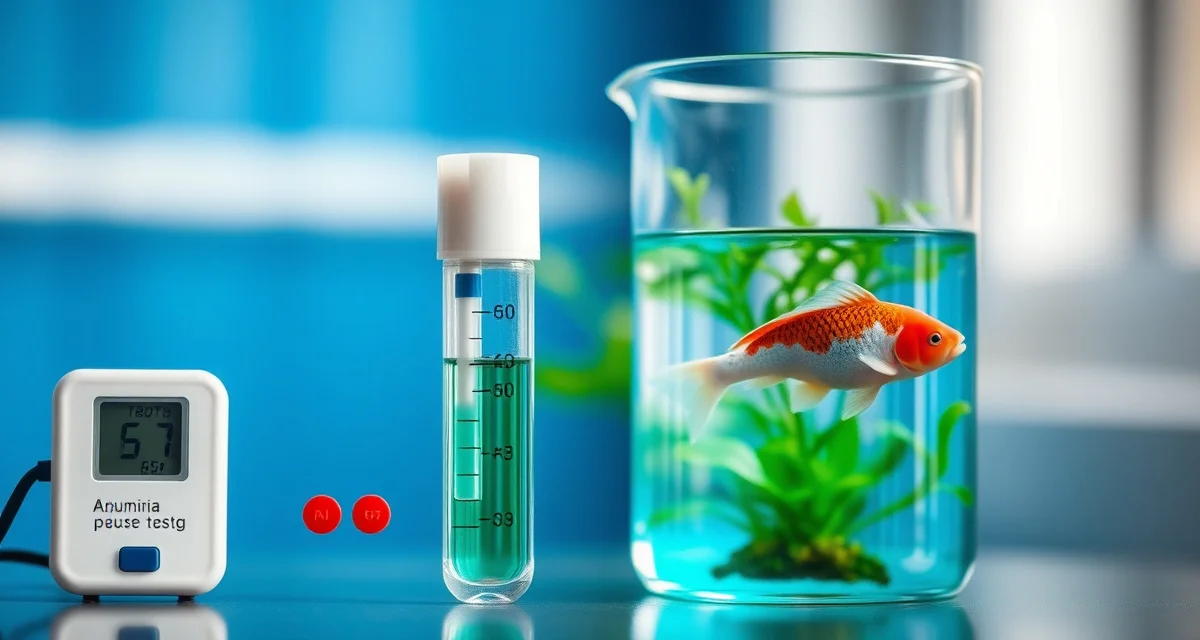
Koi Ammonia Guide: Safe Levels, Testing, and the Nitrogen Cycle
Ammonia is the most common killer of koi in new ponds and quarantine tanks. It's invisible. It builds before any fish show obvious signs. And by the time a fish is behaving abnormally from ammonia toxicity, the damage to its gills and kidneys has already started.
Understanding ammonia - where it comes from, what it does, how to measure it accurately, and how to control it - is the foundation of safe koi keeping.
TL;DR
- The commonly cited "safe" level of 0.25 ppm is a threshold for emergency action, not a target to maintain.
- As pH rises, a larger proportion converts to the toxic NH3 form.
- If strips show 0.5, that might be 0.2 or 0.8.
- Use a clean test tube rinsed with tank water (not tap water) 2.
- Collect a sample from mid-water column, away from filter return or feeding area 3.
- Follow reagent instructions exactly - number of drops, shaking protocol, wait time 4.
- Compare color against chart in natural light (not direct sunlight, not fluorescent-only lighting) 5.
Where Ammonia Comes From
Koi produce ammonia as a metabolic waste product, primarily excreted through the gills. Additional sources:
- Decomposing uneaten food
- Dead organic matter (leaves, dead algae, fish carcasses)
- Decaying plant material
- Bacterial decomposition of organic waste in the water column and substrate
In a properly established pond, beneficial bacteria convert ammonia to nitrite and then to nitrate through the nitrogen cycle. In a new pond or new quarantine tank without established biological filtration, this conversion doesn't happen fast enough, and ammonia accumulates.
Safe Ammonia Levels for Koi
Target: 0 ppm
Any detectable ammonia in a koi system is a problem. The commonly cited "safe" level of 0.25 ppm is a threshold for emergency action, not a target to maintain.
| Ammonia Level | Risk |
|--------------|------|
| 0 ppm | Safe |
| 0.1-0.25 ppm | Stress threshold - investigate and correct |
| 0.25-0.5 ppm | Dangerous - immediate water change required |
| 0.5-1.0 ppm | Acute toxicity risk - fish in distress |
| Above 1.0 ppm | Emergency - severe risk of death |
The pH factor: Ammonia exists in water in two forms - ionized ammonium (NH4+, relatively safe) and un-ionized ammonia (NH3, toxic). As pH rises, a larger proportion converts to the toxic NH3 form.
At pH 7.0: roughly 0.5% of total ammonia is as toxic NH3
At pH 8.0: roughly 5% is as toxic NH3
At pH 9.0: roughly 40% is as toxic NH3
This is why ammonia problems are more dangerous in high-pH systems and why elevated pH after a hard rain or algae photosynthesis cycle can turn a "manageable" ammonia reading into a crisis.
Symptoms of Ammonia Toxicity
- Rapid gilling / gasping
- Fish hanging near the surface or near aeration/return jets
- Red streaking on fins and body (capillary hemorrhage)
- Clamped fins and lethargy
- Darting or erratic swimming (neurological effects at high levels)
- Excess mucus production
- In chronic low-level exposure: suppressed immunity, secondary bacterial infections, increased disease susceptibility
Testing Ammonia Accurately
Test Kit Types
Liquid reagent test kits (API, Salifert, Seachem): Accurate, affordable. The gold standard for routine testing.
Test strips: Convenient but less accurate. The margin of error on strips is large enough to make the reading unreliable for action decisions. If strips show 0, that might be 0.1. If strips show 0.5, that might be 0.2 or 0.8. Don't use strips for quarantine tank management.
Electronic meters: Expensive and require calibration. More accurate than strips but overkill for most operations. The liquid reagent kit is the right tool.
Testing Technique
- Use a clean test tube rinsed with tank water (not tap water)
- Collect a sample from mid-water column, away from filter return or feeding area
- Follow reagent instructions exactly - number of drops, shaking protocol, wait time
- Compare color against chart in natural light (not direct sunlight, not fluorescent-only lighting)
- Log the actual reading with date and time
For quarantine tanks, test daily during active quarantine. Test morning and evening if there are known problems.
Seasonal and Temperature Accuracy Notes
Most test kits are calibrated for use at room temperature. Very cold water (below 60°F) can affect color development. If you're testing cold quarantine water, pre-warm the sample slightly (carry it in your hand for 2-3 minutes) before adding reagents.
The Nitrogen Cycle: Why New Systems Are Dangerous
The nitrogen cycle is the biological process by which ammonia is rendered safe:
- Fish excrete ammonia → NH3/NH4+
- Nitrosomonas bacteria oxidize ammonia → Nitrite (NO2-)
- Nitrobacter and related bacteria oxidize nitrite → Nitrate (NO3-)
- Nitrate removed by water changes or plant uptake
In a mature pond with established filter media, step 2 and 3 happen fast enough to keep ammonia and nitrite at or near zero continuously.
In a new system - a new pond, a new quarantine tank, any system where biological filtration hasn't established - the bacteria that drive these conversions haven't colonized the filter media in sufficient numbers. Ammonia builds, then when Nitrosomonas establish, nitrite builds. This is "new tank syndrome" and it's dangerous to fish.
Nitrogen cycle establishment timeline:
- Without seeding: 4-6 weeks to fully cycle
- With seeded filter media from an established system: days to 1-2 weeks
- With commercial bacterial products (Fritz Turbo Start, Seachem Stability): 1-2 weeks with daily monitoring
Do not add fish to a new, uncycled system. Either cycle the system fishlessly first (add an ammonia source - pure ammonia drops or fish food - and wait for the cycle to complete) or seed from an established filter and monitor daily.
Managing Ammonia in Quarantine
Quarantine tanks are particularly vulnerable because:
- Small water volume = faster accumulation
- Stressed fish = higher waste output
- Treatments may harm nitrifying bacteria
- Filter often hastily established
Prevention:
- Pre-cycle the quarantine tank before fish arrive
- Seed filter media from your established pond
- Don't overfeed
- Remove uneaten food promptly
- Match fish load to filter capacity
Response to elevated ammonia:
- Immediate water change (25-50% depending on level)
- Temperature-match replacement water
- Dechlorinate before adding
- Remove all uneaten food
- Stop feeding for 24-48 hours
- Test again after water change
- Find and correct the cause
Emergency ammonia removal: Zeolite (clinoptilolite) absorbs ammonium ions. A mesh bag of zeolite in the filter can buy time during an ammonia crisis. Note: zeolite doesn't work in saltwater (salt displaces the ammonium). In salted quarantine, zeolite is ineffective - water changes are your only tool.
KoiQuanta and Ammonia Management
KoiQuanta's water parameter logging tracks your daily ammonia readings and flags trends - a reading of 0.1 for two consecutive days triggers a warning before you hit dangerous levels. For dealers managing multiple quarantine tanks, the dashboard shows parameter status across all active tanks at a glance.
Related Articles
- KHV Testing for Koi: PCR Test Guide
- Nitrate in Koi Ponds: Acceptable Levels and Management
- Calcium Hardness in Koi Ponds: Testing and Management Guide
FAQ
What is a safe ammonia level for koi?
Zero is the target. Any detectable ammonia in a koi system indicates a problem, either in cycling, bioload management, or feeding. The "action threshold" where you need an immediate water change is 0.25 ppm - but don't think of 0.25 ppm as safe. Chronically elevated ammonia at even low levels suppresses immunity and makes fish more susceptible to bacterial infections, parasites, and opportunistic disease.
Why is my ammonia spiking even with a filter?
The most common causes: the filter media isn't carrying enough biological capacity (either it's too new, too small, or was recently damaged by a treatment); you've overstocked the system for the filter size; you're overfeeding; or a disease or die-off event added sudden organic load. Check each of these systematically. If the filter seems established but ammonia keeps rising, consider whether the filter volume is sized adequately for your fish load.
How do I lower ammonia in a koi pond quickly?
Partial water changes are the fastest effective response. For pond emergencies: 25-30% water change immediately, remove any dead fish or decomposing material, stop feeding for 24-48 hours, increase aeration. Commercial ammonia detoxifiers (containing sodium thiosulfate or sodium hydroxymethanesulfonate) can temporarily convert ammonia to a less toxic form - useful for buying a few hours while you do water changes. They don't remove ammonia, they just change its form. Water changes remove it.
What is Koi Ammonia Guide: Safe Levels, Testing, and the Nitrogen Cycle?
This guide covers everything koi keepers need to know about ammonia in ponds and quarantine tanks. It explains where ammonia originates, how it harms koi, what safe levels actually mean, how to test accurately, and how the nitrogen cycle naturally controls it. Unlike surface-level advice, it clarifies that 0.25 ppm is an emergency threshold—not a safe target—and explains why pH affects ammonia toxicity, making it essential reading for anyone serious about fish health.
How much does Koi Ammonia Guide: Safe Levels, Testing, and the Nitrogen Cycle cost?
This is a free educational guide published on KoiQuanta. There is no purchase required. It provides practical, science-backed information on ammonia management for koi ponds and quarantine setups at no cost. If you keep koi or are planning a pond, this resource is available to read anytime and covers testing methods, safe level thresholds, nitrogen cycle basics, and emergency response steps without any paywall or subscription.
How does Koi Ammonia Guide: Safe Levels, Testing, and the Nitrogen Cycle work?
The guide walks you through ammonia's full lifecycle in a koi pond—from metabolic waste excreted through fish gills to decomposing food and organic matter. It explains how beneficial bacteria in a cycled filter convert toxic ammonia to nitrite, then to safer nitrate. It also details proper testing technique: using tank-rinsed test tubes, sampling from mid-water column, and reading color charts in natural light to avoid the inaccurate results that strips commonly produce.
What are the benefits of Koi Ammonia Guide: Safe Levels, Testing, and the Nitrogen Cycle?
Understanding ammonia prevents the most common cause of koi death—especially in new ponds and quarantine tanks where biological filtration hasn't established yet. This guide helps you catch dangerous spikes before fish show visible symptoms, because gill and kidney damage begins before behavioral changes appear. You'll also learn why pH matters: at higher pH, a greater proportion of ammonia converts to the highly toxic NH3 form, making the same reading far more dangerous.
Who needs Koi Ammonia Guide: Safe Levels, Testing, and the Nitrogen Cycle?
Any koi keeper benefits from this guide, but it's especially critical for beginners setting up a new pond or quarantine tank, hobbyists who've experienced unexplained fish losses, and anyone using test strips rather than liquid reagent kits. If you're cycling a pond for the first time, adding new fish, dealing with a sick fish in isolation, or troubleshooting water quality issues, this guide provides the foundational knowledge to make informed, timely decisions.
Sources
- Associated Koi Clubs of America (AKCA)
- Koi Organisation International (KOI)
- University of Florida IFAS Extension Aquaculture Program
- Fish Vet Group
- Water Quality Association