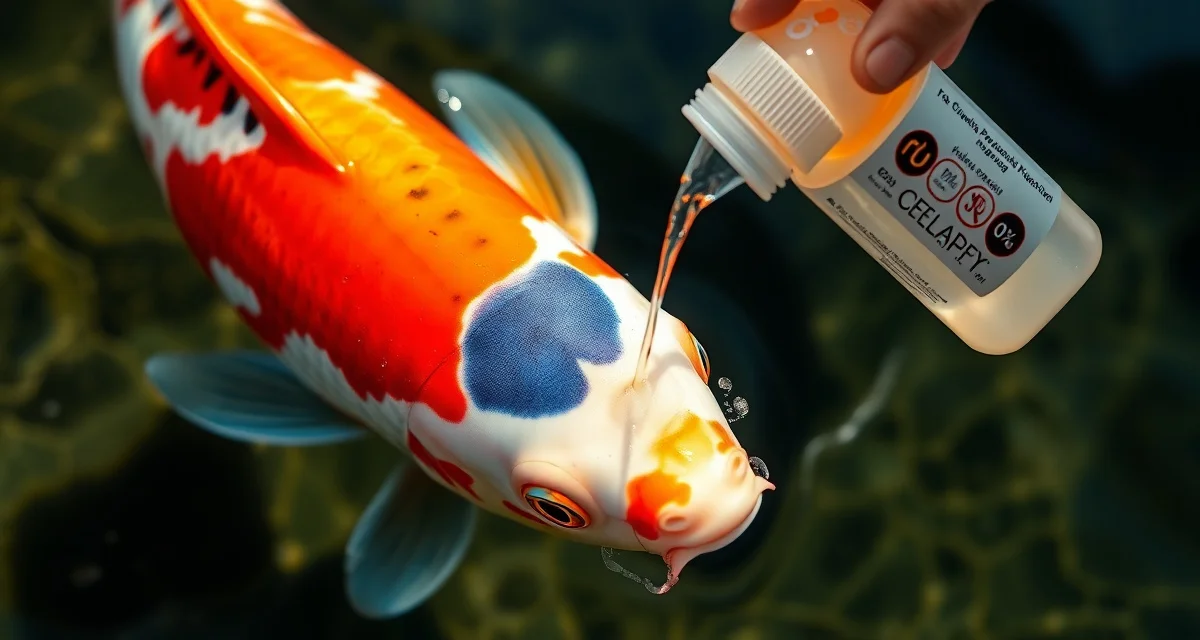
Potassium Permanganate Treatment for Koi: Doses, Timing, and Safety
Potassium permanganate (PP, KMnO4) is one of the most effective treatments in koi keeping. It handles external bacteria, fungi, and many parasites simultaneously. It's also one of the treatments most likely to cause fish loss when used incorrectly. The margin between effective and toxic doses is narrow enough that you need to know exactly what you're doing before you use it.
Here's the complete guide to using PP safely and effectively.
TL;DR
- 1 gram of PP looks very similar to 3 grams depending on crystal size.
- In ponds with high organic load, you may need to dose 3-4 ppm because much of the PP is consumed by the organic load before it can act on parasites or bacteria.
- Apply with cotton swab directly to the lesion for 30-60 seconds, then rinse with clean water.
- If a fish is showing severe distress during treatment, add hydrogen peroxide at approximately 10 mL per 100 gallons to neutralize the PP immediately.
- Use the color test: if your water turns yellow-brown within 30-60 minutes of dosing 2 ppm, your organic load consumed most of the PP before it could work.
- For a prolonged bath (4-6 hours): 2-3 ppm (2-3 mg per liter of water volume).
- For a short dip (15-30 minutes): 10-20 ppm.
What Potassium Permanganate Treats
PP is an oxidizing agent. It works by generating reactive oxygen species that damage the cellular membranes of pathogens. Effective against:
- External bacteria (Aeromonas, Pseudomonas, Flavobacterium)
- Monogenean flukes (Gyrodactylus and Dactylogyrus)
- Trichodina and other ciliated protozoa
- Costia (Ichthyobodo)
- Fungal infections (Saprolegnia)
- General surface disinfection of wounds
Less effective against:
- Ich (free-swimming stage is susceptible but contact time in tanks is limited)
- Internal parasites
- KHV (no effect on viral pathogens)
- Anchor worm and lice (limited efficacy at safe doses)
PP Forms and Concentrations
Potassium permanganate is sold as:
- Crystals (pure KMnO4): Purple-black crystals, very concentrated. Requires precise weighing and dissolving.
- Pre-diluted solution: Commercial koi products with PP at known concentrations. Easier to dose but more expensive per treatment.
Always weigh crystals - don't estimate by volume. 1 gram of PP looks very similar to 3 grams depending on crystal size.
Treatment Methods and Doses
Method 1: Prolonged Bath (Pond or Tank Treatment)
Standard dose: 2-3 ppm (2-3 mg/L of active PP in water)
Calculation:
- Volume in liters × dose (mg/L) = total mg needed
- 1000-gallon pond = 3785 liters
- At 2 ppm: 3785 × 2 = 7570 mg = 7.57 grams of PP crystals
Duration: 4-6 hours
What you'll see: Water turns pink/violet at correct dose. As the PP is consumed, color fades to yellow-brown. When the color turns yellow-brown before treatment time is up, the PP has been consumed - the dose wasn't maintained.
High organic load warning: PP is consumed by organic material in the water (algae, plant matter, substrate, fish waste). In ponds with high organic load, you may need to dose 3-4 ppm because much of the PP is consumed by the organic load before it can act on parasites or bacteria. This is why bare-bottom quarantine tanks are easier to treat - less competition for the PP.
Method 2: Short Dip (Individual Fish)
Standard dose: 10-20 ppm
Duration: 15-30 minutes maximum at 10 ppm, 10 minutes at 20 ppm
Use: Individual fish treatment when you want concentrated surface treatment without treating the whole pond.
Technique: Prepare the dip solution in a separate bucket of pond water. Anesthetize the fish lightly or have someone hold it securely. Immerse in dip for the treatment period. Watch continuously. Have a bucket of clean, untreated pond water ready as a rinse/emergency tank.
When to abort: If fish rolls, loses orientation, or shows severe distress - transfer immediately to clean water.
Method 3: Very Short Dip (Spot Treatment)
Dose: 100-200 ppm (a concentrated "paint" applied with a swab)
Use: Direct topical treatment of ulcers, wounds, or fungal lesions on an anesthetized fish. Apply with cotton swab directly to the lesion for 30-60 seconds, then rinse with clean water. Powerful surface sterilization.
Neutralization
PP can be neutralized by hydrogen peroxide (H2O2). Have a bottle on hand. If a fish is showing severe distress during treatment, add hydrogen peroxide at approximately 10 mL per 100 gallons to neutralize the PP immediately. This will rapidly decolor the water and neutralize the oxidant.
Sodium thiosulfate also neutralizes PP, though it works more slowly.
Safety Precautions
Personal protection:
- Wear gloves - PP stains skin brown/purple and the crystals are caustic
- Eye protection when handling crystals
- Don't inhale crystal dust
- Work in a ventilated area
Fish safety:
- Never dose PP at therapeutic levels without being present to monitor the fish for the entire treatment duration
- Have neutralization agent ready before you start
- Never combine PP with formalin - they react to produce toxic compounds
- PP at effective doses reduces dissolved oxygen. Run maximum aeration during treatment.
- Don't treat fish that are severely compromised - the additional oxidative stress can be fatal to very weak fish
Organic Load and PP Demand
One of the most common PP treatment failures: the dose was right for the water volume but wrong for the organic load in the water.
PP is consumed by:
- High algae content (green water ponds need 3-4× the dose of clear water ponds)
- Substrate (gravel, soil)
- High dissolved organic load
- Plant material
Before treating a pond with PP, estimate organic load. Use the color test: if your water turns yellow-brown within 30-60 minutes of dosing 2 ppm, your organic load consumed most of the PP before it could work. You need to either do a large water change to reduce organic load, increase the dose, or choose a different treatment.
PP in Quarantine vs. Display Ponds
Bare-bottom quarantine tanks with regular water changes have low organic load. PP treatment in quarantine is more predictable and reliable than in established display ponds.
For display ponds: assess organic load, dose accordingly, monitor continuously.
Related Articles
- How to Use Potassium Permanganate on Koi: Safe Dosing Guide
- How to Calculate Koi Treatment Doses Without Making a Dangerous Mistake
- Formalin Treatment for Koi: Protocol and Safety Guide
- Praziquantel Treatment for Koi: Dosing, Timing, and the Two-Dose Protocol
FAQ
What is the correct dose of potassium permanganate for koi?
For a prolonged bath (4-6 hours): 2-3 ppm (2-3 mg per liter of water volume). For a short dip (15-30 minutes): 10-20 ppm. For topical wound treatment: up to 100-200 ppm applied directly with a swab. Always calculate by water volume, weigh crystals with a scale, and have neutralization agent (hydrogen peroxide or sodium thiosulfate) on hand before starting treatment.
Is potassium permanganate safe for koi?
At correct doses and with proper monitoring, yes. PP is widely used in professional koi and aquaculture settings. The risk comes from overdosing (easy when using crystals without weighing), treating fish that are too weak to handle oxidative stress, high organic load consuming the dose unpredictably, or combining PP with formalin (never do this). Monitor fish continuously during treatment and be prepared to neutralize immediately if they show severe distress.
How do I know if potassium permanganate treatment is working?
The water should remain pink/violet throughout the treatment window. Fish should remain oriented and breathing normally (slightly elevated gilling is expected but should not be severe). After treatment, in the following 24-48 hours: reduced flashing if treating parasites, improved behavior, improved feeding response. If water turns yellow-brown rapidly (within an hour), the PP was consumed by organic load and the treatment didn't work - reassess organic load and dose accordingly.
What is Potassium Permanganate Treatment for Koi: Doses, Timing, and Safety?
Potassium permanganate (KMnO4) treatment is a method of using a powerful oxidizing chemical to eliminate external bacterial infections, fungal outbreaks, and parasites on koi fish. It works by oxidizing and destroying pathogens on contact. While highly effective, it requires precise dosing—the margin between a therapeutic and toxic concentration is narrow. Used correctly, it's one of the most versatile treatments available to koi keepers, capable of addressing multiple health issues simultaneously in pond or controlled bath settings.
How much does Potassium Permanganate Treatment for Koi: Doses, Timing, and Safety cost?
Potassium permanganate itself is an inexpensive chemical, typically costing just a few dollars for a small quantity from aquatic or chemical suppliers. The real cost consideration is accuracy: improper dosing can result in fish loss, making a reliable scale and testing supplies essential investments. Overall, PP treatment is one of the most cost-effective options in koi health management, especially for pond-wide parasite or bacterial outbreaks where more expensive medications would require significantly larger quantities.
How does Potassium Permanganate Treatment for Koi: Doses, Timing, and Safety work?
Potassium permanganate works by releasing oxygen through oxidation, which destroys pathogens on contact. When dosed at 2–3 ppm for a prolonged bath or 10–20 ppm for a short dip, it kills external bacteria, fungi, and many parasites on the fish's skin and gills. High organic loads in pond water consume the chemical before it can act, so color monitoring is critical—water turning yellow-brown within 30–60 minutes signals that the dose was insufficient and organic matter neutralized it.
What are the benefits of Potassium Permanganate Treatment for Koi: Doses, Timing, and Safety?
The primary benefit of potassium permanganate is its broad-spectrum effectiveness: it targets external bacteria, fungi, and numerous parasites in a single treatment. It also doubles as a topical spot treatment—applied directly via cotton swab to lesions for 30–60 seconds. Unlike some treatments that address only one pathogen type, PP handles multiple issues simultaneously. It's also rapidly neutralizable with hydrogen peroxide at 10 mL per 100 gallons, giving keepers an emergency off-switch if fish show severe distress during treatment.
Who needs Potassium Permanganate Treatment for Koi: Doses, Timing, and Safety?
Any koi keeper dealing with external bacterial infections, fungal lesions, or parasitic outbreaks needs to understand PP treatment. It's especially relevant for ponds with recurring health issues, newly quarantined fish, or cases where other treatments have failed. However, it's not for beginners without proper preparation—accurate gram-weight scales, knowledge of pond volume, organic load awareness, and hydrogen peroxide on hand are all prerequisites. Keepers managing high-value fish or large collections benefit most from mastering this versatile but demanding treatment.
Sources
- Associated Koi Clubs of America (AKCA)
- Koi Organisation International (KOI)
- University of Florida IFAS Extension Aquaculture Program
- Fish Vet Group
- Water Quality Association