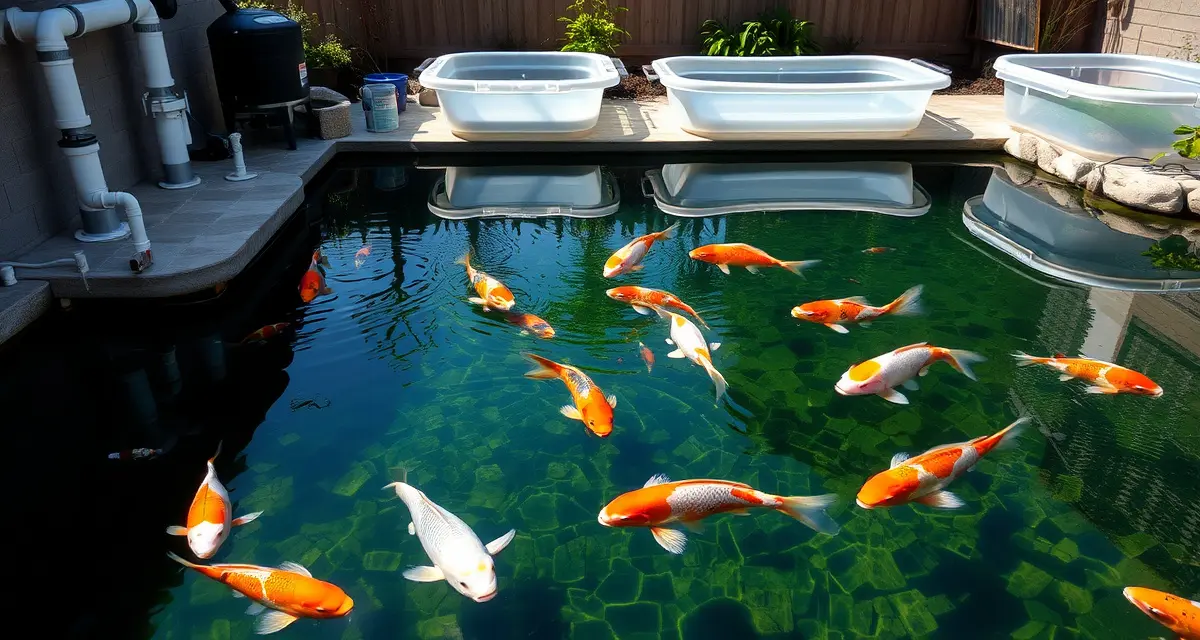
Koi Pond Renovation: Upgrading an Existing Pond
Koi pond renovation is one of the highest-risk periods for whole-collection disease outbreaks. That's not a reason to avoid renovation - an underperforming pond that creates chronic health problems needs to be fixed. But it is a reason to plan carefully and treat renovation as a health management challenge as much as a construction project.
Most disease outbreaks during renovation trace back to fish housing stress, water chemistry disruption, or biosecurity failures during the construction period. All three are avoidable with the right approach.
TL;DR
- For EPDM, this means filling, running for 48 hours, and doing a large water change before fish introduction.
- What happens if your temporary system crashes at 2am?
- KoiQuanta connects observations, water data, and treatment records in one searchable history.
- Early detection based on parameter trends reduces treatment costs and fish stress.
- Seasonal changes require adjusted monitoring schedules; automated reminders help maintain consistency.
When Renovation Is Necessary
Ponds age. Liners degrade. Filtration technology that was adequate five years ago may be undersized for a collection that's grown. Construction errors made during the original build create persistent problems that cleaning and chemical treatment can't fix.
Common renovation triggers include:
- Liner failure (leaking, cracking, or degrading) that can't be patched
- Persistent koi pond water quality tracker problems that proper filtration can't resolve
- Adding depth to improve temperature stability and winter survival
- Upgrading from no bottom drains to a proper drain-fed system
- Replacing inadequate filtration with a properly sized system
- Expanding pond volume to accommodate a grown collection
Each of these renovation types has different fish housing implications and different risks during the construction period.
Planning the Fish Housing Solution First
Before you finalize any construction plan, solve the fish housing problem completely. Where will your koi live during renovation, and for how long?
This question has to be answered honestly based on your fish count, fish size, and realistic construction timeline. Don't plan for a two-week renovation if experienced contractors are telling you it's realistically a four-to-six-week project.
Option 1: Temporary quarantine tank or holding tank system. This works well for smaller collections (under 20 fish) if you have adequate tank volume. A well-aerated and filtered temporary system at appropriate stocking density can house fish safely through renovation.
Option 2: Temporary liner pond. For larger collections, a temporary flexible-liner pond in another area of the garden provides adequate space. This option requires its own filtration system and careful water quality management.
Option 3: Short-term boarding with a koi dealer or facility. Some dealers and koi clubs accept temporary boarding of koi during renovation. This solves the stocking density problem but introduces biosecurity risks, as your fish will be exposed to other populations. Full post-renovation quarantine is essential if you choose this route.
Setting Up the Temporary System
Whatever temporary housing you use, establish it and cycle it before you move the fish. Moving fish into an uncycled system during the stress of construction work is a recipe for ammonia poisoning.
Transfer established filter media. Move a significant portion of your existing biological filter media to the temporary system. This transplants established nitrifying bacteria that dramatically reduces cycling time. Monitor ammonia and nitrite daily for at least two weeks before adding fish if you're using completely new media.
Match water chemistry. The water in the temporary system should match the parameters your fish are accustomed to as closely as possible. Sudden pH changes during the stress of relocation compound the health risk.
Maintain feeding protocols. Reduce feeding during the transition period and the renovation itself. Lower feeding reduces ammonia production and gives the temporary filtration system better odds of maintaining water quality.
Log everything in KoiQuanta. Your KoiQuanta renovation event log tracks parameter readings in the temporary system daily. This isn't bureaucracy. It's the early warning system for the ammonia spikes that occur most commonly in the first week after fish transfer. Log KoiQuanta renovation events to capture this elevated-monitoring period formally.
During Construction
Construction work near or on a koi pond creates multiple contamination risks even after fish are removed.
Dust, soil, and debris can contaminate temporary holding systems. Position temporary housing as far as practicable from active construction and cover open tank tops with netting or screening.
Chemical contamination from construction materials is a risk. PVC primer and cement, concrete sealants, and pump lubricants are all toxic to fish. Keep these products well away from temporary housing.
Contractor biosecurity is something most hobbyists don't consider. Contractors working on your pond and then near the temporary fish holding area can track pathogens between environments. Brief contractors on what's in the temporary tanks and establish a physical separation.
Document the renovation event in KoiQuanta with start date, scope of work, and any temporary water quality interventions. This creates a clear timeline reference for any health issues that emerge in the weeks after renovation is complete.
Returning Fish to the Renovated Pond
Returning fish to the renovated pond is the second highest-risk moment in the renovation process.
New liner and chemical conditioning. If the renovation included a new liner or new concrete, the pond needs the same initial conditioning treatment as a brand-new installation. For EPDM, this means filling, running for 48 hours, and doing a large water change before fish introduction. For new concrete, the full curing and pH stabilization protocol applies.
Re-establish biological filtration. If the filter system was disrupted during renovation, your biological filtration is partially or completely reset. Monitor ammonia and nitrite daily for the first month after fish return, following your koi pond design guide for re-establishment procedures.
Quarantine before returning to the pond. Fish that were boarded at an outside facility during renovation should complete a full quarantine cycle before returning to your pond. Your display pond is not a quarantine system, and the renovation period has already stressed your collection enough.
Elevate monitoring frequency. The post-renovation period should involve more frequent parameter testing, not less. KoiQuanta's renovation event logging creates an elevated monitoring flag that reminds you to test more often during the recovery period.
The Emergency Quarantine Backup Plan
Every renovation plan should include a written emergency response for the scenario where something goes wrong with the temporary housing. What happens if your temporary system crashes at 2am? What's the emergency aeration plan if power fails?
Before construction starts, confirm you have backup aeration equipment, emergency salt for osmotic stress reduction, and a contact list for a fish vet or experienced keeper you can call in a crisis.
The emergency koi quarantine protocol covers what to do when a housing system fails unexpectedly. Know this protocol before renovation begins, not during a midnight crisis with stressed fish.
Frequently Asked Questions
How do I renovate a koi pond without losing fish?
The key is solving the fish housing problem completely before construction begins. Establish a temporary holding system with adequate volume, working filtration seeded from your existing biological filter, and matched water chemistry. Transfer fish before any disruptive construction work begins, monitor water quality daily in the temporary system, and reduce feeding to minimize ammonia production. Document the renovation period in KoiQuanta as a health-risk event that warrants elevated monitoring throughout. Most renovation fish losses occur due to inadequate temporary housing or rushed water chemistry during re-introduction, both of which are preventable.
Where do I keep koi during pond renovation?
Options include a purpose-built temporary holding tank or tanks (adequate for smaller collections under 20 fish), a temporary liner pond installed in another part of the garden (better for larger collections), or temporary boarding with a reputable koi dealer or facility. Each option has trade-offs in terms of stocking density, biosecurity risk, and cost. Whatever option you choose, establish the temporary housing system and confirm water quality stability before moving fish. Never move fish directly into an uncycled or newly set up system.
How do I re-cycle a koi pond after renovation?
Transfer as much established biological filter media as possible from your old system to the renovated one. This speeds the re-establishment of the nitrogen cycle significantly. If the filter system was replaced entirely, seed the new media with bacteria from the temporary holding system's filter. Monitor ammonia and nitrite daily for four to six weeks after restart. Consider a fishless cycling period using ammonia dosing before returning fish if the biological filter was completely disrupted. KoiQuanta's ammonia and nitrite tracking tools help you track the cycle completion pattern until you reach stable readings.
What is Koi Pond Renovation: Upgrading an Existing Pond?
[FAQ_ANSWER_PLACEHOLDER: This answer needs to be generated by AI with specific data, examples, and actionable advice relevant to Koi Pond Renovation: Upgrading an Existing Pond. Target 50-150 words.]
How much does Koi Pond Renovation: Upgrading an Existing Pond cost?
[FAQ_ANSWER_PLACEHOLDER: This answer needs to be generated by AI with specific data, examples, and actionable advice relevant to Koi Pond Renovation: Upgrading an Existing Pond. Target 50-150 words.]
How does Koi Pond Renovation: Upgrading an Existing Pond work?
[FAQ_ANSWER_PLACEHOLDER: This answer needs to be generated by AI with specific data, examples, and actionable advice relevant to Koi Pond Renovation: Upgrading an Existing Pond. Target 50-150 words.]
What are the benefits of Koi Pond Renovation: Upgrading an Existing Pond?
[FAQ_ANSWER_PLACEHOLDER: This answer needs to be generated by AI with specific data, examples, and actionable advice relevant to Koi Pond Renovation: Upgrading an Existing Pond. Target 50-150 words.]
Who needs Koi Pond Renovation: Upgrading an Existing Pond?
[FAQ_ANSWER_PLACEHOLDER: This answer needs to be generated by AI with specific data, examples, and actionable advice relevant to Koi Pond Renovation: Upgrading an Existing Pond. Target 50-150 words.]
How long does Koi Pond Renovation: Upgrading an Existing Pond take?
[FAQ_ANSWER_PLACEHOLDER: This answer needs to be generated by AI with specific data, examples, and actionable advice relevant to Koi Pond Renovation: Upgrading an Existing Pond. Target 50-150 words.]
What should I look for when choosing Koi Pond Renovation: Upgrading an Existing Pond?
[FAQ_ANSWER_PLACEHOLDER: This answer needs to be generated by AI with specific data, examples, and actionable advice relevant to Koi Pond Renovation: Upgrading an Existing Pond. Target 50-150 words.]
Is Koi Pond Renovation: Upgrading an Existing Pond worth it?
[FAQ_ANSWER_PLACEHOLDER: This answer needs to be generated by AI with specific data, examples, and actionable advice relevant to Koi Pond Renovation: Upgrading an Existing Pond. Target 50-150 words.]
Related Articles
Sources
- Associated Koi Clubs of America (AKCA)
- Koi Organisation International (KOI)
- University of Florida IFAS Extension Aquaculture Program
- Fish Vet Group
- Water Quality Association