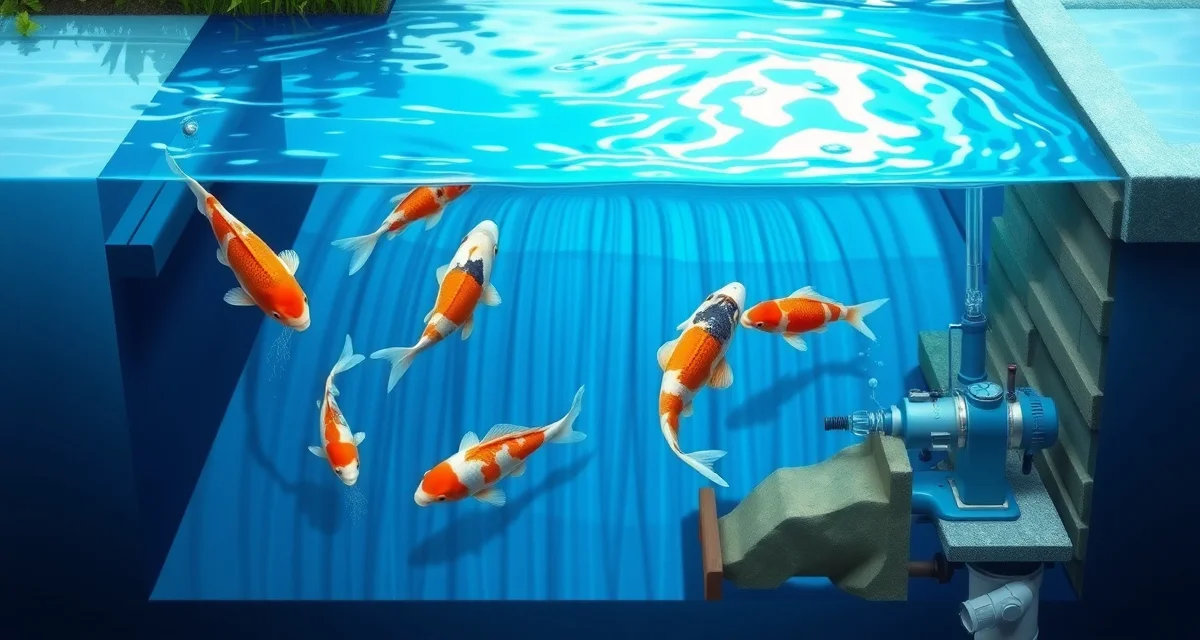
Koi Pond Design: Planning Your Pond from Scratch
Poorly designed koi ponds cost an average of 50% more to maintain than well-designed ones. That figure shows up in electricity bills, water treatment chemicals, veterinary costs, and fish replacement. It also shows up in time: hours every week of manual maintenance that a better-designed system would have handled automatically.
The decisions you make before a single shovel of earth is moved determine how your pond performs for the next 20 years. This guide covers what experienced koi keepers wish they'd known at the planning stage.
TL;DR
- The decisions you make before a single shovel of earth is moved determine how your pond performs for the next 20 years.
- A 2-foot pond in summer sun can swing 15°F in a day.
- A 4-foot pond at the same location might swing 5°F.
- A minimum depth of 4 feet allows koi to sit below the ice line in most temperate climates.
- A 4+ foot pond edge makes predation significantly more difficult.
- Plan for a minimum of 4 feet throughout the pond, not just at a single point.
- A gradual slope toward bottom drains (typically 1:10 to 1:20) ensures solid waste moves to where it can be removed, rather than sitting on a flat bottom and decomposing.
Size: Bigger Than You Think You Need
The single most common regret among koi hobbyists is not building the pond large enough. This applies almost universally.
Minimum recommendations exist for a reason: koi are large fish that produce significant waste. But minimums are starting points, not targets. A pond sized exactly to minimum recommendations leaves no margin for the inevitable expansion of your collection, the addition of larger fish, or the natural biological fluctuations that create spikes in ammonia and waste load.
Practical sizing guidelines:
- Plan for at least 1,000 gallons for a starter koi pond, with 2,000-3,000 gallons as a more realistic minimum for a serious setup
- Each adult koi (over 24 inches) needs at minimum 250 gallons of well-filtered water, but 500 gallons per fish is a more comfortable target
- Factor in grow-out: tosai purchased at 6 inches will be 24+ inches in 2-3 years, dramatically increasing their bioload
- Add 20-30% to whatever size you're planning, because you will want more fish
The KoiQuanta pond creation wizard captures pond volume as the baseline for every dose calculation and stocking density recommendation. Getting this number right from the start matters to everything that follows.
Depth: Non-Negotiable Minimums
Depth matters for several distinct reasons:
Temperature stability. Deep water buffers temperature swings that stress fish. A 2-foot pond in summer sun can swing 15°F in a day. A 4-foot pond at the same location might swing 5°F. Temperature stability supports koi immune function and feeding behavior.
Winter survival. In freezing climates, pond depth determines whether koi can survive winter without supplemental heating. A minimum depth of 4 feet allows koi to sit below the ice line in most temperate climates. Shallower ponds freeze solid and kill fish.
Koi comfort. Large koi (30+ inches) need depth to turn comfortably, hold position in current, and establish the behavioral territories that reduce stress.
Predator deterrence. Herons and raccoons work shallow water most effectively. A 4+ foot pond edge makes predation significantly more difficult.
Plan for a minimum of 4 feet throughout the pond, not just at a single point. Many hobbyists build ponds with deep center sections and shallow shelves; koi in stressed or ill health tend to seek depth, so the entire footprint should accommodate this.
Shape and Current Flow
Pond shape affects water circulation, dead zones, and the efficiency of your filtration system. The goal is a shape that encourages all pond water to pass through filtration regularly, without creating corners or bays where water sits stagnant.
Oval and kidney shapes are well-tested options that create natural circulation patterns when pumps are positioned correctly. Avoid sharp corners, which accumulate debris and create low-oxygen zones.
Bottom slope should direct waste toward collection points. A gradual slope toward bottom drains (typically 1:10 to 1:20) ensures solid waste moves to where it can be removed, rather than sitting on a flat bottom and decomposing.
Current placement matters. Positioning your return flow to create a circular current that sweeps the entire pond surface is more effective than directing flow straight into the filter intake. This brings floating debris and oxygenates the water while creating the flow patterns koi prefer.
Bottom Drains: The Foundation of Water Quality
If you're building a pond and not including at least one bottom drain, you're making a costly mistake. Bottom drains are the single most important koi pond water quality tracker management feature in a koi pond.
A properly installed bottom drain connects to your filter system and continuously removes settled waste from the lowest point of the pond. Without one, waste accumulates on the bottom and decomposes, driving ammonia, organic load, and hydrogen sulfide production.
Bottom drain guidelines:
- One bottom drain per 10,000-15,000 gallons is a common rule of thumb
- Position drains at the lowest point of each pond section
- Install anti-vortex covers to prevent fish ingestion
- Pipe diameter should accommodate your filter system's flow rate without restriction
- Consider gravity-fed versus pump-fed configurations based on your site
Retrofitting bottom drains into an existing pond is possible but disruptive and expensive. Getting them in during initial construction is dramatically easier.
Filtration: The Heart of the System
Koi pond filtration does three things: mechanical removal of solid waste, biological conversion of ammonia to nitrite to nitrate, and (in most systems) UV sterilization of pathogens. Your filtration system needs to handle all three adequately for your stocking density.
Mechanical filtration comes first in the flow sequence. Vortex chambers, drum filters, and settlement chambers all serve to remove solid particles before they enter the biological filtration stage. Allowing solids into the biological filter clogs it and reduces efficiency.
Biological filtration provides surface area for nitrifying bacteria. Moving bed filter (MBBF) systems, static media filters, and matala filter systems are all popular choices. The key metric is media surface area relative to bioload. Undersized biological filtration is the most common cause of persistent ammonia and nitrite problems.
UV sterilization kills free-swimming pathogens and controls suspended algae (green water). UV units need to be sized for your pond volume with appropriate flow rates. Too fast a flow through the UV chamber reduces contact time and effectiveness.
Total system turnover rate is the measure of how often all pond water passes through filtration. A minimum of once per hour is typically recommended for koi ponds; twice per hour or more is better for heavily stocked ponds.
Aeration: Oxygen Is Not Optional
Koi are high-oxygen-demand fish. Aeration requirements increase with water temperature (warmer water holds less oxygen), stocking density, and organic load. The koi pond filtration guide covers aeration equipment in detail, but the design principle is to plan for significantly more aeration capacity than you think you need.
Air pumps fail. Hot weather reduces dissolved oxygen. Disease events create periods of elevated respiration. Design in redundancy with backup aeration options, and position aeration equipment to circulate water through the entire pond volume, not just one corner.
Access and Maintenance Design
Ponds that are difficult to work around are maintained less frequently. This has direct consequences for fish health.
Bank stability should allow you to walk around the perimeter safely. Sloped grass banks are beautiful but make reaching the pond edge to observe fish, net individual animals, or perform maintenance awkward. Flat stone or paved edging around at least part of the perimeter is practical.
Equipment access means being able to reach pumps, filter systems, and UV units without acrobatics. Build your filter housing and equipment shelter with maintenance access in mind. A pump you can't reach easily is a pump that gets serviced less often.
Electrical and plumbing planning should be done before concrete is poured or liners laid. Conduits for electrical runs and plumbing sleeves are inexpensive to include in construction and extremely expensive to retrofit.
Quarantine Infrastructure
Many pond builders add a quarantine facility as an afterthought. Building it in from the start, or at minimum designing space for it, is far better planning.
A dedicated quarantine tank, ideally with its own separate water supply and drainage, is a fundamental part of responsible koi management. Size it at a minimum of 300-500 gallons, with independent aeration and filtration.
Site Selection
Before you finalize any design decisions, consider the site carefully:
Sunlight exposure affects algae pressure and temperature stability. Partial shade from a structure (not deciduous trees whose leaves will fall into the water) can reduce summer heat load and algae growth.
Tree proximity determines whether you'll be removing leaves, seeds, and debris from your pond continuously. Deciduous trees within 20 feet of a pond will add significant maintenance burden and tannin-related pH management challenges.
Ground stability determines whether the pond will move. Expansive soils, former fill areas, and sites with high water tables all require special consideration for pond construction.
Drainage from surrounding areas needs to go away from, not toward, your pond. Lawn fertilizer runoff, road salt drainage, and pesticide-treated turf all represent contamination risks.
The KoiQuanta Connection
Your pond design decisions live in your KoiQuanta pond profile. Volume, depth, liner type, filtration configuration, and bottom drain status all become reference points for parameter interpretation, dose calculations, and maintenance scheduling.
A well-documented pond profile means your stocking density alerts are accurate, your dose calculations are correct, and your maintenance reminders are based on your actual system rather than generic defaults. The investment in accurate setup pays dividends for the life of the pond.
The koi pond setup guide covers the initial configuration process, including how to enter your pond parameters and establish your first water quality baseline in KoiQuanta.
Frequently Asked Questions
What shape is best for a koi pond?
Oval and kidney shapes work well because they create natural circular flow patterns that improve filtration efficiency and reduce dead zones. The most important design principle isn't the shape itself but ensuring the shape avoids sharp corners where waste accumulates and allows pump placement to create a sweeping current across the entire pond surface. Whatever shape you choose, the bottom should slope toward bottom drain locations to direct settled waste for removal. Avoid complex multi-bay designs where water circulation between sections is poor.
How do I design koi pond filtration?
A complete koi pond filtration system has three stages in sequence: mechanical filtration to remove solid particles, biological filtration to convert ammonia through the nitrogen cycle, and UV sterilization to manage pathogens and green water. Size your mechanical filtration generously - it protects the biological stage from clogging. Size your biological filtration for at least your current stocking density plus 50% growth capacity. Choose UV systems rated for twice your pond volume at your actual pump flow rate. The total system turnover rate should be at least once per hour, ideally twice.
How do I plan for future pond expansion?
Build in larger filtration capacity than your current stocking requires. Run plumbing with additional valves and connection points for future system additions. If budget allows, oversize your electrical service to the pond area. Design the physical footprint of the pond with potential extension in mind, as a rectangular pond can often be extended more easily than a complex irregular shape. Most importantly, document your current pond's complete specifications in KoiQuanta now, so that when you plan an expansion you have accurate baseline data to work from rather than guessing at volumes and flow rates.
What is Koi Pond Design: Planning Your Pond from Scratch?
Koi Pond Design: Planning Your Pond from Scratch is a comprehensive guide covering every critical decision you need to make before building a koi pond. It addresses pond size, depth, filtration, placement, and slope to help you avoid costly mistakes. Poorly designed ponds cost an average of 50% more to maintain than well-designed ones, so this guide focuses on upfront planning that saves money and time over the pond's 20-year lifespan.
How much does Koi Pond Design: Planning Your Pond from Scratch cost?
Building a well-designed koi pond from scratch typically costs more upfront than a minimally planned one, but saves significantly over time. Poorly designed ponds cost an average of 50% more to maintain due to higher electricity, water treatment chemicals, veterinary bills, and fish replacement costs. Investing in proper depth, filtration, and drainage during planning can eliminate years of expensive reactive maintenance and reduce weekly hands-on time substantially.
How does Koi Pond Design: Planning Your Pond from Scratch work?
Koi pond design works by making deliberate decisions before construction begins—choosing the right size, minimum 4-foot depth, proper bottom drain slope (1:10 to 1:20), and appropriate filtration. These choices determine water temperature stability, waste removal efficiency, predator resistance, and seasonal survival. A well-designed system handles maintenance automatically rather than requiring constant manual intervention, letting filtration, gravity, and proper geometry do the heavy lifting.
What are the benefits of Koi Pond Design: Planning Your Pond from Scratch?
A properly planned koi pond delivers stable water temperatures, efficient waste removal, and natural predator deterrence. A 4-foot depth reduces daily temperature swings from 15°F down to around 5°F, protecting fish from thermal stress. Correct drain slopes move solid waste automatically to collection points. A 4-foot-plus pond edge discourages herons and other predators. Together, these design choices reduce chemical use, fish loss, and maintenance hours significantly.
Who needs Koi Pond Design: Planning Your Pond from Scratch?
Anyone planning to build a koi pond benefits from this guide—whether a first-time hobbyist or an experienced keeper starting a new build. It is especially valuable for those who have already owned a poorly performing pond and want to avoid repeating costly mistakes. Backyard pond builders, landscape contractors working with koi clients, and anyone designing a system intended to last 20 or more years will find it directly applicable.
How long does Koi Pond Design: Planning Your Pond from Scratch take?
The planning phase itself can be completed in days or weeks, but the decisions made during that period shape pond performance for 20 years. Rushing planning to start digging faster is the most expensive mistake koi keepers make. Taking extra time to finalize depth, size, filtration type, and pond placement before breaking ground prevents expensive retrofits—adding depth or drainage after construction is far more disruptive and costly than getting it right initially.
What should I look for when choosing Koi Pond Design: Planning Your Pond from Scratch?
Look for guidance that addresses minimum depth (at least 4 feet throughout, not just at one point), proper bottom drain slope for waste removal, and realistic sizing advice. Good koi pond design guidance acknowledges that most hobbyists build too small and too shallow. Prioritize resources that explain the why behind each recommendation—understanding that depth controls temperature swings and predator access helps you make better decisions when your specific site requires trade-offs.
Is Koi Pond Design: Planning Your Pond from Scratch worth it?
Yes—proper koi pond planning is almost always worth the additional upfront investment and time. The 50% maintenance cost premium on poorly designed ponds accumulates every single year. Over a 20-year pond lifespan, the savings in electricity, chemicals, vet costs, and replacement fish far exceed any extra planning or construction cost. Beyond finances, a well-designed pond requires less weekly labor and produces healthier, longer-lived fish, making the hobby genuinely enjoyable rather than frustrating.
Related Articles
Sources
- Associated Koi Clubs of America (AKCA)
- Koi Organisation International (KOI)
- University of Florida IFAS Extension Aquaculture Program
- Fish Vet Group
- Water Quality Association