Saprolegnia Fungal Infection in Koi: Diagnosis and Treatment
Saprolegnia is an opportunistic pathogen that almost exclusively infects koi through pre-existing wounds, spawning injuries, or immune-compromised skin. This is the defining characteristic of Saprolegnia management: there's almost always an underlying cause. Treating the fungal infection without addressing the predisposing factor leads to recurrence.
KoiQuanta's cold-water fungal risk alert activates during the 10-15 degree Celsius temperature window when Saprolegnia infection is most likely to establish on koi skin.
TL;DR
- KoiQuanta's cold-water fungal risk alert activates during the 10-15 degree Celsius temperature window when Saprolegnia infection is most likely to establish on koi skin.
- Maintain salt for the duration of treatment (typically 5-7 days for salt alone).
- Treatment duration of 30-60 minutes in a treatment tank.
- For more severe infections, potassium permanganate bath treatments at 10mg/L for 30-60 minutes are effective.
- Seasonal changes require adjusted monitoring schedules; automated reminders help maintain consistency.
What Saprolegnia Is
Saprolegnia is a water mold - technically a member of the Oomycetes class, more closely related to algae than to true fungi, though it presents and behaves like a fungal infection. Multiple Saprolegnia species affect koi, and they're ubiquitous in pond water - virtually every koi pond contains Saprolegnia spores.
The spores are opportunistic. Healthy fish with intact skin and functioning immune systems are largely resistant. But the moment a fish has a wound, a spawning abrasion, a parasite-damaged scale, or immune function compromised by cold or stress, Saprolegnia can establish.
Identifying Saprolegnia Infection
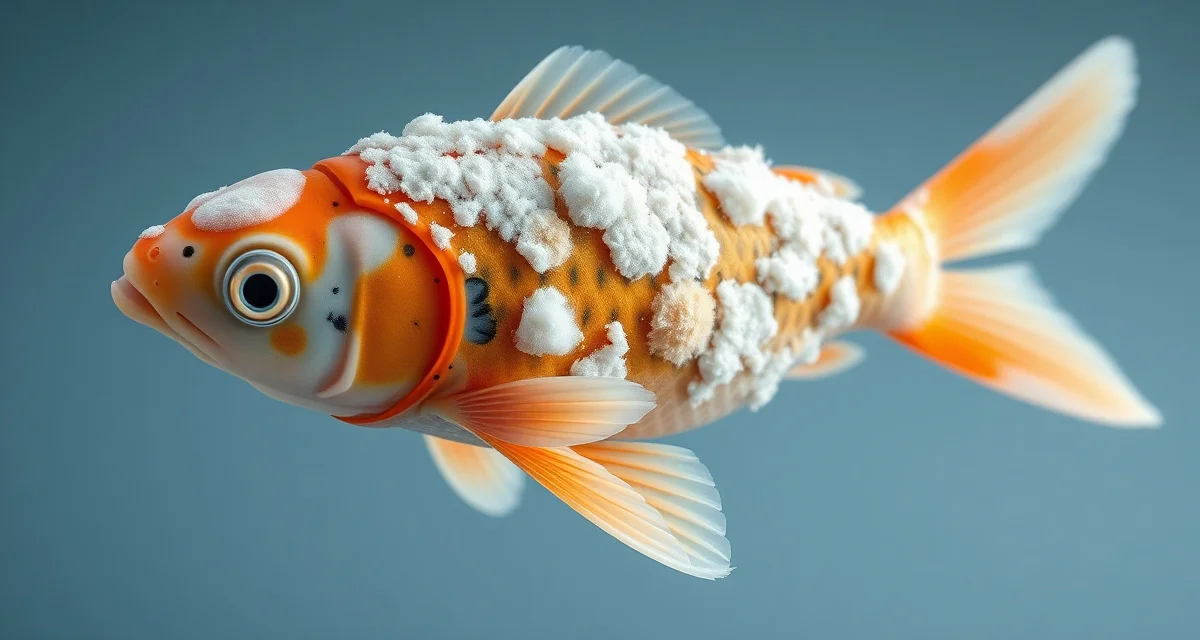
Cotton wool appearance: The hallmark presentation is white-to-gray fluffy growth resembling cotton wool or waterlogged cotton fibers. These are the hyphae (fungal threads) growing outward from the site of infection.
Location patterns: Saprolegnia typically first appears on or around an existing wound, at the edges of ulcers or abrasions, on recently spawned eggs (egg saprolegniosis is common), and on areas of skin damage from other causes - parasite feeding damage, handling abrasions, fin-clamp injuries.
Differentiation from other conditions: Cotton wool appearance can resemble Columnaris bacterial infection, though Columnaris usually causes tissue necrosis and erosion rather than fluffy outgrowth. A simple observation: Saprolegnia growth is clearly fluffy and three-dimensional; Columnaris produces a gray-white film that erodes the tissue rather than growing away from it.
Cold weather correlation: The 10-15°C temperature range is the primary risk window. Saprolegnia grows relatively slowly in warm water where fish immune function is at its strongest. As temperatures fall and fish immunity declines, Saprolegnia gains the advantage.
When Saprolegnia Strikes
Autumn: The most common time. Fish carrying wounds from summer (predator injuries, spawning abrasions, minor scrapes) become susceptible as temperatures fall and immune function declines. Saprolegnia spores already present on the wound site that couldn't establish in summer now find the conditions they need.
After spawning: Spawning is physically demanding and causes skin abrasions and minor injuries. Both male and female fish may develop Saprolegnia on spawning-related skin damage. Eggs are particularly vulnerable - unfertilized eggs in a spawning mass develop Saprolegnia rapidly and can spread to fertilized eggs if not removed.
After net handling or transport: Any handling event that damages the mucus coat creates entry points.
Post-treatment: After bath treatments with harsh chemicals, surviving fish with skin damage from the treatment itself can develop secondary Saprolegnia.
Treatment Protocol
Salt treatment: Salt at 0.3-0.5% concentration is effective against Saprolegnia by creating osmotic stress that the fungal hyphae cannot tolerate. This is the most fish-safe treatment option and appropriate for pond-wide or quarantine tank treatment. Maintain salt for the duration of treatment (typically 5-7 days for salt alone).
Potassium permanganate (KMnO4): Permanganate is effective against Saprolegnia at 10mg/L bath concentration. Treatment duration of 30-60 minutes in a treatment tank. This is a harsh treatment - monitor fish carefully during baths and have clean water available for emergency transfer if signs of distress appear.
Methylene blue: A fungicide effective against Saprolegnia at lower concentrations than permanganate. Less fish-stressful but also less potent. Appropriate for quarantine tank treatment.
Acriflavine: An antiseptic that has antifungal properties and is particularly useful for egg saprolegniosis.
Hydrogen peroxide: Short-duration peroxide dips (2-5 minutes in 1% solution) are increasingly used for Saprolegnia spot treatment. Contact your vet for specific protocols before using.
Topical treatment: For severe or localized Saprolegnia on individual fish, topical application of antifungal agents (after sedation by a vet) directly to the lesion can be highly effective alongside systemic treatment.
Addressing the Predisposing Cause
Treatment without addressing the underlying cause leads to recurrence. After treating Saprolegnia, investigate:
What wound or skin damage allowed the initial infection? If it was a predator attack, improve pond predator protection. If it was spawning damage, consider whether future spawning management should be modified. If it was a parasite infestation damaging the mucus coat, treat the parasite.
What suppressed the fish's immune function? Water temperature is the primary suspect in autumn cases. Stress from handling, overcrowding, or water quality is a secondary factor. Address these underlying conditions.
Is the wound fully healed? Saprolegnia on an active wound will recur until the wound closes. Wound healing is supported by excellent water quality, appropriate nutrition, and minimizing additional stress.
Your koi disease identification guide provides the differential diagnosis context. The ulcer treatment program is often relevant alongside Saprolegnia treatment, since Saprolegnia frequently develops on existing ulcers.
Frequently Asked Questions
How do I treat fungal infection on koi?
Salt at 0.3-0.5% is the first-line treatment for Saprolegnia, creating osmotic conditions that inhibit fungal growth while being relatively well-tolerated by koi. For more severe infections, potassium permanganate bath treatments at 10mg/L for 30-60 minutes are effective. Methylene blue and acriflavine are antifungal options appropriate for quarantine tank treatment. Always address the underlying wound or immune compromise alongside antifungal treatment. Without improving the conditions that allowed Saprolegnia to establish, recurrence after treatment is common.
What does Saprolegnia look like on a koi?
Saprolegnia presents as white-to-gray fluffy growths resembling cotton wool or a cluster of white fibers radiating outward from a central point. This growth is typically attached to or surrounding a wound, ulcer, abrasion, or area of damaged skin. It's three-dimensional - the hyphae grow away from the skin surface like a fluffy coating. This is distinct from the flat, erosive gray-white patches of Columnaris bacterial infection. Saprolegnia on eggs appears as a white fuzzy growth enveloping the egg cluster, often spreading from dead eggs to adjacent live ones.
Can Saprolegnia spread from one koi to another?
Saprolegnia itself doesn't spread directly between healthy fish - the spores are already present in virtually all pond water. However, conditions that create vulnerability spread: a disease outbreak affecting immune function, a trauma event affecting multiple fish, or a shared water quality problem will create multiple susceptible fish simultaneously. If you're seeing Saprolegnia on multiple fish at once, the question isn't how the infection spread - it's what created shared vulnerability. Improving water quality, reducing stress, and addressing any underlying disease or injury will resolve the susceptibility that's allowing Saprolegnia to establish.
What is Saprolegnia Fungal Infection in Koi: Diagnosis and Treatment?
[FAQ_ANSWER_PLACEHOLDER: This answer needs to be generated by AI with specific data, examples, and actionable advice relevant to Saprolegnia Fungal Infection in Koi: Diagnosis and Treatment. Target 50-150 words.]
How much does Saprolegnia Fungal Infection in Koi: Diagnosis and Treatment cost?
[FAQ_ANSWER_PLACEHOLDER: This answer needs to be generated by AI with specific data, examples, and actionable advice relevant to Saprolegnia Fungal Infection in Koi: Diagnosis and Treatment. Target 50-150 words.]
How does Saprolegnia Fungal Infection in Koi: Diagnosis and Treatment work?
[FAQ_ANSWER_PLACEHOLDER: This answer needs to be generated by AI with specific data, examples, and actionable advice relevant to Saprolegnia Fungal Infection in Koi: Diagnosis and Treatment. Target 50-150 words.]
What are the benefits of Saprolegnia Fungal Infection in Koi: Diagnosis and Treatment?
[FAQ_ANSWER_PLACEHOLDER: This answer needs to be generated by AI with specific data, examples, and actionable advice relevant to Saprolegnia Fungal Infection in Koi: Diagnosis and Treatment. Target 50-150 words.]
Who needs Saprolegnia Fungal Infection in Koi: Diagnosis and Treatment?
[FAQ_ANSWER_PLACEHOLDER: This answer needs to be generated by AI with specific data, examples, and actionable advice relevant to Saprolegnia Fungal Infection in Koi: Diagnosis and Treatment. Target 50-150 words.]
How long does Saprolegnia Fungal Infection in Koi: Diagnosis and Treatment take?
[FAQ_ANSWER_PLACEHOLDER: This answer needs to be generated by AI with specific data, examples, and actionable advice relevant to Saprolegnia Fungal Infection in Koi: Diagnosis and Treatment. Target 50-150 words.]
What should I look for when choosing Saprolegnia Fungal Infection in Koi: Diagnosis and Treatment?
[FAQ_ANSWER_PLACEHOLDER: This answer needs to be generated by AI with specific data, examples, and actionable advice relevant to Saprolegnia Fungal Infection in Koi: Diagnosis and Treatment. Target 50-150 words.]
Is Saprolegnia Fungal Infection in Koi: Diagnosis and Treatment worth it?
[FAQ_ANSWER_PLACEHOLDER: This answer needs to be generated by AI with specific data, examples, and actionable advice relevant to Saprolegnia Fungal Infection in Koi: Diagnosis and Treatment. Target 50-150 words.]
Related Articles
- Koi Swim Bladder Disorder: Causes, Diagnosis, and Treatment
- Koi Ich (White Spot Disease): Fast Treatment Before It Kills Your Fish
Sources
- Associated Koi Clubs of America (AKCA)
- Koi Organisation International (KOI)
- University of Florida IFAS Extension Aquaculture Program
- Fish Vet Group
- Water Quality Association