Koi Fungal Infections: Saprolegnia Treatment Guide
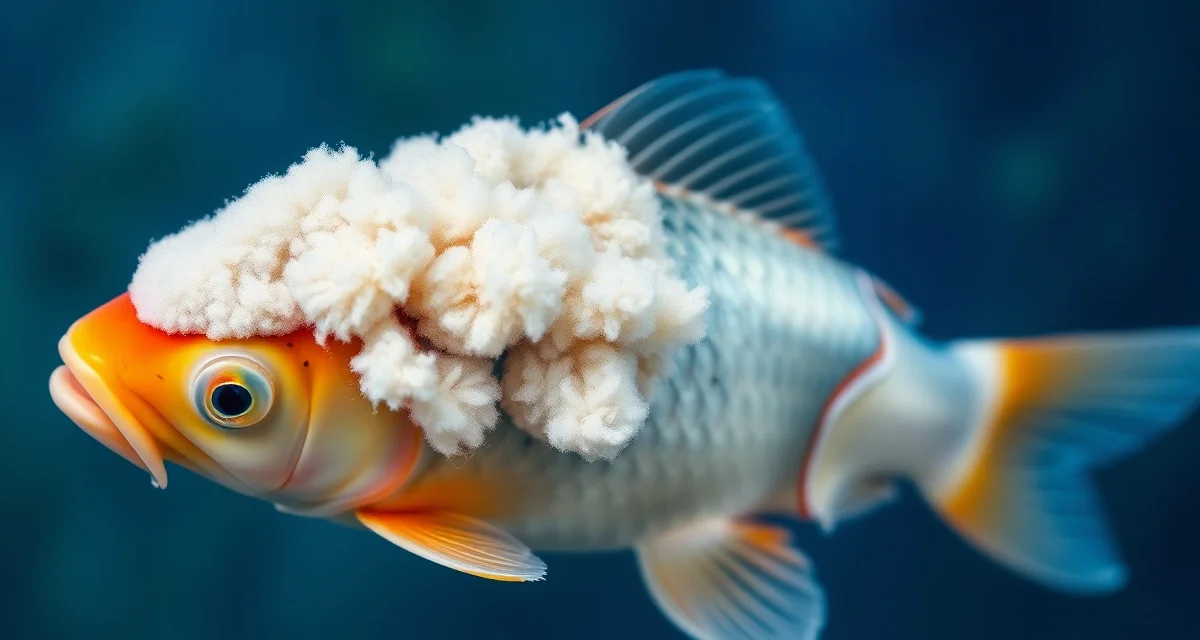
White, fluffy cotton-like growth on a koi. That's Saprolegnia. And it almost never appears on a healthy fish with undamaged skin.
This is the most important thing to understand about koi fungal infections: they're secondary. Saprolegnia doesn't invade intact healthy skin in fish living in appropriate conditions. It colonizes wounds, lesions, necrotic tissue, and skin that's already compromised by other disease or injury. Treating the fungus is part of the answer - finding and treating the underlying cause is the rest of it.
Treating Saprolegnia without addressing the primary cause leads to recurrence. Every time.
TL;DR
- When uncertain, check the lesion's growth rate - Columnaris in warm water expands dramatically in 24 hours; Saprolegnia grows more slowly.
- Repeat daily for the first 5–7 days, then every other day until the growth is resolved.
- Saprolegnia tolerates freshwater better than the mild salinity of 0.3–0.5% NaCl.
- For fish in a display pond with suspected or confirmed Saprolegnia, a short-term salt treatment at 0.3% is straightforward and safe for most pond plants (though some are salt-sensitive - research your plant species).
- If the fish is in a cold quarantine tank and has Saprolegnia, consider warming the tank to 20°C for the treatment period.
- It spreads rapidly across an egg batch - one infected egg releases spores that colonize adjacent eggs, and a 100% egg loss from Saprolegnia infection is not uncommon in unmanaged breeding.
- The most effective topical treatment is 3% hydrogen peroxide applied directly to the fungal growth with a cotton swab while the fish is briefly out of water - leave 30–60 seconds and return to the tank.
What Saprolegnia Looks Like
The characteristic presentation: white to gray, fluffy cotton-like growth, usually spreading outward from a central point (a wound, ulcer, or necrotic patch). The growth may be dense and three-dimensional in well-established infections.
Under magnification: a mat of fungal hyphae (thread-like filaments) with sporangia (spore sacs) at the ends.
Common locations:
- On ulcer margins or within open ulcer wounds
- At anchor worm or fish lice attachment sites
- On eggs (egg Saprolegnia affects entire egg masses in breeding)
- On fins, particularly where fin rot has exposed underlying tissue
- After injury (transport damage, predator wounds, rough handling)
Distinguishing from Columnaris:
Columnaris lesions are flat and dry-looking; Saprolegnia has genuine three-dimensional fluffy growth. Columnaris is a medical emergency with hours-to-days mortality potential; Saprolegnia, while serious, typically progresses over days to weeks. When uncertain, check the lesion's growth rate - Columnaris in warm water expands dramatically in 24 hours; Saprolegnia grows more slowly.
Common Primary Causes of Saprolegnia
Bacterial ulcers (Aeromonas): The most common primary cause. A bacterial ulcer that isn't being treated, or an ulcer that's partially treated with antibiotics but the wound isn't being kept clean, becomes a perfect Saprolegnia substrate.
Parasitic injuries: Anchor worm attachment sites, heavy fish lice infestations, and flashing injuries from heavy parasite burdens create micro-wounds that Saprolegnia colonizes.
Transport injuries: Fin damage, scale loss, and minor skin abrasions during shipping are frequent Saprolegnia triggers.
Spawning injuries: Female koi pursued aggressively during spawning sustain significant fin and body injuries. Post-spawn Saprolegnia is common.
Temperature stress: Cold water below 10°C suppresses the immune system. Fish in cold conditions can develop Saprolegnia on wounds that would heal without issue in warmer, immunocompetent conditions.
Poor water quality: Elevated ammonia, low dissolved oxygen, or pH instability compromises skin integrity and immune function, making even minor abrasions susceptible to Saprolegnia colonization.
Identifying the Primary Cause
Before treating the fungus, examine the fish closely:
- What's under the Saprolegnia? Use a gentle rinse of clean water over the growth to see the tissue underneath. There's almost always a wound, ulcer, lesion, or necrotic patch.
- Are other fish affected? If only one fish shows Saprolegnia, look for individual injury. If multiple fish show it, check water quality - a pond-wide parameter problem can trigger widespread Saprolegnia.
- What's the water quality? Test ammonia, nitrite, pH, temperature, and dissolved oxygen. A Saprolegnia event in a pond with elevated ammonia and low DO is a water quality problem first.
- Has the fish had any recent stressors? New addition, show return, handling, spawning, predator attack?
Document the primary cause in KoiQuanta alongside the fungal treatment - this links the fungal event to its trigger and helps identify patterns over time.
Treatment Protocol
Step 1: Topical Treatment Out of Water
For visible Saprolegnia on accessible surfaces, direct topical treatment is the fastest and most effective approach.
Hydrogen peroxide (3% pharmaceutical grade): Apply directly to the fungal growth using a cotton swab or soft gauze while the fish is briefly out of water. Leave for 30–60 seconds. The peroxide destroys fungal hyphae on contact - you'll see the affected tissue fizz slightly. Rinse with dechlorinated water and return the fish to the tank.
Repeat daily for the first 5–7 days, then every other day until the growth is resolved.
Povidone-iodine (dilute): 1 part iodine to 10 parts water applied to the affected area. Less immediately destructive to fungal tissue than peroxide but provides good broad-spectrum antimicrobial coverage at the wound site.
Proprietary koi wound sealants: Products like Koi Care Keeper and similar preparations can be applied to wound sites to create a physical barrier that excludes Saprolegnia while the wound heals underneath.
Step 2: Salt Treatment
Salt at 0.3–0.5% in the quarantine or treatment tank provides antifungal action at the fish's skin surface. Saprolegnia tolerates freshwater better than the mild salinity of 0.3–0.5% NaCl.
For fish in a display pond with suspected or confirmed Saprolegnia, a short-term salt treatment at 0.3% is straightforward and safe for most pond plants (though some are salt-sensitive - research your plant species).
Step 3: Address the Primary Cause
This is the decisive step.
- Bacterial ulcer present? Start antibiotic treatment simultaneously with antifungal management. The Saprolegnia won't resolve if the ulcer that's feeding it isn't being treated.
- Water quality issue? Fix it. Large water change, filter assessment, aeration improvement - whatever is needed.
- Parasites causing skin wounds? Treat the parasites.
- Post-spawning injuries? Move the female to a quiet, low-stress recovery environment and run salt and wound care.
Step 4: Improve Water Quality as a Foundation
Saprolegnia thrives in poor water conditions. Regardless of the primary cause, improving water quality during treatment supports faster resolution:
- Ammonia: 0 mg/L
- Dissolved oxygen: 7+ mg/L
- Temperature: 20–24°C is ideal for immune function during recovery
- pH: stable at 7.5–8.0
Cold water (below 15°C) slows immune function and slows wound healing. If the fish is in a cold quarantine tank and has Saprolegnia, consider warming the tank to 20°C for the treatment period.
Formalin as a Water Treatment
Formalin at 15–25 mg/L effectively kills Saprolegnia in the water column and on the fish's skin surface. It's particularly useful when Saprolegnia is widespread across the body rather than isolated to one wound.
Important caveats:
- Run maximum aeration during formalin treatment - significant oxygen depletion risk
- Reduce dose by 25–50% in warm water above 70°F (21°C)
- Don't use in water with high organic load (parasites, debris) without water changes first
- Monitor dissolved oxygen every 30 minutes during treatment
Formalin is effective but carries more risk than topical hydrogen peroxide for localized infections. Reserve it for widespread or treatment-resistant Saprolegnia.
Egg Saprolegnia in Breeding Operations
Saprolegnia on koi eggs is a different management challenge. It spreads rapidly across an egg batch - one infected egg releases spores that colonize adjacent eggs, and a 100% egg loss from Saprolegnia infection is not uncommon in unmanaged breeding.
For breeding operations:
- Remove unfertilized eggs immediately (white, opaque) - they become Saprolegnia substrates that infect viable eggs
- Methylene blue at 2 mg/L in the hatching tank provides antifungal protection without harming developing embryos
- Gentle water flow over the eggs prevents the stagnant water conditions that favor Saprolegnia growth
- Separate egg batches from adult fish to prevent pathogen exposure
Related Articles
- Koi Bacterial Infection Treatment Tracker: Dose, Log, Recover
- Acriflavine Treatment for Koi: Fungal and Bacterial Protocol
- Koi Bacterial Infection Prevention: Water Quality and Stress Management
- Columnaris (Saddleback Disease) in Koi: Treatment Guide
FAQ
What does fungal infection look like on a koi?
Saprolegnia fungal infection appears as white to gray, cotton-like fluffy growth on the fish's skin, fins, or in open wounds. It's distinctly three-dimensional - unlike bacterial lesions which tend to be flat and dense. The growth typically spreads outward from a central point (a wound or necrotic area). Eggs affected by Saprolegnia show white, cloudy growth spreading across the egg mass.
What treats fungal infection in koi?
The most effective topical treatment is 3% hydrogen peroxide applied directly to the fungal growth with a cotton swab while the fish is briefly out of water - leave 30–60 seconds and return to the tank. Daily treatment for 5–7 days. In-water treatment with formalin at 15–25 mg/L kills Saprolegnia throughout the tank. Salt at 0.3–0.5% provides antifungal support. Critically, the underlying wound or disease that allowed Saprolegnia to establish must also be treated.
Can salt treat fungal infection on koi?
Salt at 0.3–0.5% has antifungal properties at the fish's skin surface and is a useful supportive treatment during Saprolegnia management. However, salt alone is typically insufficient to resolve an established Saprolegnia infection, particularly if the underlying wound or disease trigger isn't also addressed. Use salt as one component of a broader treatment protocol alongside direct topical treatment and addressing the primary cause of the fungal infection.
What is Koi Fungal Infections: Saprolegnia Treatment Guide?
KoiQuanta's Saprolegnia Treatment Guide is a practical resource for koi keepers dealing with fungal infections caused by the water mold Saprolegnia. It explains why the infection occurs, how to identify it by its white cotton-like growth, and—critically—why treating only the fungus without addressing the underlying wound or disease always leads to recurrence. The guide covers salt treatment, temperature adjustment, and treatment schedules.
How much does Koi Fungal Infections: Saprolegnia Treatment Guide cost?
The guide is free editorial content published on KoiQuanta.com. There is no purchase required. It covers diagnosis, treatment protocols, and prevention strategies at no cost to readers. Any products mentioned for treatment—such as aquarium salt or antifungal medications—carry their own costs, but the guidance itself is freely accessible to all koi keepers.
How does Koi Fungal Infections: Saprolegnia Treatment Guide work?
The guide works by first helping you correctly identify Saprolegnia versus look-alike conditions like Columnaris (tip: Columnaris spreads much faster in warm water). It then walks you through a treatment protocol: salt at 0.3–0.5% NaCl to inhibit fungal growth, daily treatment for the first 5–7 days, then every other day until resolved, plus warming cold quarantine tanks to around 20°C to support recovery.
What are the benefits of Koi Fungal Infections: Saprolegnia Treatment Guide?
The key benefit is understanding that Saprolegnia is a secondary infection—it colonizes damaged or compromised skin, not healthy fish. By treating both the fungus and the root cause (injury, bacterial infection, poor water quality), you break the cycle of recurrence. The guide gives you a clear, actionable framework rather than a surface-level fix that leaves your koi vulnerable to repeat outbreaks.
Who needs Koi Fungal Infections: Saprolegnia Treatment Guide?
Any koi keeper who spots white, fluffy growths on their fish needs this guide. It's especially relevant if you've treated fungal infections before only to see them return—a sign the underlying cause was missed. It's also useful for pond owners considering salt treatment, quarantine tank managers, and anyone trying to distinguish Saprolegnia from other conditions like Columnaris before starting treatment.
Sources
- Associated Koi Clubs of America (AKCA)
- Koi Organisation International (KOI)
- University of Florida IFAS Extension Aquaculture Program
- Fish Vet Group
- Water Quality Association