Koi Swim Bladder Disorder: Causes, Diagnosis, and Treatment
True primary swim bladder disease in koi is relatively rare - most buoyancy problems are secondary to systemic bacterial infection requiring antibiotic treatment. This is the most important thing to understand about koi buoyancy problems: the swim bladder itself is usually fine. What's wrong is something else that's affecting buoyancy as a secondary symptom.
KoiQuanta's swim bladder differential diagnosis distinguishes between primary buoyancy disorder, systemic bacterial infection, and gas bubble disease.
TL;DR
- If bacterial disease is possible - treat it first and observe buoyancy over 5-7 days of antibiotic treatment.
- If bacterial disease is possible, start antibiotic treatment and monitor for improvement over 5-7 days.
- If bacterial disease is ruled out, try fasting for 2-3 days followed by high-fiber foods (blanched peas) and temperature optimization.
- Early detection based on parameter trends reduces treatment costs and fish stress.
- Seasonal changes require adjusted monitoring schedules; automated reminders help maintain consistency.
Understanding the Swim Bladder
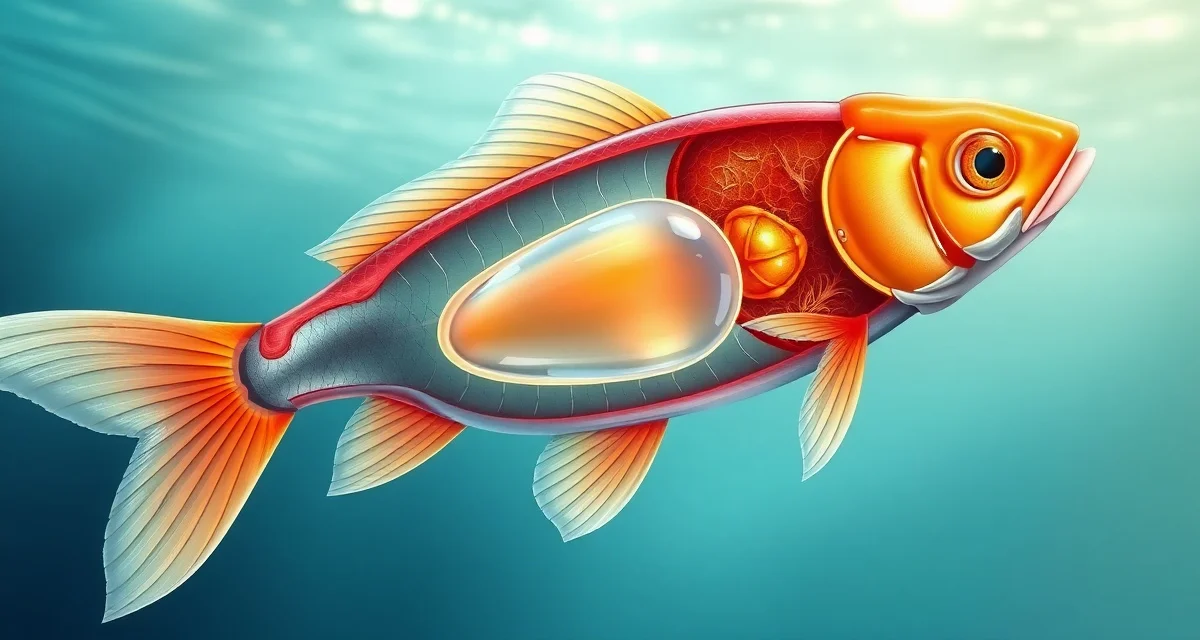
The swim bladder is a gas-filled organ in the dorsal body cavity that provides neutral buoyancy without continuous swimming effort. Koi control buoyancy by adjusting the amount of gas in the swim bladder through physiological gas secretion and reabsorption.
Anatomy: Koi (like most cyprinids) have a two-chambered swim bladder. The anterior chamber is connected to the gut via the pneumatic duct. The posterior chamber is the main gas-holding structure.
Normal function: A fish in healthy buoyancy can hold any position in the water column without effort. It can swim comfortably at any depth.
Buoyancy dysfunction: A fish with buoyancy problems floats at the surface, sinks to the bottom, or lists to one side. These are symptoms, not a diagnosis.
The Differential Diagnosis
The most common causes of buoyancy problems in koi:
1. Systemic Bacterial Infection (Dropsy / Hemorrhagic Ascites)
When Aeromonas or other bacteria cause systemic hemorrhagic disease, fluid accumulates in the body cavity (ascites). This fluid accumulation changes the fish's buoyancy. The fish often shows scale lifting (the classic "pinecone" or "pine cone" appearance of dropsy) because of the pressure of accumulated fluid.
This is the most common cause of sudden buoyancy loss in koi and must be treated aggressively with appropriate antibiotics. Treating "swim bladder disease" with dietary changes and environmental adjustment while the fish has systemic Aeromonas infection is ineffective and allows the infection to progress.
Signs pointing to bacterial cause: Scale lifting, hemorrhagic lesions, exophthalmos, recent wound or disease history, other fish showing signs of bacterial disease.
2. Overinflated Swim Bladder (Positive Buoyancy - Floating)
True primary positive buoyancy disorders can result from:
- Constipation or intestinal impaction causing pressure on the swim bladder
- Fatty degeneration of the swim bladder wall (obese fish)
- Developmental abnormality
- Gas-producing intestinal bacteria causing gas accumulation
Signs pointing to primary swim bladder dysfunction: Fish has been floating for weeks without scale lifting or other disease signs, fish is otherwise alert and feeding, water quality is normal, no other disease signs in the pond.
3. Gas Bubble Disease
Gas supersaturation of the water can cause gas bubbles to form in the fish's tissues - in the bloodstream, under the skin, and in the eyes. This presents as visible bubbles (particularly in the skin and eyes of affected fish) and buoyancy problems.
Gas supersaturation occurs when water is oversaturated with dissolved gases, typically due to deep well water being pumped directly to the pond or certain pressure changes in the water supply. Aeration typically corrects mild cases.
4. Developmental or Traumatic Swim Bladder Injury
A congenital abnormality or trauma (spawning injury, predator attack) can damage the swim bladder directly. These cases typically have a sudden onset following a specific event and don't respond to bacterial treatment.
Diagnostic Approach
Step 1: Rule out bacterial infection first. This is the most important step. Check for scale lifting, hemorrhagic lesions, eye changes, and recent health events. Test water quality for ammonia, nitrite, and pH. Check treatment history.
If bacterial disease is possible - treat it first and observe buoyancy over 5-7 days of antibiotic treatment.
Step 2: Rule out gas bubble disease. Check for visible bubbles in the skin and eyes. If your water supply is ground water, check for dissolved gas supersaturation by collecting water in a sealed container and observing for bubble formation.
Step 3: Assess feeding and stool. A constipated fish with buoyancy problems may benefit from fasting and dietary intervention. Soak food or feed peas to provide additional fiber.
Step 4: Physical examination. Assess body condition, symmetry, and any visible abnormalities. A fish that's floating on one side consistently may have a ruptured or non-functional posterior chamber on one side.
Step 5: Veterinary assessment. For ongoing buoyancy problems in a valuable fish, a vet can perform ultrasound examination of the swim bladder and body cavity to assess gas content, fluid accumulation, and structural abnormality.
Treatment Options
For bacterial secondary buoyancy disorder: Treat the underlying bacterial infection aggressively with appropriate antibiotics. As infection resolves and ascites drains, buoyancy often normalizes. This is the most productive treatment pathway for the majority of buoyancy problems.
For primary swim bladder disorder: Dietary management - fasting for 2-3 days followed by high-fiber foods (blanched peas, gel diet); correction of water temperature if outside optimal range; reduction of feeding rate and food quality if obesity is suspected.
For gas bubble disease: Vigorous aeration typically resolves mild cases. For water supply issues, a degassing system or allowing water to aerate before adding to the pond is required.
Swim bladder aspiration: A vet can aspirate excess gas from the posterior chamber through a needle under anesthesia. This provides immediate buoyancy correction but doesn't address underlying causes - it must be combined with treatment of the root problem.
Your koi swimming sideways guide covers the immediate assessment of acute buoyancy events. The bacterial infection treatment tracker manages antibiotic treatment when infection is the cause.
Frequently Asked Questions
What causes swim bladder disease in koi?
True primary swim bladder disease in koi - where the organ itself is dysfunctional - is caused by constipation or intestinal impaction, fatty degeneration of the swim bladder wall in obese fish, developmental abnormalities, or direct trauma. However, most koi buoyancy problems are secondary to systemic bacterial infection causing fluid accumulation in the body cavity (ascites/dropsy). Gas bubble disease from water supersaturation is another distinct cause. Accurate diagnosis of the underlying cause determines the appropriate treatment - treating all buoyancy problems as "swim bladder disease" misses the majority of cases.
Can koi recover from swim bladder disease without treatment?
If the underlying cause is mild constipation, fasting and dietary intervention may resolve the problem without medical treatment. If the cause is systemic bacterial infection (the most common cause), the prognosis without antibiotic treatment is poor - the infection will progress and the fish will die without treatment. Gas bubble disease from mild water supersaturation often improves with vigorous aeration. True primary swim bladder disorders may be permanent in some cases, particularly if the underlying cause is structural. The prognosis depends heavily on accurate diagnosis and addressing the root cause.
How do I treat koi with buoyancy problems?
Start by ruling out the most common cause: systemic bacterial infection. Check for scale lifting, hemorrhagic lesions, and other bacterial signs. Test water quality. If bacterial disease is possible, start antibiotic treatment and monitor for improvement over 5-7 days. If bacterial disease is ruled out, try fasting for 2-3 days followed by high-fiber foods (blanched peas) and temperature optimization. Consult a fish vet for ongoing buoyancy problems in valuable fish - ultrasound examination can identify the specific structural problem. Swim bladder aspiration under veterinary supervision can provide temporary buoyancy correction while the underlying cause is treated.
What is Koi Swim Bladder Disorder: Causes, Diagnosis, and Treatment?
[FAQ_ANSWER_PLACEHOLDER: This answer needs to be generated by AI with specific data, examples, and actionable advice relevant to Koi Swim Bladder Disorder: Causes, Diagnosis, and Treatment. Target 50-150 words.]
How much does Koi Swim Bladder Disorder: Causes, Diagnosis, and Treatment cost?
[FAQ_ANSWER_PLACEHOLDER: This answer needs to be generated by AI with specific data, examples, and actionable advice relevant to Koi Swim Bladder Disorder: Causes, Diagnosis, and Treatment. Target 50-150 words.]
How does Koi Swim Bladder Disorder: Causes, Diagnosis, and Treatment work?
[FAQ_ANSWER_PLACEHOLDER: This answer needs to be generated by AI with specific data, examples, and actionable advice relevant to Koi Swim Bladder Disorder: Causes, Diagnosis, and Treatment. Target 50-150 words.]
What are the benefits of Koi Swim Bladder Disorder: Causes, Diagnosis, and Treatment?
[FAQ_ANSWER_PLACEHOLDER: This answer needs to be generated by AI with specific data, examples, and actionable advice relevant to Koi Swim Bladder Disorder: Causes, Diagnosis, and Treatment. Target 50-150 words.]
Who needs Koi Swim Bladder Disorder: Causes, Diagnosis, and Treatment?
[FAQ_ANSWER_PLACEHOLDER: This answer needs to be generated by AI with specific data, examples, and actionable advice relevant to Koi Swim Bladder Disorder: Causes, Diagnosis, and Treatment. Target 50-150 words.]
How long does Koi Swim Bladder Disorder: Causes, Diagnosis, and Treatment take?
[FAQ_ANSWER_PLACEHOLDER: This answer needs to be generated by AI with specific data, examples, and actionable advice relevant to Koi Swim Bladder Disorder: Causes, Diagnosis, and Treatment. Target 50-150 words.]
What should I look for when choosing Koi Swim Bladder Disorder: Causes, Diagnosis, and Treatment?
[FAQ_ANSWER_PLACEHOLDER: This answer needs to be generated by AI with specific data, examples, and actionable advice relevant to Koi Swim Bladder Disorder: Causes, Diagnosis, and Treatment. Target 50-150 words.]
Is Koi Swim Bladder Disorder: Causes, Diagnosis, and Treatment worth it?
[FAQ_ANSWER_PLACEHOLDER: This answer needs to be generated by AI with specific data, examples, and actionable advice relevant to Koi Swim Bladder Disorder: Causes, Diagnosis, and Treatment. Target 50-150 words.]
Related Articles
- Internal Parasites in Koi: Identification, Diagnosis, and Treatment
- Koi Cloudy Eye: Causes, Treatment, and When to Worry
Sources
- Associated Koi Clubs of America (AKCA)
- Koi Organisation International (KOI)
- University of Florida IFAS Extension Aquaculture Program
- Fish Vet Group
- Water Quality Association