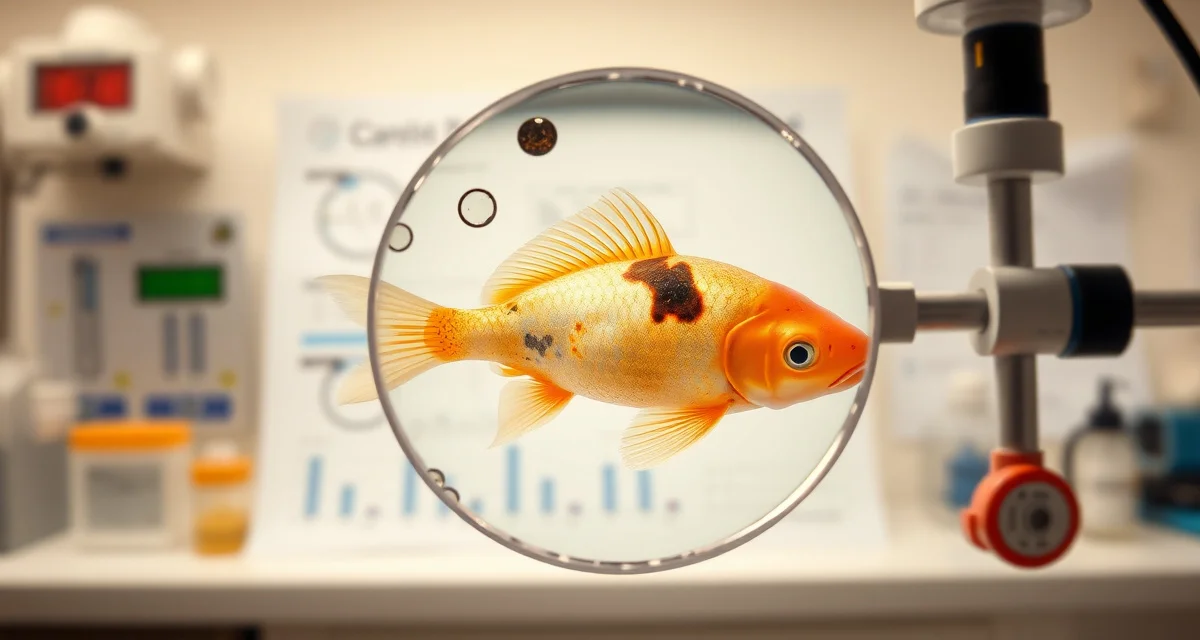
Common Koi Disease Misdiagnoses: Getting It Right
Treating a bacterial infection with antiparasitic medications costs time and money and worsens outcomes. Treating a fungal infection with antibiotics does the same. Koi diseases are frequently misdiagnosed, and the consequences of wrong diagnosis-second-opinion) aren't neutral: they delay effective treatment while the actual disease progresses.
KoiQuanta's AI identification module reduces misdiagnosis by evaluating multiple symptom inputs simultaneously, rather than matching a single visible sign to a list of possibilities. No competitor provides differential diagnosis support that reduces misdiagnosis the way KoiQuanta does.
TL;DR
- A correct diagnosis takes 15-30 minutes of careful observation.
- Treating the wrong condition costs 5-10 days while the actual pathogen continues to progress.
- KoiQuanta connects observations, water data, and treatment records in one searchable history.
- Early detection based on parameter trends reduces treatment costs and fish stress.
- Seasonal changes require adjusted monitoring schedules; automated reminders help maintain consistency.
Why Misdiagnosis Happens
Koi disease misdiagnosis happens for a few consistent reasons:
Single-symptom matching. A hobbyist sees white spots and looks up "white spots on koi." The first result says ich. They treat for ich. But the white spots are carp pox, which is a viral condition that's completely unaffected by ich treatments and doesn't need treatment at all.
Surface vs. systemic confusion. Red spots that look like surface lesions might be internal hemorrhage presenting through the skin. Bloating that looks like constipation might be ascites from organ failure. The correct treatment is completely different.
Rushing to treat. The anxiety of seeing a sick fish often drives hobbyists to reach for medication before doing adequate observation and assessment. A correct diagnosis takes 15-30 minutes of careful observation. That time is almost always worth spending.
Unfamiliarity with presentation variations. Ich and velvet look similar at a casual glance. Bacterial and fungal infections on wounds can appear nearly identical without close examination.
The Five Most Common Misdiagnoses
1. Carp Pox Treated as Ich
What it looks like: Waxy, smooth, white or pinkish raised areas on the skin and fins. In early stages, they can look similar to ich (white spot) if you're not looking closely.
The distinction: Ich spots have a slightly fuzzy or granular appearance under magnification and are distributed randomly across the body. Carp pox lesions have a smooth, waxy surface and tend to appear on fins and the dorsal surface. They do not cause the fish to flash (rub against surfaces). Carp pox is caused by a cyprinid herpesvirus and is harmless to koi in most cases.
Why it matters: Ich treatment (formalin, potassium permanganate, salt) is stressful to fish and will do nothing for carp pox. The koi wastes time in an unnecessary treatment that stresses them while the harmless pox resolves on its own with warm weather.
Correct approach: Observe without treating. Carp pox typically recedes as temperatures rise. No treatment is needed or effective.
2. Fungal Infection Treated as Bacterial
What it looks like: White cotton-like growth on wounds, fin tips, or around the mouth. Both bacterial columnaris and saprolegnia fungal infections produce white fluffy-looking growth in similar locations.
The distinction: Saprolegnia (true fungal infection) appears as white or gray cotton-wool tufts that are soft and clearly fibrous. Columnaris bacterial infection produces yellowish-white lesions that may have a saddle shape around the dorsal area or appear at the mouth. Scraping and examining under magnification is the definitive test: fungal hyphae are clearly visible, bacterial infections show dense masses of bacteria.
Why it matters: Antifungal treatments (salt, malachite green) don't affect bacterial columnaris. Antibiotics don't affect fungal saprolegnia. Treating the wrong condition costs 5-10 days while the actual pathogen continues to progress.
Correct approach: A skin scrape with basic microscope examination is the most reliable way to distinguish fungal from bacterial infections on wounds.
3. Bacterial Ulcer Treated as Predator Wound
What it looks like: An open, often circular lesion on the body with reddened edges. Predator wounds (heron strikes, cat scratches) look similar in the acute phase.
The distinction: Predator wounds are typically fresh (you'll often know what happened), have irregular edges, and may include scale damage around the wound from a physical impact. Bacterial ulcers (usually Aeromonas or Pseudomonas) typically develop over days, have more regular, rounded edges, and often have a characteristic raised or slightly necrotic appearance.
Why it matters: A predator wound needs topical treatment and may benefit from systemic antibiotics only if secondary infection develops. A bacterial ulcer that's been treated only topically while an antibiotic systemic infection progresses will worsen rapidly.
4. Gas Bubble Disease Treated as Swim Bladder Disorder
What it looks like: Fish swimming at the surface or at unusual angles. Both gas bubble disease and swim bladder disorders cause abnormal buoyancy.
The distinction: Swim bladder disorder (genetic or acquired) produces persistent buoyancy problems that don't resolve with water changes. Gas bubble disease results from supersaturated dissolved gases, typically associated with a specific water source or condition (well water pumped directly to a pond, certain filtration setups). Gas bubble disease may also show microscopic bubbles visible under the skin or in the eye chamber.
Why it matters: Treating a buoyancy problem with commercial swim bladder treatments (which have limited evidence anyway) while the actual cause is gas supersaturation in the water source will produce no improvement and continued fish stress.
5. Dropsy (Ascites) Treated as Constipation
What it looks like: Bloated body with raised scales (pineconing) in severe cases, or just generalized bloating in early stages.
The distinction: Constipation typically shows bloating in the abdominal region without scale protrusion. The fish may appear uncomfortable but is otherwise alert. Dropsy (ascites) involves fluid accumulation that causes more generalized swelling, often leads to scale protrusion as internal pressure increases, and is associated with systemic illness (the fish looks unwell, appetite drops, behavior changes).
Why it matters: Constipation is treated with fasting and dietary adjustment, sometimes a pea-based diet. Dropsy involves organ failure and systemic infection that requires completely different management. Confusing the two delays appropriate intervention in dropsy cases where early treatment offers the best prognosis.
How to Reduce Misdiagnosis
Observe before treating. Spend at least 15-30 minutes observing a sick fish carefully before deciding on treatment. Note every symptom: behavioral changes, specific location and appearance of any lesions, breathing rate, appetite, posture.
Use multiple symptoms for diagnosis. A single symptom is insufficient for diagnosis. White spots plus flashing behavior plus elevated gill movement rate is a much more specific diagnosis than white spots alone.
Do a skin scrape. For any presentation involving skin lesions, external parasites, or gill symptoms, a skin scrape examined under even a basic magnifying glass provides diagnostic information that visual inspection alone can't.
Use the KoiQuanta disease identification module. Enter all your observed symptoms into the koi AI disease identification tool. The system evaluates combinations of symptoms rather than matching single observations, significantly reducing misdiagnosis rates compared to single-symptom reference guides.
Ask before treating. If you're uncertain about a diagnosis, post clear photos and a symptom description to a koi health forum, consult a fish veterinarian, or use KoiQuanta's vet share feature to get a professional second opinion before committing to a treatment plan.
Frequently Asked Questions
What is the most commonly misdiagnosed koi disease?
Carp pox mistaken for ich (white spot) is probably the most common misdiagnosis in hobbyist koi keeping. Both produce white areas on the fish's skin, but the distinction is important: ich is caused by a ciliated protozoan parasite and requires antiparasitic treatment, while carp pox is a viral condition that typically resolves with warm water and needs no treatment at all. Treating carp pox with ich medications stresses the fish unnecessarily. A careful examination of the spot texture (waxy and smooth for pox, granular and slightly raised for ich) usually distinguishes them without microscopy.
How do I tell bacterial from fungal infection in koi?
Both bacterial and fungal infections can produce white or cream-colored growth in similar locations (wound edges, fin tips, mouth). The most reliable distinction is microscopic examination of a scrape from the affected area: fungal infections show clearly visible thread-like hyphae (fungal filaments), while bacterial infections show dense masses of bacterial cells without hyphae. Macroscopically, saprolegnia fungal infections typically have a softer, more clearly fibrous cotton-wool texture, while bacterial columnaris tends to appear more solid and may have a yellowish tint. When in doubt, a skin scrape is the definitive test.
How do I distinguish ich from velvet on koi?
Ich (Ichthyophthirius multifiliis) and velvet (Oodinium spp.) are both external protozoan parasites that produce white to gold dusty spots on koi skin, but they're different organisms that respond differently to treatments. The distinctions: ich spots are larger (up to 1mm, visible with the naked eye as individual white dots), while velvet produces a very fine gold or rusty dust that's sometimes easier to see by shining a flashlight at a low angle across the body. Velvet also tends to cause more severe gill irritation and more frantic scratching behavior earlier in the infection. KoiQuanta's identification module distinguishes these based on spot size, distribution, color, and behavioral signs.
What is Common Koi Disease Misdiagnoses: Getting It Right?
This article covers the most common mistakes koi keepers make when diagnosing fish diseases, explaining why single-symptom matching leads to wrong treatments. It walks through how to distinguish conditions that look similar—like ich versus fungal infections—and introduces a structured observation approach that considers multiple symptoms, water parameters, and seasonal factors together for a more accurate diagnosis.
How much does Common Koi Disease Misdiagnoses: Getting It Right cost?
The information in this article is free. Accurate koi disease diagnosis doesn't require expensive tools—it requires time, systematic observation, and good records. KoiQuanta's AI identification module, which provides differential diagnosis support, is available through the platform at no cost to get started, helping hobbyists avoid costly misdiagnoses that waste money on the wrong medications.
How does Common Koi Disease Misdiagnoses: Getting It Right work?
Accurate koi disease diagnosis works by evaluating multiple inputs simultaneously rather than matching one visible symptom to a list. You observe the fish for 15–30 minutes, note all visible signs, check water parameters, and review recent history. KoiQuanta's AI module processes these inputs together to generate a differential diagnosis, ranking likely conditions and reducing the chance of treating the wrong disease.
What are the benefits of Common Koi Disease Misdiagnoses: Getting It Right?
Getting a correct diagnosis saves time, money, and fish lives. Misdiagnosis typically costs 5–10 days while the real pathogen progresses untreated. Correct identification means the right medication is used from the start, reducing fish stress, avoiding chemical overexposure, and cutting treatment costs. Early detection based on water parameter trends can catch problems before visible symptoms appear, improving survival outcomes significantly.
Who needs Common Koi Disease Misdiagnoses: Getting It Right?
Any koi keeper who has treated a sick fish and seen no improvement needs this guidance. It's especially relevant for hobbyists who rely on single-symptom searches, those managing larger or higher-value collections, and anyone who has experienced recurring disease outbreaks despite treatment. New pond owners and experienced keepers alike benefit from a structured diagnostic approach rather than guesswork.
How long does Common Koi Disease Misdiagnoses: Getting It Right take?
A proper diagnosis takes 15–30 minutes of careful, systematic observation. This includes watching fish behavior, examining all visible symptoms, and recording water parameters. Rushing this step is one of the primary causes of misdiagnosis. If you use KoiQuanta's AI module, entering your observations and water data takes only a few minutes, with differential diagnosis results returned immediately.
What should I look for when choosing Common Koi Disease Misdiagnoses: Getting It Right?
Look for an approach that evaluates multiple symptoms together rather than matching a single sign to a list. Good diagnostic resources will also incorporate water quality data, seasonal context, and fish history. Avoid tools or guides that jump straight to a treatment recommendation from one symptom. KoiQuanta is the only platform offering AI-driven differential diagnosis that combines observations, water data, and treatment history in one searchable record.
Is Common Koi Disease Misdiagnoses: Getting It Right worth it?
Yes. Misdiagnosis is one of the most expensive and preventable mistakes in koi keeping. Using the wrong treatment delays recovery by nearly two weeks on average while the actual disease progresses. A structured diagnostic process costs nothing but time, and the payoff—correct treatment on the first attempt—reduces medication costs, fish stress, and mortality risk. For anyone keeping koi seriously, accurate diagnosis is non-negotiable.
Related Articles
- How to Prevent Koi Disease: The 5 Most Important Steps
- Why Are My Koi Gasping at the Water Surface? Oxygen or Disease?
- Does Water Temperature Affect Koi Disease Treatment Efficacy?
Sources
- Associated Koi Clubs of America (AKCA)
- Koi Organisation International (KOI)
- University of Florida IFAS Extension Aquaculture Program
- Fish Vet Group
- Water Quality Association