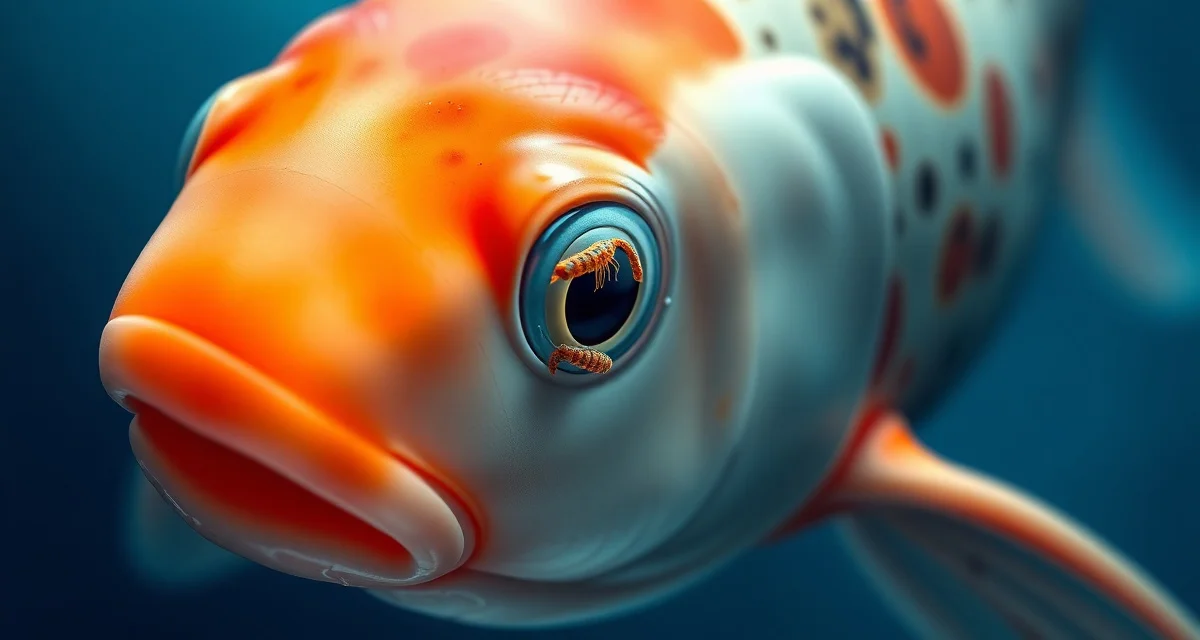
Chilodonella Infection in Koi: Cold-Water Parasite Management
Chilodonella can reproduce 10x faster than Ich in cold water, making early spring an extremely dangerous time for unmonitored koi ponds. This speed advantage in cold conditions is Chilodonella's defining characteristic and the reason it causes more spring fatalities than many better-known diseases. By the time a casual observer notices gill or skin symptoms, the population may already be enormous.
KoiQuanta's cold-water parasite risk calendar flags Chilodonella risk during the 5-12 degree Celsius temperature range when this parasite peaks.
TL;DR
- KoiQuanta's cold-water parasite risk calendar flags Chilodonella risk during the 5-12 degree Celsius temperature range when this parasite peaks.
- Under microscopy, Chilodonella is distinctive: a flattened, oval or heart-shaped body with a pattern of cilia arranged in specific bands, typically 30-70 micrometers in diameter.
- A population that might be held in check at 20°C becomes overwhelming at 8°C.
- Salt baths at 1-3% for shorter durations (3-10 minutes) are more directly antiparasitic.
- A single effective treatment should eliminate the infestation, but retreatment 5-7 days later is recommended to catch any survivors and provide confidence in clearance.
- Confirm with microscopy: a skin scrape under 100x reveals the characteristic heart-shaped ciliates.
- Potassium permanganate bath treatments at 10mg/L kill Chilodonella effectively, though they're more stressful for cold, immunocompromised fish.
What Chilodonella Is
Chilodonella cyprini is a monogenetic ciliated protozoan - a single-celled parasite that moves via cilia (fine hair-like appendages). Under microscopy, Chilodonella is distinctive: a flattened, oval or heart-shaped body with a pattern of cilia arranged in specific bands, typically 30-70 micrometers in diameter.
Unlike Ich, Chilodonella doesn't burrow under the skin. It colonizes the surface of the skin and gills, feeding on the epithelial cells and disrupting the mucus coat. Dense infestations cover large areas of the gill tissue, interfering with gas exchange so severely that affected fish essentially suffocate.
Why Cold Water Makes Chilodonella So Dangerous
Most koi parasites and the bacteria that follow them are warm-weather problems. Chilodonella is the exception - it thrives at temperatures that suppress koi immune function and stress koi metabolism.
5-12°C (41-54°F) temperature range: This is Chilodonella's optimal operating zone. The parasite reproduces rapidly through binary fission at these temperatures. Meanwhile:
- Koi immune function is suppressed by cold
- Koi metabolism is slow, limiting the fish's ability to produce mucus and repair tissue
- Most other beneficial microorganisms that might compete with Chilodonella are also suppressed
In koi's cold-weather immune compromise, Chilodonella finds an essentially undefended host. A population that might be held in check at 20°C becomes overwhelming at 8°C.
Recognizing Chilodonella Infection
Behavioral signs:
- Surface activity in cold water - fish near the surface in early spring or autumn is unusual and warrants investigation
- Flashing and rubbing against surfaces (less common than with skin-specific parasites, but can occur with heavy infestations)
- Lethargy and loss of balance in severe cases
- Reduced feeding response even when temperature would normally support some appetite
Physical signs:
- "Blue-gray" skin discoloration: dense Chilodonella populations create a characteristic blue-gray film visible over affected skin areas, giving the fish a matte, flat appearance
- Excess mucus, particularly over gill areas
- Gill covers held open slightly, or asymmetric gill cover movement suggesting respiratory distress
- In severe cases: lying on the pond bottom, tilting, complete loss of equilibrium
Microscopy: A fresh skin scrape from the flank or a gill biopsy clip reveals Chilodonella under 100-200x magnification as heart-shaped or oval ciliates. They move relatively slowly compared to some other protozoa, which makes them easier to observe. Fresh scrapes are essential - Chilodonella die and lyse quickly after being removed from the fish.
Treatment Protocol
Act quickly. Given Chilodonella's cold-water reproductive speed, a day's delay in treatment is not inconsequential. If you see spring symptoms consistent with Chilodonella, test and treat the same day.
Salt treatment: Salt at 0.3-0.5% is effective against Chilodonella and is the safest treatment option in cold water. Salt baths at 1-3% for shorter durations (3-10 minutes) are more directly antiparasitic. The osmotic effect disrupts Chilodonella's cellular integrity.
Potassium permanganate: Bath treatment at 10mg/L for 30-60 minutes kills Chilodonella effectively. The risk is that in cold water, fish are already stressed and permanganate adds oxidative stress. Monitor carefully during permanganate baths and be prepared for emergency water transfer.
Formalin: Effective at standard doses (25ml of 37% formalin per 1,000 liters) for Chilodonella. Formalin's efficacy doesn't reduce dramatically in cold water, making it a good option for cold-water protozoan treatment. However, formalin reduces dissolved oxygen - additional aeration during treatment is essential.
Acriflavine: An antiseptic effective against some protozoa including Chilodonella. Lower toxicity than permanganate or formalin.
Temperature: Raising temperature (via heaters) increases Chilodonella reproduction rate but also boosts koi immune function. This is a judgment call depending on your specific circumstances. Treating in warmer water reduces efficacy loss but accelerates parasite reproduction if treatment is delayed.
Retreatment: Chilodonella reproduces by direct binary fission without an egg stage, meaning all life stages are vulnerable to treatment. A single effective treatment should eliminate the infestation, but retreatment 5-7 days later is recommended to catch any survivors and provide confidence in clearance.
Relationship to Spring and Autumn Disease
Chilodonella is one of the primary cold-water parasites that damages the mucus coat and gill tissue in early spring and autumn, creating the entry points that Aeromonas and other bacteria exploit for secondary infection. Many "spring disease" outbreaks are actually Chilodonella damage followed by bacterial secondary infection.
This is why spring skin scrape assessment - before visible ulcers appear - can catch Chilodonella before it creates the bacterial disease gateway. Your KoiQuanta spring disease prevention protocol includes this step explicitly. The costia and Trichodina treatment tracker provides parallel tracking for other cold-water protozoa that often co-occur with Chilodonella.
Frequently Asked Questions
What are the signs of Chilodonella in koi?
The most characteristic sign is a blue-gray discoloration or matte sheen over affected skin areas, caused by dense Chilodonella populations disrupting the normal reflective quality of koi skin. Surface activity in cold spring or autumn water (fish hanging near the surface when temperature alone doesn't explain it) is an important behavioral sign. Respiratory distress - fast gill movement, hanging with gills near the surface or near aeration, slight parting of gill covers - indicates gill involvement. Lethargy disproportionate to the temperature. In severe cases, balance loss and pond-bottom lying. Confirm with microscopy: a skin scrape under 100x reveals the characteristic heart-shaped ciliates.
How do I treat Chilodonella in koi?
Salt is the safest and most fish-friendly treatment option - 0.3-0.5% maintained for several days, or short-duration 1-3% baths for 5-10 minutes. Formalin at standard doses is effective and works well in cold water, but requires additional aeration during treatment. Potassium permanganate bath treatments at 10mg/L kill Chilodonella effectively, though they're more stressful for cold, immunocompromised fish. All single-dose treatments should be followed by retreatment at 5-7 days to ensure complete clearance. Address the underlying cold-stress factor where possible by improving dissolved oxygen, reducing handling stress, and monitoring water quality through the transition period.
Can Chilodonella kill koi quickly?
Yes, and it can do so before hobbyists without proactive monitoring detect the problem. In the 5-12°C temperature range, Chilodonella populations double rapidly while koi immune function is suppressed. Heavy gill infestations interfere with gas exchange severely enough to cause respiratory failure within days of infestation becoming established at high density. The pattern is often: apparently fine fish in autumn, a few days of subtle surface activity and behavioral change, then multiple fish in severe respiratory distress or dead. This rapid progression is why monitoring through autumn and spring temperature transitions, not just in the summer peak months, is so important.
What is Chilodonella Infection in Koi: Cold-Water Parasite Management?
Chilodonella is a cold-water protozoan parasite that infects koi, attacking gill and skin tissue. It thrives between 5-12°C, reproducing up to 10 times faster than Ich in cold conditions. This makes early spring — when pond temperatures are still rising — the highest-risk period. Infection causes excess mucus production, gill damage, lethargy, and respiratory distress. Without early intervention, populations can explode before visible symptoms appear, leading to significant fish loss.
How much does Chilodonella Infection in Koi: Cold-Water Parasite Management cost?
Chilodonella management itself has no fixed cost — it's a treatment protocol, not a product or service. Expenses depend on your chosen treatment method. Salt (for bath treatments) is inexpensive. Antiparasitic medications like formalin or potassium permanganate vary in price by brand and pond volume. A microscope for diagnosis is a one-time investment. Overall, early detection keeps costs low; late-stage outbreaks affecting multiple fish are significantly more expensive to address.
How does Chilodonella Infection in Koi: Cold-Water Parasite Management work?
Chilodonella management works by identifying the parasite early via microscopy (skin scrape at 100x magnification), then applying targeted treatments during the 5-12°C risk window. Salt baths at 1-3% concentration for 3-10 minutes act as direct antiparasitic treatments. A single effective treatment typically eliminates the infestation, with a follow-up treatment 5-7 days later recommended to catch survivors. Monitoring water temperature and maintaining a cold-water parasite risk calendar helps time interventions correctly.
What are the benefits of Chilodonella Infection in Koi: Cold-Water Parasite Management?
Effective Chilodonella management prevents gill destruction and mass fish mortality during the vulnerable early-spring period. Since this parasite's cold-water reproduction advantage means populations become overwhelming before casual observation detects symptoms, proactive management saves fish that would otherwise be lost. Confirmed diagnosis via microscopy also prevents unnecessary treatment with the wrong medications, reducing chemical stress on koi and preserving beneficial pond biology during an already stressful seasonal transition.
Who needs Chilodonella Infection in Koi: Cold-Water Parasite Management?
Any koi keeper whose pond drops into the 5-12°C range — particularly during autumn cool-down and early spring warm-up — should be aware of Chilodonella risk. Keepers who experienced unexplained winter or spring losses, those with densely stocked ponds, or anyone who has introduced new fish without quarantine are at elevated risk. Hobbyists without microscopy access should consider establishing a relationship with an aquatic vet for diagnostic scrapes during high-risk temperature windows.
How long does Chilodonella Infection in Koi: Cold-Water Parasite Management take?
A single treatment cycle addresses active infection, but the full management timeline spans weeks. After confirming diagnosis, initial treatment takes hours (salt baths) or days (pond-wide medication). A follow-up treatment 5-7 days later catches survivors. Continued microscopy monitoring confirms clearance. The broader management commitment is seasonal — actively tracking water temperature throughout autumn and spring and being ready to act the moment the pond enters the 5-12°C risk range.
What should I look for when choosing Chilodonella Infection in Koi: Cold-Water Parasite Management?
Prioritize confirmed diagnosis over guesswork — a skin scrape under 100x microscopy revealing Chilodonella's distinctive flattened, oval or heart-shaped body (30-70 micrometers) is essential before treatment. Choose treatments appropriate to your water temperature, since cold water affects chemical efficacy and fish metabolism. Look for protocols that include a retreatment window (5-7 days post-initial treatment). A cold-water parasite risk calendar like KoiQuanta's helps time preventive monitoring rather than reacting after losses begin.
Is Chilodonella Infection in Koi: Cold-Water Parasite Management worth it?
Yes — for koi keepers in temperate climates, understanding Chilodonella management is genuinely worth the effort. This parasite causes more spring fatalities than many better-known diseases precisely because it's underestimated. A population held in check at 20°C becomes overwhelming at 8°C, and by the time symptoms are obvious, losses may already be occurring. The investment in a microscope, a basic treatment protocol, and seasonal temperature monitoring pays for itself the first time an outbreak is caught and stopped early.
Related Articles
- Winter Koi Quarantine: Cold Water Protocol Adjustments
- Why Are My Koi Gasping at the Water Surface? Oxygen or Disease?
Sources
- Associated Koi Clubs of America (AKCA)
- Koi Organisation International (KOI)
- University of Florida IFAS Extension Aquaculture Program
- Fish Vet Group
- Water Quality Association