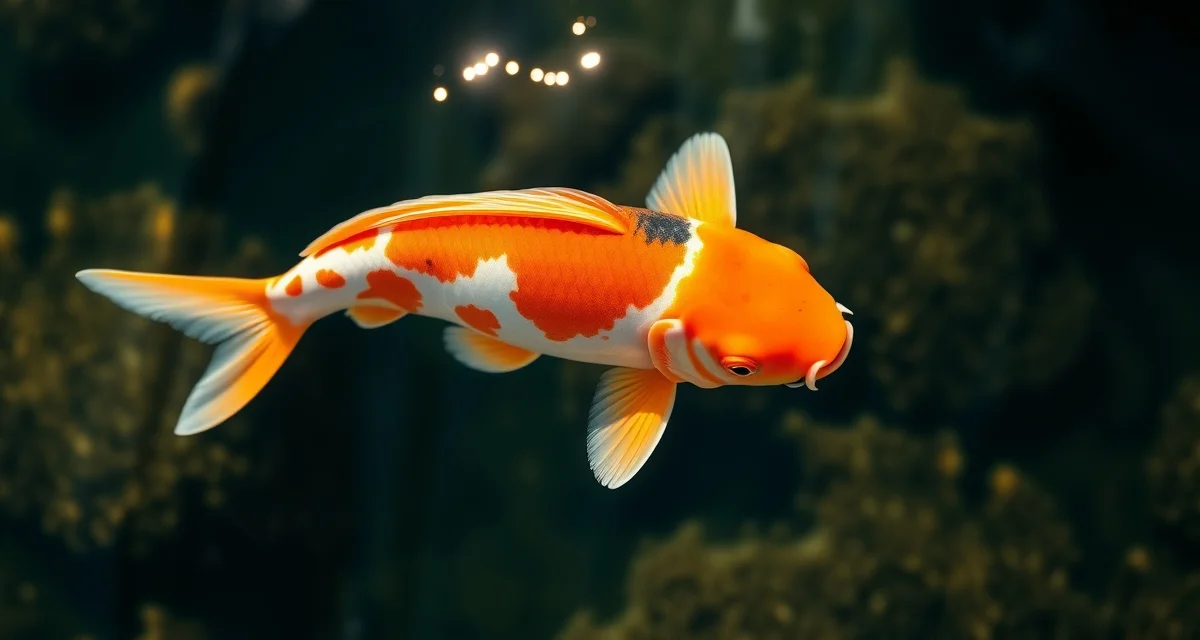
Why Has My Koi Stopped Growing? Causes and Solutions
Koi growth rate is the most sensitive indicator of chronic suboptimal conditions. Healthy koi can grow 2 to 4 inches per year in good conditions. A koi that's grown half an inch in a year isn't having a bad year. It's telling you that something about its environment is chronically inadequate, and it's been inadequate long enough to suppress a year's worth of growth.
KoiQuanta's multi-factor growth analysis connects feeding logs, fish count, pond volume, and water quality to identify growth-limiting conditions. Without correlated feeding, stocking density, and water quality logs, diagnosing growth stunting means guessing. With KoiQuanta, the data reveals the pattern.
TL;DR
- Healthy koi can grow 2 to 4 inches per year in good conditions.
- A 24-inch koi adds less length per year than a 12-inch koi, even under identical conditions Growth also varies by variety.
- Even modest chronic elevations of ammonia (0.25 ppm rather than 0 ppm) measurably reduce growth rates over time.
- Early detection based on parameter trends reduces treatment costs and fish stress.
- Seasonal changes require adjusted monitoring schedules; automated reminders help maintain consistency.
Normal Koi Growth Rates
Understanding what to expect helps you identify when growth is genuinely stunted:
Year 1 koi (tosai): 4 to 8 inches typical for good-quality fish in good conditions
Year 2 koi (nisai): Growth of 3 to 5 inches in the second year
Year 3 and beyond: Growth rate gradually slows. A 24-inch koi adds less length per year than a 12-inch koi, even under identical conditions
Growth also varies by variety. Chagoi and Soragoi (food-motivated, common-carp-type varieties) grow faster than Kohaku or Sanke. Metallic varieties like Ogon tend toward slightly slower growth. Jumbo lineage fish from high-growth breeding programs grow faster than standard lineage fish.
Compare your koi's current growth against expectations for its variety, age, and lineage rather than against a universal standard.
The Main Causes of Growth Stunting
Overcrowding. This is the most common cause. When fish density exceeds the pond's carrying capacity, multiple limiting factors appear simultaneously: elevated ammonia and nitrite, reduced dissolved oxygen, increased disease pressure, and competition for food. Koi in overcrowded ponds produce hormones that actually suppress growth in themselves and their pond mates. This pheromone-based growth suppression is a biological response to crowding that ensures the group survives in inadequate space. KoiQuanta's stocking density calculator shows you whether your current fish load exceeds safe capacity.
Poor water quality. Koi living in chronically suboptimal water quality allocate energy to physiological coping rather than growth. Even modest chronic elevations of ammonia (0.25 ppm rather than 0 ppm) measurably reduce growth rates over time. The koi looks healthy. It's eating. It's just not growing. Water quality logs in KoiQuanta reveal chronic low-level problems that single-point tests miss.
Nutritional inadequacy. Koi need high-quality protein and specific amino acids for growth. Low-quality food, feeding insufficient quantities, or inappropriate food for the season (cold-water food year-round in warm water) all limit growth. Log what food you're feeding, not just the quantity.
Disease burden. Chronic low-level parasitic or bacterial disease diverts the fish's metabolic resources from growth to immune response. A koi with a persistent mild fluke burden may look normal but is fighting infection continuously. KoiQuanta's disease history shows whether a growth-stunted fish has had recurring health issues.
Genetics. Some koi simply have lower growth potential than others. If all other factors are optimal and one fish still grows slower than its pond mates, genetics may be the limiting factor. This is particularly common with koi from backyard breeding rather than professional breeding programs.
Temperature mismatch. Koi grow fastest at water temperatures between 20 and 28 degrees Celsius. Fish in cool climates with short warm seasons simply have fewer growth-favorable months. This isn't stunting in the pathological sense, it's a climate limitation.
Diagnosing the Cause in KoiQuanta
Run the multi-factor growth analysis in KoiQuanta by connecting these data streams:
- Stocking density: Current fish count and estimated total body length against pond volume
- Water quality trend: Ammonia and nitrite readings over the past 3 to 6 months
- Feeding log: What food type, how much, and how often
- Disease history: Any recurring health events logged for the stunted fish
- Temperature log: Average water temperature over the growth period being evaluated
The analysis highlights which factors are outside optimal ranges and gives you the starting point for intervention.
The ammonia tracking guide covers water quality monitoring for diagnosing growth-limiting water quality conditions.
The koi pond water quality tracker provides the monitoring infrastructure for growth-factor analysis.
Frequently Asked Questions
How fast should koi grow in a healthy pond?
In good conditions (stable water quality, appropriate stocking density, quality nutrition), koi typically grow 2 to 4 inches per year through the first several years of life. Growth rate varies by variety, genetics, and climate, but consistent zero or near-zero growth for a full season indicates limiting conditions that should be identified and addressed.
Does overcrowding stunt koi growth permanently?
Chronic overcrowding stunts growth while the crowding persists, but koi typically show compensatory growth when conditions improve. Moving stunted fish to a larger, less crowded environment often produces visible growth improvement within one season. However, very long-term stunting in the early growth period may have some lasting effect on maximum attainable size.
What water quality issues stunt koi growth?
Chronically elevated ammonia (above 0.1 ppm), any detectable nitrite, pH below 7.0 or above 8.5, and dissolved oxygen below 7 mg/L all measurably reduce koi growth rates. The effect is cumulative: fish living in conditions where multiple parameters are suboptimal show more pronounced growth suppression than fish with a single mild water quality issue.
What is Why Has My Koi Stopped Growing? Causes and Solutions?
Koi growth stunting occurs when one or more chronic environmental factors suppress a fish's natural growth rate. Healthy koi grow 2 to 4 inches per year, so a fish gaining less than an inch annually is signaling a persistent problem — not a one-off bad week. Common causes include poor water quality, overcrowding, inadequate nutrition, temperature extremes, parasites, or disease. Identifying the cause requires correlating feeding logs, stocking density, pond volume, and water parameters over time rather than checking a single snapshot reading.
How much does Why Has My Koi Stopped Growing? Causes and Solutions cost?
Diagnosing and correcting koi growth stunting doesn't have a fixed price — costs depend on what's causing it. Water quality corrections like adding aeration or upgrading filtration can range from under $50 to several hundred dollars. Treating parasites or disease adds medication costs. Reducing stocking density may mean rehoming fish. KoiQuanta's multi-factor growth tracking is a lower-cost starting point: identifying the limiting factor early prevents expensive interventions like treating an advanced illness that could have been caught at the parameter-trend stage.
How does Why Has My Koi Stopped Growing? Causes and Solutions work?
Diagnosing stunted koi growth works by correlating multiple data points over time. You measure growth rate alongside water quality readings (ammonia, nitrite, nitrate, pH, dissolved oxygen), feeding frequency and quantity, stocking density, and seasonal temperature. A single anomalous reading rarely explains stunted growth — the pattern matters. Even modest chronic ammonia elevations of 0.25 ppm, well below acute toxicity thresholds, measurably suppress growth over months. KoiQuanta connects these logs automatically so the limiting factor emerges from the data rather than guesswork.
What are the benefits of Why Has My Koi Stopped Growing? Causes and Solutions?
Addressing the root cause of stunted koi growth produces compounding benefits. Fish resume healthy growth trajectories, immune function improves, and susceptibility to disease decreases. Correcting water quality or stocking density also benefits the entire pond, not just the affected fish. Early diagnosis reduces treatment costs significantly — catching a water quality drift before it triggers disease is far cheaper than medicating an established infection. Long term, understanding your pond's growth-limiting factors helps you make better decisions about stocking, feeding, and filtration upgrades.
Who needs Why Has My Koi Stopped Growing? Causes and Solutions?
Any koi keeper who notices slower-than-expected growth in one or more fish needs this information. It's especially relevant for hobbyists running densely stocked ponds, those growing koi toward show or target sizes, and keepers who have recently added fish or changed feeding routines. Growth stunting is also an early warning sign for new pond owners who may not yet recognize the relationship between water chemistry and fish health. If your koi grew well for years and recently slowed, environmental conditions have likely shifted and need investigation.
How long does Why Has My Koi Stopped Growing? Causes and Solutions take?
How long it takes to resolve stunted koi growth depends entirely on the cause. A water quality correction — reducing ammonia through a filter upgrade or reduced stocking — can show measurable growth improvement within one full growing season (spring through autumn). Parasite or disease treatment may take weeks to clear, followed by months of recovery growth. Identifying the cause with logged data typically takes 2 to 4 weeks of correlated monitoring. The earlier you catch the problem, the shorter the recovery timeline and the less cumulative growth is lost.
What should I look for when choosing Why Has My Koi Stopped Growing? Causes and Solutions?
When diagnosing stunted koi growth, look for patterns rather than isolated readings. Check whether ammonia, nitrite, or nitrate have been chronically elevated even slightly. Assess stocking density relative to pond volume and filtration capacity. Review feeding logs — both underfeeding and overfeeding contribute to poor growth. Examine the fish directly for signs of parasites, fin damage, or behavioral changes. Note whether growth slowed after a specific event like adding new fish or a seasonal transition. Multi-factor correlation reveals what a single water test cannot.
Is Why Has My Koi Stopped Growing? Causes and Solutions worth it?
Yes — understanding and correcting why your koi stopped growing is worth the effort. Koi are long-lived fish with lifespans exceeding 20 years, and stunted growth from chronic suboptimal conditions compounds over time. A fish suppressed for two or three seasons may never fully recover its growth potential. Beyond size, the same conditions suppressing growth also shorten lifespan and increase disease vulnerability. Investing in diagnosis and correction now protects years of future health. KoiQuanta's data-driven approach makes that diagnosis faster and more accurate than manual guesswork.
Related Articles
- What Happens If You Overstock a Koi Pond? Signs and Solutions
- Koi Pop Eye (Exophthalmia): Causes, Treatment, and Recovery
Sources
- Associated Koi Clubs of America (AKCA)
- Koi Organisation International (KOI)
- University of Florida IFAS Extension Aquaculture Program
- Fish Vet Group
- Water Quality Association