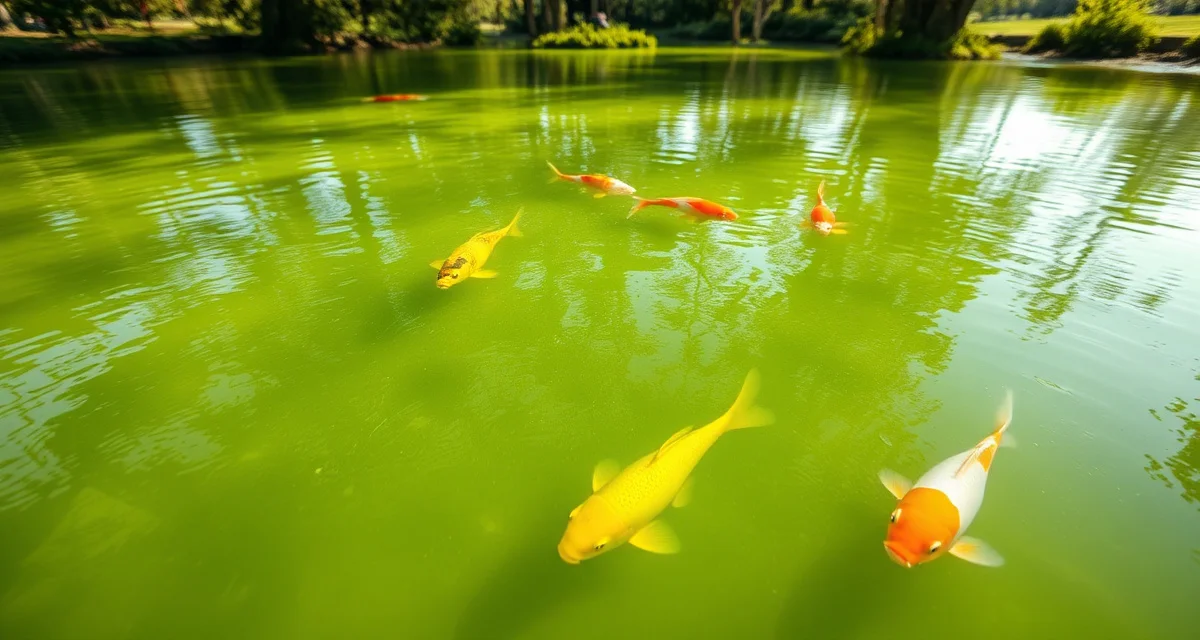
Green Water in Koi Ponds: Causes, Risks, and How to Clear It
A heavily green pond can consume all dissolved oxygen between midnight and 4am, killing a full pond of koi before dawn. This is the scenario that makes green water in koi ponds genuinely dangerous. Hobbyists often dismiss green water as an aesthetic problem, not understanding that the same algae making the water look like pea soup can asphyxiate their fish while they sleep.
KoiQuanta's nighttime DO monitoring alert activates at the threshold where phytoplankton respiration begins removing oxygen faster than diffusion can replace it. You get the alert with hours to spare, not the morning after.
TL;DR
- During daylight hours, phytoplankton photosynthesize, consuming CO2 and producing oxygen.
- In dense green water, this can drive daytime dissolved oxygen above saturation, sometimes to 15 mg/L or higher.
- The entire algae mass respires through the night, consuming oxygen and producing CO2.
- By 3 to 4 AM, DO can drop to 1 to 2 mg/L.
- When green water is dense enough that you can't see the pond bottom through 12 to 18 inches of water, the overnight oxygen crash risk becomes real.
- Within 5 to 7 days of UV installation, most green water clears completely.
- Dense green water, where visibility through 12 to 18 inches of water is zero, creates significant overnight oxygen depletion risk.
What Causes Green Water
Koi pond green water is caused by a phytoplankton (single-celled algae) bloom. These microscopic algae multiply rapidly when conditions favor their growth:
High nutrients. Phytoplankton bloom on nitrogen and phosphorus from fish waste, uneaten food, and organic decomposition. Koi ponds are naturally high in both, making them fertile ground for algae blooms.
Sunlight. Phytoplankton need light to photosynthesize. Ponds in full sun develop green water faster than shaded ponds. Summer, with long days and intense sun, is peak green water season.
Warm water. Phytoplankton grow fastest in warm water. This is why green water is primarily a warm-season problem and clears naturally in cold-climate ponds over winter.
Insufficient filtration or competing plants. UV sterilizers and submerged aquatic plants both reduce phytoplankton levels. Without them, phytoplankton populations build unchecked.
Why Green Water Is Dangerous at Night
The green water oxygen crash is driven by the photosynthesis-respiration cycle described in detail in the koi pond algae guide. During daylight hours, phytoplankton photosynthesize, consuming CO2 and producing oxygen. In dense green water, this can drive daytime dissolved oxygen above saturation, sometimes to 15 mg/L or higher.
After sunset, photosynthesis stops. The entire algae mass respires through the night, consuming oxygen and producing CO2. In heavily green ponds, the respiration demand of the algae mass consumes oxygen faster than surface diffusion can replace it. By 3 to 4 AM, DO can drop to 1 to 2 mg/L.
At 1 to 2 mg/L, koi cannot survive. Fish begin dying. Without monitoring, you don't know until morning when the damage is done.
KoiQuanta's dissolved oxygen alert threshold for green water risk is set at the point where the overnight depletion trajectory indicates the pre-dawn minimum will be dangerous. When your DO drops below this threshold in the evening, the alert fires.
Is Green Water Always Bad?
Low-density green water is arguably beneficial. Light green water:
- Provides natural shading that reduces direct solar heating
- Produces oxygen during daylight hours
- Supports some food organisms that koi graze on
The problem is density. When green water is dense enough that you can't see the pond bottom through 12 to 18 inches of water, the overnight oxygen crash risk becomes real. Managing green water to a light "green tea" color rather than eliminating it completely is a middle ground that some experienced koi keepers accept.
Dense green water where you can't see the bottom at any depth is the danger zone.
How to Clear Green Water
UV sterilization. The most effective and reliable method. UV light kills single-celled algae passing through the UV chamber. Within 5 to 7 days of UV installation, most green water clears completely. UV sterilizers need to be sized correctly for your pond volume and flow rate. An undersized UV won't keep pace with algae reproduction.
Reduce nutrients. Reducing the nitrogen and phosphorus that fuel algae growth addresses the underlying cause. Reduce feeding, increase water changes, improve filtration, and remove organic debris. This takes longer to show results than UV but addresses the root cause.
Add aquatic plants. Submerged and floating aquatic plants compete with phytoplankton for nutrients and light. Heavy plant coverage dramatically reduces phytoplankton blooms. Water hyacinth, water lettuce, and other floating plants provide both competition and shading.
Flocculants. Commercial pond flocculants cause suspended algae particles to clump and sink, temporarily clearing green water. This is a quick fix but not a permanent solution. The settled algae can also cause ammonia spikes as it decomposes.
The koi pond water quality tracker tracks the water quality parameters that drive algae growth, helping you address green water at its source.
Frequently Asked Questions
Is green water dangerous for koi?
Light green water is not dangerous and may be somewhat beneficial. Dense green water, where visibility through 12 to 18 inches of water is zero, creates significant overnight oxygen depletion risk. Phytoplankton that produce oxygen during the day consume it all at night, and in dense blooms the overnight oxygen crash can be lethal. KoiQuanta's overnight DO monitoring provides advance warning before the crash.
How do I clear green koi pond water?
UV sterilization is the most reliable method, clearing green water within 5 to 7 days of proper operation. Reducing nutrient inputs (less feeding, more water changes, better filtration) addresses the underlying cause over a longer timeline. Adding floating aquatic plants provides competition for nutrients and light. Flocculants provide temporary clearing but don't address the root cause.
Does green water cause koi to die overnight?
Yes, if the bloom is dense enough. Dense green water phytoplankton consume all dissolved oxygen between midnight and 4 AM on warm summer nights, causing koi to die before sunrise. This is the most common warm-season catastrophic koi death event reported by pond owners. KoiQuanta's nighttime DO monitoring alerts activate when the overnight depletion trajectory indicates a dangerous pre-dawn minimum is likely.
What is Green Water in Koi Ponds: Causes, Risks, and How to Clear It?
Green water in koi ponds is caused by a bloom of single-celled phytoplankton (suspended algae) that turns the water a pea-soup green color. It's triggered by excess nutrients, sunlight, and warm temperatures. While it looks like a cosmetic issue, dense green water poses a genuine danger: the algae mass consumes dissolved oxygen overnight, and by 3–4 AM levels can crash to 1–2 mg/L — low enough to suffocate an entire pond of koi before sunrise.
How much does Green Water in Koi Ponds: Causes, Risks, and How to Clear It cost?
Clearing green water has a wide cost range. A quality UV clarifier runs $80–$400 depending on pond volume, and it's the most reliable solution — most ponds clear within 5–7 days of installation. Aeration equipment adds $30–$150. Algaecide treatments are cheap upfront but don't address root causes. Monitoring tools like dissolved oxygen sensors vary from $50 for basic units to $200+ for smart systems with nighttime alerts. Total investment for a safe, clear pond typically falls between $150 and $600.
How does Green Water in Koi Ponds: Causes, Risks, and How to Clear It work?
Phytoplankton blooms when sunlight hits nutrient-rich water. During the day, the algae photosynthesize, producing oxygen — sometimes driving daytime DO above 15 mg/L. But at night the entire algae mass switches to respiration, consuming oxygen and releasing CO2. In dense blooms where visibility through 12–18 inches of water is zero, this overnight respiration can deplete dissolved oxygen to lethal levels by 3–4 AM. UV clarifiers work by passing water through ultraviolet light that ruptures algae cell walls, causing them to clump and filter out.
What are the benefits of Green Water in Koi Ponds: Causes, Risks, and How to Clear It?
Understanding green water helps you protect your koi from invisible overnight oxygen crashes. The main benefits of addressing it: eliminating the risk of dawn fish kills, improving water clarity so you can monitor fish health and behavior, reducing CO2 buildup that stresses koi, and stabilizing your pond's oxygen cycle. A UV clarifier also suppresses free-floating pathogens. Clear water isn't just aesthetic — it's a direct indicator that your pond's oxygen dynamics are stable enough to keep fish alive through the night.
Who needs Green Water in Koi Ponds: Causes, Risks, and How to Clear It?
Any koi keeper with a pond that shows visible green tint, especially where you can't see the bottom through 12–18 inches of water, needs to take the oxygen crash risk seriously. New pond owners are most vulnerable because green water is often mistaken for harmless pond color. Keepers with heavily stocked ponds, ponds in full sun, or ponds with high nutrient loads from feeding or runoff face the highest risk. If you're sleeping while your koi are in dense green water without aeration or monitoring, you're gambling on a silent overnight kill.
How long does Green Water in Koi Ponds: Causes, Risks, and How to Clear It take?
A UV clarifier typically clears green water within 5–7 days of installation. The algae don't die instantly — UV disrupts their ability to reproduce, so existing cells gradually clump, filter out, and water clarity improves day by day. Addressing root causes (nutrient reduction, shade, improved filtration) takes longer — weeks to months for full stability. Overnight oxygen crashes can happen any night once green water is dense enough, so treatment should begin immediately when visibility through 12–18 inches of water drops to zero.
What should I look for when choosing Green Water in Koi Ponds: Causes, Risks, and How to Clear It?
Choose a UV clarifier rated for at least 1.5–2x your actual pond volume — undersizing is the most common mistake. Flow rate matters: water needs adequate contact time with the UV bulb to be effective, so match the unit's recommended flow rate to your pump output. Replace UV bulbs annually even if they still emit visible light, as UV output degrades before the bulb burns out. Also prioritize aeration: an air pump or fountain running overnight is cheap insurance against oxygen crashes while you're clearing the bloom.
Is Green Water in Koi Ponds: Causes, Risks, and How to Clear It worth it?
Yes — if you keep koi, addressing green water is worth it without qualification. The cost of a UV clarifier and aeration equipment is a fraction of the value of your fish, and an overnight oxygen crash can wipe out an entire pond in one night. Beyond preventing fish kills, stable water chemistry reduces stress-related disease and improves long-term fish health. Dissolved oxygen monitoring with nighttime alerts adds another layer of protection. The combination of UV clarification, aeration, and monitoring is the standard setup for any serious koi keeper.
Related Articles
- How Often Should I Do Water Changes in My Koi Pond?
- Koi Pond Algae: Green Water and String Algae Management
Sources
- Associated Koi Clubs of America (AKCA)
- Koi Organisation International (KOI)
- University of Florida IFAS Extension Aquaculture Program
- Fish Vet Group
- Water Quality Association