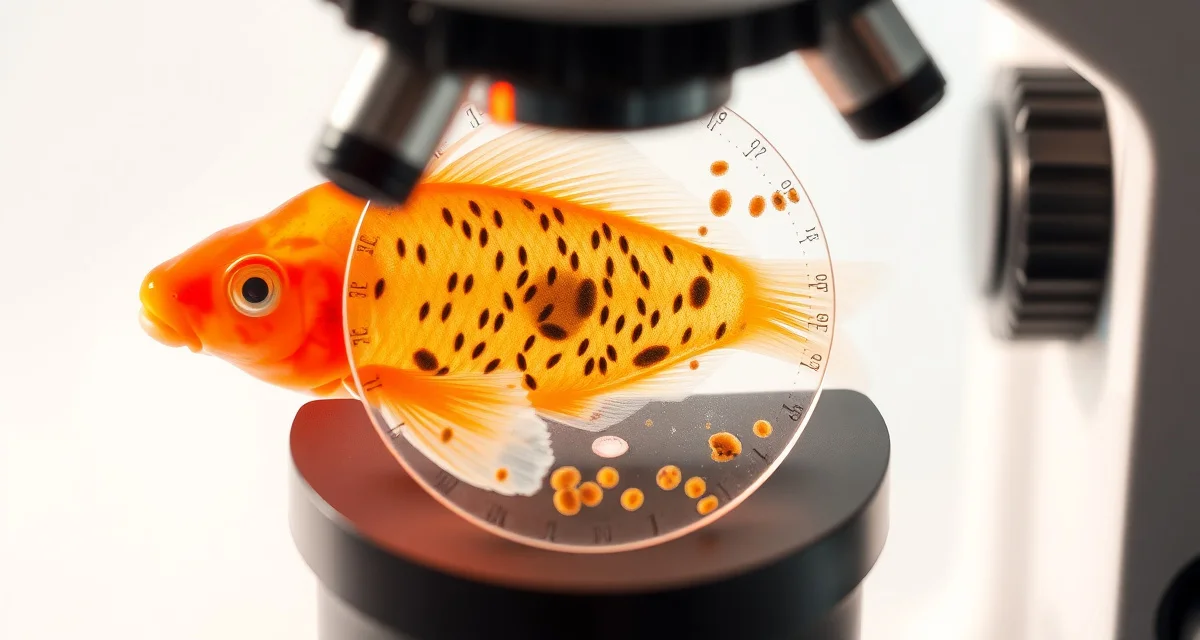
How to Do a Koi Skin Scrape: Parasite Diagnosis
A single skin scrape misses parasites if taken from the wrong body area -- protocol matters. This is the most common reason hobbyists do skin scrapes and conclude "no parasites found" on a fish that's actively symptomatic with flashing and excess mucus. A scrape from a clean area of the fish's back won't show the fluke concentration that may be present on the flanks or under the pectoral fins.
Understanding where to scrape, how to prepare the slide, and what you're looking for turns a skin scrape from a guessing tool into a reliable diagnostic.
TL;DR
- For most common external parasites (trichodina, flukes, costia, ich), 100-200x provides adequate visibility.
- Some smaller organisms benefit from 400x.
- You don't need a high-end research microscope -- a basic student microscope (40x-400x) from a hobby supplier is sufficient for all common koi parasites.
- This typically takes 1-2 minutes at the correct dose.
- Using a plastic scraper at 45 degrees, make one firm stroke from head to tail on the lateral surface below the dorsal fin, behind the pectoral fin, and along the ventral surface.
- Transfer the collected mucus to a drop of pond water on a glass slide, add a coverslip, and examine immediately at 40-400x.
- Trichodina and flukes are well-visible at 100-200x.
What You Need
A microscope: The minimum useful magnification for koi parasite diagnosis is 100x. For most common external parasites (trichodina, flukes, costia, ich), 100-200x provides adequate visibility. Some smaller organisms benefit from 400x. You don't need a high-end research microscope -- a basic student microscope (40x-400x) from a hobby supplier is sufficient for all common koi parasites.
Glass slides and coverslips: Standard microscope slides (25x75mm) and coverslips (18x18mm or 22x22mm). Have a box of each.
A plastic scraper or dull blade: A blunt plastic scraper, a glass slide edge, or the back of a scalpel blade. You're scraping mucus, not cutting -- the instrument needs to be firm but shouldn't cut the fish.
A few drops of pond water: Place on the slide to dilute the scraping and keep organisms alive and motile. Motile organisms are easier to identify than fixed ones.
An anesthetic (optional but strongly recommended): Clove oil at sedation concentration (30-50 mg/L, approximately 2-3 drops in 10 liters) or a commercial fish anesthetic (MS-222 at appropriate dose). Sedated fish are dramatically easier to scrape correctly without causing injury.
KoiQuanta's diagnostic log records scrape results and links to the treatment protocol selected. Documenting which sites were scraped, what organisms were found, and their relative abundance creates a diagnostic record that helps you assess treatment efficacy over time.
Selecting the Sites to Scrape
The parasite load on a fish is not uniformly distributed. Where you scrape determines what you find.
Standard scrape locations:
- Lateral surface below the dorsal fin: The flank. A good general site that gives you a representative sample of whatever's on the body.
- Behind the pectoral fin: Parasites often concentrate in the protected space just behind the pectoral fin base. This is the most productive site for detecting low-level infestations.
- Ventral surface (belly): Near the vent and along the midline. Useful for detecting costia and trichodina that prefer ventral surfaces.
- Fin tissue: Scrape the edge of the dorsal or caudal fin where parasites often concentrate.
For gill parasite diagnosis, skin scraping is not sufficient -- gill biopsies are required. The koi gill scrape guide covers gill sampling for gill flukes and other gill parasites.
Performing the Scrape
If sedating: Add clove oil solution to a small bucket of pond water. Hold the fish gently with wet hands and allow it to lose balance (stage of sedation). This typically takes 1-2 minutes at the correct dose. Work quickly once sedated.
Positioning: Hold the fish gently but firmly with your non-dominant hand, or lay it on a wet surface. Keeping the fish wet is critical -- dried skin gives poor samples and damages mucus.
The scrape technique: Hold your scraper at about 45 degrees to the body surface. Apply light to moderate pressure and draw firmly from head to tail across the site. One firm stroke is better than multiple light passes. You're collecting the surface mucus layer.
Slide preparation: Place a drop of pond water on a clean slide. Transfer your scraping (the small amount of mucus and material on your scraper) to the water drop. Place a coverslip over the sample with a slight rolling motion to avoid air bubbles. Apply gentle pressure to flatten the coverslip and spread the material.
Immediately examine: Start with 40-100x to survey the field, then increase magnification for organisms you want to identify more closely. Work through the slide systematically rather than randomly -- examine from one end to the other.
What to Look For Under the Microscope
Gyrodactylus (skin flukes): Oval, elongated worms about 0.5-1mm long (very small but just visible to the naked eye at high density). Under the microscope, look for anchors (hooks) at the anterior end and a live birth structure (grasping hooks and embryo visible inside the adult). Gyrodactylus are viviparous -- they give live birth.
Dactylogyrus (gill flukes): Similar shape to Gyrodactylus but has four eyes (Gyrodactylus has no eyes) and a characteristic head organ. Usually found in gill scrapes rather than skin scrapes, but occasionally found on skin.
Trichodina: Saucer-shaped, circular, with a ring of teeth (denticles) visible at 100-200x. Look for the characteristic spinning motion as the organism moves. The denticle ring distinguishes trichodina from other rounded organisms on the slide.
Costia (Ichthyobodo): Very small (7-15 microns), pear-shaped flagellated protozoa. Look for rapid tumbling motion. You need 400x to see these clearly. They're often attached to the mucus by a sucker and detach rapidly -- examine immediately after preparation.
Ich (Ichthyophthirius): Large, distinctive organism visible at 40-100x. Rounded, with cilia around the perimeter and a horseshoe-shaped nucleus. Much larger than trichodina -- if you see very large, clearly cilia-covered spheres, this is ich.
Chilodonella: Oval, flattened, about 50-70 microns long. Characteristic band of cilia along one side and spiral nuclear arrangement. Moves with a slow gliding motion.
Anchor worm (Lernaea): The embedded portion that's below skin surface can sometimes be seen in a scrape as tubular structures with an attachment structure. Usually identified visually on the fish surface rather than by scrape.
Quantifying What You Find
Finding one or two organisms on a slide is not necessarily clinically significant -- some level of parasite presence is normal in most pond fish. You're looking for:
- High numbers: Dozens to hundreds of organisms per field of view indicate heavy infestation
- Multiple organisms per field: Even 5-10 trichodina per field at 100x suggests a significant population
- Finding the same organism on multiple scrape sites: Consistent finding across sites indicates widespread infestation
A negative scrape (nothing found) doesn't definitively rule out parasites -- as noted above, scraping location matters. If symptoms are strongly suggestive, scrape multiple sites including gill tissue before concluding negative.
For what microscope specifications to look for, the koi microscope guide covers minimum specifications for koi diagnostic work. For the gill biopsy procedure that complements skin scraping, see the koi gill scrape guide.
Frequently Asked Questions
How do I do a koi skin scrape?
Sedate the fish briefly with clove oil (30-50 mg/L) for safe handling. Using a plastic scraper at 45 degrees, make one firm stroke from head to tail on the lateral surface below the dorsal fin, behind the pectoral fin, and along the ventral surface. Transfer the collected mucus to a drop of pond water on a glass slide, add a coverslip, and examine immediately at 40-400x. Document what organisms you find, their approximate density per field, and which sites were scraped. Link your findings to the appropriate treatment protocol in KoiQuanta.
What microscope do I need for koi diagnostics?
A basic student microscope with 40x, 100x, 200x, and 400x objective capability is sufficient for all common koi external parasites. Trichodina and flukes are well-visible at 100-200x. Costia requires 400x for clear identification. You don't need a phase-contrast or fluorescence microscope -- standard brightfield illumination at these magnifications is adequate. Prices for adequate microscopes start around $100-150 for entry-level student models and $300-500 for better quality instruments with good optics.
What do I look for in a koi scrape sample?
At 100x, survey the full slide systematically: oval worms with hooks (flukes), circular saucer-shaped organisms with denticle rings (trichodina), and large cilia-covered spheres (ich). At 400x, look for small pear-shaped rapidly moving organisms with flagella (costia). Note the density of any organisms found -- a few incidental organisms are different from dozens per field. Compare across your multiple scrape sites. Consistently finding the same organism at high density across multiple sites warrants treatment for that specific parasite.
What is How to Do a Koi Skin Scrape: Parasite Diagnosis?
A koi skin scrape is a diagnostic technique where a small amount of mucus is collected from specific areas of a koi's body using a plastic scraper, transferred to a glass slide with pond water, and examined under a microscope. It allows hobbyists to identify external parasites like trichodina, flukes, costia, and ich that may be causing symptoms such as flashing, rubbing, or excess mucus production.
How much does How to Do a Koi Skin Scrape: Parasite Diagnosis cost?
A koi skin scrape costs very little — typically just the one-time investment in a basic student microscope ($50–$150 from hobby suppliers), glass slides, coverslips, and a plastic scraper. These supplies are reusable across many diagnostic sessions. There are no ongoing per-test fees, making it one of the most cost-effective diagnostic tools available to koi keepers.
How does How to Do a Koi Skin Scrape: Parasite Diagnosis work?
Using a plastic scraper held at a 45-degree angle, you make one firm stroke from head to tail along key zones: the lateral surface below the dorsal fin, behind the pectoral fin, and along the ventral surface. The collected mucus is placed in a drop of pond water on a glass slide, covered with a coverslip, and immediately examined at 40–400x magnification to identify parasites.
What are the benefits of How to Do a Koi Skin Scrape: Parasite Diagnosis?
A skin scrape gives you definitive, visual confirmation of which parasites are present before you treat — eliminating guesswork and preventing unnecessary chemical exposure to your fish. It helps you choose the correct treatment, avoid ineffective medications, and catch infestations early when they are easiest to manage. It also helps explain symptoms like flashing or excess mucus that might otherwise go undiagnosed.
Who needs How to Do a Koi Skin Scrape: Parasite Diagnosis?
Any koi keeper whose fish are showing signs of stress, flashing, rubbing against surfaces, producing excess mucus, or displaying unexplained lethargy should perform a skin scrape. It is especially valuable before starting any parasite treatment, since different parasites require different medications. Both beginners and experienced hobbyists benefit, as symptoms alone rarely identify the specific organism responsible.
How long does How to Do a Koi Skin Scrape: Parasite Diagnosis take?
The scrape itself takes under two minutes once you are comfortable with the technique. Preparing the slide and getting it under the microscope adds another minute or two. The full process from catching the fish to completing your examination typically takes 5–10 minutes. Fish handling time should be minimized, so having your microscope and supplies ready before you net the koi is important.
What should I look for when choosing How to Do a Koi Skin Scrape: Parasite Diagnosis?
Choose areas where parasites concentrate: the lateral surface below the dorsal fin, behind and beneath the pectoral fins, and along the ventral surface. Avoid scraping only the dorsal surface, which commonly yields false negatives. Ensure your microscope covers 40–400x magnification, use fresh pond water (not tap water) on the slide, and examine immediately — parasites become less visible as the sample dries.
Is How to Do a Koi Skin Scrape: Parasite Diagnosis worth it?
Yes. A skin scrape is the most reliable low-cost diagnostic tool available to koi hobbyists. Without it, you risk treating for the wrong parasite or treating a fish that needs a different intervention entirely. Given that unnecessary treatments stress fish and can harm biological filtration, the small investment in basic microscopy equipment pays for itself the first time it prevents a misdiagnosis and an ineffective treatment round.
Related Articles
Sources
- Associated Koi Clubs of America (AKCA)
- Koi Organisation International (KOI)
- University of Florida IFAS Extension Aquaculture Program
- Fish Vet Group
- Water Quality Association